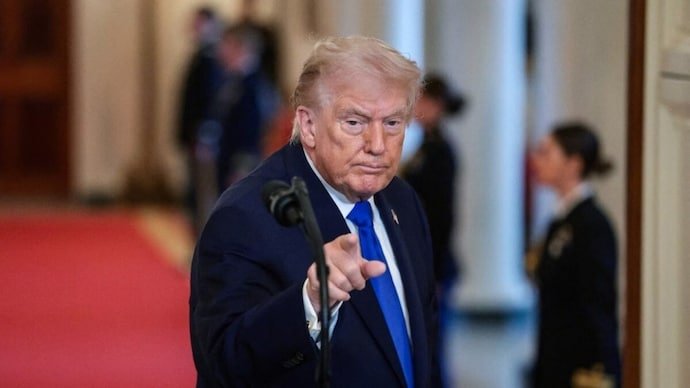
The US Supreme Court has struck down President Donald Trump‘s executive order seeking to restrict Birthright Citizenship, ruling that the 14th Amendment guarantees automatic citizenship to nearly all children born on American soil, regardless of whether their parents are US citizens, lawful permanent residents, temporary visa holders, or are living in the country unlawfully.
The judgment represents one of the most consequential constitutional rulings on immigration and citizenship in recent decades. By preserving the long-standing interpretation of the Citizenship Clause, the Court has reaffirmed a principle that has shaped American nationality law for more than 150 years.
Beyond its immediate legal impact, the decision carries significant implications for Immigration Policy, constitutional interpretation, civil rights, and future presidential authority. It also marks another major judicial setback for the Trump administration’s second-term policy agenda following the Court’s earlier ruling against its tariff measures.
Key Highlights of the Supreme Court Decision
| Issue | Supreme Court Decision | Impact |
|---|---|---|
| Birthright Citizenship | Executive order struck down | Automatic citizenship remains in effect |
| Constitutional Basis | 14th Amendment upheld | Long-standing interpretation reaffirmed |
| Majority Opinion | 5-4 decision | Citizenship protected for children born in the US |
| Estimated Annual Impact | Approximately 250,000 births | Families avoid additional citizenship verification requirements |
| Broader Significance | Limits executive authority over constitutional citizenship | Reinforces constitutional protections |
What Is Birthright Citizenship?
Birthright citizenship is the legal principle that grants citizenship automatically to individuals born within a country’s territory.
In the United States, this principle derives from the Citizenship Clause of the Fourteenth Amendment, ratified in 1868 following the Civil War.
The relevant constitutional language states that:
All persons born or naturalized in the United States, and subject to the jurisdiction thereof, are citizens of the United States and of the State wherein they reside.
For more than a century, American courts have generally interpreted this provision to include children born in the United States even when their parents are not US citizens, subject to limited exceptions such as children of accredited foreign diplomats.
Why Trump Issued the Executive Order
Shortly after beginning his second presidential term, Donald Trump signed an executive order aimed at restricting birthright citizenship.
The order sought to limit automatic citizenship to children with at least one parent WHO was legally present in the United States.
The administration argued that the existing interpretation of the Fourteenth Amendment encouraged unauthorized immigration and imposed long-term immigration and public policy challenges.
President Trump described birthright citizenship as “a disgrace,” while Vice President JD Vance publicly criticized the policy, arguing that it no longer reflected the original intent of the Constitution.
The administration maintained that executive action could reinterpret the phrase “subject to the jurisdiction” contained in the Fourteenth Amendment.
Why the Supreme Court Rejected the Order
The Supreme Court concluded that the Constitution itself not executive action governs citizenship acquired at birth.
Writing for the 5-4 majority, Chief Justice John Roberts emphasized that citizenship is one of the Constitution’s most fundamental guarantees.
The Court held that:
- Children born in the United States are generally subject to US jurisdiction.
- The Citizenship Clause applies regardless of the immigration status of parents.
- An executive order cannot override constitutional protections.
- The long-established judicial interpretation of the Fourteenth Amendment remains controlling.
The judgment preserves more than 150 years of constitutional practice concerning citizenship by birth.
The Majority Opinion Explained
Chief Justice Roberts described citizenship as a foundational constitutional right.
“Citizenship, then and now, was the right to have rights to freely participate in our political community.”
The majority further concluded that children born in the United States to parents who are either unlawfully or temporarily present remain “subject to the jurisdiction” of the United States and therefore qualify for citizenship under the Citizenship Clause.
The decision effectively reaffirmed long-standing constitutional precedent rather than creating an entirely new legal doctrine.
The Dissenting Opinion
Justice Clarence Thomas disagreed with the majority’s constitutional interpretation.
In his dissent, he argued that aspects of the executive order could be consistent with what he viewed as the original public understanding of the Citizenship Clause.
Justice Thomas also discussed the historical relationship between the Civil Rights Act of 1866 and the Fourteenth Amendment, emphasizing a different constitutional reading from that adopted by the majority.
Dissenting opinions do not change the law but often influence future constitutional debates and academic discussion.
The Historical Origins of the Fourteenth Amendment
The Fourteenth Amendment was ratified in 1868 during the Reconstruction era following the American Civil War.
Its primary purpose was to overturn the Supreme Court’s infamous Dred Scott v. Sandford decision, which had denied citizenship to people of African descent.
The Citizenship Clause established a clear constitutional rule ensuring that individuals born in the United States would enjoy equal citizenship under federal law.
Over time, the Amendment became one of the most important constitutional foundations for civil rights, equal protection, and due process.
Timeline of the Birthright Citizenship Dispute
| Year / Period | Major Development |
|---|---|
| 1868 | Fourteenth Amendment ratified. |
| 1898 | Supreme Court reinforces birthright citizenship principles in landmark precedent. |
| January (Second Trump Term) | Executive order issued restricting birthright citizenship. |
| April | Supreme Court hears oral arguments. |
| Current Decision | Executive order declared unconstitutional. |
Who Is Affected by the Ruling?
The Court’s decision affects families across the United States, particularly those involving immigrants.
According to estimates cited during the case, nearly 250,000 children born annually could have faced uncertainty regarding citizenship if the executive order had been upheld.
Instead, the ruling preserves automatic citizenship for eligible children born in the United States, avoiding additional administrative procedures requiring parents to prove immigration or citizenship status at birth.
Why the Case Matters Beyond Immigration
Although the case centered on immigration policy, its constitutional significance extends much further.
The ruling reinforces several broader legal principles:
- Constitutional rights cannot be modified through executive orders alone.
- The judiciary remains the final interpreter of constitutional language.
- Long-standing constitutional precedents carry substantial legal weight.
- Presidential authority operates within constitutional limits.
These principles affect numerous areas of constitutional Governance beyond immigration.
Political and Policy Implications
The decision represents another significant judicial setback for the Trump administration’s second-term agenda.
Immigration has remained one of the administration’s defining policy priorities, with efforts focused on border enforcement, asylum reform, deportation procedures, and citizenship-related issues.
The ruling demonstrates that while presidents possess broad executive authority in immigration enforcement, constitutional citizenship standards remain governed by the Constitution itself and subject to judicial review.
Interesting Context: Birthright Citizenship and American Leadership
The debate has also attracted attention because several prominent figures in President Trump’s administration are themselves children of immigrants who became American citizens through birthright citizenship.
Public discussions surrounding the case have highlighted this historical context, illustrating how birthright citizenship has shaped American society across multiple generations.
The Court’s ruling preserves the same constitutional framework under which millions of Americans have acquired citizenship since the nineteenth century.
International Perspective
The United States is among a relatively small group of countries that broadly recognize unconditional birthright citizenship based primarily on place of birth, often referred to as
Many other nations instead follow
This distinction has contributed to recurring political debates over whether the United States should maintain or modify its constitutional approach.
Future Outlook
The Supreme Court’s ruling effectively preserves the existing constitutional interpretation of birthright citizenship, making significant policy changes through executive action highly unlikely. Any future effort to fundamentally alter birthright citizenship would almost certainly require either a constitutional amendment or a dramatically different judicial interpretation both of which present substantial legal and political challenges.
Immigration policy will remain a central issue in American Politics, and debates over border security, legal immigration, asylum and citizenship are expected to continue. However, the Court’s decision establishes that the Citizenship Clause of the Fourteenth Amendment remains a constitutional safeguard that cannot be narrowed through presidential executive orders alone.
Conclusion
The US Supreme Court’s decision to strike down President Donald Trump’s executive order marks a defining moment in modern constitutional law. By reaffirming that children born in the United States are entitled to citizenship under the Fourteenth Amendment regardless of their parents’ immigration status, the Court has preserved a legal principle that has shaped American citizenship for more than 150 years.
Beyond its immediate impact on hundreds of thousands of families, the ruling reinforces broader constitutional values concerning judicial review, separation of powers and the enduring authority of the Constitution. As immigration continues to influence political debate in the United States, this judgment is likely to remain one of the most significant constitutional precedents governing citizenship and executive power for years to come.
For breaking news and live news updates, like us on Facebook or follow us on Twitter and Instagram. Read more on Latest World on thefoxdaily.com.





COMMENTS 0