- What Is Birthright Citizenship in the United States?
- Why Trump Wants to End Birthright Citizenship
- The Supreme Court Case Could Redefine Constitutional Law
- Why Trump’s Comments About Slavery Are Politically Significant
- The Case Reflects America’s Larger Immigration Divide
- Why the Supreme Court’s Conservative Majority Does Not Guarantee Trump a Victory
- What Happens If Trump Wins?
- What Happens If Trump Loses?
- Birthright Citizenship Is Rare Globally
- The Political Timing Matters
- The Real Constitutional Battle Goes Beyond Immigration
- Conclusion
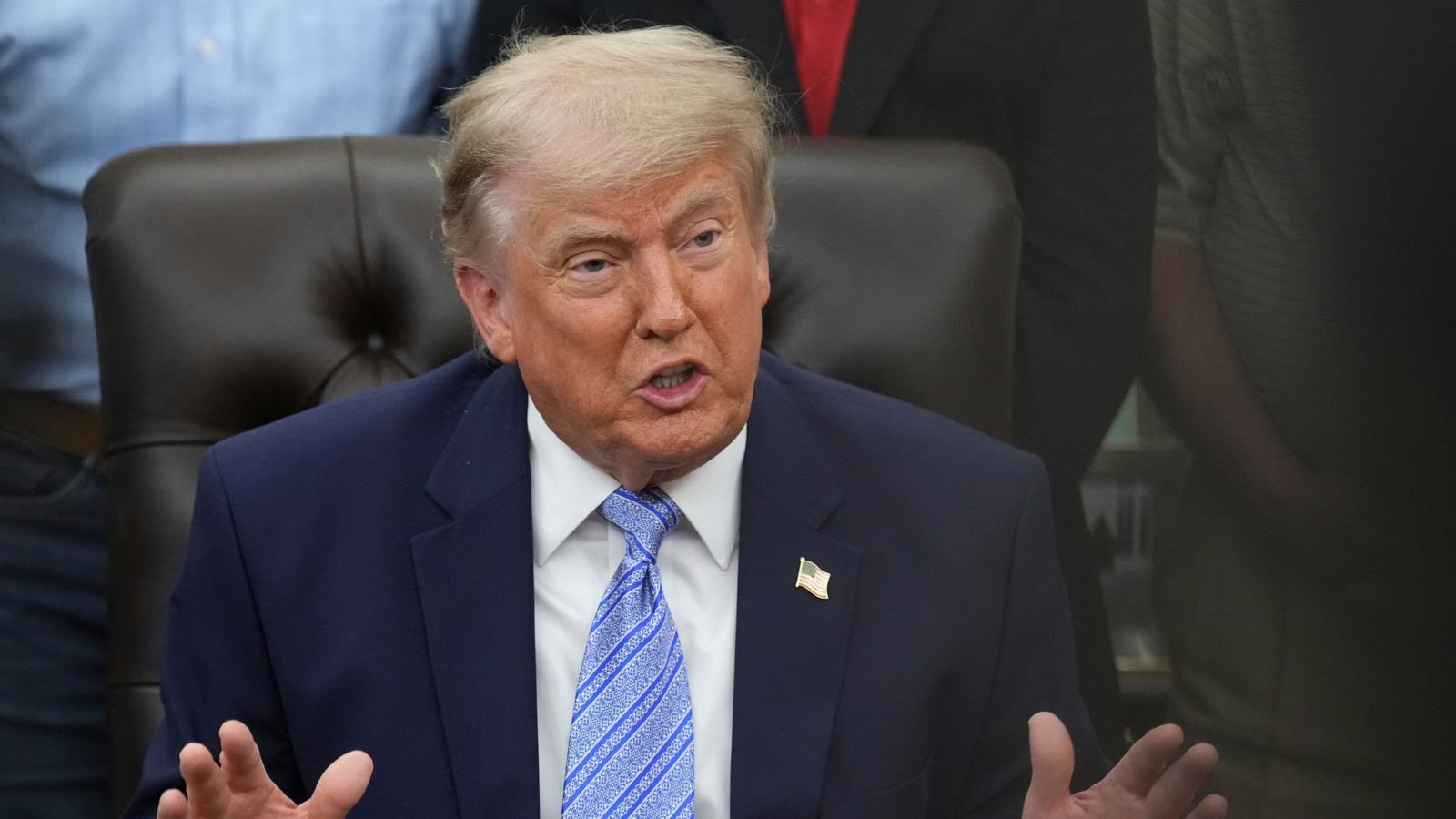
Donald Trump has reopened one of the most explosive constitutional debates in modern American Politics who gets to be an American citizen at birth.
Ahead of a crucial Supreme Court decision, Trump intensified his campaign against Birthright Citizenship by declaring that the constitutional protection was originally intended for the “babies of slaves,” not “Chinese billionaires” entering the United States to secure citizenship advantages for their children.
The remarks immediately triggered fierce political debate across the United States, but beyond the controversy lies a far larger issue: the future interpretation of the 14th Amendment, the scope of presidential power, and the direction of America’s immigration system in the 21st century.
What makes this legal battle extraordinary is that it is no longer simply about Immigration Policy.
It has become a national argument over constitutional identity, demographic change, border control, economic pressure, and the meaning of citizenship itself.
The outcome could reshape immigration law, redefine executive authority, and influence millions of families for decades.
What Is Birthright Citizenship in the United States?
Birthright citizenship is the legal principle that automatically grants American citizenship to nearly anyone born on US soil, regardless of the immigration status of their parents.
The principle is rooted in the Citizenship Clause of the 14th Amendment to the US Constitution, ratified in 1868 after the American Civil War.
The amendment states that all persons born or naturalized in the United States and subject to its jurisdiction are citizens of the United States.
Historically, the amendment was designed primarily to overturn the infamous Dred Scott decision and guarantee citizenship rights to formerly enslaved African Americans.
Over time, however, courts interpreted the amendment broadly, establishing automatic citizenship as a foundational part of American constitutional law.
For more than a century, birthright citizenship has remained largely unquestioned by mainstream political institutions.
Trump’s challenge represents the most serious attempt in modern history to narrow or reinterpret that constitutional guarantee.
Why Trump Wants to End Birthright Citizenship
Trump argues that the current interpretation of birthright citizenship encourages illegal immigration and creates incentives for what critics call “birth tourism,” where foreign nationals travel to the United States specifically so their children obtain American citizenship.
His administration claims the system imposes significant burdens on public services, healthcare systems, education infrastructure, and immigration enforcement.
Trump’s latest comments about “Chinese billionaires” reflect a broader political argument that wealthy foreign nationals exploit American citizenship laws for economic and strategic advantages.
Supporters of Trump’s position believe automatic citizenship was never intended to apply universally to all non-citizens entering the country temporarily or unlawfully.
They argue that the phrase “subject to its jurisdiction” in the 14th Amendment should exclude certain categories of non-citizens.
Critics, however, say this interpretation contradicts more than a century of constitutional precedent.
The Supreme Court Case Could Redefine Constitutional Law
The legal dispute began after Trump signed an executive order stating that children born in the United States to undocumented immigrants or temporary visa holders would no longer automatically receive citizenship.
Several lower courts quickly blocked the order, ruling that it likely violated the Constitution.
Now, the issue has reached the Supreme Court, where the stakes extend far beyond immigration policy.
The justices are effectively being asked to answer several enormous constitutional questions:
- Can a president reinterpret constitutional citizenship through executive action?
- Does the 14th Amendment guarantee universal birthright citizenship?
- How much authority does the executive branch possess over immigration-related constitutional issues?
- Can longstanding constitutional interpretations be narrowed without a formal amendment?
The ruling could become one of the most consequential constitutional decisions in decades.
| Key Issue | Why It Matters |
|---|---|
| 14th Amendment Interpretation | Defines constitutional citizenship rights |
| Executive Authority | Determines limits of presidential power |
| Immigration Enforcement | Could reshape future immigration policy |
| Citizenship Eligibility | Affects millions of future births |
| Supreme Court Precedent | May alter longstanding constitutional doctrine |
Why Trump’s Comments About Slavery Are Politically Significant
Trump’s statement that birthright citizenship was intended for the “babies of slaves” was politically provocative, but historically rooted in one undeniable fact: the 14th Amendment emerged directly from the aftermath of slavery and the Civil War.
The amendment’s original purpose was to ensure that formerly enslaved Black Americans would be recognized as full citizens after centuries of legal exclusion.
However, constitutional law evolves through judicial interpretation over time.
Courts gradually expanded the principle beyond its original post-Civil War context, applying it broadly to nearly all children born within US territory.
Trump’s argument attempts to return the debate to original constitutional intent a legal philosophy often favored by conservative constitutional scholars.
But opponents argue that selectively narrowing constitutional protections based on historical context risks undermining broader civil liberties.
The Case Reflects America’s Larger Immigration Divide
The birthright citizenship battle is ultimately part of a much deeper political divide over immigration itself.
For years, immigration has become one of the most polarizing issues in American politics.
Supporters of stricter immigration controls argue that:
- Border systems are overwhelmed
- Public services face increasing pressure
- Illegal immigration undermines legal pathways
- Citizenship incentives encourage unauthorized entry
Meanwhile, immigration advocates argue that:
- Birthright citizenship is constitutionally protected
- Restricting it could create stateless populations
- Executive overreach threatens constitutional norms
- Immigration remains central to America’s national identity
The intensity of the debate reflects how immigration has evolved into a cultural, economic, and political identity issue across the United States.
Why the Supreme Court’s Conservative Majority Does Not Guarantee Trump a Victory
Although conservatives currently hold a majority on the Supreme Court, Trump’s victory is far from guaranteed.
One major misconception in political discourse is that judges always support the presidents who appoint them.
In reality, Supreme Court justices often rule independently once confirmed.
Trump himself has repeatedly expressed frustration when judges he appointed ruled against him on key issues.
The birthright citizenship case places conservative justices in a difficult position.
On one hand, many conservatives favor stricter immigration enforcement and narrower constitutional interpretation.
On the other hand, overturning or dramatically narrowing a long-established constitutional principle could create enormous legal and political consequences.
Even some conservative legal scholars remain divided on whether a president can alter birthright citizenship through executive action alone.
What Happens If Trump Wins?
If the Supreme Court sides with Trump, the consequences could be historic.
Children born in the United States to undocumented immigrants or temporary visa holders could lose automatic citizenship rights.
That would fundamentally transform how citizenship works in America.
Potential consequences could include:
- Massive legal confusion over citizenship status
- New federal documentation systems
- Long immigration court battles
- Challenges involving stateless children
- Diplomatic complications with foreign governments
- Expanded political polarization
Such a ruling would also likely trigger years of additional litigation.
States, civil rights organizations, and immigration groups would almost certainly challenge implementation mechanisms immediately.
What Happens If Trump Loses?
If the Supreme Court rejects Trump’s executive order, birthright citizenship would remain constitutionally protected under existing interpretation.
However, the political issue itself would not disappear.
In fact, a defeat could intensify conservative calls for:
- Constitutional amendments
- Stronger immigration enforcement
- Congressional reforms
- Expanded border security measures
Trump has already transformed immigration into one of the defining ideological battles of modern American politics.
The Supreme Court ruling may settle the legal question temporarily, but it is unlikely to end the political debate.
Birthright Citizenship Is Rare Globally
One of Trump’s recurring arguments is that the United States is unusually permissive regarding automatic citizenship.
While his claim that America is the “only country” with birthright citizenship is inaccurate, it is true that unconditional birthright citizenship is relatively uncommon globally.
Many countries either restrict or condition citizenship based on parental status, residency, or nationality.
Several developed nations have tightened citizenship rules over recent decades in response to immigration pressures.
That global trend has strengthened political arguments among conservatives who believe America’s citizenship laws are outdated.
At the same time, defenders of birthright citizenship argue that America’s constitutional framework and immigration history are unique and should not simply follow international trends.
The Political Timing Matters
Trump’s aggressive push on birthright citizenship also reflects broader electoral strategy.
Immigration remains one of the most mobilizing issues for his political base.
By framing the debate around constitutional integrity, border control, and economic pressure, Trump continues reinforcing themes that have defined his political identity since 2016.
The rhetoric surrounding the issue is also carefully designed to shape public perception.
Terms like “economic disaster,” “illegal migration,” and “citizenship abuse” are intended to frame birthright citizenship not as a civil rights issue, but as a national systems issue.
That distinction matters politically.
The Real Constitutional Battle Goes Beyond Immigration
The most important aspect of this case may ultimately involve presidential power rather than immigration alone.
At its core, the dispute asks whether a president can significantly reinterpret constitutional rights through executive authority.
If the Supreme Court allows such reinterpretation, future presidents could potentially attempt broader constitutional changes through executive action.
If the court blocks Trump decisively, it could reinforce limits on executive power.
That is why legal scholars across the political spectrum are watching the case closely.
The implications may extend far beyond immigration policy.
Conclusion
Donald Trump’s campaign against birthright citizenship has reignited one of the most consequential constitutional debates in modern American history.
What began as an immigration policy dispute has evolved into a larger national argument over constitutional interpretation, presidential authority, demographic change, and America’s identity as a nation.
Trump’s remarks about the original purpose of birthright citizenship have intensified an already deeply polarized debate, placing the Supreme Court at the center of a political and constitutional storm.
The upcoming ruling could shape immigration policy, citizenship rights, and executive power for generations.
But regardless of the outcome, one reality is already clear:
The fight over who gets to become an American citizen is no longer just a legal issue.
It has become one of the defining political battles of America’s future.
For breaking news and live news updates, like us on Facebook or follow us on Twitter and Instagram. Read more on Latest World on thefoxdaily.com.






COMMENTS 0