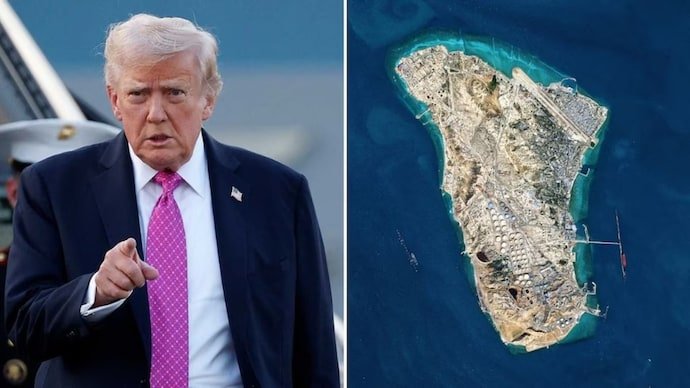
The war between the United States and Iran appears to be entering a more dangerous phase. US President Donald Trump has publicly threatened fresh military strikes against Iran while also declaring that Washington could eventually seize Kharg Island and other key Iranian energy facilities. The comments have intensified concerns that a conflict originally centered on military targets could increasingly expand into the economic heart of Iran.
Trump’s remarks come amid continuing exchanges of attacks across the Middle East, growing instability in the Gulf region, and ongoing diplomatic efforts aimed at preventing a wider regional war. While negotiations reportedly continue behind the scenes, the latest statements suggest military pressure remains Washington’s primary leverage against Tehran. :contentReference[oaicite:0]{index=0}
The significance of Trump’s comments extends far beyond political messaging. Kharg Island is not simply another military target. It is the centerpiece of Iran’s oil export infrastructure and one of the most strategically important energy locations in the world.
What Did Trump Actually Say?
In a Truth Social post, Trump declared that the United States would strike Iran “very hard tonight” and claimed that much of Iran’s military capability had already been neutralized. He further stated that the United States would eventually take control of Kharg Island and other oil infrastructure assets while assuming influence over Iranian oil and gas markets. :contentReference[oaicite:1]{index=1}
The statement represents one of the strongest public declarations yet regarding American intentions toward Iran’s energy sector.
It also signals a shift from purely military objectives toward economic pressure targeting the financial foundations of the Iranian state.
Why Is Kharg Island So Important?
Many people outside energy circles have never heard of Kharg Island, yet it plays an outsized role in global Oil Markets.
Located in the Persian Gulf, Kharg Island functions as Iran’s primary oil export terminal.
For decades, it has served as the main hub through which Iranian crude oil reaches international markets.
| Kharg Island Fact | Importance |
|---|---|
| Location | Persian Gulf, off Iran’s southern coast |
| Main Function | Iran’s primary crude oil export terminal |
| Economic Role | Critical source of Iranian government revenue |
| Strategic Value | Vital to regional and global energy supply chains |
Analysts frequently describe the island as the beating heart of Iran’s oil economy. Disruptions there can have immediate consequences for Iranian export capacity and potentially influence Global Energy prices. :contentReference[oaicite:2]{index=2}
Why Energy Infrastructure Has Become a Military Target
modern warfare increasingly focuses not only on military assets but also on economic infrastructure.
Governments understand that weakening an opponent’s revenue streams can be as impactful as destroying military equipment.
For Iran, oil exports remain a crucial source of national income.
Revenue generated through energy exports supports:
- Government spending.
- Infrastructure projects.
- Public services.
- Military operations.
- Foreign exchange reserves.
Targeting energy infrastructure therefore places pressure on a country’s ability to sustain prolonged conflict.
This explains why Kharg Island repeatedly appears in discussions surrounding the current confrontation.
The Broader Military Escalation
Trump’s latest remarks did not occur in isolation.
The United States and Iran have exchanged multiple rounds of military action in recent days.
American operations have reportedly targeted Iranian military facilities, surveillance systems, communications networks and air-defense assets. Meanwhile, Iranian forces claim to have launched retaliatory attacks against American military installations across the Gulf region. :contentReference[oaicite:3]{index=3}
The situation has become increasingly volatile because both sides continue to signal a willingness to escalate while simultaneously discussing diplomatic solutions.
This combination of negotiations and military pressure creates an environment where miscalculation becomes a significant risk.
Can the US Really Take Control of Kharg Island?
From a military perspective, capturing and maintaining control over major foreign energy infrastructure presents enormous challenges.
Any operation involving direct control of strategic territory would require:
- Long-term military presence.
- Protection against counterattacks.
- Logistical support networks.
- Maritime security operations.
- Political and diplomatic backing.
Military experts often distinguish between striking a facility and controlling it.
Disabling infrastructure can be achieved through air and missile operations. Maintaining control over infrastructure, however, typically requires sustained commitments and complex operational planning.
This reality explains why discussions surrounding Kharg Island are generating significant attention among defense analysts.
How Global Oil Markets Are Reacting
Energy traders closely monitor every development involving Iran and the Strait of Hormuz.
Even statements suggesting potential disruptions to Iranian oil exports can influence market sentiment.
Oil prices often react to:
- Military strikes near energy infrastructure.
- Threats against export terminals.
- Shipping disruptions.
- Strait of Hormuz tensions.
- Production interruptions.
Following Trump’s latest comments, market participants again focused on the possibility of supply disruptions affecting one of the world’s most important energy-producing regions. :contentReference[oaicite:4]{index=4}
The Strait of Hormuz Factor
Any discussion of Kharg Island inevitably leads to the Strait of Hormuz.
This narrow waterway serves as one of the world’s most critical energy transit routes.
A significant portion of internationally traded oil passes through the strait each day.
Disruptions in this region can affect:
- Global fuel prices.
- Shipping costs.
- Energy security.
- Industrial supply chains.
- Inflation trends worldwide.
Because of this strategic importance, events involving Iran often generate reactions far beyond the Middle East.
Diplomacy Continues Despite Escalation
One of the most striking aspects of the current crisis is that negotiations continue even as military operations intensify.
Reports indicate that American and Iranian representatives remain engaged in indirect discussions regarding potential agreements and the release of frozen Iranian funds. :contentReference[oaicite:5]{index=5}
This reflects a common feature of international conflicts.
Military pressure and Diplomacy frequently occur simultaneously rather than sequentially.
Governments often attempt to strengthen their negotiating position through demonstrations of force while still pursuing diplomatic outcomes.
Why Frozen Iranian Assets Matter
One of the key issues reportedly under discussion involves billions of dollars in Iranian funds held abroad.
For Tehran, gaining access to these resources could provide significant economic relief.
For Washington, the release of funds represents a powerful bargaining tool.
The disagreement reportedly centers on:
- The total amount released.
- Conditions governing access.
- Permitted uses of the funds.
- Verification mechanisms.
The outcome of these negotiations may ultimately influence whether military escalation continues or begins to subside.
The Real Stakes: More Than Just Iran and the US
The current confrontation affects far more than the two countries directly involved.
Regional governments, global energy markets, multinational corporations, and international shipping operators all have significant interests in the outcome.
A prolonged conflict could affect:
- Global energy prices.
- International trade routes.
- Economic growth forecasts.
- Investment confidence.
- Regional political stability.
For this reason, governments across Europe, Asia and the Middle East continue to push for de-escalation even as military actions persist.
A Historical Perspective on Energy and Conflict
History demonstrates that energy infrastructure often becomes central during major geopolitical confrontations.
Oil facilities, pipelines, export terminals and shipping routes have repeatedly played critical roles in conflicts because they represent both economic power and strategic leverage.
What makes the current situation unique is the direct public discussion of potentially controlling energy assets rather than merely targeting them.
That distinction has attracted attention from policymakers, economists and security experts worldwide.
What Happens Next?
Several scenarios remain possible.
The United States could continue limited strikes designed to pressure Iran while avoiding broader escalation.
Iran could intensify retaliation against regional military targets.
Diplomatic negotiations could produce a temporary agreement that reduces tensions.
Alternatively, attacks on strategic infrastructure could trigger a wider regional crisis.
The direction of events will likely depend on both military developments and the progress of ongoing negotiations.
Conclusion
Donald Trump’s threat to hit Iran “very hard tonight” and his declaration that the United States may eventually take control of Kharg Island represent a major escalation in the rhetoric surrounding the US-Iran conflict. While the military implications are significant, the broader importance lies in what Kharg Island represents: the economic heart of Iran’s energy industry and a critical component of global oil markets.
The controversy underscores how modern conflicts increasingly blur the lines between military objectives and economic strategy. As diplomacy and military operations continue simultaneously, the future of the confrontation may ultimately be determined not only on battlefields but also in negotiations over energy, finance and regional stability.
For the world, the stakes extend well beyond one island. The outcome could influence energy prices, global trade, regional security and the future balance of power in one of the world’s most strategically important regions.
For breaking news and live news updates, like us on Facebook or follow us on Twitter and Instagram. Read more on Latest World on thefoxdaily.com.



COMMENTS 0