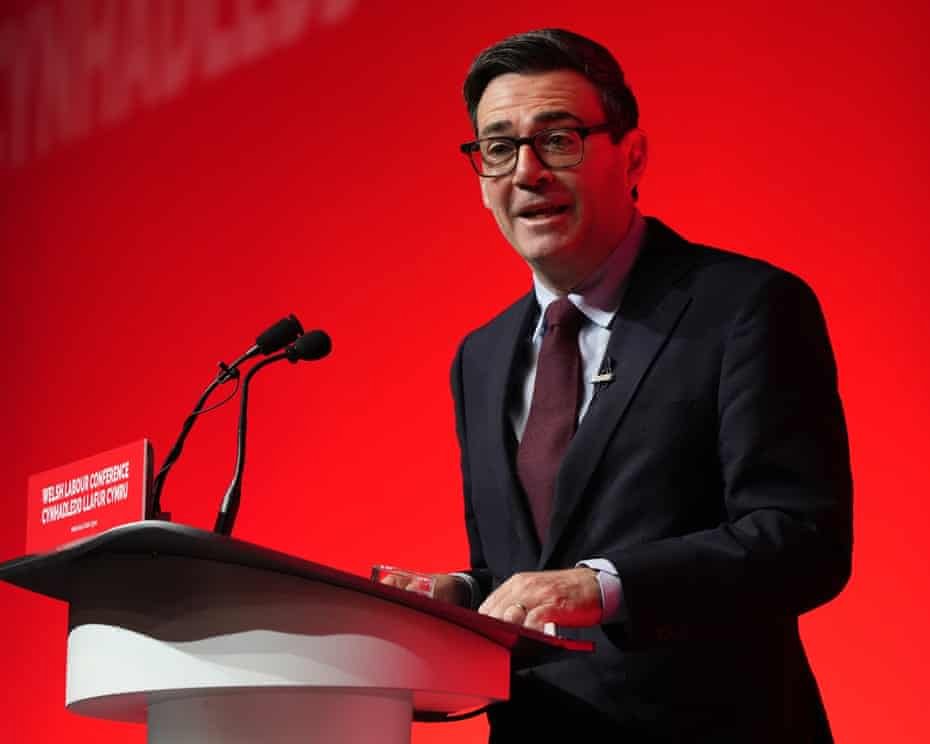
UK Prime Minister Andy Burnham has said Britain has “lost more than we’ve gained” since leaving the European Union, renewing his criticism of the country’s post-Brexit relationship with Brussels ahead of a major diplomatic summit next week.
Speaking at the Welsh Labour conference on Saturday, November 14, Burnham accused the Conservative Party of having “burned all of our bridges” with the EU after the 2016 referendum. He argued that the approach taken during the Brexit negotiations produced a harsher arrangement than many voters had expected.
The prime minister said his government was seeking closer cooperation with the bloc to reduce trade barriers, support British exporters and ease pressure on household costs. He particularly highlighted a proposed food and farming agreement that could benefit Welsh farmers and businesses selling products such as lamb and shellfish to European markets.
Burnham is due to meet European Commission President Ursula von der Leyen and European Council President António Costa in Brussels on November 20. The summit is expected to focus on agreements covering food and drink, carbon emissions and opportunities for young people to live, work and study abroad.
Burnham says Brexit has delivered fewer benefits than expected
Burnham used his address to argue that the economic consequences of Brexit remain a concern for British businesses and consumers. He said closer relations with the EU could help address some of the additional costs and administrative difficulties that emerged after the UK left the bloc.
“I think we’ve lost more than we’ve gained over the last 10 years,” Burnham told the conference.
He argued that the Conservative government responsible for negotiating the UK’s departure had delivered a harder Brexit than people anticipated when they voted in the 2016 referendum.
According to Burnham, the relationship between London and Brussels deteriorated during the negotiations and their aftermath, leaving British businesses facing additional barriers when trading with European partners.
He said he wanted to take a different approach as prime minister, focusing on practical agreements that could deliver economic benefits without immediately reopening every aspect of the UK’s relationship with Europe.
“We need to be willing to take difficult decisions to get the cost of living down,” he said, explaining why his government was pursuing closer cooperation on food and farming.
Burnham specifically referred to Welsh businesses that could benefit from reduced trade barriers, including farmers and exporters of Welsh lamb and shellfish. He said securing a favourable agreement would be an important part of his efforts to support regional businesses.
UK-EU summit expected to focus on three major agreements
The November 20 meeting in Brussels is expected to be an important stage in the government’s attempt to reset relations with the European Union.
Burnham’s administration is pursuing agreements in three main areas: food and farming, emissions trading and youth mobility. The government believes closer cooperation in these sectors could reduce costs for businesses, improve economic opportunities and strengthen links between the UK and European countries.
Food and farming agreement
A proposed agreement on food and agricultural products is expected to be among the most significant items on the summit’s agenda.
Following Brexit, businesses trading food and agricultural goods between Britain and the EU have faced additional certification requirements, inspections and other administrative procedures. These requirements have increased the paperwork and costs involved in moving certain products across borders.
The proposed agreement would bring the UK closer to relevant EU food and animal health standards. In return, it could remove many checks and certificates for covered products, making trade easier for British producers and European suppliers.
For Welsh businesses, the potential benefits could be particularly relevant to agricultural and seafood exports. Producers of lamb, shellfish and other food products rely on access to overseas markets, including the EU.
Burnham said reducing unnecessary barriers would help exporters and could also ease pressure on supermarket prices. However, the extent of any savings for consumers would depend on how businesses respond to lower trading costs and how quickly the agreement is implemented.
Emissions trading cooperation
The two sides are also seeking closer cooperation between their emissions trading systems.
Emissions trading schemes require companies in covered industries to account for the greenhouse gases they produce, generally through permits or allowances. Linking the UK and EU systems could make it easier for businesses operating across both markets to manage their obligations.
The arrangement could also help address differences between the two systems and reduce the risk of additional costs for certain businesses involved in cross-border trade.
Negotiations are still required to establish the precise terms. Any agreement would need to address how the systems operate together and the conditions under which businesses could benefit from closer alignment.
Youth mobility scheme
A proposed youth mobility arrangement is another major part of the discussions. It could create opportunities for young people from the UK and EU to spend a limited period in the other jurisdiction for work, study, travel or cultural exchange.
Such an arrangement would offer a new route for temporary movement after Brexit ended the UK’s participation in the EU’s general freedom-of-movement system.
However, a youth mobility scheme would not automatically restore the unrestricted movement rights that existed before Brexit. Its eligibility rules, duration and participation limits would need to be agreed by both sides.
Government estimates potential economic benefits from closer EU ties
The government has argued that the agreements being negotiated could provide a measurable boost to the British economy.
Burnham has previously said the proposed arrangements could increase the UK’s gross domestic product by up to 0.4%. The figure has been presented as an estimate of the potential economic benefit rather than a guaranteed outcome.
The government has also highlighted the possibility of generating billions of pounds in additional economic activity over the longer term. The expected benefits would depend on the final agreements, their implementation and the extent to which businesses take advantage of improved access to European markets.
Reducing border procedures could be particularly valuable for companies dealing in products that require time-sensitive transportation, including fresh food, meat and seafood.
For smaller exporters, fewer administrative requirements could make European trade easier to manage. Businesses that previously found the additional paperwork and compliance costs difficult to absorb may also find it more practical to serve customers in EU countries.
Consumers could benefit if lower costs across supply chains are passed on through prices. However, food prices are influenced by several factors, including production expenses, energy costs, transport, exchange rates and international market conditions. A trade agreement alone would not guarantee cheaper groceries.
Burnham keeps Labour’s Brexit red lines despite calls for closer integration
Although Burnham has made several comments suggesting that Britain should consider a much closer relationship with the EU, he reiterated that his immediate approach remains bound by Labour’s manifesto commitments.
Those commitments rule out rejoining the EU’s customs union or single market during the current political programme and also reject a return to general freedom of movement.
Burnham said the government would respect the result of the 2016 referendum while pursuing practical cooperation with European partners.
“And, yes, working with the European Union, as I said, but at the same time respecting the red lines in our manifesto and respecting the referendum, the referendum result,” he told the conference.
His position reflects an attempt to distinguish between closer cooperation in specific sectors and a full reversal of Brexit.
Burnham has recently indicated that he is open to considering options such as rejoining the single market, the customs union or even the EU itself over the longer term. He has also said that voters would ultimately have the final say on any major change to the country’s relationship with Europe.
That leaves a distinction between the agreements being negotiated for the November summit and the broader constitutional and economic questions surrounding Britain’s future relationship with the bloc.
EU leaders warn against choosing only the benefits of the single market
While the UK government is seeking closer ties, European officials have made clear that access to EU programmes and markets comes with conditions.
Former EU Brexit negotiator Michel Barnier has warned that Britain cannot select individual advantages of single-market membership while rejecting the obligations attached to it.
Speaking to the BBC, Barnier said there would be no possibility of accepting one freedom without the others. He was referring to the EU’s four fundamental freedoms: the movement of goods, services, capital and people.
He also reiterated that the UK could not rejoin the single market on an à la carte basis, arguing that the principles underpinning the system did not allow countries to choose only the elements they preferred.
The comments underline a continuing difference between the two sides. Britain wants to negotiate targeted arrangements that provide economic advantages while preserving its ability to set policy in other areas. The EU, meanwhile, is seeking clear commitments and financial contributions where access to its programmes or structures is involved.
Any broader relationship involving the single market would therefore require negotiations beyond the sector-specific agreements currently being discussed.
Tuition fees and access to EU programmes add complexity to negotiations
The government’s wider efforts to strengthen relations with Brussels have already raised questions about the financial conditions attached to participation in European initiatives.
One issue concerns access to the EU’s proposed Made in Europe industrial programme, which could influence the ability of British companies to participate in certain European supply chains and public procurement opportunities.
Earlier reports indicated that the UK was prepared to consider spending up to £450 million a year to allow EU students to access discounted university tuition fees at British institutions, if Brussels agreed to Britain’s participation in the industrial programme.
The proposal illustrates how closer economic cooperation could involve financial commitments as well as changes to trade rules.
Another area of discussion concerns the European electricity market. Hamish Falconer, the minister responsible for EU negotiations, has said Britain is willing to discuss contributing towards infrastructure schemes in less wealthy parts of the EU in exchange for access to the European electricity market.
Such discussions could become part of a longer-term negotiation over energy cooperation, market access and the financial responsibilities associated with participation in European schemes.
Senior EU figures have indicated that Britain should expect to pay for access to programmes and arrangements where financial contributions are required. This means the government will need to balance the potential economic gains against the costs of closer cooperation.
What the November summit could mean for Britain’s future relationship with Europe
The November 20 summit is expected to deliver progress on specific areas of cooperation, but it is unlikely to settle the wider debate over Brexit.
Agreements on food trade, emissions trading and youth mobility could mark a significant step towards reducing some of the practical barriers that have affected relations since the UK’s departure from the EU.
However, the details will matter. Businesses will need clarity on which products are covered, what rules they must follow, when changes will take effect and whether the expected reductions in paperwork translate into lower costs.
The youth mobility proposal will also require agreement on eligibility and duration, while emissions cooperation will depend on the technical and legal arrangements governing the two systems.
For Burnham, the immediate challenge is to demonstrate that closer cooperation can produce tangible benefits for households, farmers, exporters and businesses without reopening the most divisive elements of the Brexit debate.
The EU, for its part, will be looking for a workable agreement that respects its rules and the conditions attached to access to its markets and programmes.
Burnham’s comments at the Welsh Labour conference show that his government intends to make the economic consequences of Brexit a central part of its European policy. Whether the upcoming summit delivers the expected benefits will depend on the agreements reached and how effectively they are put into practice.
For breaking news and live news updates, like us on Facebook or follow us on Twitter and Instagram. Read more on Latest World on thefoxdaily.com.






COMMENTS 0