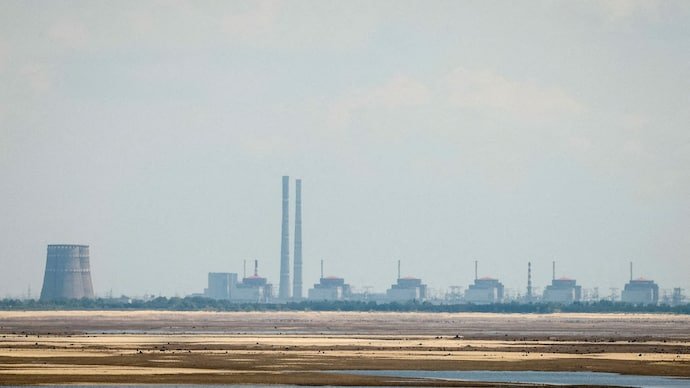
The Zaporizhzhia Nuclear Power Plant (ZNPP), Europe’s largest nuclear facility, has once again become the center of international attention after Russia claimed that a Ukrainian drone struck part of the plant on Saturday. Ukraine swiftly denied the allegation, calling it a propaganda effort and insisting that its forces did not conduct any attack on the facility.
The incident has renewed fears about the risks posed by Military activity around nuclear infrastructure during armed Conflict. Although Russian authorities stated that no critical equipment was damaged, the event highlights the continuing vulnerability of one of the world’s most sensitive energy sites amid a war that has now entered its fifth year.
With both sides offering sharply different accounts, the latest episode underscores how the Zaporizhzhia plant remains both a strategic asset and a source of Global Security concern.
What Russia Claims Happened at the Zaporizhzhia Nuclear Plant
According to Russia’s state nuclear energy corporation Rosatom, a Ukrainian kamikaze drone struck the turbine hall of Unit 6 at the Zaporizhzhia Nuclear Power Plant.
Rosatom chief Alexei Likhachev described the incident as a deliberate attack. Russian officials stated that the drone detonated after impacting the turbine hall building, creating a hole in the structure’s wall.
Authorities further claimed that while the explosion caused visible structural damage, no critical nuclear systems or primary equipment were affected.
The assertion is significant because Unit 6 is one of the six reactors located at the sprawling nuclear complex, which has remained under Russian control since the early stages of the conflict.
Russian officials argue that repeated attacks near the facility increase the risk of a potentially catastrophic nuclear incident and threaten regional stability.
Ukraine Rejects the Allegations
Ukraine’s military immediately denied any involvement in the reported strike.
Kyiv described the accusation as another example of Russian information warfare and stated that Ukrainian forces had not targeted Unit 6 or any part of the nuclear facility.
Ukrainian military officials emphasized that their operations comply with international humanitarian law and that they understand the severe consequences of military actions involving nuclear infrastructure.
According to Ukraine, there was no active combat in the immediate area at the time of the alleged incident, and no weapons were deployed from Ukrainian positions that could have caused the reported damage.
The denial reflects a broader pattern throughout the conflict, where both sides have frequently accused each other of attacks on critical infrastructure while rejecting responsibility for incidents reported by their opponents.
Why the Zaporizhzhia Nuclear Plant Matters
The Zaporizhzhia Nuclear Power Plant is not just another industrial facility. It is the largest nuclear power station in Europe and one of the largest in the world.
Before the war, the plant played a crucial role in Ukraine’s energy system, supplying a significant portion of the country’s electricity needs.
| Zaporizhzhia Nuclear Plant Fact | Details |
|---|---|
| Location | Zaporizhzhia Region, Southeastern Ukraine |
| Reactors | 6 Nuclear Reactors |
| Status | Russian-Controlled Since March 2022 |
| Significance | Largest Nuclear Power Plant in Europe |
| Primary Concern | Nuclear Safety During Armed Conflict |
The facility’s enormous size and strategic importance mean that even minor incidents attract worldwide attention.
Any damage to critical systems could have consequences extending far beyond Ukraine and Russia, affecting neighboring countries and potentially much of Europe.
A Brief Timeline of the Zaporizhzhia Nuclear Crisis
The plant has been a recurring source of concern since the beginning of Russia’s full-scale invasion of Ukraine.
March 2022: Russian Forces Capture the Plant
Russian troops seized control of the facility during the early stages of the conflict, making it one of the most strategically important sites under Russian occupation.
2022–2024: Repeated Security Alerts
Throughout the war, both Russia and Ukraine accused each other of shelling areas near the plant. Several incidents prompted warnings from international nuclear experts.
International Monitoring Efforts
Global nuclear watchdogs repeatedly called for restraint and sought access to monitor conditions at the facility.
2025–2026: Continued Frontline Risks
Despite efforts to improve safety measures, the plant remains located near active military zones, creating persistent concerns about accidental or deliberate damage.
Why Nuclear Facilities Are Different From Other Military Targets
Nuclear Power Plants occupy a unique position during armed conflicts.
Unlike conventional infrastructure, damage to certain parts of a nuclear facility can have consequences that extend for decades.
While modern reactors include multiple safety systems, military activity near such sites creates several risks:
- Damage to power supply systems.
- Disruption of cooling mechanisms.
- Loss of operational control.
- Threats to plant personnel.
- Potential environmental contamination.
- Regional panic and economic disruption.
Even when reactor systems remain intact, repeated incidents can strain emergency preparedness and increase the possibility of miscalculation.
The Information War Surrounding Nuclear Facilities
One often-overlooked aspect of the Zaporizhzhia situation is the role of information warfare.
Throughout the conflict, both Russia and Ukraine have sought to shape international perceptions regarding responsibility for attacks and security incidents.
Because independent verification is often difficult during active conflict, competing narratives frequently emerge after major events.
This creates challenges for governments, international organizations, and the public attempting to assess the reality on the ground.
The latest Drone Strike claims fit into this broader pattern, with each side presenting a dramatically different version of events.
Why the International Community Is Concerned
The global concern surrounding Zaporizhzhia extends beyond the immediate military conflict.
Nuclear safety experts have repeatedly warned that active warfare around nuclear facilities creates unprecedented risks.
The situation is unusual because most nuclear safety frameworks were designed for peacetime operations rather than prolonged military conflict.
As a result, the international community has consistently urged both sides to avoid actions that could endanger the plant.
The concern is not only about reactor safety but also about maintaining stable operational conditions, protecting personnel, and ensuring access to emergency systems.
The Strategic Importance of Zaporizhzhia in the Russia-Ukraine War
Beyond its role as an energy facility, the plant has strategic military and political significance.
Control of critical infrastructure often provides leverage during wartime negotiations and influences broader battlefield dynamics.
The facility’s location in southeastern Ukraine also places it near key logistical and military routes.
As a result, events involving the plant frequently carry implications that extend beyond nuclear safety alone.
Both Russia and Ukraine understand that developments at Zaporizhzhia attract intense international scrutiny, making the site important from both operational and diplomatic perspectives.
Could a Drone Strike Trigger a Nuclear Disaster?
This question often emerges whenever reports of attacks near nuclear facilities surface.
The answer is more complex than many headlines suggest.
Modern nuclear plants are designed with multiple layers of protection, including reinforced structures intended to withstand significant impacts.
However, experts generally emphasize that the greatest risk comes not necessarily from a direct hit on a reactor but from cumulative disruptions affecting power supplies, cooling systems, communications networks, or emergency operations.
Repeated incidents increase uncertainty and create conditions where unforeseen problems become more difficult to manage.
That is why even attacks that cause limited physical damage generate substantial concern among nuclear safety specialists.
The Economic and Energy Impact
The Zaporizhzhia facility once served as a critical component of Ukraine’s electricity generation system.
Its reduced operational role has had broader implications for regional Energy Security.
energy infrastructure has become one of the central battlegrounds of the conflict, affecting electricity supplies, industrial production, and Economic Recovery efforts.
Any incident involving the plant therefore carries both safety and economic consequences.
Maintaining stability at the facility remains important not only for preventing accidents but also for preserving future energy options once the conflict eventually ends.
A Unique Angle: The War Has Changed How the World Thinks About Nuclear Security
Perhaps the most important lesson from the Zaporizhzhia crisis is that it has fundamentally altered global discussions about nuclear security.
Before 2022, most nuclear safety planning focused on natural disasters, technical failures, or isolated security threats.
The Russia-Ukraine war introduced a new challenge: the prolonged presence of military operations around a major nuclear power plant.
This has forced governments, regulators, and energy experts worldwide to reconsider how nuclear facilities should be protected during modern conflicts.
Future nuclear security frameworks are likely to incorporate lessons learned from Zaporizhzhia, making the plant a case study that could influence Global Policy for decades.
What Happens Next?
The immediate focus will likely remain on determining the facts surrounding the alleged drone strike and assessing whether any additional security measures are necessary.
Both Russia and Ukraine are expected to continue presenting their respective versions of events, while international observers monitor developments closely.
The larger challenge remains unchanged: ensuring that military activity does not escalate into a nuclear safety crisis.
As long as the facility remains near active conflict zones, concerns about security incidents are unlikely to disappear.
Conclusion
Russia’s claim that a Ukrainian drone struck the Zaporizhzhia Nuclear Power Plant and Ukraine’s categorical denial highlight the continuing tensions surrounding Europe’s largest nuclear facility. While Russian authorities reported limited structural damage and no impact on critical equipment, the incident has once again drawn attention to the risks associated with military activity near nuclear infrastructure.
The Zaporizhzhia plant remains one of the most sensitive locations in the Russia-Ukraine conflict, symbolizing both strategic importance and global vulnerability. Regardless of the competing narratives, the broader concern remains clear: preventing any event that could jeopardize nuclear safety.
As the war continues, the international community will remain focused on ensuring that Europe’s largest nuclear power plant does not become the source of a wider humanitarian, environmental, or security crisis.
For breaking news and live news updates, like us on Facebook or follow us on Twitter and Instagram. Read more on Latest World on thefoxdaily.com.






COMMENTS 0