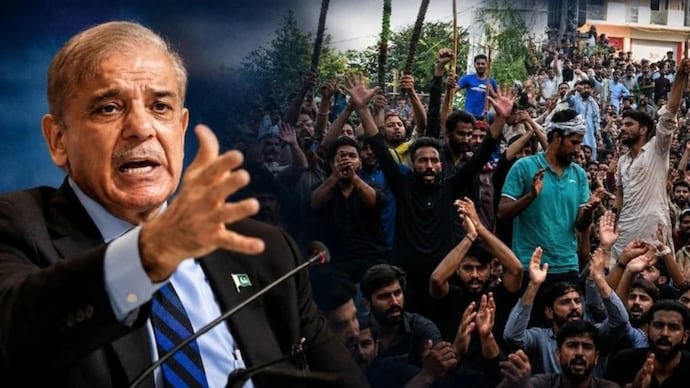
Pakistan-Occupied Kashmir (POK), officially referred to by Pakistan as “Azad Jammu and Kashmir” (AJK), occupies a unique and controversial position in South Asian Geopolitics. Unlike Pakistan’s provinces such as Punjab, Sindh, Balochistan, or Khyber Pakhtunkhwa, POK has its own president, prime minister, legislative assembly, judiciary, and even a separate flag.
At first glance, these institutions give the appearance of a semi-autonomous political entity. For decades, Pakistan has highlighted this structure as evidence that the territory enjoys self-rule. However, critics, constitutional experts, and many political activists within the region argue that the arrangement is largely symbolic and designed to maintain the appearance of autonomy while preserving Islamabad’s control.
The debate has gained fresh relevance amid widespread Protests, political unrest, and growing dissatisfaction within POK over Governance, economic issues, and alleged interference from Pakistan’s federal establishment. As thousands continue to demand greater rights and accountability, a fundamental question is being asked again: if POK is truly autonomous, why do so many key decisions appear to be controlled outside the territory?
Understanding the answer requires examining the history of Kashmir, Pakistan’s strategic calculations, and the political structure that has evolved over the last seven decades.
The Historical Origins of Pakistan-Occupied Kashmir
The roots of the issue lie in the partition of British India in 1947. At the time, the princely state of Jammu and Kashmir had not immediately joined either India or Pakistan.
In October 1947, tribal forces backed by Pakistan entered the princely state, triggering a military conflict. Facing the invasion, Maharaja Hari Singh signed the Instrument of Accession with India, after which Indian troops were deployed to defend the territory.
The resulting conflict led to the first India-Pakistan war. A ceasefire eventually left parts of the former princely state under Pakistani control and the remainder under Indian administration.
India maintains that the entire former princely state, including areas currently under Pakistani control, legally acceded to India and remains an integral part of the country.
Pakistan, meanwhile, adopted a different approach. Instead of formally integrating the territory as a province, it created a separate administrative arrangement that allowed it to maintain its political position regarding the broader Kashmir dispute.
Why Pakistan Never Made POK a Province
One of the most important reasons POK has its own institutions is that Pakistan has historically avoided fully integrating the territory into its constitutional structure.
If Pakistan were to formally absorb POK as a regular province, it could potentially weaken its long-standing diplomatic position that Kashmir remains a disputed territory.
As a result, Islamabad developed a governance model that allows the territory to appear separate while remaining closely linked to Pakistan politically, economically, and administratively.
This approach serves several strategic objectives:
- Maintaining Pakistan’s position on the Kashmir issue internationally.
- Projecting an image of local self-governance.
- Avoiding formal constitutional integration.
- Preserving flexibility in diplomatic negotiations.
- Creating institutions that differentiate POK from Pakistan’s provinces.
The creation of a president, prime minister, assembly, and flag was therefore not merely administrative it was also political and strategic.
How POK’s Political System Was Created
The modern political framework of POK evolved gradually.
A key milestone came with the Karachi Agreement of 1949, which transferred important subjects such as Defense, foreign affairs, and communications to Pakistan.
Subsequent constitutional developments eventually led to the establishment of local institutions, culminating in the 1974 Interim Constitution Act.
This framework created:
- A President as the constitutional head.
- A Prime Minister as the head of government.
- A Legislative Assembly.
- A judicial system.
- A distinct administrative structure.
These institutions gave the territory characteristics commonly associated with a self-governing political unit.
However, critics argue that while the structure resembles autonomy, significant powers remain concentrated outside the territory.
POK’s Political Structure at a Glance
| Institution | Purpose | Criticism |
|---|---|---|
| President | Constitutional head of territory | Largely ceremonial role |
| Prime Minister | Heads local government | Limited authority over major strategic matters |
| Legislative Assembly | Passes laws and oversees governance | Influence constrained by broader federal framework |
| Judiciary | Legal and constitutional matters | Questions over institutional independence |
| Flag | Symbol of distinct identity | Viewed by critics as symbolic rather than substantive |
Is POK’s System Similar to India’s Former Article 370?
For years, observers often compared POK’s political structure with the special constitutional status that Jammu and Kashmir enjoyed under Article 370 before its abrogation in 2019.
There are superficial similarities.
- Separate constitutional arrangements.
- Distinct political institutions.
- Own flag and assembly.
- Local governance structures.
However, the legal foundations of the two systems were very different.
Article 370 was incorporated into the Constitution of India and derived from the circumstances surrounding Jammu and Kashmir’s accession to India.
POK’s administrative framework, by contrast, emerged from Pakistan’s decision to administer the territory separately while maintaining its broader position on the Kashmir dispute.
This distinction remains central to understanding why the territory’s institutions exist.
Where Does Real Power Lie?
The core criticism of POK’s political structure revolves around the gap between formal institutions and actual decision-making power.
While the territory elects representatives and maintains its own government, critics argue that Islamabad continues to exercise significant influence over critical areas.
Historically, much of this influence flowed through institutions linked to Pakistan’s federal government.
Areas often cited as examples of external influence include:
- Security and defense policy.
- Foreign affairs.
- Major infrastructure decisions.
- Administrative appointments.
- Financial oversight.
- Strategic development planning.
Political activists within POK frequently argue that local institutions cannot effectively address major issues without approval from authorities outside the territory.
This perception has become one of the primary drivers behind recurring protests and political agitation.
The Reserved Seats Controversy
One of the most debated aspects of POK’s electoral system involves reserved assembly seats allocated to refugees who live outside the territory.
These seats are not elected by residents within POK itself but by individuals residing in various parts of Pakistan who trace their origins to the former princely state of Jammu and Kashmir.
Critics argue that this arrangement gives Islamabad an additional avenue of influence over electoral outcomes.
Supporters contend that these communities retain a legitimate connection to Kashmir and deserve representation.
Regardless of perspective, the issue has become a significant point of contention in recent political movements and reform demands.
Why the Oath Requirement Is So Controversial
Another frequently criticized aspect of the political system is the mandatory oath required for politicians, judges, and constitutional office-bearers.
Individuals seeking public office must affirm support for Kashmir’s accession to Pakistan.
Supporters argue that the requirement reflects the territory’s constitutional framework and political identity.
Critics contend that it limits political pluralism by preventing alternative viewpoints from participating fully in the democratic process.
The debate highlights a broader question facing many disputed territories worldwide: how can political systems balance constitutional commitments with open democratic competition?
Why Recent Protests Have Reignited the Debate
The latest unrest has brought renewed attention to these long-standing concerns.
Protest movements that initially focused on economic issues such as Inflation, electricity tariffs, and public services have increasingly expanded their demands to include governance reforms and greater local decision-making authority.
Many activists argue that economic grievances cannot be separated from political structures.
According to this view, meaningful reforms require not only lower costs and better services but also greater accountability and local control over policy decisions.
This explains why recent protests have evolved into broader discussions about autonomy, representation, and governance.
The Symbolism vs Reality Debate
The existence of a president, prime minister, assembly, and flag creates a powerful symbolic image.
To outside observers unfamiliar with the region, these institutions can suggest substantial self-government.
However, critics argue that symbols alone do not determine the degree of autonomy.
Instead, they point to practical questions:
- Who controls major policy decisions?
- Who manages security matters?
- Who oversees financial resources?
- Who appoints key officials?
- Who determines strategic priorities?
The answers to these questions often shape perceptions of political autonomy more than constitutional titles or official symbols.
A Global Perspective: Why Territories Use Autonomous Structures
The POK model is not entirely unique in international Politics.
Throughout history, governments have sometimes created autonomous institutions in disputed or sensitive regions for political, diplomatic, or administrative reasons.
| Purpose | Reason |
|---|---|
| Political Legitimacy | Demonstrate local representation |
| Diplomatic Flexibility | Maintain specific international positions |
| Administrative Efficiency | Manage local governance needs |
| Identity Recognition | Acknowledge regional distinctiveness |
| Conflict Management | Reduce tensions through local institutions |
The effectiveness of such arrangements often depends on whether local populations believe the institutions possess genuine authority rather than symbolic status.
Conclusion
Pakistan-Occupied Kashmir’s president, prime minister, assembly, judiciary, and flag were created as part of a unique political framework designed to administer the territory separately from Pakistan’s provinces while preserving Islamabad’s broader position on the Kashmir dispute.
Over time, these institutions have become central to Pakistan’s portrayal of the territory as self-governing. However, recurring protests, governance disputes, and political controversies have fueled ongoing debates about how much authority these institutions actually possess.
The fundamental question remains at the heart of the discussion: does the existence of separate political institutions automatically translate into meaningful autonomy?
For supporters of the current framework, these institutions provide representation and governance. For critics, they are largely symbolic structures operating within a system where major decisions continue to be influenced by power centers outside the territory.
As political unrest and demands for reform continue, the debate over POK’s autonomy is unlikely to disappear. Instead, it may become one of the defining issues shaping the region’s political future and its relationship with Pakistan in the years ahead.
For breaking news and live news updates, like us on Facebook or follow us on Twitter and Instagram. Read more on Latest World on thefoxdaily.com.



COMMENTS 0