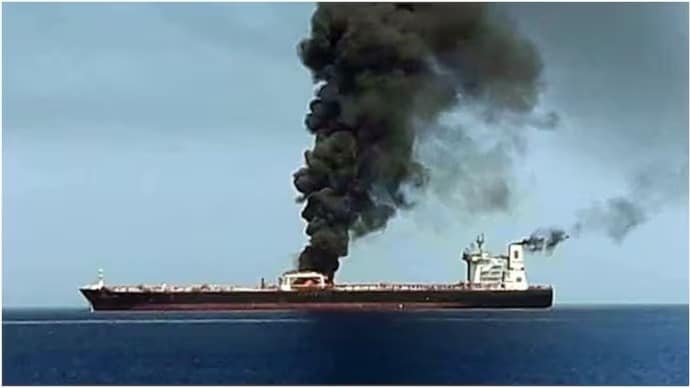
The UAE has accused Iran of attacking commercial shipping in the Strait of Hormuz, saying 15 vessels linked to state oil company ADNOC have been targeted by missiles or Drones since the conflict began.
The United Arab Emirates has condemned what it described as a hostile Iranian attack on a vessel linked to Abu Dhabi’s state-owned oil giant ADNOC while the ship was transiting the Strait of Hormuz, escalating tensions around one of the world’s most important energy corridors.
The UAE Foreign Ministry accused Iran of engaging in what it called “acts of piracy” and said attacks on commercial vessels violated international principles protecting Freedom of Navigation. The ministry also called on Tehran to stop attacks on shipping and fully reopen the strategic waterway.
The latest incident occurred early Saturday, when a vessel associated with ADNOC was reportedly targeted by a missile. UAE state news agency WAM initially quoted ADNOC as saying the situation had been brought under control.
No injuries were reported in the latest incident. Authorities did not identify the vessel or disclose details about its cargo, the extent of any damage or the precise circumstances surrounding the attack.
UAE accuses Iran of targeting commercial shipping
The UAE Foreign Ministry described the incident as a “hostile Iranian attack” and accused Iran’s Islamic Revolutionary Guard Corps of targeting commercial vessels passing through the Strait of Hormuz.
Abu Dhabi said the attacks amounted to a violation of a United Nations Security Council resolution concerning freedom of navigation. It also accused Tehran of using the waterway as a means of applying economic pressure.
The UAE called for an end to attacks on commercial shipping and demanded the Strait of Hormuz be reopened fully and without conditions.
The accusations come against the backdrop of heightened tensions between Iran and its regional and international adversaries. Iran’s Revolutionary Guards have previously warned that vessels associated with countries viewed as hostile to Tehran could face action while transiting the strait.
The latest UAE statement therefore goes beyond a complaint about damage to a single ship. It reflects a broader dispute over whether Iran can restrict or challenge commercial traffic through a waterway that is vital to global Energy Markets.
ADNOC says 15 vessels have been targeted
ADNOC said Friday that its operations had been significantly affected by attacks on its personnel and assets, although the company said it continued working to meet customer requirements under exceptionally difficult conditions.
The company said 15 of its vessels had been targeted by missiles and drones while passing through the Strait of Hormuz since the conflict began. Three of those vessels were targeted during the week in which the latest incident occurred.
According to ADNOC, the earlier incidents resulted in one crew member being killed and 20 others being injured.
The company did not identify those responsible for the previous attacks. The latest UAE government statement, however, directly blamed Iran for the Saturday incident and linked the attacks to Iranian activity in the strait.
ADNOC is one of the UAE’s major energy companies, producing and exporting crude oil, natural gas and refined petroleum products. Any sustained disruption affecting its shipping operations therefore has implications not only for the company but also for the movement of energy from the Gulf to international markets.
Why the Strait of Hormuz matters to global energy markets
The Strait of Hormuz is a narrow maritime passage between Iran and Oman that connects the Persian Gulf with the Gulf of Oman and the wider Arabian Sea.
Its importance comes from the enormous volume of energy that normally moves through the waterway. Before the current conflict, roughly one-fifth of global oil and liquefied natural gas shipments passed through the strait, according to the information provided for the incident.
That makes any serious disruption potentially significant for oil producers, shipping companies, energy traders and countries that depend on Gulf supplies.
The strait is particularly difficult to replace because of the geography of the region. Alternative export routes exist for some producers, but they cannot simply substitute for all of the maritime capacity normally passing through Hormuz.
As a result, even the possibility of prolonged disruption can influence shipping costs and energy-market expectations.
Shipping traffic has fallen sharply
Commercial shipping through the Strait of Hormuz has declined considerably since the war began.
Before Iran closed the waterway following the outbreak of the conflict, around 130 to 140 vessels would typically transit the strait. The latest figures provided show a much lower level of activity.
Only 33 vessels passed through the waterway during the latest week, compared with 50 during the previous week.
The decline illustrates the practical consequences of heightened maritime risk. Even when a route remains physically navigable, ship operators may decide that the security risks, insurance costs and potential delays are too high.
| Indicator | Reported figure |
|---|---|
| Typical vessel traffic before the closure | About 130–140 vessels |
| Vessels transiting in the previous week | 50 |
| Vessels transiting in the latest week | 33 |
| ADNOC vessels reportedly targeted since the conflict began | 15 |
| ADNOC vessels targeted during the latest week | 3 |
| Crew casualties reported by ADNOC | 1 killed, 20 injured |
The figures show how sharply maritime activity has contracted compared with normal traffic levels. They also underline why diplomatic efforts surrounding the reopening of the strait are being watched closely by energy and shipping markets.
Missiles and drones raise a different kind of maritime threat
The reported attacks on ADNOC vessels have involved both missiles and drones, according to the company.
That combination creates a difficult security environment for commercial shipping. Tankers and cargo vessels are large, relatively slow-moving targets, while attacks involving unmanned aircraft can occur without the attacker needing to approach the vessel directly.
For shipping operators, the threat is not limited to the possibility of a vessel being sunk. Even a limited attack can cause casualties, damage equipment, delay a voyage or force a vessel to change course.
The risk can also affect decisions made before a ship enters the waterway. Operators may weigh the value of the cargo against the cost of additional security measures, higher insurance premiums, longer routes or waiting outside the strait.
This helps explain why maritime traffic can fall even when some vessels continue to pass through the waterway.
The latest attack adds pressure on the UAE
The UAE has a direct economic interest in maintaining safe and predictable shipping through the Strait of Hormuz.
Abu Dhabi is a major energy producer and exporter, and ADNOC’s operations depend on reliable transportation infrastructure connecting production facilities with international customers.
Repeated attacks therefore create a double concern. The first is the immediate safety of crews and vessels. The second is the possibility that continued disruption could affect the wider logistics chain supporting energy exports.
The UAE’s strong language reflects that concern. Calling the incidents “acts of piracy” signals that Abu Dhabi views attacks on commercial vessels as a direct challenge to freedom of navigation rather than simply another episode in the wider regional conflict.
Iran’s position and the dispute over navigation
Iran has previously threatened action against vessels passing through the Strait of Hormuz if they are considered linked to its adversaries or fail to comply with Iranian instructions.
That position conflicts directly with the UAE’s demand that commercial shipping be allowed to move through the waterway freely.
The dispute is therefore about more than the security of individual tankers. It concerns control, access and the ability of commercial vessels to use an international maritime route during a military conflict.
For countries dependent on Gulf energy supplies, the outcome has consequences well beyond the immediate region.
Why fewer ships can mean higher costs
A sharp fall in traffic through Hormuz can affect the economics of Global Shipping even if energy production itself continues.
When vessels avoid a high-risk route, they may need to wait, take alternative routes where available or use additional security measures. Each option can increase the cost and time involved in transporting cargo.
Freight rates have already risen as shipping operators respond to the security environment described in the source material.
For energy companies, higher transport costs can eventually feed into the cost of delivering crude oil, natural gas and refined products to customers. For import-dependent economies, prolonged disruption can create additional uncertainty over supply and prices.
The precise effect on consumers and energy prices will depend on how long the disruption lasts, how much shipping capacity remains available and whether diplomatic efforts succeed in restoring normal traffic.
Talks with Oman are being closely watched
Shipping activity is being monitored alongside talks between Iran and Oman that could influence the future of the waterway.
The decline from 50 vessel transits in the previous week to 33 in the latest week suggests that shipping operators remain cautious while the diplomatic situation develops.
A meaningful reopening of the Strait of Hormuz would likely require more than a declaration. Commercial operators need confidence that vessels can Travel without facing a high risk of attack or detention.
That means the security situation and diplomatic negotiations are closely connected. If tensions ease and shipping companies regain confidence, traffic could begin to recover. If attacks continue, operators may remain reluctant to use the route even if the waterway is technically open.
What the ADNOC attacks mean for the wider region
The incidents involving ADNOC vessels highlight how quickly a regional military conflict can spill into commercial transportation.
Oil tankers are not military assets, but their movement can become strategically important when they operate through a contested waterway. An attack on a commercial vessel can therefore have consequences for Diplomacy, energy markets and international shipping at the same time.
The reported death of one crew member and injuries to 20 others also demonstrate that the consequences are not limited to economic disruption. Seafarers working on commercial vessels can become exposed to the risks created by geopolitical confrontation.
For the UAE, protecting those crews and maintaining the movement of energy exports are now closely linked priorities.
What happens next in the Strait of Hormuz?
The next major developments will depend on whether the diplomatic efforts involving Iran and Oman produce progress toward reopening the waterway and whether attacks on commercial shipping continue.
If vessel traffic remains at severely reduced levels, pressure on shipping operators and energy markets could persist. If security conditions improve, companies may gradually restore normal routes.
Another key question is whether the attacks on ADNOC vessels continue. The company’s statement that three of its vessels were targeted in the latest week suggests that the threat remains active rather than being limited to a single isolated incident.
For now, the UAE is demanding an unconditional reopening of the Strait of Hormuz while accusing Iran of deliberately targeting commercial shipping. Iran’s previous warnings about vessels associated with its adversaries provide the broader context for the confrontation, but the immediate priority for shipping companies remains the safety of crews and cargo.
The Strait of Hormuz remains one of the world’s most consequential maritime chokepoints. As long as traffic remains far below its normal level, every new attack, diplomatic statement and negotiation surrounding the waterway will be closely watched by governments, energy producers and shipping markets around the world.
For breaking news and live news updates, like us on Facebook or follow us on Twitter and Instagram. Read more on Latest World on thefoxdaily.com.




COMMENTS 0