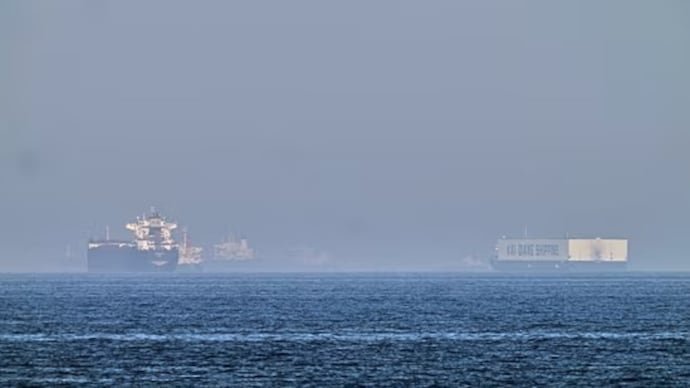
A potentially tragic maritime emergency in the Arabian Sea ended safely after a coordinated rescue operation involving the US Navy, Omani authorities, commercial vessels, and Indian officials helped save 14 Indian Sailors stranded off the coast of Oman.
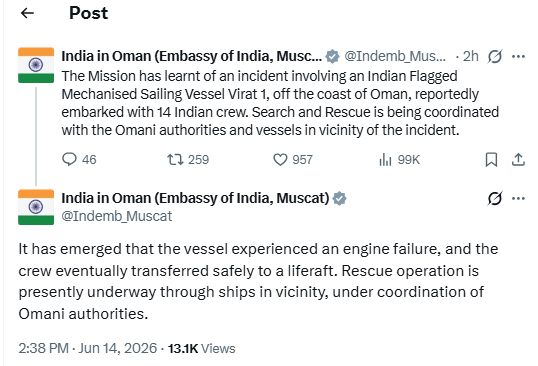
The Indian-flagged vessel Virat 1 suffered a critical engine failure approximately 80 nautical miles east of Ras al Hadd, leaving the crew vulnerable as the dhow began taking on water. The situation quickly escalated into a major maritime emergency, prompting an international response that ultimately ensured the safe evacuation of every crew member aboard.
While the incident occurred amid heightened tensions in the Gulf region and recent attacks on commercial shipping, authorities have clarified that the emergency was caused by a technical malfunction rather than any hostile action.
The rescue operation serves as a powerful example of how maritime safety systems, international naval cooperation, and Emergency Response networks work together to protect lives at sea.
What Happened to Virat 1?
Virat 1, an Indian-flagged Mechanised Sailing Vessel (MSV), experienced engine failure while operating in waters near Oman. The mechanical breakdown left the vessel unable to maneuver effectively, creating a dangerous situation as seawater reportedly began entering the vessel.
Once the crew realized the situation was deteriorating, emergency protocols were initiated.
The 14 Indian sailors aboard were eventually forced to abandon the vessel and transfer to a liferaft while awaiting rescue.
Maritime emergencies involving engine failures can become life-threatening within hours, particularly when vessels are operating far from shore and exposed to changing sea conditions.
Fortunately, emergency alerts were transmitted quickly, enabling authorities to launch a coordinated response before the situation worsened.
Where Did the Incident Occur?
The emergency occurred approximately 80 nautical miles east of Ras al Hadd, a strategically important location along Oman’s eastern coastline.
Ras al Hadd lies near major international shipping lanes connecting:
- The Persian Gulf
- The Gulf of Oman
- The Arabian Sea
- The Indian Ocean
This region serves as a critical maritime gateway for global trade, energy transportation, and commercial shipping.
Thousands of vessels transit through nearby waters annually, making maritime safety a top priority for regional and international authorities.
How the Rescue Operation Unfolded
The rescue operation began after maritime authorities received distress information indicating that Virat 1 was in trouble.
The US Navy played a crucial role in the early stages of the response.
A US Navy P-8 maritime patrol aircraft was deployed to the area to assess the situation and provide immediate assistance.
The aircraft:
- Located the distressed crew
- Monitored the emergency situation
- Deployed a life raft
- Maintained communication with rescue authorities
- Directed nearby vessels toward the location
This rapid aerial response significantly improved the crew’s chances of survival and accelerated rescue coordination.
The Critical Role of the US Navy’s P-8 Aircraft
Modern maritime patrol aircraft are among the most effective tools for search-and-rescue missions.
The P-8 aircraft used during the operation is equipped with advanced surveillance systems capable of locating vessels and individuals across vast stretches of ocean.
Its capabilities include:
- Long-range monitoring
- Real-time communications
- Emergency supply deployment
- Search-and-rescue coordination
- Maritime surveillance
In emergencies occurring far from shore, such aircraft often become the first line of response before rescue ships arrive.
Commercial Shipping Also Played a Key Role
International maritime safety relies heavily on cooperation among nearby vessels.
During the Virat 1 emergency, assistance was also requested from MV Jabal Ali 9, a commercial vessel sailing between Sohar and Mumbai.
The ship altered its operations and proceeded toward the distressed crew’s location.
This type of response reflects longstanding maritime traditions and international conventions that require ships to assist people in distress whenever possible.
For centuries, sailors have relied upon mutual assistance at sea, and modern rescue frameworks continue to uphold this principle.
Understanding What a Mechanised Sailing Vessel Is
Virat 1 belongs to a category known as a Mechanised Sailing Vessel, often referred to as a dhow.
Dhows have been an essential part of trade across the Arabian Sea, Persian Gulf, and Indian Ocean for centuries.
Modern mechanised versions combine traditional vessel designs with engines and navigation equipment.
These vessels are commonly used for:
- Regional cargo transportation
- Coastal trade
- Fishing activities
- Cross-border maritime commerce
Despite technological improvements, smaller commercial vessels remain more vulnerable to mechanical failures and adverse weather conditions than larger modern cargo ships.
Why Engine Failures at Sea Are So Dangerous
Many people underestimate how quickly an engine failure can become a life-threatening emergency.
Without propulsion, vessels lose their ability to:
- Navigate away from hazards
- Maintain stable positioning
- Avoid rough weather
- Reach safe harbors
- Control drift patterns
If a vessel simultaneously begins taking on water, the situation can escalate rapidly.
In remote waters, rescue teams may require several hours to reach the scene, making immediate emergency procedures essential.
Why the Gulf of Oman Is a Strategically Important Maritime Zone
The Gulf of Oman is one of the world’s most significant maritime corridors.
It connects the Arabian Sea to the Strait of Hormuz, through which a substantial portion of Global energy supplies pass every day.
| Strategic Importance | Impact |
|---|---|
| Energy Transportation | Major route for global oil exports |
| Commercial Shipping | Critical trade corridor |
| Naval Operations | Important security zone |
| Regional Connectivity | Links Gulf states with global markets |
| International Trade | Supports global supply chains |
Because of its strategic significance, maritime incidents in the region often attract international attention.
Why Authorities Clarified the Incident Was Not an Attack
The timing of the Virat 1 emergency made clarification particularly important.
The Gulf region has recently experienced increased Security concerns involving commercial vessels.
Recent attacks on merchant ships carrying Indian sailors heightened concerns about maritime safety, causing authorities to closely monitor any emergency involving Indian-flagged vessels.
Officials quickly emphasized that the Virat 1 incident resulted from a mechanical breakdown rather than hostile action.
This distinction was important because geopolitical tensions in the region have already created uncertainty among shipping operators and maritime insurers.
Growing Concerns About Seafarer Safety
The incident also highlights broader concerns regarding the safety of seafarers worldwide.
Millions of sailors work aboard commercial vessels that form the backbone of international trade.
Yet maritime workers routinely face:
- Mechanical failures
- Extreme weather conditions
- Piracy threats
- Geopolitical tensions
- Long periods away from family
- Emergency situations far from shore
The successful rescue of the Virat 1 crew underscores the importance of investing in maritime safety Infrastructure and emergency response capabilities.
India’s Expanding Maritime Interests
India’s involvement in the rescue operation reflects the country’s growing maritime footprint.
As one of the world’s largest trading nations, India increasingly depends on secure sea routes for:
- Energy imports
- Export trade
- Supply chain stability
- Economic growth
The Indian government has also expanded its maritime Diplomacy and naval cooperation initiatives across the Indian Ocean Region.
These efforts aim to improve maritime security, disaster response capabilities, and protection for Indian seafarers working worldwide.
How International Maritime Rescue Networks Work
One of the most remarkable aspects of the Virat 1 incident was the seamless cooperation among multiple stakeholders.
The rescue involved:
- US Navy aviation assets
- Omani maritime authorities
- Commercial shipping operators
- Indian diplomatic officials
- Regional search-and-rescue coordinators
This collaboration demonstrates the effectiveness of global maritime rescue frameworks that transcend political boundaries when lives are at risk.
At sea, emergency response often becomes a shared international responsibility.
Lessons for the Shipping Industry
The Virat 1 emergency offers several important lessons for maritime operators.
- Regular engine maintenance remains critical
- Emergency preparedness saves lives
- Rapid distress reporting is essential
- Crew training must remain a priority
- International coordination improves rescue outcomes
While modern Technology has significantly improved maritime safety, mechanical failures remain an unavoidable risk in shipping operations.
Preparation often determines whether an emergency becomes a tragedy or a successful rescue story.
Future Outlook: Maritime Safety in an Uncertain Region
The successful rescue of all 14 Indian crew members is a positive outcome, but it also serves as a reminder of the challenges facing maritime operations in strategically sensitive regions.
As global trade volumes continue to grow, shipping lanes near Oman, the Gulf of Oman, and the Arabian Sea will remain critically important to international commerce.
Governments, naval forces, and shipping companies are likely to increase investments in maritime surveillance, emergency response systems, and crew safety measures to reduce future risks.
Conclusion
The rescue of the 14 Indian sailors aboard Virat 1 demonstrates how effective international cooperation can save lives during maritime emergencies. After suffering a critical engine failure off the coast of Oman, the crew faced a potentially dangerous situation that required immediate action.
Thanks to the coordinated efforts of the US Navy, Omani authorities, nearby commercial vessels, and Indian officials, all crew members were safely evacuated and brought out of danger.
Beyond the successful rescue itself, the incident highlights the importance of maritime preparedness, regional cooperation, and robust emergency response systems in safeguarding one of the world’s busiest and most strategically important shipping corridors.
As global trade continues to rely heavily on maritime transportation, stories like the rescue of Virat 1 serve as powerful reminders that vigilance, technology, and international collaboration remain essential for keeping the world’s oceans safe.
For breaking news and live news updates, like us on Facebook or follow us on Twitter and Instagram. Read more on Latest World on thefoxdaily.com.






COMMENTS 0