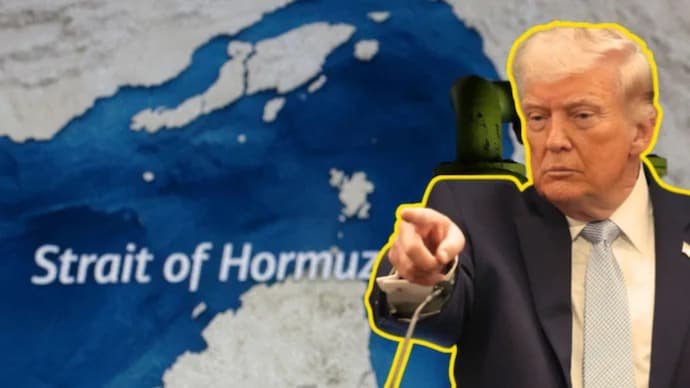
- Understanding the Strait of Hormuz Blockade
- Timeline: How the Situation Escalated
- The Rise of the “Shadow Fleet” Strategy
- How Iran-Linked Ships Are Evading Detection
- Why the Blockade Isn’t Fully Effective
- Global Impact: Why This Matters Beyond the Gulf
- Comparison: Traditional Blockades vs Modern Maritime Evasion
- The Information War Dimension
- Unique Insight: The Future of Sanctions Is Being Rewritten
- Prediction: A New Arms Race at Sea
- Conclusion: A High-Stakes Game with Global Consequences
The Strait of Hormuz blockade has quickly become one of the most consequential geopolitical flashpoints of the decade. Within hours of the United States deploying thousands of troops, warships, and aircraft to enforce restrictions on Iranian oil movement, reports began surfacing that Iran-linked vessels were still slipping through. The situation raises critical questions: Who is winning this maritime chess game? What tactics are being used? Why does it matter globally?
This article explores the how, why, and what next of the unfolding standoff from shadow fleets and spoofed identities to the broader implications for global Energy Markets and international law.
Understanding the Strait of Hormuz Blockade
The Strait of Hormuz is not just another waterway it is the artery of global energy trade. Roughly a quarter of the world’s oil and a significant portion of liquefied petroleum gas (LPG) flows through this narrow corridor connecting the Persian Gulf to the Arabian Sea.
When the United States initiated a blockade targeting Iran-linked Shipping, the goal was clear: cut off Tehran’s oil revenues and reduce its strategic leverage. The move followed the collapse of diplomatic negotiations and marked a shift from economic Sanctions to direct maritime enforcement.
However, what was expected to be a tight naval chokehold is already showing cracks not due to lack of military strength, but because of evolving maritime evasion tactics.
Timeline: How the Situation Escalated
| Event | Details |
|---|---|
| Diplomatic Breakdown | Talks between the US and Iran collapse over key disagreements |
| Blockade Announced | US declares restrictions on Iranian maritime movement |
| Military Deployment | Over 10,000 personnel, warships, and aircraft deployed |
| Initial Enforcement | Ships turned back; early compliance reported |
| Evasion Begins | Iran-linked ships begin bypassing detection systems |
The Rise of the “Shadow Fleet” Strategy
At the heart of this maritime cat-and-mouse game lies a concept known as the shadow fleet. Originally associated with countries under heavy sanctions, this strategy involves operating ships in ways that obscure ownership, identity, and movement.
Iran appears to be adopting and adapting this model with remarkable speed.
What Is a Shadow Fleet?
- Ships with unclear ownership structures
- Frequent changes in flags and registrations
- Use of third-party intermediaries
- Minimal compliance with international tracking norms
This decentralized and opaque system makes enforcement extremely difficult, even for a technologically advanced navy.
How Iran-Linked Ships Are Evading Detection
The real story lies not just in the blockade, but in the innovation of evasion. Iran-linked vessels are using a combination of digital deception and logistical complexity to bypass surveillance.
1. Going Dark: Turning Off AIS Transponders
Most commercial vessels are required to use an Automatic Identification System (AIS) that broadcasts their identity and location. However, ships can simply switch it off effectively disappearing from digital maps.
Why it works: Enforcement relies heavily on tracking data. Without it, ships become harder to monitor in real time.
2. Spoofing: Broadcasting False Data
Some vessels take deception a step further by transmitting fake coordinates or identities. This creates confusion and delays response times.
Example tactics:
- Showing a location hundreds of miles away
- Imitating another legitimate vessel
- Sending conflicting navigation signals
3. “Zombie” Identification Numbers
Ships are reportedly using manipulated or fabricated identification numbers essentially creating ghost identities that cannot be easily verified.
This tactic mirrors earlier strategies seen in other sanctioned economies and highlights a growing trend: identity itself has become a tool of evasion.
4. Complex Ownership Webs
A single ship may be:
- Owned in one country
- Operated from another
- Registered under a third flag
This fragmentation creates legal ambiguity, making it difficult to determine responsibility or enforce penalties.
Why the Blockade Isn’t Fully Effective
Despite overwhelming military presence, the blockade faces structural challenges:
Technology vs Adaptability
While the US relies on advanced surveillance systems, Iran-linked operators rely on flexibility and unpredictability. In asymmetric conflicts, adaptability often trumps raw power.
Legal Constraints
Intercepting vessels in international waters involves complex legal considerations. Not every suspicious ship can be stopped without risking escalation.
Volume of Maritime Traffic
The Strait of Hormuz sees heavy daily traffic. Monitoring every vessel in real time is a logistical challenge, even for the most advanced navies.
Global Impact: Why This Matters Beyond the Gulf
1. Energy Market Volatility
Any disruption in the Strait of Hormuz can send shockwaves through global oil prices. Even partial evasion undermines the intended economic pressure and creates market uncertainty.
2. India and Asian Economies
Countries heavily dependent on Gulf energy imports face heightened risk. Supply disruptions could lead to increased costs and inflationary pressures.
3. Precedent for Future Conflicts
The success of these evasion tactics could inspire similar strategies in other regions, reshaping how sanctions and blockades are enforced globally.
Comparison: Traditional Blockades vs Modern Maritime Evasion
| Aspect | Traditional Blockade | Modern Evasion Scenario |
|---|---|---|
| Tracking | Visual and radar-based | Digital systems (AIS, satellite) |
| Identity | Fixed and verifiable | Flexible and spoofed |
| Enforcement | Direct interception | Data-driven monitoring |
| Challenges | Physical resistance | Digital deception |
The Information War Dimension
Beyond physical evasion, there is also a battle of narratives. Conflicting reports, strategic messaging, and digital propaganda are shaping public perception.
This adds another layer of complexity: control over information can be as powerful as control over territory.
Unique Insight: The Future of Sanctions Is Being Rewritten
What’s unfolding in the Strait of Hormuz is not just a regional conflict it is a blueprint for the future of economic warfare.
Sanctions once relied on financial systems and physical enforcement. Now, they must contend with:
- Decentralized shipping networks
- Digital manipulation tools
- Jurisdictional loopholes
This shift suggests that traditional enforcement mechanisms may be losing effectiveness in a rapidly evolving technological landscape.
Prediction: A New Arms Race at Sea
The next phase of this conflict is likely to involve:
- Advanced AI-driven tracking systems
- Stricter international maritime regulations
- Increased cyber warfare targeting shipping infrastructure
In response, evasion tactics will also evolve, leading to a continuous cycle of adaptation a maritime arms race driven by technology.
Conclusion: A High-Stakes Game with Global Consequences
The Strait of Hormuz blockade highlights a fundamental truth of modern Geopolitics: power is no longer just about military strength it’s about adaptability, technology, and strategy.
While the United States has demonstrated its ability to project force, Iran-linked networks have shown that even the most sophisticated systems can be challenged through innovation.
The outcome of this standoff will not only shape regional dynamics but also redefine how nations approach sanctions, trade, and maritime security in the years ahead.
In a world where ships can vanish, identities can be fabricated, and data can deceive control of the seas is no longer guaranteed.
For breaking news and live news updates, like us on Facebook or follow us on Twitter and Instagram. Read more on Latest World on thefoxdaily.com.





COMMENTS 0