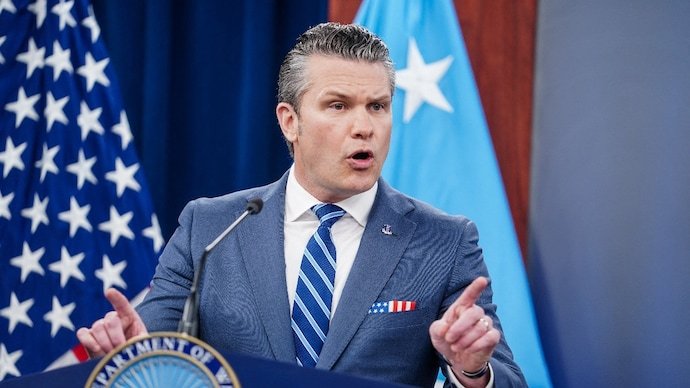
The evolving relationship between the United States and Pakistan has once again moved into the geopolitical spotlight after US Defense Secretary Pete Hegseth publicly praised Pakistan’s civilian and Military leadership, describing the growing ties between Washington and Islamabad as an important development for regional stability.
Speaking at the Shangri-La Dialogue in Singapore, one of Asia’s most influential security forums, Hegseth highlighted what he called a “true friendship” between US President Donald Trump and Pakistan’s leadership. His comments have attracted significant attention across South Asia because they suggest a potential recalibration of US engagement in the region at a time when geopolitical competition, military modernization, and strategic alliances are rapidly evolving.
The remarks are particularly noteworthy because they come amid growing US-China rivalry, changing security dynamics in the Indo-Pacific, and ongoing efforts by Washington to maintain strong relationships with both India and Pakistan despite their long-standing tensions.
What Did Pete Hegseth Say About Pakistan?
During a discussion focused on regional security and strategic stability, Hegseth praised Pakistan’s leadership and highlighted what he described as a constructive role being played by the country’s military and civilian authorities.
Referring to Pakistan Army Chief Field Marshal Asim Munir and Prime Minister Shehbaz Sharif, Hegseth suggested that Islamabad was contributing positively to efforts aimed at maintaining peace and reducing tensions in South Asia.
He characterized the strengthening relationship between Washington and Islamabad as an “unexpected development” and emphasized its growing importance in the broader regional security framework.
The comments indicate that the United States sees value in maintaining active engagement with Pakistan despite years of fluctuating relations marked by cooperation, distrust, and shifting strategic priorities.
Why the Remarks Matter
Statements by a US Defense Secretary carry significant diplomatic weight, particularly when they concern nuclear-armed nations located in one of the world’s most strategically sensitive regions.
For much of the past decade, analysts frequently described US-Pakistan relations as strained. Washington increasingly focused on strengthening ties with India while disagreements emerged over counterterrorism cooperation, Afghanistan policy, and regional security concerns.
Hegseth’s comments suggest that the relationship may be entering a new phase characterized by greater engagement and pragmatic cooperation.
While the remarks do not necessarily indicate a dramatic policy shift, they do signal an effort by Washington to maintain productive relationships with multiple regional stakeholders rather than viewing South Asian Diplomacy through a zero-sum lens.
The Historical Context of US-Pakistan Relations
Relations between the United States and Pakistan have experienced several cycles over the past seven decades.
During the Cold War, Pakistan was an important US ally and participated in Western-backed security arrangements. Following the Soviet invasion of Afghanistan in 1979, cooperation deepened significantly as both countries supported efforts against Soviet forces.
After the September 11 attacks in 2001, Pakistan again became a critical partner in America’s counterterrorism strategy.
However, the relationship often faced challenges arising from differing strategic objectives, regional rivalries, and mutual concerns over security issues.
| Period | Key Development |
|---|---|
| 1950s–1980s | Cold War alliance and military cooperation |
| 1980s | Joint efforts during Soviet-Afghan conflict |
| 2001–2021 | Counterterrorism partnership after 9/11 |
| 2021–2025 | Reduced engagement after US withdrawal from Afghanistan |
| 2026 | Renewed emphasis on strategic cooperation |
The Significance of Asim Munir’s Growing International Profile
One of the most important aspects of Hegseth’s remarks was his direct reference to Field Marshal Asim Munir.
As Pakistan’s military chief, Munir occupies one of the country’s most influential positions. The military continues to play a central role in Pakistan’s security policy, foreign relations, and strategic decision-making.
Recognition from senior US officials can enhance the international profile of military leaders and may indicate closer communication channels between defense establishments.
For Pakistan, such recognition could be viewed as validation of its efforts to remain a significant strategic actor in regional affairs.
US Claims of Supporting Regional Stability
Hegseth also referenced efforts aimed at promoting peace and reducing tensions in South Asia.
Regional stability remains a priority for Washington because South Asia contains two nuclear-armed rivals whose relationship has periodically experienced military crises.
Any reduction in tensions between India and Pakistan is generally viewed positively by international policymakers due to the potential consequences of escalation.
The United States has historically supported diplomatic engagement, confidence-building measures, and crisis management efforts intended to prevent conflicts from spiraling out of control.
The Missile Question and Hegseth’s Clarification
One of the most closely watched moments during the discussion came when Hegseth addressed questions regarding missile capabilities in South Asia.
Asked whether India or Pakistan posed a missile threat to the United States, he responded that Washington does not currently regard either nation as a direct missile threat.
The statement is significant because strategic missile programs often influence international security assessments and defense planning.
Hegseth emphasized that both countries face legitimate security concerns and are likely to continue maintaining deterrence capabilities aimed primarily at preserving regional strategic balance.
His comments appeared intended to reduce speculation about potential tensions between Washington and either South Asian power over missile development programs.
How This Differs From Earlier US Security Discussions
The remarks gained additional attention because they came after earlier discussions within the US national security establishment about global missile proliferation.
Previous assessments by American intelligence officials had highlighted the continued advancement of missile technologies by various countries around the world.
By emphasizing that neither India nor Pakistan is currently viewed as a direct missile threat to the United States, Hegseth appeared to draw a distinction between long-term technological developments and immediate security concerns.
This distinction reflects the nuanced nature of modern strategic assessments, where capability and intent are evaluated separately.
The US-India Strategic Partnership Remains Strong
While praising Pakistan, Hegseth was equally clear in reaffirming the importance of India’s relationship with the United States.
He described India as a critical anchor in South Asia and highlighted expanding defense cooperation between the two countries.
This is a crucial point because Washington’s engagement with Pakistan does not appear to be coming at the expense of its partnership with India.
Instead, US policymakers increasingly emphasize the ability to maintain productive relations with both nations simultaneously.
The approach reflects a broader strategy of engaging multiple regional powers rather than relying exclusively on a single partner.
Growing Defense Cooperation Between India and the United States
Defense cooperation remains one of the strongest pillars of US-India relations.
Recent years have witnessed expanding military exercises, technology-sharing agreements, maritime security cooperation, and joint defense initiatives.
Hegseth specifically referenced plans involving the co-production of Javelin anti-tank guided munitions and increased collaboration in the Indian Ocean region.
These initiatives highlight how defense ties have evolved beyond simple arms purchases into deeper industrial and technological partnerships.
| US-Pakistan Cooperation Areas | US-India Cooperation Areas |
|---|---|
| Regional stability | Defense technology |
| Security dialogue | Military modernization |
| Counterterrorism engagement | Joint military exercises |
| Strategic communication | Indian Ocean cooperation |
| Diplomatic coordination | Defense manufacturing partnerships |
The Bigger Geopolitical Picture
Understanding Hegseth’s comments requires looking beyond bilateral relationships.
The Indo-Pacific region has become the central arena of global strategic competition. The United States is seeking to strengthen partnerships across Asia while maintaining regional stability.
In this context, both India and Pakistan occupy important geographic and strategic positions.
India is increasingly viewed as a major economic and security partner, while Pakistan remains significant due to its location, military capabilities, and influence in regional affairs.
Maintaining constructive relations with both countries provides Washington with greater diplomatic flexibility.
What Pakistan Stands to Gain
For Pakistan, warmer relations with the United States could provide several benefits.
- Greater diplomatic engagement.
- Enhanced security cooperation.
- Improved international standing.
- Expanded economic opportunities.
- Stronger channels for strategic dialogue.
At a time when countries are increasingly navigating complex geopolitical rivalries, maintaining strong relationships with major global powers can offer significant advantages.
What India Should Watch
India is unlikely to view the renewed US-Pakistan engagement as a major threat, particularly given the depth of its own partnership with Washington.
However, Indian policymakers will closely monitor developments to ensure that evolving US-Pakistan relations do not alter the broader strategic balance in the region.
Historically, India has favored transparency regarding defense cooperation and security arrangements involving neighboring countries.
The key question will be whether improved US-Pakistan relations remain focused on regional stability or evolve into broader strategic cooperation.
Future Outlook: A More Balanced US Approach to South Asia?
Hegseth’s remarks may signal an emerging trend in American diplomacy toward South Asia.
Rather than choosing between regional partners, Washington appears increasingly interested in maintaining strong relationships with multiple countries simultaneously.
This approach aligns with broader US objectives of promoting stability, encouraging economic growth, and preventing security crises in strategically important regions.
Whether the current warming trend between Washington and Islamabad develops into a long-term strategic partnership will depend on future cooperation, regional developments, and shared interests.
Conclusion
US Defense Secretary Pete Hegseth’s praise for Pakistan’s leadership and his characterization of growing ties as a “true friendship” mark a notable moment in South Asian diplomacy. His remarks suggest that Washington sees renewed value in engaging Islamabad while simultaneously deepening its already strong partnership with India.
The comments underscore a broader reality of modern Geopolitics: relationships are no longer defined solely by alliances or rivalries but increasingly by strategic flexibility and shared interests. As regional security dynamics continue to evolve, the United States appears determined to maintain productive ties with both of South Asia’s most influential nations.
For Pakistan, the statements offer diplomatic encouragement. For India, they reaffirm that Washington remains committed to its strategic partnership. And for the wider region, they highlight the continuing importance of dialogue, stability, and balanced engagement in an increasingly complex geopolitical landscape.
For breaking news and live news updates, like us on Facebook or follow us on Twitter and Instagram. Read more on Latest World on thefoxdaily.com.





COMMENTS 0