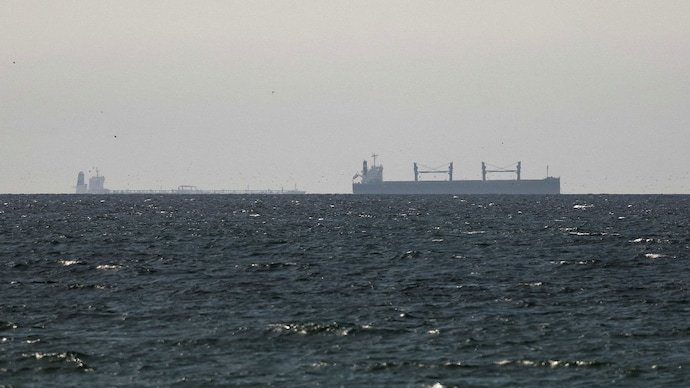
- Rich Starry Forced to Retreat Amid US Naval Enforcement
- Sanctions and Ownership Raise Stakes
- US Navy Intercepts Tankers Near Iranian Ports
- Strait of Hormuz: A Critical Global Chokepoint
- Other Tankers Continue Movements Under Uncertainty
- Impact on Global Shipping and Energy Markets
- Geopolitical Tensions Drive Policy Decisions
- Conclusion: A High-Stakes Maritime Standoff
A US-sanctioned Chinese-owned tanker, Rich Starry, was forced to reverse course and head back toward the Strait of Hormuz after failing to break through a newly imposed US blockade on vessels linked to Iranian ports. The development comes just days after US President Donald Trump announced the blockade following unsuccessful Peace Talks between the United States and Iran in Islamabad, intensifying uncertainty across global shipping and energy markets.
Rich Starry Forced to Retreat Amid US Naval Enforcement
Shipping data revealed that the tanker Rich Starry attempted to navigate out of the Gulf but ultimately turned back on Wednesday, unable to pass through US naval restrictions. The vessel had been among several ships moving through the region on the first day of the blockade.
According to US Central Command, no ships successfully crossed the blockade within the first 24 hours. Several vessels were instructed to turn back, with at least six complying and returning toward Iranian waters.
“During the first 24 hours, no ships made it past the US blockade,” US Central Command stated, underscoring the strict enforcement of the new maritime restrictions.
The Rich Starry, a medium-range tanker, was carrying approximately 250,000 barrels of methanol. The cargo had been loaded at Hamriyah port in the United Arab Emirates, making its journey particularly significant in terms of regional trade flows.
Sanctions and Ownership Raise Stakes
The tanker and its owner, Shanghai Xuanrun Shipping Co, are already under US Sanctions due to alleged dealings with Iran. This added layer of restriction likely contributed to the vessel’s inability to pass through the blockade.
Sanctions have increasingly targeted shipping networks suspected of facilitating Iranian oil and chemical exports, placing companies and vessels under intense scrutiny. In this case, the combination of sanctions and active naval enforcement created a near-impossible passage for the tanker.
US Navy Intercepts Tankers Near Iranian Ports
In a further escalation, a US destroyer intercepted two oil tankers attempting to leave Iran’s Chabahar Port on the Gulf of Oman. The move signals a more aggressive operational stance by US forces in enforcing the blockade.
Chabahar, a strategically important port, has been a key hub for regional trade. Blocking outgoing vessels from this location represents a significant tightening of maritime controls in the region.
Strait of Hormuz: A Critical Global Chokepoint
The Strait of Hormuz remains one of the most vital maritime corridors in the world, handling a significant portion of global oil shipments. Any disruption in this narrow passage has immediate ripple effects across international energy markets.
Before the escalation of tensions and the onset of conflict involving the US, Israel, and Iran, the strait saw over 130 vessel crossings daily. However, recent developments have reduced traffic to only a fraction of that number.
| Metric | Before Conflict | Current Situation |
|---|---|---|
| Daily Ship Crossings | 130+ vessels | Significantly reduced |
| Blockade Success Rate | Not applicable | 100% enforcement in first 24 hours |
| Major Cargo Type | Crude oil, chemicals | Limited, restricted movement |
The sharp decline in traffic reflects both security concerns and compliance with US directives, as ship operators seek to avoid confrontation or penalties.
Other Tankers Continue Movements Under Uncertainty
Despite the heightened risks, some vessels are still attempting to navigate the region. The Very Large Crude Carrier Alicia, another US-sanctioned tanker, was reported entering the Gulf via the Strait of Hormuz. Unlike Rich Starry, Alicia is currently empty and heading toward Iraq to load crude oil.
Similarly, the Malta-flagged VLCC Agios Fanourios I made a second attempt to transit through the strait. The vessel is expected to load Basra crude destined for Vietnam’s Nghi Son refinery, indicating that some trade routes remain operational despite the risks.
However, these movements are being closely monitored, and the situation remains fluid as geopolitical tensions continue to evolve.
Impact on Global Shipping and Energy Markets
The blockade has introduced a new layer of uncertainty for global shipping companies, oil producers, and insurers. War risk premiums are likely to rise, and shipping routes may need to be adjusted to avoid restricted zones.
For energy markets, even minor disruptions in the Strait of Hormuz can lead to price volatility. The region’s importance means that any sustained blockade or conflict could have far-reaching economic consequences.
Industry stakeholders are now closely watching developments, weighing the risks of continuing operations in the region against the potential costs of rerouting or halting shipments altogether.
Geopolitical Tensions Drive Policy Decisions
The blockade follows failed diplomatic efforts between the United States and Iran, highlighting the fragile nature of negotiations in the region. With no immediate resolution in sight, military and economic measures are increasingly shaping the situation.
The involvement of multiple countries, including china through its shipping interests, adds another layer of complexity. As global powers intersect in this strategic region, the stakes continue to rise.
Conclusion: A High-Stakes Maritime Standoff
The retreat of the Rich Starry tanker underscores the effectiveness of the US blockade while also highlighting the growing risks for global shipping in the region. With strict enforcement preventing vessels from passing through, the Strait of Hormuz has once again become a focal point of geopolitical tension.
Looking ahead, the situation remains highly uncertain. Continued enforcement of the blockade, combined with unresolved diplomatic tensions, could further disrupt global trade and energy supplies. For now, shipping companies and governments alike are navigating a delicate balance between economic necessity and geopolitical risk.
For breaking news and live news updates, like us on Facebook or follow us on Twitter and Instagram. Read more on Latest World on thefoxdaily.com.





COMMENTS 0