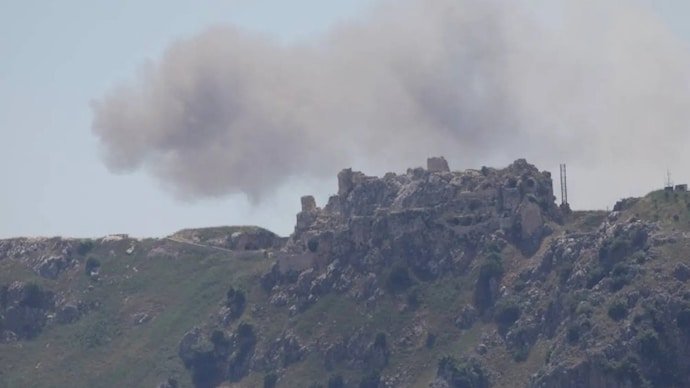
Israeli forces have announced the capture of the historic Beaufort Castle and its surrounding ridge in southern Lebanon, describing the operation as a major step in efforts to weaken Hezbollah‘s military infrastructure near Israel‘s northern border. The move comes despite a ceasefire that was announced more than six weeks ago and highlights the fragile nature of security arrangements in the region.
The seizure of one of the Middle East‘s most iconic medieval fortresses is not only a military event but also a development with broader geopolitical implications. Located on a commanding hilltop overlooking large parts of southern Lebanon and northern Israel, Beaufort Castle has long been regarded as one of the most strategically valuable positions in the area.
As tensions continue between Israel and the Iran-backed Hezbollah movement, the operation raises fresh questions about the future of the ceasefire, regional stability, and the evolving balance of power along one of the world’s most volatile frontiers.
What Happened at Beaufort Castle?
According to the Israeli military, troops successfully captured Beaufort Castle and the surrounding Beaufort Ridge during an operation aimed at disrupting Hezbollah positions and reducing threats to northern Israeli communities.
The military stated that forces focused on securing:
- Beaufort Ridge
- Wadi al-Saluki area
- Hezbollah launch infrastructure
- Observation and firing positions
- Strategic high-ground locations
Israeli officials said the area had been used for launching attacks and maintaining military infrastructure associated with Hezbollah. The operation reportedly resulted in the death of one Israeli soldier.
Neither Hezbollah nor Lebanese authorities immediately issued detailed responses regarding the reported capture.
The History of Beaufort Castle: A Fortress Built for War
Beaufort Castle is far more than a military position. It is one of the most historically significant fortresses in the Levant.
Constructed approximately 900 years ago during the Crusader era, the castle has witnessed centuries of conflict involving Crusaders, Muslim dynasties, Ottoman forces, European powers, and modern armies.
Perched atop a steep hill approximately 700 meters above sea level, the fortress commands sweeping views of the surrounding countryside, making it an ideal defensive position.
Over the centuries, whoever controlled Beaufort Castle gained a substantial military advantage due to its ability to monitor troop movements and supply routes across a vast area.
Why Beaufort Castle Is Strategically Important
The castle’s military value stems primarily from geography.
From its elevated position, forces can observe large sections of:
- Southern Lebanon
- The Litani River region
- Northern Israel
- Cross-border movement corridors
- Key transportation routes
Military planners often prioritize high ground because it provides superior surveillance capabilities and defensive advantages.
In modern warfare, such locations remain valuable despite advances in satellite technology and aerial reconnaissance.
The Military Significance of the Beaufort Ridge
The ridge surrounding the castle is arguably as important as the fortress itself.
The Beaufort Ridge forms part of a network of elevated terrain that dominates much of southern Lebanon.
| Strategic Feature | Military Advantage |
|---|---|
| High Elevation | Enhanced surveillance capabilities |
| Wide Visibility | Observation of troop movements |
| Natural Defenses | Difficult for opposing forces to attack |
| Border Proximity | Direct oversight of northern Israel |
| Communication Control | Potential monitoring of regional activity |
Control of such terrain can significantly influence Military Operations, particularly in a region characterized by hills, valleys, and complex geography.
Hezbollah’s Role in Southern Lebanon
Hezbollah remains one of the most influential political and military organizations in Lebanon.
Founded during the 1980s, the group has evolved into a powerful force with political representation, social programs, and substantial military capabilities.
Southern Lebanon has historically served as one of Hezbollah’s strongest areas of support and operational activity.
The region’s proximity to Israel has made it a central theater in multiple conflicts over the past several decades.
Israeli officials argue that Hezbollah has used parts of southern Lebanon to establish military infrastructure, stockpile weapons, and launch attacks across the border.
Hezbollah, meanwhile, presents itself as a resistance movement focused on defending Lebanon against external threats.
How Recent Escalations Led to the Operation
The capture of Beaufort Castle did not occur in isolation.
According to Israeli accounts, the operation followed one of the most intense periods of Hezbollah fire toward northern Israel since the ceasefire was announced.
The escalation reportedly led to:
- School closures
- Security restrictions
- Heightened military readiness
- Cross-border tensions
- Expanded operational planning
Israeli military leaders argued that action was necessary to reduce the threat posed by launch sites and observation posts positioned near the border.
The Fragile Nature of the Ceasefire
One of the most striking aspects of the operation is that it occurred despite an existing ceasefire.
Ceasefires in the Middle East often reduce large-scale fighting but do not necessarily eliminate military activity altogether.
In many cases, both sides continue conducting operations they consider defensive or preventive.
This creates a situation where:
- Official ceasefires remain in place.
- Military operations continue.
- Tensions remain elevated.
- The risk of escalation persists.
The latest developments illustrate how ceasefires can stabilize conflicts without fully resolving their underlying causes.
A Comparison With Previous Israeli Operations in Lebanon
Israel has conducted numerous military operations in Lebanon over the past several decades.
| Period | Primary Objective |
|---|---|
| 1980s | Establish security buffer zones |
| 1990s | Counter guerrilla operations |
| 2006 Conflict | Degrade Hezbollah capabilities |
| Recent Operations | Target infrastructure and launch sites |
| Current Advance | Secure strategic high ground |
The current operation differs from some previous campaigns because it focuses heavily on controlling terrain that provides long-term tactical advantages rather than conducting short-duration strikes.
The Iran Factor in the Conflict
Iran’s relationship with Hezbollah remains a central element in the broader regional equation.
Israeli officials frequently describe Hezbollah as part of a wider network of Iranian-aligned groups operating across the Middle East.
This perception influences Israeli security planning and helps explain why developments in Lebanon are often viewed through a broader regional lens.
For Israel, actions against Hezbollah are not solely about border security but also about limiting the influence of actors it considers strategic adversaries.
Impact on Lebanese Communities
Military operations in southern Lebanon inevitably affect local communities.
Residents in border regions often face:
- Security concerns
- Economic disruption
- Infrastructure damage
- Population displacement risks
- Reduced commercial activity
The uncertainty created by recurring tensions can have lasting consequences for development, investment, and daily life.
Many communities in the area have experienced multiple cycles of conflict over the years, making stability an ongoing challenge.
A Unique Insight: Why High Ground Still Matters in Modern Warfare
One overlooked aspect of this development is the enduring importance of geography.
In an age of satellites, drones, Artificial Intelligence, and advanced surveillance technologies, it may seem surprising that armies continue to fight for hilltops and ridges.
Yet military history repeatedly demonstrates that terrain remains a force multiplier.
High ground provides visibility, defensive strength, communication advantages, and operational flexibility. Even modern armies equipped with sophisticated technology continue to prioritize strategic elevations because geography amplifies military effectiveness.
The battle for Beaufort Castle serves as a reminder that while technology evolves, some fundamentals of warfare remain remarkably consistent.
What This Means for Regional Security
The capture of Beaufort Castle could have implications beyond the immediate tactical gains.
Potential consequences include:
- Increased Israeli military presence in the area
- Potential Hezbollah countermeasures
- Renewed diplomatic efforts to stabilize the border
- Heightened regional security concerns
- Greater international attention on southern Lebanon
Whether the operation remains limited or contributes to a broader escalation will depend largely on the actions taken by both sides in the coming weeks.
Future Outlook
The seizure of Beaufort Castle represents one of the most significant developments along the Israel-Lebanon front in recent months. While the immediate objective appears to be securing strategic terrain and reducing perceived threats from Hezbollah infrastructure, the long-term implications remain uncertain.
The operation demonstrates that despite ceasefire arrangements, the conflict environment remains highly fluid. Both Israel and Hezbollah continue to view security challenges through strategic and military lenses, making sustained stability difficult to achieve.
As regional actors assess the situation, attention will focus on whether the capture of the fortress becomes a temporary tactical success or a catalyst for broader developments in southern Lebanon.
Conclusion
Israel’s capture of the 900-year-old Beaufort Castle highlights the continuing strategic importance of southern Lebanon and the enduring tensions between Israel and Hezbollah. Beyond its historical significance, the fortress offers commanding military advantages that make it one of the most valuable positions in the region.
The operation underscores the fragile nature of existing ceasefire arrangements and reflects the broader security challenges facing the Middle East. As both sides evaluate their next steps, the future of the border region will depend on whether military actions give way to greater stability or lead to renewed confrontation. For now, Beaufort Castle once again stands at the center of a conflict that has shaped the region for generations.
For breaking news and live news updates, like us on Facebook or follow us on Twitter and Instagram. Read more on Latest World on thefoxdaily.com.






COMMENTS 0