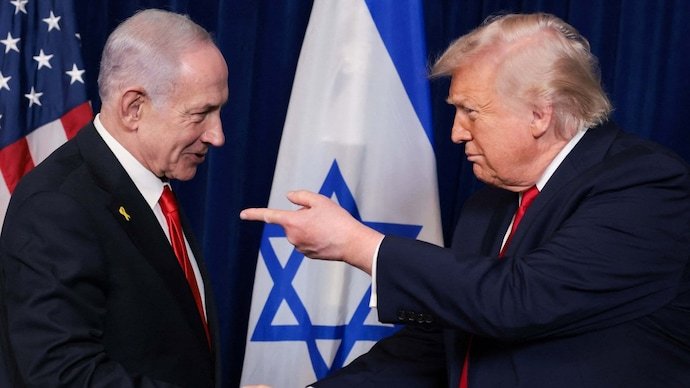
The relationship between the United States and Israel has long been considered one of the strongest strategic partnerships in modern Geopolitics. Yet the latest confrontation involving Israel, Iran, Lebanon, and the broader Middle East has revealed visible cracks in what was once seen as an unshakable alliance.
At the centre of the debate is a critical question: Has Benjamin Netanyahu effectively ignored Donald Trump‘s calls for restraint, or is this part of a larger coordinated strategy?
The issue gained international attention after Trump publicly stated that he was leading negotiations with Iran and that Israel would ultimately have to accept any agreement reached by Washington. Days later, Israeli military operations in Lebanon and subsequent strikes linked to Iranian targets appeared to contradict the White House’s preference for de-escalation.
The developments have reignited discussions about the limits of American influence over Israel, the future of US-Iran diplomacy, and the possibility of a broader regional conflict.
The Latest Israel-Iran Escalation Explained: Who, What, When, Where, Why and How
The latest crisis emerged after Israeli military strikes targeted Hezbollah-linked positions in Beirut‘s southern suburbs. Hezbollah, backed by Iran, remains one of Israel’s most significant security concerns and plays a central role in Tehran’s regional influence strategy.
Iran viewed the attacks as a violation of broader ceasefire understandings that had helped reduce tensions following months of conflict. In response, Tehran launched missiles toward Israel, triggering another cycle of retaliation.
Israel subsequently conducted strikes against targets inside Iran, including military and industrial infrastructure allegedly connected to missile programs. The exchange marked one of the most serious confrontations since the ceasefire arrangements that took effect earlier in the year.
While military exchanges between Israel and Iranian-backed groups are not new, the timing is particularly significant because it comes during active diplomatic efforts aimed at reducing tensions.
Why Donald Trump Wants a Nuclear Deal and Regional Stability
For the Trump administration, preventing a wider Middle East war has become increasingly important for several strategic, economic, and political reasons.
Protecting Global Energy Markets
The Middle East remains a critical supplier of oil to the global economy. Any major conflict involving Iran threatens shipping routes through the Strait of Hormuz, one of the world’s most important energy chokepoints.
According to data from international energy agencies, roughly one-fifth of the world’s petroleum consumption passes through this narrow waterway. Any disruption can trigger immediate spikes in oil prices, increasing inflation worldwide.
For countries like India, which import a significant portion of their crude oil requirements, higher oil prices can directly affect inflation, trade deficits, and economic growth.
Avoiding Another Costly Military Conflict
The United States has spent decades and trillions of dollars involved in conflicts across the Middle East. American voters across the political spectrum have increasingly shown fatigue toward prolonged overseas military engagements.
A diplomatic breakthrough with Iran would allow Washington to claim success without becoming directly involved in another large-scale conflict.
Maintaining Economic Stability
Financial markets generally react negatively to geopolitical uncertainty. Escalating tensions in the Middle East can affect stock markets, global trade routes, commodity prices, and investor confidence.
Trump’s push for diplomacy aligns with broader efforts to preserve economic stability while reducing regional security risks.
Why Netanyahu Believes Military Pressure Is Necessary
Israel’s security calculations differ significantly from those of the United States because Israel faces direct and immediate threats from hostile actors operating near its borders.
For Israeli policymakers, Iran represents more than a diplomatic challenge. It is viewed as a long-term strategic threat due to its missile capabilities, support for proxy groups, and nuclear ambitions.
Israeli governments across different political eras have consistently argued that military preparedness and deterrence remain essential national security tools.
From Jerusalem’s perspective, relying solely on negotiations may provide adversaries with additional time to strengthen military infrastructure.
This strategic outlook explains why Israel often reserves the right to take unilateral military action, even when allies advocate restraint.
The History of US-Israel Disagreements Over Security
Although the United States and Israel remain close allies, disagreements over military strategy are not new.
| Year | Event | Strategic Objective |
|---|---|---|
| 1981 | Operation Opera | Destruction of Iraq’s Osirak nuclear reactor |
| 2007 | Operation Orchard | Strike on suspected Syrian nuclear facility |
| 2010s–2020s | Repeated Syria Operations | Prevent advanced weapons transfers to Hezbollah |
| 2026 | Iran-Related Operations | Target military and missile-linked infrastructure |
These operations demonstrate a consistent Israeli doctrine: when leaders perceive an existential security threat, they often act regardless of international criticism.
Has Netanyahu Really Gone Rogue?
The phrase “gone rogue” suggests a complete break from American influence. The reality is likely more nuanced.
There is clear evidence of tactical disagreements between Washington and Jerusalem. Trump has repeatedly emphasized diplomacy and de-escalation, while Netanyahu continues to stress military readiness and deterrence.
However, both governments still share broader objectives, including preventing Iran from gaining strategic advantages and maintaining regional security.
The disagreement appears less about goals and more about methods.
Trump believes negotiations can reduce tensions. Netanyahu appears skeptical that diplomacy alone can address long-term security concerns.
As a result, the two leaders may be pursuing parallel strategies that occasionally collide.
The Domestic Political Pressures Driving Both Leaders
Foreign policy decisions are rarely shaped by international considerations alone. Domestic politics often play a major role.
For Trump, securing a diplomatic achievement with Iran could strengthen his image as a dealmaker capable of resolving complex international disputes.
For Netanyahu, demonstrating strength against Iran remains politically important within Israel’s highly competitive political environment.
Israeli voters traditionally place significant emphasis on national security issues. Any perception of weakness can quickly become a political liability.
This political reality helps explain why Israeli leaders often prioritize visible security actions during periods of heightened regional tension.
How Iran Is Navigating the Crisis
Iran faces its own strategic balancing act.
On one hand, Tehran wants to project strength and demonstrate that attacks against its interests will not go unanswered. On the other hand, Iranian leaders understand that a full-scale regional war could have devastating economic and military consequences.
Iran’s approach often combines military signaling with diplomatic engagement. Missile launches, proxy activity, and strong public rhetoric are frequently paired with messages indicating openness to negotiations.
This dual-track strategy allows Tehran to maintain deterrence while preserving diplomatic options.
Why Lebanon Has Become a Critical Flashpoint
The latest crisis highlights the growing importance of Lebanon in the broader Israel-Iran confrontation.
Hezbollah remains one of the most heavily armed non-state actors in the world and serves as a key component of Iran’s regional deterrence network.
Because of Hezbollah’s close ties to Tehran, Israeli military operations in Lebanon are often interpreted by Iran as direct challenges to its regional influence.
This dynamic makes Lebanon one of the most sensitive theatres in the Middle East security landscape.
Any escalation involving Hezbollah carries the risk of drawing additional actors into the conflict.
The Economic Consequences the World Cannot Ignore
Even limited military confrontations between Israel and Iran can produce significant global economic effects.
- Higher crude oil prices
- Increased shipping and insurance costs
- Pressure on global inflation
- Volatility in stock markets
- Disruptions to international trade
- Reduced investor confidence
Energy markets remain particularly sensitive because the Middle East continues to play a central role in global oil supply chains.
For emerging economies such as India, prolonged instability could increase import costs and complicate economic planning.
The Bigger Story: Is American Influence in the Middle East Changing?
One perspective often missing from daily news coverage is the broader transformation taking place across the region.
The debate should not focus solely on whether Trump controls Netanyahu or whether Netanyahu is ignoring Washington.
The more important question may be whether traditional American influence in the Middle East is evolving.
Regional powers today possess stronger military capabilities, greater economic resources, and more independent foreign policy ambitions than they did decades ago.
Countries such as Israel, Iran, Saudi Arabia, Turkey, and the United Arab Emirates increasingly pursue policies driven by national interests rather than simply aligning with Washington’s preferences.
This shift represents one of the most significant geopolitical developments of the 21st century.
Potential Scenarios for the Months Ahead
Scenario One: Diplomatic Breakthrough
Trump successfully secures an agreement with Iran, reducing immediate tensions and creating space for broader regional stability.
Scenario Two: Controlled Confrontation
Israel and Iran continue limited military exchanges while carefully avoiding actions that could trigger a full-scale war.
Scenario Three: Wider Regional Conflict
A miscalculation, accidental escalation, or major attack could draw additional regional actors into the confrontation, creating a much larger crisis.
Most analysts currently view controlled confrontation as the most likely short-term outcome because all major stakeholders face significant costs from a wider war.
Conclusion: A Defining Moment for the US-Israel Relationship
The latest Israel-Iran crisis has evolved into more than a military confrontation. It has become a test of diplomacy, alliance management, regional power dynamics, and geopolitical influence.
Donald Trump is pursuing negotiations designed to reduce tensions and avoid another destabilizing Middle East Conflict. Benjamin Netanyahu appears determined to preserve Israel’s ability to act independently against what it perceives as existential threats.
Whether this represents open defiance, strategic disagreement, or a coordinated diplomatic strategy remains unclear. What is certain is that the relationship between Washington and Jerusalem is facing one of its most significant challenges in recent years.
The outcome will influence not only Israel-Iran relations but also global energy markets, international diplomacy, and the future balance of power across the Middle East.
As missiles, diplomacy, political calculations, and strategic interests collide, the world is witnessing a critical moment that could shape regional security for years to come. The coming weeks may reveal whether diplomacy can prevail over confrontation or whether the Middle East is entering another dangerous chapter of uncertainty.
For breaking news and live news updates, like us on Facebook or follow us on Twitter and Instagram. Read more on Latest World on thefoxdaily.com.






COMMENTS 0