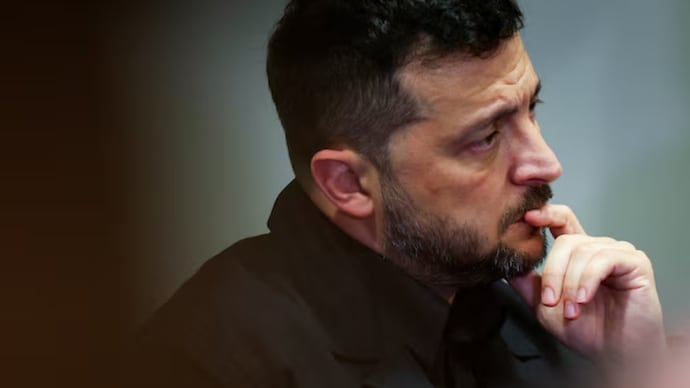
Ukrainian President Volodymyr Zelenskyy has arrived in Serbia for his first official visit to the country, opening a politically sensitive round of talks with President Aleksandar Vucic and Prime Minister Djuro Macut on trade, European Union relations and security.
The visit puts Serbia’s complicated foreign-policy position under sharper scrutiny. Belgrade wants to advance its long-term path toward EU membership while maintaining close economic and political ties with Russia and refusing to join Western sanctions against Moscow.
For Zelenskyy, the trip offers an opportunity to deepen relations with a country that has historically been close to Russia but has also increased its engagement with Kyiv since the full-scale Russian invasion of Ukraine. For Vucic, welcoming the Ukrainian president allows Serbia to demonstrate that it can maintain dialogue with Kyiv and European capitals without abandoning its current position on sanctions against Moscow.
That balancing act is becoming increasingly difficult as the EU continues to demand greater alignment from countries seeking membership.
Why is Zelenskyy visiting Serbia?
Zelenskyy said the talks would focus on expanding economic ties, relations with the European Union and security issues.
His visit is significant because Serbia has remained one of the few European countries that has refused to impose sanctions on Russia since Moscow launched its full-scale invasion of Ukraine in 2022.
At the same time, Belgrade has not simply sided with Moscow on every aspect of the conflict. Serbia has provided humanitarian and other assistance to Ukraine and has expressed support for Ukraine’s territorial integrity. It has also maintained contacts with Kyiv while seeking to preserve its relationship with Russia.
That creates an unusual diplomatic position. Serbia can engage with Ukraine without formally adopting the Western sanctions regime against Russia.
Zelenskyy’s visit gives both governments a chance to expand that space for cooperation.
Before the talks, Zelenskyy said the two sides would look for practical opportunities that could benefit their populations and emphasized that Ukraine was prepared to work on the basis of mutual respect.
Vucic, meanwhile, confirmed that cooperation and EU integration would be discussed but made clear that Serbia’s position on sanctions had not changed.
Serbia says its Russia sanctions policy is not changing
The most important limitation on the visit is therefore already clear.
Serbia is not preparing to join Western sanctions against Russia simply because Zelenskyy has arrived in Belgrade.
Vucic reiterated that Serbia had established its policy on sanctions and that its position would remain unchanged for the time being.
This distinction matters because Serbia’s relationship with Moscow is not simply political. Russia remains deeply important to Serbia’s Energy Security, with the country relying heavily on Russian supplies.
Any abrupt change in that relationship could have significant economic and political consequences for Belgrade.
At the same time, Serbia’s refusal to align with EU sanctions has become an increasingly important issue in its membership negotiations with Brussels.
The result is a foreign policy built around maintaining room for manoeuvre: closer engagement with the EU and Ukraine where possible, while preserving key relationships with Russia.
Why Serbia wants to keep talking to Ukraine
Serbia’s engagement with Kyiv has increased even though its sanctions policy has not changed.
Vucic and Zelenskyy have met several times since the beginning of Russia’s full-scale invasion. Vucic has also travelled to Ukraine for regional summits aimed at strengthening European support for Kyiv.
Those contacts allow Belgrade to demonstrate that its relationship with Moscow does not prevent it from maintaining diplomatic channels with Ukraine.
That message is particularly important as Serbia continues to pursue EU membership.
Belgrade’s long-term strategic objective remains complicated by its reluctance to align completely with EU foreign policy, especially on Russia. The EU expects candidate countries to progressively align their foreign and security policies with the bloc as they move toward membership.
Serbia’s position therefore creates a built-in contradiction: it wants the economic and political benefits of EU integration while retaining a foreign-policy relationship with Moscow that differs sharply from that of most EU governments.
Zelenskyy’s visit puts that contradiction on display
The symbolism of the visit is almost as important as the substance of the talks.
For Ukraine, having its president welcomed officially in Belgrade demonstrates that Kyiv can deepen relations even with European governments that have not adopted the full Western approach to Russia.
For Serbia, hosting Zelenskyy sends a different message. It shows Brussels that Belgrade is willing to engage constructively with Ukraine and participate in wider European diplomatic efforts.
Neither side needs the visit to produce an immediate breakthrough on sanctions for it to be useful.
Instead, the meeting can create space for cooperation in areas where their interests overlap, including trade, reconstruction and broader European Diplomacy.
That is why the visit should not be interpreted simply as Serbia moving into Ukraine’s camp or abandoning Russia.
The evidence points to something more complicated: Serbia is attempting to expand its relationship with Kyiv without crossing the political red line it has established on sanctions.
Russia has reasons to be uncomfortable with the rapprochement
Moscow has historically regarded Serbia as one of its closest partners in the Balkans, making Belgrade’s growing engagement with Kyiv politically sensitive.
Russia has already expressed anger over allegations that Serbian-made weapons reached Ukraine through third countries. Moscow previously described such developments as a betrayal, while Serbia has faced questions about how its defence exports may have ended up in Ukraine.
That history adds another layer to Zelenskyy’s visit.
Belgrade is attempting to maintain a relationship with Russia while expanding cooperation with Ukraine. That may be possible for a time, but each new step toward Kyiv can increase pressure from Moscow.
At the same time, the Russian invasion has changed the political environment in Europe. Countries that once treated relations with Moscow as largely separate from their European integration plans increasingly have to consider the two issues together.
Serbia’s position is therefore being tested not only by the war itself but by the wider geopolitical realignment caused by it.
EU membership is the bigger issue for Belgrade
For Serbia, the most consequential audience for Zelenskyy’s visit may not be in Kyiv or Moscow. It may be in Brussels.
Serbia has been seeking EU membership for years, but its accession process has faced political and institutional obstacles. One of the most important is the gap between Serbia’s foreign policy and that of the EU.
The bloc has repeatedly expanded sanctions against Russia in response to the war. The EU adopted its 21st package of Russia sanctions in July 2026, covering areas including energy, financial services, trade and Russia’s military-industrial complex. :contentReference[oaicite:0]{index=0}
That makes Serbia’s refusal to join the sanctions regime increasingly difficult to separate from its European ambitions.
In July, Vucic was the only participant at a Southeast Europe-Ukraine summit in Kyiv who did not sign the summit’s joint declaration. He said Serbia’s position on sanctions was already known. :contentReference[oaicite:1]{index=1}
The episode illustrates the dilemma clearly: Serbia wants to participate in European initiatives involving Ukraine, but it is not prepared to adopt every political position shared by the EU.
Trade could provide the easiest area for progress
Economic cooperation is likely to be one of the less politically difficult areas of the Zelenskyy-Vucic talks.
Unlike the sanctions question, expanding trade does not necessarily require Serbia to choose between Russia and the EU.
Ukraine is also looking ahead to reconstruction and deeper economic integration with European markets. Serbia, meanwhile, has an interest in maintaining commercial relationships across the region.
That creates potential space for practical cooperation even while the two countries remain divided over the broader geopolitical question of Russia.
Reconstruction could become particularly important over the longer term if the war moves toward a settlement and large-scale rebuilding begins in Ukraine.
Serbia has already expressed an intention to participate in rebuilding Ukraine after the war. That gives Belgrade an economic interest in maintaining a workable relationship with Kyiv regardless of its continuing ties with Moscow.
Security is another sensitive part of the talks
Security discussions are likely to be more complicated because Serbia occupies a distinctive position in the European security system.
Belgrade does not follow the same security alignment as NATO members, and its relationship with Russia remains an important part of its strategic calculations.
Ukraine, meanwhile, is seeking broad European support as it confronts Russia.
That does not mean Serbia will suddenly adopt Kyiv’s security priorities wholesale. But dialogue can still be valuable, particularly on regional stability and the wider security consequences of the war.
The Balkans have their own unresolved political disputes, meaning developments in Ukraine are closely watched across the region.
For Belgrade, maintaining communication with Kyiv allows it to demonstrate that Serbia is engaged with the broader European security conversation even while preserving its independent position on Russia.
Vucic is also facing domestic political pressure
Serbia’s foreign policy cannot be separated entirely from its domestic politics.
Vucic has faced sustained youth-led Protests following the November 2024 train station disaster that killed 16 people. The demonstrations have increased pressure on his government and brought questions about governance and accountability to the centre of Serbian politics.
That makes the government’s relationship with the EU particularly important.
Serbia’s EU path is not only about foreign policy. Brussels has also raised concerns about democratic standards, rule of law and the functioning of institutions.
Vucic therefore has to manage several pressures simultaneously: maintaining support at home, preserving Serbia’s traditional relationship with Russia, satisfying domestic constituencies that favour closer ties with Moscow and keeping the country’s European ambitions alive.
The Zelenskyy visit fits into that broader political calculation.
What does the visit mean for Russia?
From Moscow’s perspective, the most uncomfortable aspect of the visit is not necessarily any single agreement that might emerge from the talks.
It is the possibility that Serbia’s relationship with Ukraine gradually becomes normal and increasingly institutionalised.
That would not automatically mean Serbia was abandoning Russia. But it would demonstrate that Moscow’s traditional influence in the Balkans is no longer sufficient to prevent its partners from developing closer relationships with Kyiv.
The distinction is important.
Serbia can remain outside Western sanctions while simultaneously expanding ties with Ukraine. In other words, diplomatic engagement does not automatically translate into strategic alignment.
That is precisely what makes Belgrade’s position so difficult to interpret.
What does Zelenskyy gain from the Serbia visit?
For Zelenskyy, the visit offers several potential benefits.
- Diplomatic outreach: Ukraine can strengthen relations with a European country that has not joined sanctions against Russia.
- Regional support: Serbia’s position in the Balkans gives engagement with Belgrade wider political significance.
- Economic ties: Ukraine can explore opportunities for greater trade and future reconstruction cooperation.
- European integration: Kyiv can encourage Serbia to remain engaged with Ukraine-related European initiatives.
- Political messaging: The visit demonstrates that Ukraine can maintain dialogue even with countries that have close relationships with Moscow.
None of these objectives requires Serbia to immediately change its Russia policy.
What could happen next?
The most important measure of the visit will be what happens after the cameras leave Belgrade.
If the two governments announce new trade initiatives, reconstruction cooperation or deeper institutional contacts, the visit could become a meaningful step in the gradual development of Serbia-Ukraine relations.
If the talks remain largely symbolic, the meeting will still have diplomatic value but may not significantly alter Serbia’s position.
The sanctions issue is likely to remain the hardest obstacle.
Vucic has already made clear that Serbia is not changing its policy toward sanctions against Russia. Unless that position changes, Belgrade’s relationship with Kyiv will have a clear ceiling.
At the same time, Serbia’s EU ambitions create an incentive to keep demonstrating that it can work constructively with Ukraine and other European partners.
Serbia’s balancing act is becoming harder to sustain
Zelenskyy’s first official visit to Serbia is important because it captures the dilemma facing Belgrade more clearly than another round of statements about European integration or relations with Moscow could.
Serbia wants access to the European Union and its economic opportunities. It also wants to preserve close ties with Russia, particularly in energy and traditional political relations. Ukraine now sits directly in the middle of that balancing act.
Zelenskyy is offering Belgrade an opportunity to deepen ties with Kyiv without demanding an immediate rupture with Moscow. Vucic, meanwhile, can use the visit to show Brussels that Serbia remains engaged with Ukraine while insisting that its sanctions policy has not changed.
That may be enough for short-term diplomacy. But the longer Serbia’s EU accession process continues, the harder it may become to keep foreign-policy alignment with Brussels and its Russia policy completely separate.
For now, the message from Belgrade is one of continuity rather than a geopolitical U-turn. Serbia is talking to Zelenskyy, expanding practical cooperation with Ukraine and keeping its European channels open. At the same time, Vucic is drawing a firm line on sanctions against Russia.
The real test will be whether that line can remain politically and economically sustainable as the EU tightens its own sanctions regime and Serbia’s membership ambitions move forward.
For breaking news and live news updates, like us on Facebook or follow us on Twitter and Instagram. Read more on Latest World on thefoxdaily.com.





COMMENTS 0