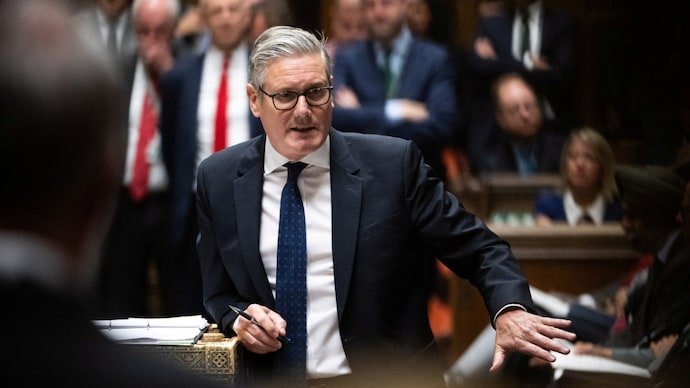
British Prime Minister Keir Starmer has made his position unmistakably clear: he is not stepping down.
Facing a wave of criticism following the resignations of senior defence officials and mounting concerns over Labour’s political trajectory, Starmer has chosen to confront the crisis head-on rather than retreat from it. His declaration that he is “not going to walk away” comes at a crucial moment for both his leadership and the future of the Labour government.
The political turmoil has evolved far beyond a disagreement over Defence Spending. It now raises broader questions about Britain’s economic priorities, military readiness, public finances, and Labour’s ability to maintain unity while navigating an increasingly uncertain global Environment.
As Britain confronts economic pressures, geopolitical instability, and growing demands on public spending, Starmer’s leadership challenge offers a revealing glimpse into the difficult choices modern governments face.
Why Keir Starmer Is Under Pressure
The immediate trigger for the crisis was the resignation of Defence Secretary John Healey, who publicly criticized the government’s defence spending strategy and accused the Treasury of failing to provide sufficient resources for Britain’s long-term military needs.
His departure quickly escalated into a broader political problem when Armed Forces Minister Al Carns also resigned, arguing that Britain’s defence strategy required a more ambitious approach in response to rapidly changing military realities.
Although cabinet resignations are not uncommon in British politics, the departure of two senior defence figures within such a short period sent a powerful message. It suggested a deeper disagreement over priorities at a time when national Security has become one of the most important issues facing Western governments.
The Controversy intensified because both ministers linked their concerns directly to Britain’s ability to respond to emerging global threats.
The Bigger Story: Defence Spending Is No Longer Just a Budget Debate
While headlines have focused on political drama, the real issue extends much deeper.
Across Europe, governments are reassessing defence strategies following major geopolitical shifts. The security environment of the 2020s looks dramatically different from that of the previous decade.
Military planners now face challenges that include:
- Growing geopolitical tensions.
- Cyber warfare threats.
- Artificial Intelligence in military operations.
- Drone-based warfare.
- Space-based security concerns.
- Energy and infrastructure vulnerabilities.
These developments have fundamentally changed the conversation around defence investment.
Countries that once viewed defence spending as a secondary priority are increasingly treating it as a core component of national resilience and economic security.
How the Ukraine War Changed Britain’s Defence Priorities
One of the most important factors influencing the current debate is the war in Ukraine.
The conflict has demonstrated how quickly conventional warfare can return to Europe and how technological innovation is transforming battlefields.
Drones, electronic warfare systems, satellite intelligence, and autonomous technologies have become central components of modern military strategy.
Defence experts argue that the lessons emerging from Ukraine require governments to rethink procurement strategies, force structures, and military spending plans.
Supporters of higher defence budgets believe Britain must accelerate investment to remain prepared for future challenges.
Critics of rapid spending increases, however, point out that governments must balance security needs against economic realities and competing domestic priorities.
Starmer’s Core Argument: Government Is About Trade-Offs
At the center of Starmer’s defence is a simple but politically challenging message: every spending decision involves compromise.
Rather than promising unlimited increases in military funding, he has argued that governments must weigh defence requirements against demands for healthcare, Education, housing, infrastructure, welfare programs, and economic growth initiatives.
His position reflects a broader fiscal reality confronting governments across developed economies.
Public finances remain under pressure from Inflation, demographic changes, healthcare costs, and slower economic growth. In such an environment, increasing spending in one area often means limiting expenditure elsewhere.
Starmer’s challenge is convincing both voters and party colleagues that difficult choices today can produce greater stability tomorrow.
Labour’s Electoral Setbacks Have Made the Situation Worse
Political crises rarely occur in isolation.
One reason the resignations have generated such intense scrutiny is that they come shortly after disappointing election results for Labour.
Starmer himself acknowledged the problem, admitting that the party had experienced a poor electoral performance and needed to regain momentum.
Election setbacks often amplify internal tensions because they encourage party members to question strategy, leadership, and messaging.
What might otherwise have remained a policy disagreement has therefore evolved into a broader debate about Labour’s future direction.
Understanding Britain’s Economic Constraints
To understand the current dispute, it is important to examine the economic backdrop.
Britain faces multiple fiscal pressures simultaneously:
- Rising healthcare expenditure.
- Infrastructure modernization needs.
- Public sector wage demands.
- Economic competitiveness challenges.
- Energy transition investments.
- National security requirements.
Managing these priorities requires careful balancing.
Even governments committed to increasing defence spending must determine where the money will come from and how quickly investment can realistically expand.
This reality explains why Starmer argues that any potential successor would face similar constraints.
How Britain’s Defence Debate Compares with Other NATO Countries
| Challenge | Impact on NATO Countries |
|---|---|
| Rising Military Costs | Increased pressure on national budgets |
| Modern Warfare Technology | Need for investment in drones and AI |
| Cyber Security Threats | Expansion of digital defence capabilities |
| Geopolitical Uncertainty | Greater emphasis on military readiness |
| Economic Pressures | Competing demands on public spending |
Across Europe, leaders are facing similar debates about how to balance national security requirements with domestic priorities.
This suggests the issue confronting Starmer is part of a broader international trend rather than an isolated political dispute.
Potential Leadership Contenders and Labour’s Future
Whenever political pressure intensifies, attention naturally shifts toward potential successors.
Several Labour figures have been mentioned as possible future contenders. Among the most frequently discussed names is Andy Burnham, who has long maintained a significant profile within the party and is often viewed as a potential leadership candidate.
Wes Streeting has also attracted attention after publicly expressing concerns about aspects of Labour’s direction.
However, leadership speculation and actual leadership challenges are very different things. At present, there is no formal contest underway, and Starmer remains firmly in control of government.
Nevertheless, political history shows that leadership questions often gain momentum when parties experience electoral disappointments and internal disagreements simultaneously.
A Unique Insight: This Crisis Is Really About Public Trust
Most political analysis has focused on resignations, budgets, and leadership rumours. Yet the deeper issue may be trust.
Voters generally understand that governments face difficult choices. What they want is confidence that leaders have a clear plan and can explain why those choices are necessary.
The danger for Starmer is not simply that ministers resigned. The greater risk is that the resignations create an impression of uncertainty at a time when voters are looking for stability amid economic and geopolitical turbulence.
Restoring trust may therefore be more important than winning any individual policy argument. If voters believe the government has a coherent strategy, political setbacks can be overcome. If confidence erodes, even strong policies can struggle to gain support.
What This Means for Britain’s Military Future
The resignations have also sparked a wider conversation about the future shape of Britain’s armed forces.
Military experts increasingly argue that future conflicts will be defined by technological superiority rather than sheer troop numbers.
Key areas likely to attract investment include:
- Drone systems and autonomous platforms.
- Artificial intelligence applications.
- Cyber defence infrastructure.
- Space and satellite capabilities.
- Advanced surveillance technologies.
- Electronic warfare systems.
The debate is therefore not merely about spending more money. It is about determining how military resources should be allocated in a rapidly changing security environment.
This is precisely why the dispute has become so politically sensitive. It touches not only on budgets but also on Britain’s long-term strategic vision.
Comparison: Political Leadership Crises vs Policy Crises
| Leadership Crisis | Policy Crisis |
|---|---|
| Focuses on individuals | Focuses on government decisions |
| Driven by popularity and authority | Driven by outcomes and performance |
| Can be resolved through political change | Requires practical policy solutions |
| Often short-term in nature | Can have long-term consequences |
| Dominates headlines quickly | Shapes public perception over time |
The current situation contains elements of both. While attention is focused on Starmer personally, the underlying disagreement concerns Britain’s future priorities and spending choices.
Can Starmer Recover Politically?
History suggests that political recoveries are entirely possible.
Many leaders who appeared vulnerable at one stage later regained authority through economic improvements, successful reforms, or shifts in public opinion.
For Starmer, recovery will likely depend on several factors:
- Improving Labour’s electoral performance.
- Maintaining party unity.
- Delivering economic stability.
- Addressing defence concerns effectively.
- Communicating a clear long-term vision.
The coming months are therefore likely to be more important than the resignations themselves. What matters most is how the government responds and whether it can demonstrate progress on the issues voters care about.
Prediction: Defence Spending Will Become a Defining Political Issue of the Decade
One lesson emerging from this controversy is that defence spending is no longer a niche policy debate reserved for military experts.
As geopolitical uncertainty grows and technological warfare evolves, national security is increasingly becoming a mainstream political issue.
Future elections across Europe may feature debates not only about healthcare, taxation, and housing but also about military preparedness, cyber resilience, artificial intelligence, and strategic independence.
In that sense, the current dispute may represent an early signal of broader political changes that will shape Western democracies for years to come.
Conclusion: A Defining Moment for Keir Starmer and Labour
Keir Starmer’s refusal to resign signals determination, but resilience alone will not be enough to end the current crisis.
The Prime Minister must now demonstrate that his government can balance economic responsibility with national security, maintain party unity despite internal disagreements, and convince voters that Labour remains capable of delivering effective leadership.
The resignations of senior defence ministers have exposed important questions about Britain’s military future, public spending priorities, and political leadership. They have also highlighted the difficult trade-offs governments face in an era marked by economic uncertainty, technological change, and global instability.
Whether Starmer emerges stronger from this challenge will depend on his ability to restore confidence among voters, colleagues, and the wider public.
For now, his message remains clear: he is not walking away. The real question is whether he can transform political survival into political recovery and lead Labour through what may become one of the defining tests of his premiership.
For breaking news and live news updates, like us on Facebook or follow us on Twitter and Instagram. Read more on Latest World on thefoxdaily.com.





COMMENTS 0