- What Is the Google Gemini Nano Banana Feature?
- How Gemini Personal Intelligence Works
- Why This Is a Big Deal: The Evolution of AI Image Generation
- Real-World Use Cases: Beyond Fun and Filters
- The Privacy Debate: Innovation vs Intrusion
- Unique Insight: AI Is Becoming Your “Digital Memory Layer”
- Timeline: How AI Personalization Reached This Point
- Challenges and Limitations
- Prediction: The Future of Personalized AI
- Why This Matters for Users and Creators
- Conclusion: A New Era of AI Personal, Powerful, and Polarizing
Imagine describing a memory or even a moment that never existed and watching it instantly turn into a realistic image featuring people from your life. That’s no longer science fiction. With the Google Gemini Nano Banana feature, AI is entering a new phase where it doesn’t just generate images it understands your personal world.
WHO: Google Gemini AI users. What: A feature that generates personalized images using google photos. When: Rolling out gradually to premium subscribers. Where: Within the Gemini app ecosystem. Why: To make AI more context-aware and personalized. How: Through a system called Gemini Personal intelligence, which connects user data across apps.
This development marks a major leap in AI from generic creativity tools to deeply personalized digital assistants. But with great intelligence comes equally big questions around Privacy, control, and the future of creativity.
What Is the Google Gemini Nano Banana Feature?
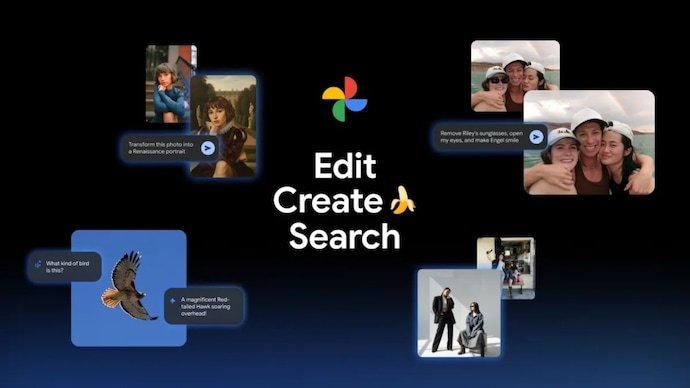
The Nano Banana feature in Google Gemini is an AI-powered image generation tool that can access your Google Photos library and use it as context to create customized visuals.
Instead of writing long, detailed prompts, users can now simply describe a scene like:
- “Me and my best friend at a beach sunset”
- “A winter vacation with my family in the mountains”
Gemini can identify relevant people, styles, and preferences from your photo library and generate an image that feels deeply personal and realistic.
This is powered by a broader system called Personal Intelligence, which connects data across Google services to enhance AI outputs.
How Gemini Personal Intelligence Works
At its core, Gemini’s new capability relies on understanding context not just commands.
Key Functional Layers
- Data Access: Reads metadata and labels from Google Photos
- Identity Recognition: Identifies people based on tagged groups
- Preference Mapping: Learns user habits, styles, and interests
- Generative Engine: Produces images aligned with personal context
This creates a shift from prompt-based AI to context-driven AI.
Why This Is a Big Deal: The Evolution of AI Image Generation
Traditional AI image tools rely entirely on text prompts. The Nano Banana feature changes that by introducing memory into creativity.
| Aspect | Traditional AI Image Tools | Gemini Nano Banana |
|---|---|---|
| Input | Text prompts only | Text + personal data |
| Personalization | Limited | High |
| Effort Required | Detailed prompts | Minimal input |
| Output Relevance | Generic | Highly contextual |
In simple terms, AI is no longer guessing what you want it’s learning who you are.
Real-World Use Cases: Beyond Fun and Filters
1. Memory Recreation
Users can recreate moments they never captured like a missed family photo or a dream vacation scene.
2. Social Media Content Creation
Personalized visuals reduce the need for editing apps, stock photos, or manual design.
3. Creative Storytelling
Writers and creators can visualize scenes using real-life references, adding authenticity.
4. Digital Identity Expression
People can craft idealized versions of themselves raising both creative and ethical questions.
The Privacy Debate: Innovation vs Intrusion
Whenever AI starts accessing personal data, privacy concerns are inevitable and justified.
What Google Says
- Private photo libraries are not directly used to train AI models
- Generated outputs and prompts may be used to improve the system
- Users retain control over connected services
What Experts Are Concerned About
- Data Sensitivity: Photos are among the most personal digital assets
- Consent Complexity: Do all individuals in your photos agree to AI usage?
- Security Risks: Centralized data access increases exposure potential
The core issue isn’t just privacy it’s trust. Users must believe that their personal memories are not being misused.
Unique Insight: AI Is Becoming Your “Digital Memory Layer”
This feature signals a deeper transformation. AI is evolving into what can be called a “digital memory layer” a system that not only stores your data but actively uses it to shape your digital experiences.
Think about it:
- Your photos → become creative inputs
- Your preferences → become design choices
- Your relationships → become visual narratives
This blurs the line between memory and imagination. In the future, distinguishing between real and AI-generated memories may become increasingly difficult.
Timeline: How AI Personalization Reached This Point
| Phase | Development |
|---|---|
| Early AI Tools | Basic image generation from text prompts |
| Smart Assistants | Integration with apps like email and calendar |
| Generative AI Boom | Advanced models creating realistic visuals |
| Personal Intelligence Era | AI connects with personal data for customization |
Challenges and Limitations
1. Accuracy Issues
AI-generated images may not always match user expectations, especially with complex prompts.
2. Bias in Data Interpretation
The system’s understanding depends on how well your photos are labeled and organized.
3. Over-Reliance on AI
As tools become easier, users may lose creative control or originality.
4. Ethical Gray Areas
Creating images of real people in fictional scenarios raises questions about consent and authenticity.
Prediction: The Future of Personalized AI
The Nano Banana feature is just the beginning. Here’s what could come next:
- Video Generation: Turning memories into short films
- Real-Time Editing: Live AI-enhanced camera experiences
- Cross-App Intelligence: AI combining photos, emails, and chats for deeper insights
- Hyper-Personal Assistants: AI that understands not just your data, but your personality
In short, AI will move from being a tool to becoming a co-creator of your digital life.
Why This Matters for Users and Creators
This shift has profound implications:
- For users: Easier, faster, more meaningful content creation
- For creators: New tools but also new competition from AI
- For businesses: Opportunities for hyper-personalized marketing
It also raises a critical question: If AI can create your memories, what role do you play in capturing them?
Conclusion: A New Era of AI Personal, Powerful, and Polarizing
The Google Gemini Nano Banana feature represents a major leap in AI evolution. By connecting directly with personal data, it transforms image generation into a deeply individualized experience.
But this Innovation comes with trade-offs. While it unlocks unprecedented creativity and convenience, it also challenges our understanding of privacy, identity, and authenticity.
The future of AI won’t just be about intelligence it will be about intimacy.
And as tools like Gemini continue to evolve, the real question is not what AI can do but how much of ourselves we are willing to share with it.
For breaking news and live news updates, like us on Facebook or follow us on Twitter and Instagram. Read more on Latest Technology on thefoxdaily.com.






COMMENTS 0