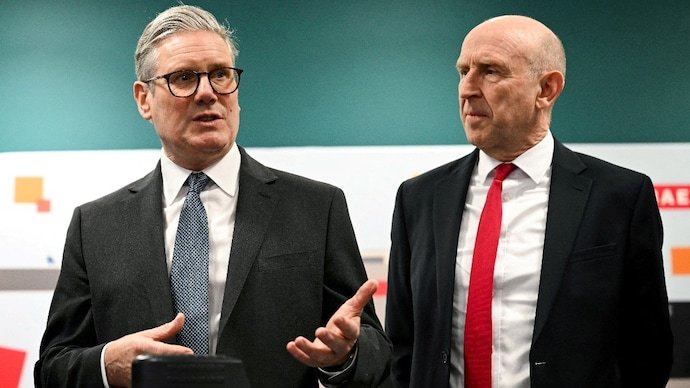
British Politics was shaken after Defence Secretary John Healey resigned following a bitter dispute with Prime Minister Keir Starmer over defence funding. The resignation represents more than a routine cabinet disagreement. It highlights a growing debate taking place across Europe: how much should governments spend on defence in an era marked by military conflicts, rising geopolitical tensions, cyber threats, and renewed great-power competition?
Healey’s departure comes at a sensitive moment for the United Kingdom. The country is balancing economic pressures, public spending demands, and growing security commitments abroad. His resignation has also intensified scrutiny of Starmer’s leadership, with critics questioning whether the government can maintain unity while addressing increasingly complex domestic and international challenges.
Why Did John Healey Resign?
The immediate trigger was a dispute over Britain’s Defence Investment Plan (DIP), a long-awaited roadmap that will determine Military Spending priorities, force modernization, procurement decisions, and operational readiness over the coming decade.
According to Healey, the government failed to provide sufficient resources to meet Britain’s security requirements. In his resignation letter, he accused both the Prime Minister and the Treasury of underestimating the scale of current threats and delaying critical defence investments.
The former Defence Secretary argued that planned spending levels would leave Britain’s armed forces underprepared for future challenges and unable to fully meet commitments to allies.
The disagreement ultimately centered on one crucial question: how much should Britain spend on defence in a rapidly changing Global Security Environment?
The Core Dispute: 2.68% vs 3% of GDP
The main point of contention involved defence spending targets.
Under the government’s current plans, defence expenditure would reportedly rise to approximately 2.68% of Gross Domestic Product (GDP) by 2030. Healey believed this was insufficient.
He instead advocated increasing defence spending to 3% of GDP by 2030, arguing that the international security landscape has fundamentally changed.
| Spending Target | Proposed By | Significance |
|---|---|---|
| 2.68% of GDP | Government/Treasury Plan | Current projected defence spending level by 2030 |
| 3% of GDP | John Healey | Desired spending level to strengthen military readiness |
While the difference may appear small on paper, it translates into billions of pounds in additional defence funding over several years.
Those funds could impact everything from troop readiness and naval expansion to cyber capabilities, weapons procurement, intelligence operations, and military infrastructure upgrades.
Why Defence Spending Has Become a Major Political Issue
The debate unfolding in Britain reflects a broader shift occurring throughout Europe and NATO.
For decades following the Cold War, many Western countries reduced military spending while prioritizing economic development and social programs. However, recent geopolitical events have forced governments to reconsider those assumptions.
Several developments have transformed security planning:
- The Russia-Ukraine conflict.
- Growing tensions in the Middle East.
- Rising cyber warfare threats.
- Increased military activity in the Arctic.
- Strategic competition between major global powers.
- Threats to international Shipping routes.
- Expansion of advanced missile and drone technologies.
These challenges have pushed many governments to increase military budgets and reassess long-term defence priorities.
Britain’s Expanding Global Commitments
One of Healey’s central arguments was that Britain’s international obligations have expanded significantly.
The UK is no longer focused solely on homeland defence. It plays a major role in several multinational security operations.
According to the former Defence Secretary, Britain’s responsibilities now include:
- Leadership roles within NATO operations.
- Maritime security missions in strategic waterways.
- Arctic defence and surveillance activities.
- Support for European security initiatives.
- Potential future involvement in post-conflict stabilization efforts.
Each of these commitments requires funding, personnel, equipment, and operational readiness.
Military planners often argue that commitments made on the international stage must be matched by corresponding investments at home.
The Defence Investment Plan Explained
The Defence Investment Plan is far more than an annual budget document.
It serves as the blueprint for Britain’s military future.
The plan determines:
- Procurement of new weapons systems.
- Naval fleet modernization.
- Air force capabilities.
- Cybersecurity investments.
- Military infrastructure projects.
- Personnel recruitment and retention.
- Research into emerging technologies.
Delays in approving the plan have reportedly frustrated military leaders and defence industry stakeholders who depend on long-term certainty for planning and investment.
Without clear funding commitments, procurement programs can face delays, costs can rise, and readiness goals can become more difficult to achieve.
How Britain’s Security Environment Has Changed
The security challenges facing Britain today are considerably different from those of a decade ago.
Traditional Military Threats now coexist with a wide range of modern risks.
Cyber Warfare
Government agencies, financial institutions, and critical infrastructure face growing cyber threats from state and non-state actors.
Maritime Security
global trade depends heavily on secure shipping routes. Disruptions in strategic waterways can affect supply chains, Energy Markets, and economic stability.
Hybrid Warfare
Modern conflicts increasingly combine military operations with cyberattacks, misinformation campaigns, economic pressure, and intelligence operations.
Arctic Competition
Climate Change and melting sea ice are opening new strategic opportunities and rivalries in the Arctic region, increasing the importance of northern defence capabilities.
These developments have expanded the definition of National Security far beyond traditional military operations.
The Economic Challenge Facing Keir Starmer
While Healey focused on security concerns, Starmer faces a different challenge: balancing defence needs with broader economic realities.
Every government operates under budget constraints.
Increasing military spending often requires difficult decisions involving:
- Healthcare funding.
- Education budgets.
- Infrastructure projects.
- Public services.
- Debt management.
- Tax policy.
The Treasury’s reluctance to accelerate defence spending likely reflects concerns about fiscal sustainability and competing public priorities.
This tension between security requirements and economic constraints lies at the heart of the dispute.
Why the Timing Is Particularly Difficult for Starmer
Political timing matters as much as policy substance.
Healey’s resignation arrives during a period when Starmer is already facing scrutiny over his leadership and government’s direction.
The departure of a senior cabinet minister inevitably raises questions about internal unity and decision-making processes.
Opposition parties are likely to use the resignation to challenge the government’s credibility on national security matters.
Meanwhile, critics within Labour may argue that the incident reflects broader concerns about strategic priorities and leadership management.
How Britain Compares With Other NATO Countries
The defence spending debate cannot be viewed in isolation.
Across Europe, governments are significantly increasing military budgets.
Many NATO members are moving toward or beyond the alliance’s benchmark of spending 2% of GDP on defence.
Several countries bordering Russia have announced even more ambitious targets as they seek to strengthen deterrence and readiness.
This broader trend has intensified pressure on Britain to maintain its status as one of NATO’s leading military powers.
Supporters of higher spending argue that falling behind allies could weaken Britain’s influence within the alliance.
The Defence Industry Perspective
Britain’s defence industry is closely watching developments.
Long-term funding certainty is critical for companies involved in:
- Shipbuilding.
- Aircraft production.
- Missile systems.
- Cybersecurity technologies.
- Artificial intelligence applications.
- Advanced defence research.
When governments delay major spending decisions, companies often postpone investments, hiring plans, and production expansion.
This can affect both military readiness and economic activity.
The Bigger Strategic Question
The resignation ultimately reflects a much larger debate than a disagreement between two politicians.
It raises fundamental questions about Britain’s future role in the world.
Should the UK maintain an expansive global security presence?
How much should taxpayers invest in military readiness?
What balance should exist between domestic priorities and international obligations?
These questions are becoming increasingly important as geopolitical uncertainty continues to grow.
Future Outlook: What Happens Next?
The government will now need to appoint a new Defence Secretary capable of restoring confidence within the Ministry of Defence while working constructively with the Treasury.
Attention will also shift to the final version of the Defence Investment Plan and whether the government chooses to increase spending commitments in response to criticism.
Meanwhile, opposition parties, military leaders, defence analysts, and international allies will closely monitor Britain’s next steps.
The choices made over the coming months could shape British defence policy for years to come.
Conclusion
John Healey’s resignation represents one of the most significant political challenges facing Keir Starmer’s government since taking office. At its core, the dispute is about far more than budget percentages. It reflects a growing struggle to define Britain’s security priorities in an era marked by geopolitical instability, expanding military commitments, and economic constraints.
The clash highlights a dilemma confronting governments across the Western world: how to strengthen national defence while managing competing demands on public finances. As security threats evolve and international tensions continue to rise, the debate over military spending is unlikely to fade.
For Starmer, the immediate challenge is political damage control. For Britain, the larger challenge is determining how it intends to defend its interests, support its allies, and maintain its global influence in an increasingly uncertain world. The decisions taken now may define the country’s strategic position well into the next decade.
For breaking news and live news updates, like us on Facebook or follow us on Twitter and Instagram. Read more on Latest World on thefoxdaily.com.






COMMENTS 0