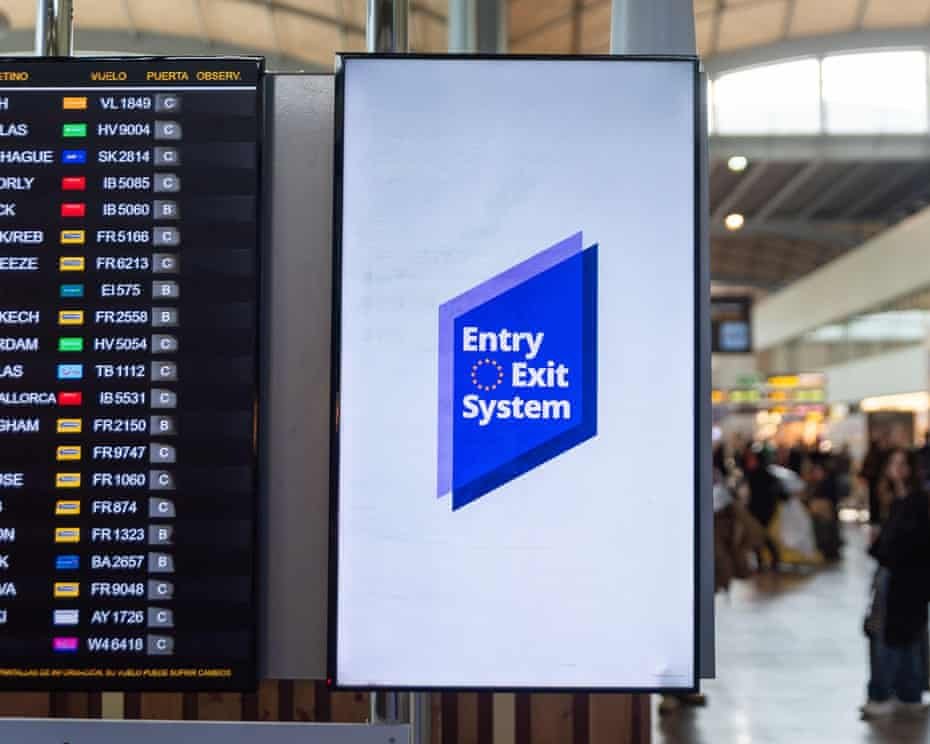
The European Union has filed a lawsuit against technology giant IBM and two European companies, Atos and leonardo, over delays in delivering its new Entry/Exit System (EES), a major digital border-management project designed to strengthen checks on travellers entering the Schengen Area.
The legal action was brought by eu-LISA, the EU agency responsible for managing large-scale information technology systems in the areas of justice and security. According to the agency’s latest annual accounts, it submitted a claim against the three companies on December 22, 2025, to a court in Estonia, where the agency is headquartered.
The case concerns delays during the system’s development and delivery. It comes after the EES rollout experienced technical difficulties at airports and other external border crossing points, contributing to long queues and concerns about passengers missing flights.
The dispute also raises questions about the management of major technology contracts involving multiple international companies and the challenges of introducing complex digital systems across several countries simultaneously.
Why the EU Is Taking Legal Action Against IBM, Atos and Leonardo
The lawsuit involves a consortium made up of IBM, French IT services company Atos and Italian defence and aerospace group Leonardo. The three companies were contracted to develop and maintain the EU’s Entry/Exit System.
The project required the consortium to deliver a complex digital infrastructure capable of supporting identity checks, biometric data collection and information sharing across participating European countries. The system was intended to modernise border procedures for travellers arriving from outside the Schengen Area.
However, delays in delivering the system prompted eu-LISA to pursue contractual and legal remedies. The agency disclosed the action in its annual accounts, stating that delays by the contracting consortium had led it to activate available legal measures to protect its financial interests.
The statement indicates that the agency is seeking to address the contractual consequences of the development delays. However, the publicly available information does not establish the precise amount being claimed, the individual responsibilities of the three companies or the specific remedies requested from the court.
Eu-LISA declined to provide further details about the proceedings. The companies involved have also not publicly disclosed a detailed response to the claims. Atos declined to comment, while IBM and Leonardo were contacted for their positions.
The European Commission clarified that it was not a party to the lawsuit. It said the proceedings concerned delays in delivering the system during its development phase rather than problems with its current operation.
What Is the EU Entry/Exit System?
The Entry/Exit System is a digital border-management platform introduced by the European Union to record the movements of non-EU nationals travelling into and out of the Schengen Area for short stays.
It replaces the traditional practice of manually stamping passports with an electronic record of a traveller’s entry and exit. The system collects personal information and biometric identifiers, including facial images and fingerprints, to help border authorities verify identities and monitor compliance with short-stay rules.
Under the Schengen short-stay framework, eligible visitors from outside the area can generally stay for up to 90 days within any 180-day period. The EES is designed to make it easier for authorities to calculate these periods and identify cases where travellers have overstayed their permitted duration.
When a traveller subject to the system enters a participating country, border authorities collect or verify the required information and register the crossing electronically. The process is repeated when the person leaves the area, creating a digital record of movements across external borders.
The system is also intended to help authorities identify people using different identities, detect certain forms of identity fraud and improve the detection of overstays. By replacing manual passport stamps with digital records, the EU aims to make border checks more consistent and improve the availability of information for national authorities.
Which Travellers Must Register Their Biometrics?
The EES applies primarily to non-EU nationals travelling to participating European countries for short stays. This includes visitors who require a short-stay visa and travellers from visa-exempt countries such as the United States, the United Kingdom and other countries whose citizens can enter the Schengen Area without obtaining a visa in advance.
Travellers who fall within the system’s scope may be required to provide a facial image and fingerprints when crossing an external Schengen border. The biometric information is linked to their travel records and used during subsequent identity checks.
The system does not apply in the same way to every person entering Europe. Citizens of EU member states and other categories of travellers covered by specific exemptions are generally outside its standard registration requirements. Ireland and Cyprus also have separate arrangements because they do not participate in the Schengen border-free area in the same way as the other participating countries.
The Schengen Area comprises 29 countries: 25 EU member states and four non-EU countries, Iceland, Liechtenstein, Norway and Switzerland. Ireland and Cyprus are outside the area.
For international travellers, the introduction of biometric registration represents a change in the border-crossing process. Visitors who previously expected a passport stamp may now need to complete additional digital checks, particularly during their first journey under the system.
Technical Problems and Long Queues at European Airports
The EES rollout has faced difficulties at several European airports since its introduction in October 2025. Airport operators and travel industry representatives have reported problems involving biometric kiosks, system outages and delays in processing passengers.
Some airports have experienced queues lasting as long as three hours during busy periods. These delays have raised concerns about passengers missing connecting flights and departures because border checks take longer than expected.
The difficulties have involved both technology and staffing. Automated kiosks are intended to collect biometric information and reduce the workload on border officials, but malfunctioning equipment or interruptions to digital services can slow the process.
Staff availability is another important factor. Even when biometric equipment is functioning, border authorities need sufficient personnel to supervise registration, assist passengers who experience problems and handle cases that cannot be completed automatically.
First-time users may require additional assistance because they are unfamiliar with the registration process. Families, elderly travellers and people who have difficulty providing fingerprints may also need more time at border-control points.
These operational pressures become particularly significant during holiday periods, when large numbers of international passengers arrive within a short period. If a digital system cannot process travellers at the speed expected by airport operators, queues can quickly build up.
Airports have therefore faced the challenge of introducing new procedures while maintaining existing passenger flows. The situation has highlighted the importance of coordinating technology, staffing and physical infrastructure before implementing major changes to border controls.
Eu-LISA Says the Lawsuit Will Not Affect Current EES Operations
Although the legal dispute concerns delays in developing the system, eu-LISA has emphasised that the proceedings do not affect its current operation.
The agency said the claim submitted in December 2025 relates to the system’s development phase and has no impact on the way the EES is currently operating. It described the system as fully operational.
The European Commission has made a similar distinction. It said the lawsuit concerns delays in delivery at the time of development and is not related to the system’s present operation.
This distinction is important because the contractual dispute and the operational difficulties are separate issues. The legal proceedings concern whether the consortium met its development and delivery obligations. Problems at airports involve the practical performance of the system, the availability of equipment and the capacity of border authorities to process travellers.
Even if the lawsuit progresses, it does not automatically mean that the EES will be suspended or that biometric checks will stop. The system remains part of the EU’s border-management framework while the legal dispute is handled separately.
Why the Case Matters for IBM, Atos and Leonardo
The lawsuit places three major technology and industrial companies under scrutiny over their involvement in a high-profile public-sector digital infrastructure project.
IBM is one of the world’s largest technology companies, with operations spanning enterprise software, cloud services, consulting and information technology infrastructure. Its involvement in the EES project reflects the role global technology providers play in developing systems used by governments and public institutions.
Atos, headquartered in France, provides digital transformation, cybersecurity, cloud and IT services. The company has been involved in major technology projects across public administration, defence and other sectors.
Leonardo is an Italian aerospace, defence and security group with expertise in electronics, digital technologies and systems used in critical infrastructure. Its participation brought additional technical and systems-integration capabilities to the consortium.
Large public technology contracts often involve several companies because the required expertise extends across software development, hardware, cybersecurity, biometric systems, data management and ongoing technical support.
However, consortium arrangements can also create complicated questions about accountability when a project experiences delays. Contractual responsibilities may be distributed across different members, while the public authority expects the entire system to meet a common delivery schedule.
The legal case could therefore have implications beyond the EES project. Its outcome may influence how public agencies assess contractor performance, enforce delivery commitments and structure future agreements for large digital infrastructure programmes.
Why Digital Border Systems Are Becoming More Important
Governments are increasingly using digital identity systems and biometric technologies to manage international travel. Rising passenger volumes, security concerns and the need to monitor immigration rules have encouraged countries to modernise border-control infrastructure.
Traditional passport stamping provides a visible record of travel but can be difficult to manage consistently across multiple countries. Digital systems can make it easier for authorities to share information, identify repeat travellers and calculate how long visitors have remained within a particular travel zone.
Biometric verification adds another layer by linking travel records to physical characteristics. Facial recognition and fingerprint matching can help establish whether a person presenting a passport is the same individual associated with an existing record.
However, these systems also introduce technical and privacy challenges. Authorities must ensure that biometric information is collected securely, stored according to applicable data-protection rules and accessed only by authorised personnel.
System reliability is equally important. Border infrastructure is a critical public service, and interruptions can affect thousands of travellers within a short period. Governments therefore need contingency arrangements that allow border operations to continue when digital services become unavailable.
The EES experience illustrates that introducing sophisticated technology is not enough on its own. Successful implementation also requires adequate staffing, passenger communication, testing, training and coordination between national authorities.
What the Lawsuit Could Mean for the EU’s Future Technology Projects
The case against IBM, Atos and Leonardo could become an important test of how the EU protects its financial interests when large technology projects fail to meet delivery expectations.
Public agencies depend on private contractors for systems that support immigration, security, taxation, healthcare and other essential services. When those projects experience delays, the consequences can extend beyond financial losses to include disruption for citizens, businesses and public institutions.
Contractual remedies are intended to provide public authorities with mechanisms to respond when suppliers fail to meet agreed obligations. Depending on the terms of the contract and the court’s findings, such remedies may involve financial compensation or other legal measures.
However, the outcome of the EES dispute remains uncertain. The agency has not disclosed the full details of its claim, and the companies’ individual positions have not been established publicly.
For future projects, the case may reinforce the need for clearer delivery milestones, stronger testing procedures and more transparent allocation of responsibility among consortium members. It could also encourage public agencies to establish more detailed contingency plans before replacing existing systems with large-scale digital platforms.
What Travellers Should Know About the Entry/Exit System
Travellers from outside the EU who are subject to the EES should expect biometric registration when entering or leaving participating Schengen countries. First-time registration may take longer than subsequent checks because the system needs to create an electronic travel record.
Passengers should allow additional time for border formalities, particularly when travelling during busy periods or using airports that have experienced processing delays. They should also follow instructions from border officials and ensure that their travel documents are valid.
The legal dispute between eu-LISA and the technology consortium does not currently change the entry requirements for travellers. The agency has stated that the case concerns the development phase and does not affect the system’s current operation.
The broader challenge for the EU is to ensure that the EES delivers the security and administrative benefits for which it was designed without creating unnecessary disruption at Europe’s busiest borders.
As the legal proceedings continue, the case will draw attention to both the financial accountability of major technology contractors and the practical difficulties of introducing digital border controls across an international travel zone. The success of the system will ultimately depend on whether its technology, staffing and border procedures can work together reliably at the scale required by European travel.
For breaking news and live news updates, like us on Facebook or follow us on Twitter and Instagram. Read more on Latest World on thefoxdaily.com.






COMMENTS 0