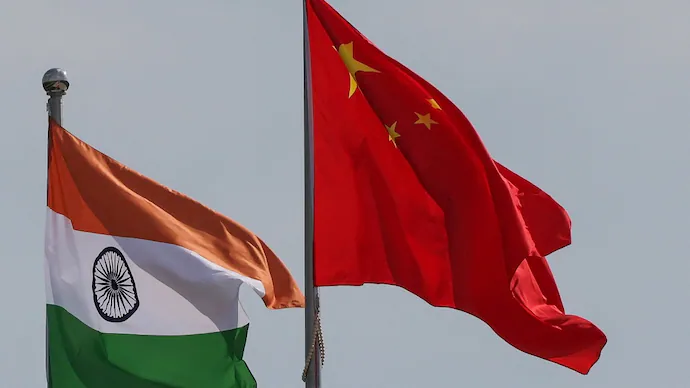
China has defended its military activities along the Line of Actual Control (LAC), saying its forces conduct normal patrolling and control operations in accordance with bilateral agreements. The statement came after India raised concerns that Chinese troops sometimes depart from established patrolling patterns, disrupting peace along the disputed border.
The exchange highlights the continuing challenge of maintaining stability along the India-China frontier despite recent efforts by both countries to rebuild diplomatic relations following years of military tensions.
China Says Its Border Activities Follow Bilateral Agreements
China’s Foreign Ministry said Beijing strictly abides by relevant agreements governing the border, responding to India’s latest remarks about conditions along the LAC. Chinese officials described the military’s activities in the border areas as normal patrolling and control operations.
The response followed comments from India’s Ministry of External Affairs (MEA), which said the situation along the frontier can become disturbed when Chinese forces move away from established patrolling patterns.
The two positions reflect the continuing importance of border management mechanisms intended to prevent localised encounters from escalating into broader military confrontations. However, the latest statements do not indicate that the underlying boundary dispute has been resolved.
India Flags Disruptions to Established Patrolling Patterns
On Friday, MEA spokesperson Randhir Jaiswal reiterated that peace and tranquillity along the India-China border were essential for the overall development of bilateral relations.
Jaiswal said India had previously observed disruptions when Chinese forces diverged from established patrolling patterns. He also stressed that both countries continued to use diplomatic and military channels to address unresolved issues and prevent misunderstandings along the LAC.
India and China maintain different positions on parts of their long-disputed boundary. The LAC serves as the practical line separating areas controlled by the two countries, although the precise alignment is not mutually agreed upon throughout the frontier. Differences over where patrols can operate have therefore remained a source of friction.
Jaiswal also said the two sides had agreed to discuss ways to improve their understanding of the LAC in appropriate areas. Better clarity, he indicated, could support more effective border management and reduce the risk of miscalculations.
ITBP Highlights Preparedness Along the Border
The diplomatic exchange followed remarks by Indo-Tibetan Border Police (ITBP) Director General Shatrujeet Kapur about the force’s operational preparedness. Speaking in Alwar, Rajasthan, on Thursday, Kapur said the ITBP had established drone platoons across its border units.
He also referred to a new training programme called the ‘Strike’ course, designed to improve personnel preparedness for confrontations resembling the 2020 Galwan Valley clashes.
The ITBP is responsible for guarding India’s border with China across difficult Himalayan terrain. Drones can support surveillance and situational awareness in remote areas, while specialised training is intended to prepare personnel for challenging operational conditions.
Kapur’s comments underline the security requirements facing Indian forces along the frontier. They do not, by themselves, establish that a new confrontation has taken place at any particular location.
How the Galwan Clashes Changed India-China Relations
Relations between New Delhi and Beijing deteriorated sharply after the deadly clashes in the Galwan Valley in June 2020. The confrontation resulted in fatalities on both sides and was followed by a prolonged military stand-off along the LAC, particularly in eastern Ladakh.
The crisis brought renewed attention to the risks posed by competing territorial claims, differing perceptions of the boundary and the presence of large numbers of troops in sensitive areas. It also placed wider bilateral cooperation under strain.
Over the following years, India and China pursued military and diplomatic discussions aimed at disengaging forces at friction points and preventing further escalation. These negotiations were important because even a localised incident could affect the broader relationship between the two countries.
India and China Reached a Disengagement Agreement in 2024
In October 2024, India and China reached an agreement on patrolling and disengagement arrangements for Depsang and Demchok in eastern Ladakh. The two areas were among the remaining major friction points associated with the military stand-off.
The agreement marked an important step in efforts to reduce tensions, although disengagement at specific locations did not settle the wider boundary dispute. Both countries continued to face the task of maintaining stable conditions along the frontier and managing differences through established channels.
Days after the agreement was announced, Prime Minister Narendra Modi and Chinese President Xi Jinping met on the sidelines of the BRICS summit in Kazan, Russia. Their talks signalled an effort to restore high-level engagement after years of strained ties.
Subsequent diplomatic contacts have continued to emphasise dialogue, mutual sensitivity and the need to prevent border tensions from undermining wider cooperation.
Modi and Xi Continue Diplomatic Engagement
During a visit to Tianjin, China, for the Shanghai Cooperation Organisation (SCO) summit in August 2025, Modi held talks with Xi on the sidelines of the gathering. Modi said India was committed to advancing relations on the basis of mutual trust, respect and sensitivity.
At a later meeting on the sidelines of the BRICS summit in New Delhi, the two leaders again discussed bilateral ties. Modi stressed the importance of respecting each other’s core concerns and allowing the relationship to be guided by what India describes as the ‘three mutuals’: mutual respect, mutual sensitivity and mutual interest.
These diplomatic engagements reflect the shared interest in avoiding a prolonged deterioration in relations. At the same time, official meetings and agreements must be followed by stable conditions on the ground if confidence along the border is to improve.
Why LAC Patrolling Remains a Sensitive Issue
Patrolling is a central part of border management because India and China do not agree on the alignment of the LAC in every sector. Patrols conducted according to each side’s own understanding of the line can bring personnel into close proximity, creating opportunities for face-offs and disputes.
For this reason, military communication, established protocols and diplomatic engagement are important tools for reducing the risk of accidental escalation. Discussions aimed at improving each side’s understanding of the LAC could help clarify operational expectations in specific areas, although they would not automatically resolve competing territorial claims.
The latest exchange also illustrates the difference between diplomatic commitments and conditions on the ground. China says its forces operate in accordance with relevant agreements, while India has raised concerns about departures from established patrolling patterns. These are the respective governments’ stated positions, and the statements alone do not independently establish the circumstances of any particular patrol.
What Happens Next?
The immediate focus for both countries remains the management of border activity through existing diplomatic and military mechanisms. Maintaining communication between commanders and officials, addressing unresolved friction points and reducing the possibility of misunderstandings will be important to sustaining stability.
For India, peace along the LAC remains closely linked to the wider state of bilateral relations. For China, its public response emphasises compliance with existing agreements and the normal nature of its border operations.
Although recent disengagement arrangements and high-level meetings have created opportunities to improve ties, the boundary dispute remains unresolved. Whether relations can continue to improve will depend in part on how consistently both sides manage patrols, respond to incidents and implement agreed border measures.
The latest statements therefore point to an ongoing diplomatic and security challenge rather than a confirmed new military escalation. Both governments continue to stress the importance of established mechanisms, while differences over patrolling and the LAC remain central to the relationship.
For breaking news and live news updates, like us on Facebook or follow us on Twitter and Instagram. Read more on Latest India on thefoxdaily.com.






COMMENTS 0