Russia’s arrest of Japanese journalist Yuki Imai on suspicion of espionage has added another source of tension to an already strained relationship between Moscow and Tokyo. Imai, a correspondent for Japan’s Hokkaido Shimbun newspaper, was detained by Russia’s Federal Security Service (FSB) on October 13 while staying at a hotel on Sakhalin Island in Russia’s Far East.
The arrest comes amid worsening diplomatic relations, stalled negotiations over a longstanding territorial dispute and growing strategic friction involving Japan, Russia and China. It has also raised concerns that Imai could become part of a wider prisoner-exchange negotiation, although there is no confirmed evidence that Russia detained him for that purpose.
Imai’s case is particularly sensitive because he is a journalist reporting from a region with deep historical significance for Japan and Russia. His detention could further restrict an already difficult relationship between the two countries, which have not concluded a formal peace treaty following the Second World War.
How Yuki Imai Was Arrested in Russia
Imai spent years studying Russian language and literature before becoming a journalist covering Russia for Hokkaido Shimbun, a regional newspaper based on Japan’s northern island of Hokkaido. During a student exchange programme in St Petersburg in 2014–15, he developed a strong familiarity with Russian literature and the city’s cultural history, including the works of novelist Fyodor Dostoyevsky.
According to footage released by the FSB, operatives entered Imai’s hotel room on Sakhalin on October 13 and handcuffed him. A masked officer told him that he was suspected of espionage. Imai, appearing confused, responded in Russian by asking what the officer meant.
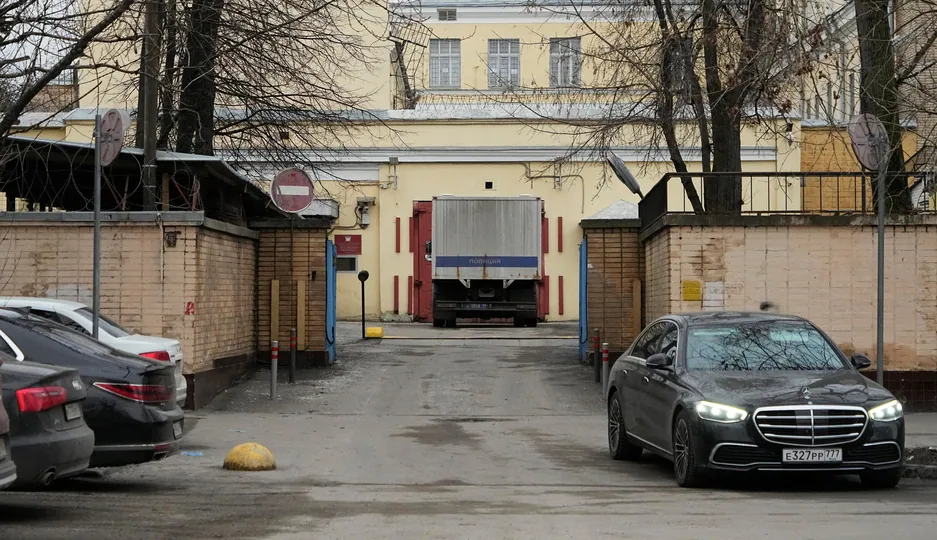
Russian authorities subsequently held him at Lefortovo, a high-profile detention facility in Moscow. His pretrial detention was scheduled to continue until December 12, according to the account provided. An espionage allegation is not, by itself, proof of wrongdoing, and the available information does not establish that the accusation is supported by evidence.
Japan has rejected the suggestion that Imai is a spy. The case has become a diplomatic concern because it involves a Japanese journalist detained by Russian security services at a time when the two governments are already at odds over security, history and territorial sovereignty.
Could the Arrest Be Linked to Russia’s Prisoner-Exchange Strategy?
One possibility discussed by analysts is that Russia could eventually seek to include Imai in a prisoner exchange. This remains speculation rather than a confirmed explanation for his arrest.
Russia has previously detained foreign nationals on espionage-related allegations who were later released through negotiations. Such cases can become part of broader diplomatic bargaining, particularly when Moscow seeks the return of Russian citizens imprisoned abroad.
Evan Gershkovich, an American journalist arrested in Russia in 2023 on espionage charges that his supporters and the US government rejected, was released after approximately 16 months in detention as part of a major prisoner swap between Russia and Western countries. His case demonstrated how a foreign journalist’s detention can become entangled in international negotiations.
Gershkovich has suggested that the arrest of a journalist on espionage allegations could indicate an effort to secure the return of someone held abroad. Russian officials have also openly discussed the value of foreign detainees in potential exchanges. However, no publicly established evidence in the supplied account confirms that Imai’s detention was ordered for this reason.
Any assessment of a possible exchange would depend on what Russia wants, which individuals it seeks to recover and whether Japan or its partners could participate in negotiations. The arrest alone does not establish that a deal is being prepared.
Russian Hacker’s Extradition Raises Questions About Possible Targets
The possibility of a wider exchange has drawn attention to the recent arrest of a Russian national linked to Qilin, a cybercrime group associated with major ransomware attacks. The individual was reportedly arrested while on holiday in Japan and extradited to Germany less than two weeks before Imai’s detention.
The timing has prompted speculation that Russia could be interested in securing the return of Russian nationals held in foreign prisons, including people accused or convicted of cybercrime. But the available information does not establish a connection between the hacker’s extradition and Imai’s arrest.
Russia could also have interests involving detainees in other countries. Australia has arrested and charged individuals over alleged links to Russian intelligence in recent years, while previous prisoner exchanges have involved people held in Belarus. These examples illustrate the range of international cases that can become relevant to diplomatic bargaining, but they do not demonstrate that any specific exchange involving Imai is under way.
For Japan, the central challenge is to seek consular access and protect its citizen while avoiding assumptions about the Russian government’s intentions that have not been substantiated.
Why Japan-Russia Relations Were Already Under Strain
Imai’s arrest comes against the background of a decades-long dispute over territory and the unresolved legacy of the Second World War. Russia regained control of Sakhalin and the nearby Kuril Islands during the closing stages of the war. Japan continues to claim sovereignty over the four southernmost islands in the Kuril chain, which it calls the Northern Territories.
The two countries have never signed a formal peace treaty ending the state of war that followed the conflict. Negotiations aimed at resolving the territorial dispute have been frozen since Russia launched its full-scale invasion of Ukraine in 2022, which Japan strongly opposed.
Japan’s sanctions against Russia and its alignment with Western countries over the war have further damaged bilateral relations. The dispute over the islands, meanwhile, remains a significant obstacle to normalising ties.
Sakhalin has particular historical significance for both countries. It is not only the location where Imai was detained but also a place connected to his family history, according to the account of his grandfather’s upbringing there.
Military Activity and Symbolic Disputes Add to Tensions
Several developments in the months preceding Imai’s arrest contributed to the worsening atmosphere between Moscow and Tokyo. Russian President Vladimir Putin visited Sakhalin during naval exercises in August, his first visit to the region in more than a decade, and also made a visit to the disputed Northern Territories.
Japan objected to the visit because of the unresolved territorial dispute. In September, Russia installed a monument in its Far East depicting a soldier destroying a chrysanthemum emblem associated with Japan’s imperial family. The monument prompted further criticism from Japan, adding a symbolic dimension to the dispute.
Japan also imposed fresh sanctions in early October on ships linked to Russia’s so-called shadow fleet of oil tankers. Such measures form part of Tokyo’s response to Russia’s war in Ukraine and contribute to the broader deterioration of relations.
These events do not establish a direct connection to Imai’s arrest. They do, however, show that his detention occurred during a period of heightened diplomatic and strategic friction rather than against a backdrop of improving ties.
Japan’s Defence Expansion and Intelligence Plans Concern Moscow
Japan’s efforts to strengthen its defence capabilities are another factor shaping its relationship with Russia. Although Tokyo’s military planning is primarily focused on regional security challenges, particularly those involving China, changes in Japan’s defence posture also have implications for Moscow.
Russia uses the Sea of Okhotsk as an important operating area for its nuclear-powered submarines. Japan’s expanding military capabilities and closer security cooperation with Western partners therefore matter to Russian strategic planners, even when Tokyo’s immediate concerns lie elsewhere.
Prime Minister Sanae Takaichi has also pushed to strengthen Japan’s intelligence services. That agenda could increase Moscow’s interest in Japanese intelligence activities, although the available information does not establish that Imai’s reporting was connected to any intelligence operation.
Russian intelligence specialist Andrei Soldatov has described Japan as an important posting for Russian intelligence officers. His assessment highlights the wider security dimension of the relationship, where diplomatic engagement, military planning and intelligence gathering can overlap.
China’s Dispute With Japan Adds a Wider Geopolitical Dimension
China’s increasingly tense relationship with Japan may be another factor behind Moscow’s recent posture. Beijing and Tokyo have clashed over Taiwan, including following Takaichi’s support for the island. Russia has echoed Chinese criticism of Japan’s military direction and has increasingly presented the Second World War as a shared historical struggle against Japan.
Alexander Gabuev of the Carnegie Russia Eurasia Centre has argued that pressure on Japan allows Moscow to signal alignment with Beijing. From this perspective, Russia’s stance is not only about its bilateral dispute with Japan but also about its strategic relationship with China.
The historical dimension is significant. Japan’s disagreements with both Russia and China involve competing interpretations of wartime history, sovereignty and regional security. Russia’s monument in its Far East has been interpreted in Japan as a signal of its willingness to cooperate with China on historical narratives at a time when Beijing and Tokyo are at odds over Taiwan.
However, these broader geopolitical considerations should be distinguished from the specific allegations against Imai. They help explain the tense environment surrounding his detention, but they do not establish why Russian authorities arrested him or whether the case is connected to a diplomatic bargaining strategy.
Japan Secures Consular Access to Imai
Despite the political tension, Japanese diplomats have continued efforts to communicate with Imai. According to the account provided, diplomats delivered a parcel containing supplies to him at Lefortovo on October 23. They were granted consular access three days later, on October 26.
Consular access allows Japanese officials to check on their citizen’s circumstances and provide assistance within the limits permitted by the detaining authorities. It does not, by itself, resolve the espionage allegation or guarantee an early release.
Imai’s scheduled pretrial detention until December 12 means the case could remain a diplomatic concern for weeks. The next steps will depend on Russian legal proceedings, the evidence presented by authorities and the efforts made by Japan to protect his interests.
What the Arrest Means for Japan and Russia
Imai’s detention adds a new and potentially prolonged dispute to an already difficult relationship. The two countries are divided over the Kuril Islands, have opposing positions on Russia’s war in Ukraine and face growing strategic tensions across the wider Indo-Pacific region.
The case also highlights the vulnerability of journalists working in countries where foreign reporting intersects with national-security claims. An espionage accusation can carry serious consequences, but it must be assessed on the evidence rather than treated as proof of guilt. In Imai’s case, the information available does not independently establish the basis for the allegation.
Whether Russia intends to use the case in a prisoner exchange remains uncertain. Previous exchanges demonstrate that detainees can become part of high-level negotiations, but there is no confirmation that Imai’s arrest was designed to secure the release of a Russian prisoner.
For now, the immediate priorities are the handling of the case, continued consular access and clarity about the allegations. The wider diplomatic consequences will depend partly on how Moscow and Tokyo manage the dispute and whether it becomes entangled in broader negotiations involving Russia and its international rivals.
Whatever the eventual outcome, Imai’s arrest has brought the strained Japan-Russia relationship into sharper focus. It has exposed the intersection of journalism, intelligence concerns, unresolved wartime disputes and global diplomacy at a time when relations between the two countries were already deteriorating.
For breaking news and live news updates, like us on Facebook or follow us on Twitter and Instagram. Read more on Latest World on thefoxdaily.com.






COMMENTS 0