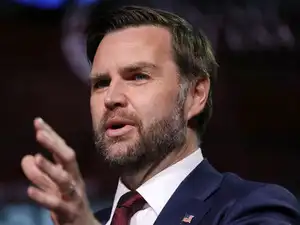
US Vice President JD Vance has expressed confidence that President Donald Trump will avoid a prolonged military conflict with Iran, seeking to reassure Americans concerned about the possibility of another extended war in the Middle East.
In an interview, Vance defended Trump’s actions concerning Iran’s nuclear programme while rejecting the idea that the United States would remain militarily involved for years. He indicated that the administration does not intend to turn its military commitment into a long-term conflict.
His remarks come amid heightened attention on Washington’s approach to Iran and the wider consequences of military action in the region. The possibility of an extended conflict has remained a major concern in American political debate, particularly given the financial, military and diplomatic costs associated with prolonged overseas interventions.
Vance Says Trump Does Not Want a ‘Forever War’ in Iran
Vance’s central message was that Trump does not intend to repeat the experience of lengthy American military engagements. He expressed confidence that the president would avoid a conflict lasting many years and specifically said the commitment would not extend for even two years.
The vice president’s comments appear aimed at distinguishing the administration’s approach from open-ended military interventions in which the United States remains involved without a clearly defined endpoint.
For the Trump administration, the distinction between a limited military operation and a prolonged war is politically important. American voters have repeatedly expressed concerns about the human and financial costs of extended military campaigns, making the duration and objectives of any overseas operation significant issues for the White House.
However, a stated intention to avoid a long war does not by itself establish how a conflict will develop. The duration of any military engagement can depend on developments on the ground, the actions of Iran and other regional actors, and the ability of diplomatic efforts to prevent further escalation.
Vance Defends Trump’s Approach to Iran’s Nuclear Programme
During the interview, Vance also defended Trump’s actions concerning Iran’s nuclear programme. The issue remains central to tensions between Washington and Tehran, with the United States focused on preventing Iran from developing nuclear weapons capabilities.
Iran’s nuclear activities have been a longstanding source of disagreement between the two countries. Disputes over uranium enrichment, international monitoring and restrictions on Tehran’s nuclear programme have repeatedly complicated diplomatic relations.
Trump’s approach has placed pressure on Iran while maintaining the possibility of further negotiations. Vance’s defence of the president’s actions signals that the administration views its policy as an effort to address the nuclear issue rather than commit the United States to an indefinite military campaign.
Nevertheless, the distinction between military pressure and a wider war could become difficult to maintain if tensions escalate. Any sustained confrontation could involve additional military deployments, regional security concerns and diplomatic challenges for the United States and its partners.
Why the ‘Forever War’ Concern Matters for the United States
The prospect of another prolonged conflict carries significant political and strategic implications for Washington. The United States has spent decades involved in major military operations abroad, including long campaigns in Afghanistan and Iraq. Those experiences have shaped public attitudes towards overseas interventions and increased scrutiny of decisions that could commit American forces for extended periods.
A prolonged conflict with Iran could create challenges beyond the immediate military campaign. It could place additional demands on US military resources, increase regional instability and complicate Washington’s relationships with countries across the Middle East.
There are also potential economic consequences. Escalating tensions in the region can affect energy markets, commercial shipping and investor confidence. The Strait of Hormuz, a major route for global oil and gas shipments, is particularly important to international energy security.
For these reasons, Vance’s reassurance that Trump will avoid a ‘forever war’ is also a message about the administration’s intended limits on American military involvement.
Diplomatic Engagement Remains Important Amid Iran Tensions
The broader diplomatic environment will influence how the situation develops. Relations between major powers, regional security calculations and negotiations over Iran’s nuclear programme could all affect the prospects for de-escalation.
A high-level summit involving Trump, Chinese President Xi Jinping and Russian President Vladimir Putin is also scheduled to take place in Shenzhen, according to the supplied report. Such a meeting would bring together leaders of three major powers at a time when international security issues are drawing considerable attention.
China and Russia have significant diplomatic and strategic interests in the Middle East, although their positions and priorities are not identical to those of the United States. Engagement among major powers could therefore form part of the wider international context surrounding tensions involving Iran.
However, the existence of a planned summit does not establish that Iran will be a central subject of discussion or that the meeting will produce a specific outcome on the conflict.
What Happens Next?
Vance’s comments offer an indication of how the Trump administration wants to frame its policy towards Iran: defending action on the nuclear issue while rejecting an open-ended American military commitment.
The key question is whether that objective can be maintained if tensions continue or military confrontation expands. Avoiding a prolonged war will require more than a public commitment to limit the duration of operations. It will also depend on the administration’s military objectives, Iran’s response and the availability of diplomatic channels.
For now, Vance has sought to reassure Americans that Trump does not intend to keep US forces engaged in Iran for years. Whether events support that assurance will depend on how the confrontation develops and whether Washington can prevent its military involvement from expanding into a wider regional conflict.
For breaking news and live news updates, like us on Facebook or follow us on Twitter and Instagram. Read more on Latest World on thefoxdaily.com.





COMMENTS 0