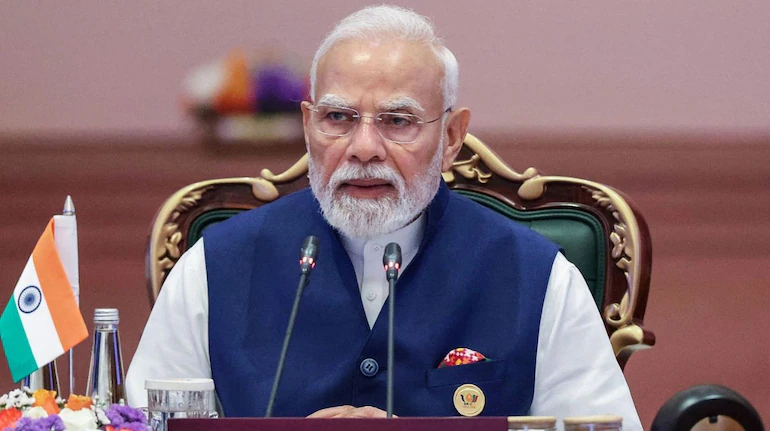
Prime Minister Narendra Modi arrived in the Philippines on Monday for a series of regional diplomatic engagements centred on trade, maritime security and India’s growing role in the Indo-Pacific. His visit comes as Southeast Asian countries seek to strengthen economic cooperation while navigating competing strategic interests involving China and major global powers.
The three-day Association of Southeast Asian Nations (ASEAN) summit, which began in Manila on Sunday, brings together regional leaders and partner countries, including India, Japan, Australia and the United States. Modi’s participation offers New Delhi an opportunity to advance its economic relationships with Southeast Asia and discuss shared security concerns.
One of the most closely watched developments will be Modi’s expected interaction with US President Donald Trump on Tuesday. The two leaders will also participate in a meeting of the four Quad countries, providing an opportunity to demonstrate continued cooperation despite disagreements over trade and differences in their respective relationships with China.
Modi’s Philippines Visit: Major Issues on the Agenda
Several interconnected issues are expected to shape India’s diplomatic engagements during the regional meetings:
- India-US trade negotiations: The two countries are seeking progress on a trade framework agreed upon in February, with disagreements over tariffs and agricultural market access still under discussion.
- South China Sea security: India wants maritime arrangements in the region to respect international law and protect the rights of countries outside the ASEAN-China negotiations.
- Quad cooperation: Modi will join the leaders of the United States, Japan and Australia to discuss regional security and economic resilience.
- Critical technologies and minerals: Supply-chain diversification, strategic infrastructure and access to important resources are expected to feature in discussions.
- Artificial intelligence: Cooperation through the US-led Pax Silica initiative could strengthen coordination on AI-related technologies and supply chains.
South China Sea Security a Key Priority for India
Maritime security is expected to be among India’s major priorities during the ASEAN and East Asia-related engagements. New Delhi is particularly interested in developments in the South China Sea, where overlapping territorial claims involving China and Southeast Asian countries, including the Philippines and Vietnam, have contributed to recurring tensions.
The South China Sea is one of the world’s important maritime trade routes, connecting the Indian and Pacific oceans. Its shipping lanes are vital to international commerce, making stability in the region an economic as well as a strategic concern for countries that depend on uninterrupted maritime movement.
India has repeatedly emphasised the importance of freedom of navigation and respect for international maritime law. Modi has described the waterway as one of the main arteries of global merchandise trade, reflecting its significance for India’s commercial interests.
India is not directly involved in the negotiations between ASEAN and China over a proposed Code of Conduct for the South China Sea. However, New Delhi has made clear that any eventual agreement should respect the legitimate rights of countries that are not participating in those discussions.
Rudrendra Tandon, secretary for the eastern region in India’s Ministry of External Affairs, said any Code of Conduct must comply with international maritime law, particularly the United Nations Convention on the Law of the Sea (UNCLOS).
He also stressed that the agreement must take into account the legitimate rights of countries outside the negotiations.
The issue has gained additional significance as ASEAN and China continue discussions on the proposed framework. A Philippine official said on Sunday that approximately 80 per cent of the draft document’s language had been completed, indicating progress in negotiations that have continued for years.
However, completing the text and reaching an agreement acceptable to all parties remain separate challenges. India’s position reflects its concern that regional arrangements should not restrict the rights of other countries or undermine established international maritime principles.
Modi and Trump to Join Quad Leaders in Manila
Modi’s expected interaction with Trump will be another major focus of the Manila visit. The two leaders are attending the regional gatherings at a time when India-US relations have faced pressure from trade disagreements and Washington’s closer engagement with Pakistan.
The Quad meeting will bring together the leaders of India, the United States, Japan and Australia. The grouping focuses on strengthening cooperation across the Indo-Pacific, particularly in maritime security, economic resilience, technology and supply-chain stability.
The Manila gathering will be the first Quad leaders’ meeting at this level in more than two years. The previous summit was hosted by then US President Joe Biden in Delaware on September 21, 2024.
The gap between leaders’ meetings makes the latest gathering important for assessing the group’s direction under the current political circumstances. Although the four countries share concerns about maintaining stability in the Indo-Pacific, they have different economic priorities and relationships with China.
For India and the United States, the Quad provides a platform to demonstrate that strategic cooperation can continue even when bilateral disagreements remain unresolved. Their collaboration on maritime security and critical technologies offers areas of common interest beyond immediate trade negotiations.
There is no formal bilateral meeting between Modi and Trump listed in the leaders’ schedules. Nevertheless, the Quad gathering could provide an opportunity for informal interaction between the two leaders.
India-US Trade Deal: Tariffs and Agricultural Market Access
Trade negotiations with the United States are expected to attract considerable attention during Modi’s visit. The US is India’s biggest export market, making the outcome of discussions over tariffs and market access important for Indian businesses and exporters.
India and the United States agreed on a trade framework in February, but negotiations have continued as both sides work through differences over the terms of a potential agreement.
New Delhi is seeking a competitive tariff rate compared with the terms available to other trading partners. Washington, meanwhile, wants greater access to the Indian market for American agricultural products.
Agriculture remains a particularly sensitive issue in India’s trade policy because market access can affect domestic producers and established farming interests. Any agreement will therefore need to address the commercial demands of both countries while accounting for their respective economic priorities.
The Manila engagements could offer Modi and Trump an opportunity to exchange views on the negotiations, even without a separate formal bilateral meeting. Any indication of progress or a willingness to narrow differences would be closely watched by businesses and policymakers.
However, the presence of both leaders at the same regional event does not automatically mean that a trade agreement is imminent. The negotiations involve complex questions over tariffs, market access and the treatment of sensitive sectors.
China’s Influence and the Quad’s Strategic Role
China’s growing economic and military influence across the Indo-Pacific provides an important backdrop to the discussions. The Quad was revived in 2017 as India, the United States, Japan and Australia sought closer coordination on regional developments and shared strategic interests.
The grouping is not a formal military alliance. Instead, it provides a framework for cooperation on issues including maritime security, infrastructure, technology, economic resilience and regional stability.
The South China Sea is one of the areas where the interests of Quad members overlap. All four countries have an interest in maintaining open maritime routes and ensuring that international trade is not disrupted by escalating regional tensions.
At the same time, their economic relationships with China differ. Each country must balance strategic concerns with trade and investment interests, making a common approach to Beijing a complex diplomatic task.
For India, the Quad also complements its wider engagement with Southeast Asia. New Delhi has sought to deepen ties with ASEAN countries through trade, connectivity, maritime cooperation and diplomatic exchanges, while maintaining its own independent approach to regional partnerships.
Critical Minerals and Supply-Chain Resilience
Economic security is expected to be another major theme at the Quad discussions. Indian officials have indicated that critical technologies, critical minerals, resilient supply chains and strategic infrastructure will feature in the conversations.
Critical minerals are essential for several industries, including electronics, renewable energy, electric vehicles, defence manufacturing and advanced computing. Dependence on a limited number of suppliers or processing locations can create vulnerabilities when geopolitical tensions or trade restrictions disrupt access.
Cooperation among India, the United States, Japan and Australia could help diversify supply networks and strengthen access to strategically important materials. The four countries have different but potentially complementary capabilities in natural resources, manufacturing, technology and industrial research.
India has a particular interest in expanding its manufacturing capacity and attracting investment in advanced industries. Stronger cooperation on minerals and technology supply chains could support these ambitions while helping Indian companies participate more actively in global production networks.
Strategic infrastructure is also relevant to this agenda. Reliable transport, energy, digital and logistics networks are necessary for supply chains to operate efficiently, particularly when countries are seeking alternatives to concentrated production systems.
Pax Silica: Artificial Intelligence Supply Chains in Focus
Artificial intelligence is emerging as another important area of cooperation between the United States and its Indo-Pacific partners. The Trump administration has promoted Pax Silica, a US-led initiative intended to strengthen cooperation on AI-related supply chains. India is among the participating countries.
The initiative reflects growing recognition that competition in artificial intelligence depends on more than software development. Advanced computing systems require semiconductors, specialised materials, manufacturing equipment, energy infrastructure and access to reliable technology networks.
According to a Financial Times report published on Sunday, countries participating in Pax Silica had agreed to jointly identify and protect AI technologies and supply chains considered vulnerable to China.
Such cooperation could become increasingly important as governments seek to protect sensitive technologies and reduce the risk of disruptions to critical industrial networks.
For India, participation in Pax Silica provides an opportunity to strengthen its position in emerging technology supply chains. It also offers a platform to work with the United States and other partners on issues that extend beyond traditional trade and security cooperation.
Why the ASEAN and East Asia Summits Matter for India
India’s participation in the regional meetings reflects the importance New Delhi places on Southeast Asia as a strategic and economic partner. ASEAN countries occupy a central position in the Indo-Pacific because of their location along major maritime routes and their growing role in regional trade and manufacturing.
Closer engagement with the bloc can support India’s export ambitions, investment relationships and connectivity objectives. It also provides opportunities to discuss maritime security and regional stability with countries directly affected by developments in the South China Sea.
The wider East Asia diplomatic engagements offer India another platform to strengthen partnerships with major regional economies. These discussions are particularly relevant as global supply chains, technology competition and maritime security become increasingly interconnected.
India’s approach involves working with multiple partners while preserving strategic autonomy. Its participation in the Quad, engagement with ASEAN and cooperation through technology initiatives such as Pax Silica are part of a broader effort to maintain a significant role in the Indo-Pacific.
What to Watch From Modi’s Manila Visit
Three developments will be particularly important in assessing the outcome of Modi’s regional engagements: the direction of India-US trade negotiations, the level of commitment shown by Quad leaders towards maritime and economic cooperation, and progress on critical technology and supply-chain initiatives.
The South China Sea discussions will also matter because they touch on India’s trade interests and its position on international maritime law. Any regional Code of Conduct will be closely watched by countries concerned about freedom of navigation and the rights of states outside the negotiations.
For Modi and Trump, the Manila gathering offers an opportunity to maintain diplomatic engagement despite unresolved differences over trade and regional policy. Whether that interaction leads to progress on bilateral issues remains uncertain, but their participation in the Quad demonstrates the continuing importance both countries attach to Indo-Pacific cooperation.
Ultimately, the visit brings together several priorities shaping India’s Foreign Policy: stronger economic ties with Southeast Asia, stable maritime trade routes, cooperation with strategic partners and a greater role in emerging technology supply chains. The discussions in Manila could help define how India advances these interests amid intensifying competition across the Indo-Pacific.
For breaking news and live news updates, like us on Facebook or follow us on Twitter and Instagram. Read more on Latest India on thefoxdaily.com.




COMMENTS 0