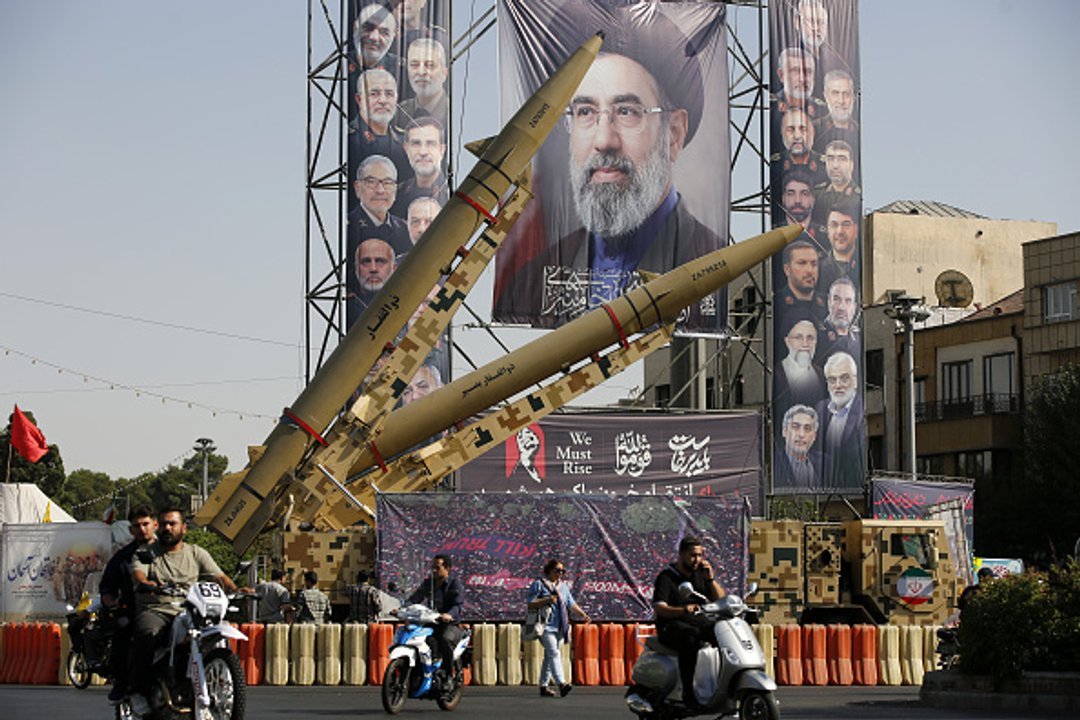
Iran is preparing for the possibility of another major confrontation with the United States and Israel, as its military leadership signals a willingness to expand the scope of any future retaliation. Public displays of military readiness, warnings about previously untouched targets and reports of revised battlefield tactics suggest that Tehran is attempting to demonstrate it can respond differently if hostilities resume.
The preparations come amid continuing uncertainty over the future of the conflict that began with US and Israeli strikes against Iran on February 28, 2026. Although diplomatic efforts have continued through regional intermediaries, the two sides remain divided over sanctions, Iran’s nuclear programme, maritime restrictions and the conditions for ending hostilities.
Iranian officials have increasingly warned that another round of attacks would not necessarily produce the same pattern of retaliation as previous confrontations. Their statements point towards a strategy that could involve military installations, shipping routes, energy infrastructure and digital networks across the Gulf and potentially beyond West Asia.
Iran uses public displays to signal military preparedness
The opening scene of Iran’s latest military messaging reflects an effort to project readiness and national mobilisation. A senior military commander fired a machine gun into the air as flares in the colours of the Iranian flag rose behind him. In front of the commander, dozens of volunteers wearing military fatigues and religiously inscribed bandanas stood in formation.
Such displays serve more than a ceremonial purpose. They allow Iran’s leadership to communicate that the country is preparing its military and volunteer networks for a possible return to fighting. They also help reinforce the government’s message that the armed forces and sections of the population are prepared to withstand another round of attacks.
Iran’s military structure includes the conventional army, the Islamic Revolutionary Guard Corps (IRGC) and the Basij volunteer organisation. These institutions have different responsibilities, but the government frequently presents them as parts of a wider national defence system.
The Basij, which operates under the IRGC, has a large network of volunteers and local units. It has historically played a role in domestic mobilisation, public demonstrations and security operations, as well as supporting the country’s broader military preparedness.
Recent recruitment and training initiatives indicate that Iranian authorities are seeking to expand the number of people available to support the state during a period of heightened security pressure. The public emphasis on volunteers also suggests that Tehran wants to show it can mobilise resources beyond its regular military forces.
However, public displays and official claims do not independently establish how effectively these forces could perform during a major conflict. Their actual capabilities would depend on training, equipment, coordination, command structures and the extent of damage inflicted by any renewed military campaign.
Iran signals a broader list of potential targets
One of the most significant elements of Iran’s preparations is the possibility of expanding its target list. Iranian officials have warned that a future response could extend beyond the military bases and facilities targeted during earlier confrontations.
Iranian Revolutionary Guards spokesperson Hossein Mohebbi has publicly indicated that the country has identified new targets that have not previously been attacked. His remarks were part of a wider series of statements by Iranian military figures suggesting that Tehran is preparing for a prolonged confrontation rather than a limited exchange of strikes.
Iran’s security leadership has also threatened infrastructure that supports the economic and technological presence of the United States and its partners in the Gulf. Potential targets mentioned by Iranian officials include:
- Undersea communications cables connecting Gulf countries to international internet networks.
- Data centres and artificial intelligence facilities linked to American technology companies.
- Oil and gas installations that support regional energy production and exports.
- Military bases, naval facilities and other US-linked assets across the region.
- Strategic infrastructure that could affect communications, financial services and regional trade.
The broader target list reflects an attempt to increase the potential economic and strategic costs of another US-Israeli military campaign. Rather than limiting retaliation to direct military exchanges, Tehran is signalling that it could place pressure on infrastructure that supports the wider regional economy.
Iran’s security chief Mohsen Rezaei has specifically warned that digital infrastructure and energy facilities could be targeted if the United States and Israel launch another attack. The statements have raised concerns among Gulf countries, many of which have invested heavily in technology, transport and energy infrastructure.
These threats should be understood as warnings and stated military intentions, not confirmation that Iran has the ability to successfully attack every facility it has named. The extent of its operational capabilities, the effectiveness of regional defences and the potential response from other countries would all influence what could happen in a renewed conflict.
Undersea internet cables emerge as a potential pressure point
Iran’s warnings about undersea communications cables have attracted particular attention because these networks carry international internet traffic between countries and regions. Submarine cables support financial transactions, cloud services, business communications, government networks and everyday internet access.
Two senior Iranian security officials told Reuters in October that Tehran had developed plans to target undersea cables in the Gulf if the United States and Israel resumed large-scale military attacks. One official indicated that Iran could also seek to prevent or delay repairs after any damage, potentially extending disruptions.
The Strait of Hormuz is an important maritime chokepoint, and several communications cables pass through or near the wider Gulf region. Damage to these connections could create problems for countries that depend on them for international connectivity.
The consequences would depend on the number of cables affected, the location of the damage and the availability of alternative routes. A single cable disruption would not necessarily disconnect an entire country because international networks often have backup connections. Multiple disruptions, however, could increase congestion, reduce capacity and complicate the restoration of services.
Repairing damaged submarine cables is also a complicated process. Specialised ships must locate the affected section, retrieve the cable and complete repairs. During a military conflict, access restrictions, security risks, insurance costs and interruptions to shipping could delay this work.
For Gulf governments, the threat is especially significant because digital infrastructure has become an important part of economic diversification plans. Financial services, international businesses, cloud computing and emerging artificial intelligence industries all depend on reliable connectivity.
Iran’s warnings could therefore have a deterrent purpose even if the threatened attacks never take place. By highlighting the vulnerability of regional infrastructure, Tehran is seeking to make neighbouring governments and international companies consider the potential economic consequences of renewed military action.
Artificial intelligence facilities and energy infrastructure also face threats
Iran’s expanded warnings extend to data centres and artificial intelligence facilities. These installations have become strategically important because they provide computing capacity for businesses, government services, financial systems and advanced technology development.
Data centres are particularly dependent on electricity, cooling systems and telecommunications. An attack does not necessarily have to destroy computer servers to interrupt a facility’s operations. Damage to power supplies, cooling equipment or external network connections could also affect services.
The Gulf has attracted substantial investment from international technology companies and regional governments seeking to establish major digital infrastructure hubs. The possibility of such facilities becoming targets adds another dimension to the security risks facing the region.
Iran has also warned about oil and gas facilities. Energy infrastructure remains one of the most economically important potential pressure points in the Middle East because disruptions can affect production, exports, transportation and international prices.
Facilities in Gulf countries are connected to a wider network of pipelines, ports, refineries, storage sites and export terminals. Damage to an important installation could create consequences beyond the country where it is located, particularly if shipping routes are already facing restrictions.
Tehran’s strategy appears designed to communicate that the economic infrastructure supporting its adversaries could also be exposed during a renewed confrontation. However, any attack on facilities in neighbouring countries could increase the likelihood of those states becoming directly involved in the conflict.
Strait of Hormuz remains central to Iran’s military strategy
The Strait of Hormuz is another major part of Iran’s preparations. The narrow waterway connects the Persian Gulf with the Gulf of Oman and the Arabian Sea. Before the conflict, it carried approximately one-fifth of global oil and liquefied natural gas trade, making it one of the world’s most important energy shipping routes.
Since the US and Israeli strikes began on February 28, Iran has sought to exert greater control over maritime movement through the strait. Restrictions and attacks on vessels have sharply disrupted shipping activity, creating uncertainty for energy exporters, shipping companies and importing countries.
Iran has used the waterway as a source of strategic leverage because disruption can affect international energy supplies and increase economic pressure on countries far beyond the immediate conflict zone.
In October, two senior Iranian officials told Reuters that the country had changed its tactics against vessels it considered to be violating its restrictions. The officials said the changes involved the type and frequency of attacks, although they did not provide a complete explanation of the revised methods.
A US military official also said Iranian forces had begun using small boats carrying unarmed spotters to identify potential targets, including US naval vessels. The change reportedly followed damage to significant parts of Iran’s coastal radar network during American strikes.
Under this approach, small vessels can observe the movement, direction and location of ships and relay information to other military units. The method could help Iranian forces maintain maritime surveillance even when conventional radar capabilities have been weakened.
Military analysts have also highlighted the potential role of drones in attacks on shipping. Small boats can operate close to commercial vessels, while unmanned aerial vehicles can be used to approach targets from different directions. Combining surveillance, drones and coastal weapons could complicate efforts to protect shipping routes.
Nevertheless, the Strait of Hormuz remains a highly contested environment. The United States and regional partners have naval, aerial surveillance and missile-defence capabilities in the area. Iran’s ability to threaten shipping does not mean it can exercise complete and uninterrupted control over the waterway.
Iran’s missile and drone capabilities remain part of its deterrence strategy
Missiles and drones continue to form the centre of Iran’s military deterrence strategy. The country has developed a range of ballistic missiles, cruise missiles and unmanned aerial vehicles that can be used against military and infrastructure targets.
These weapons offer Iran a way to threaten opponents without relying exclusively on conventional air power. They can also be deployed from different locations, making it more difficult for an adversary to identify and neutralise every launch platform before an attack.
Iranian officials have repeatedly claimed that the country has increased its weapons production and accumulated new equipment. Such statements are intended to demonstrate that military losses during earlier attacks have not eliminated Tehran’s ability to retaliate.
On November 7, Iran’s Revolutionary Guard also announced that it had lifted its previously stated self-imposed limit of 2,000 kilometres on ballistic missile range. The announcement was accompanied by a warning that Iran’s military capabilities would be demonstrated in practice.
However, the statement did not establish that Iran currently possesses operational missiles capable of reaching every location that could fall within a longer theoretical range. The ability to design, test, manufacture and deploy a missile with a particular range involves different technical and operational requirements.
The announcement nevertheless signals a change in Iran’s public messaging. By removing the previously stated range restriction, Tehran is indicating that it no longer wants potential adversaries to assume that its missile capabilities will remain within the limits it had previously described.
Missile and drone attacks also carry significant risks for Iran. US and Israeli forces have advanced air-defence systems, surveillance networks and strike capabilities that could target launch facilities, storage sites and command infrastructure. The effectiveness of any Iranian operation would depend on its ability to overcome these defences and maintain coordination under attack.
Supreme Leader orders an unrestricted response to new attacks
Iran’s Supreme Leader Mojtaba Khamenei has reinforced the military’s warnings by calling for an immediate response to any new threat from the United States or Israel.
During a meeting with senior military commanders on October 31, Khamenei reportedly instructed the armed forces to prepare a response without geographical restrictions. He also directed the military leadership to update its list of potential targets to include American and Israeli assets within the reach of Iranian forces.
The message represents an effort to establish a broader deterrence policy. Instead of allowing adversaries to assume that Iranian retaliation would remain confined to a particular battlefield or category of military installation, Tehran is signalling that it could consider a wider range of targets.
Iranian military officials have also indicated that the armed forces are increasing production of ammunition, reconnaissance equipment and other combat-related materials. The government has presented these measures as part of preparations for a conflict that could last longer than previous rounds of fighting.
However, an expanded target list does not automatically translate into an ability to strike every location on it. Operational reach, intelligence, weapon availability, air defences and the political consequences of attacks would all shape the decisions made during an actual confrontation.
Why the United States and Israel could attack Iran again
The possibility of renewed military action has remained a central concern because Washington and Tehran have not reached a comprehensive agreement to end the conflict. The United States has continued to combine military pressure with diplomatic efforts, while Israel has maintained concerns about Iran’s military and nuclear capabilities.
US President Donald Trump has repeatedly warned that military operations could resume if negotiations fail to produce an acceptable agreement. American officials have also discussed potential military options, including strikes against Iranian military, energy and nuclear-related facilities.
Israel has its own security concerns and has reportedly pressed Washington to consider further action against Iranian capabilities. However, decisions about a renewed campaign would involve military calculations as well as diplomatic, economic and domestic political considerations.
Iran, meanwhile, has sought to avoid another major campaign while refusing to accept several of Washington’s demands. The two sides remain divided over sanctions, the nuclear programme, the US naval blockade and the conditions under which the Strait of Hormuz could return to normal operations.
Limited US strikes near strategic locations around the Strait of Hormuz have added to the uncertainty. Washington has described recent operations as defensive actions against Iranian military threats, while Tehran has warned that further attacks could trigger a much wider response.
Diplomatic efforts continue despite military preparations
Military preparations are taking place alongside diplomatic contacts aimed at preventing another escalation. Qatar has played an important intermediary role, carrying messages between Washington and Tehran as regional governments seek to reduce the risk of a wider conflict.
The negotiations involve several difficult issues, including Iran’s enriched uranium stockpile, sanctions relief, frozen Iranian funds and the future of the US naval blockade. Tehran has argued that economic and maritime restrictions must be addressed before it can agree to broader negotiations.
Washington, on the other hand, wants assurances regarding Iran’s nuclear activities and the security of maritime routes. The two sides have not yet reached agreement on the sequence of concessions or the conditions for a lasting settlement.
The diplomatic challenge is complicated by the fact that both governments are trying to maintain leverage. Iran’s military warnings are intended to discourage another attack, while US military pressure is designed to influence Tehran’s negotiating position.
Regional countries have strong reasons to prevent the conflict from expanding. Gulf economies depend on stable shipping routes, energy exports, international investment and secure digital infrastructure. A wider confrontation could threaten these interests even if the countries concerned are not directly involved in the initial strikes.
What a renewed conflict could mean for the wider world
A return to large-scale fighting would have consequences extending well beyond Iran, Israel and the United States. The most immediate concern would be the security of the Strait of Hormuz and the potential disruption of oil and gas shipments.
Any sustained reduction in shipping through the waterway could place upward pressure on energy prices. Countries that rely heavily on imported oil and liquefied natural gas would be particularly exposed to higher costs and uncertainty over supplies.
India would also have an interest in developments around the strait because of its dependence on imported energy and its commercial connections with the Gulf. Higher international oil prices could increase the country’s import bill and add pressure to domestic fuel costs, inflation and transport expenses.
The impact would not be limited to energy. Disruption to undersea cables and data centres could affect banking, cloud services, telecommunications and international business operations. Damage to regional infrastructure could also discourage investment and delay technology projects.
Shipping companies could face higher insurance premiums, longer routes and additional security requirements. If vessels avoid the Strait of Hormuz or face repeated attacks, the cost and time needed to transport goods could rise.
There is also a risk that attacks on infrastructure in Gulf countries could draw more governments into the confrontation. States hosting US military facilities or American-linked businesses may face difficult decisions about how to respond if their territory or economic assets are targeted.
Military readiness does not mean another war is inevitable
Iran’s public displays of preparedness, expanded target warnings and reported tactical changes indicate that its leadership is preparing for the possibility of renewed hostilities. The strategy appears intended to convince Washington and its partners that another military campaign would carry costs beyond the destruction of Iranian military installations.
But preparations and threats should not be confused with a confirmed decision to restart the war. Diplomatic contacts remain active, and the economic and security consequences of another confrontation give all sides reasons to consider alternatives to further escalation.
Iran’s ability to carry out its threats would also be tested by the condition of its military after earlier strikes, the availability of weapons, the effectiveness of its command systems and the response of US and Israeli forces. Its adversaries would face their own challenges in protecting military bases, shipping routes and critical infrastructure across a large region.
For now, Tehran is trying to strengthen its deterrence message while keeping military options open. Its warnings about missiles, maritime attacks, energy facilities and digital infrastructure suggest that any future confrontation could involve a wider range of targets than previous exchanges.
Whether those preparations lead to another round of fighting will depend on the decisions made in Washington, Tehran and Jerusalem, as well as the ability of regional mediators to bridge the remaining diplomatic differences. The coming weeks will be important in determining whether the current military warnings remain part of a deterrence campaign or become the prelude to a renewed conflict.
For breaking news and live news updates, like us on Facebook or follow us on Twitter and Instagram. Read more on Latest World on thefoxdaily.com.





COMMENTS 0