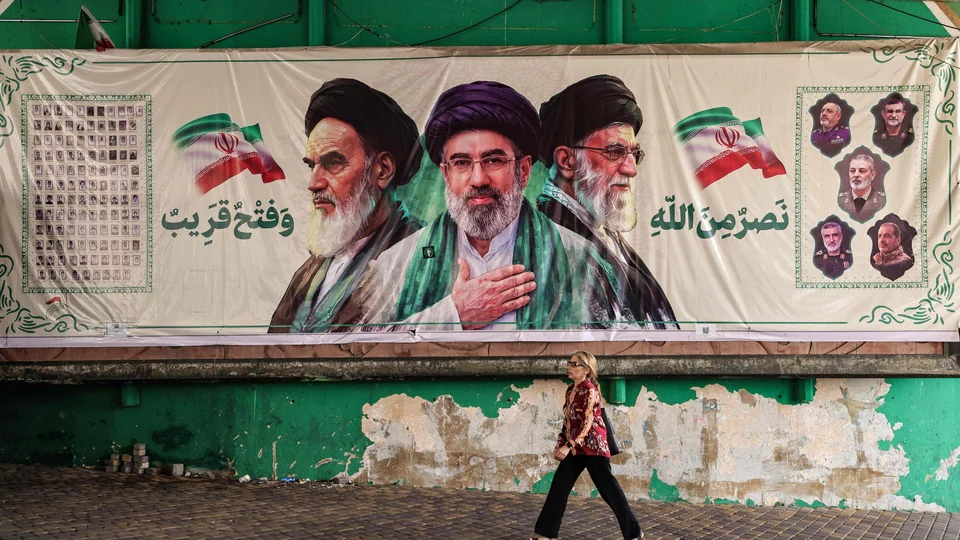
Iran’s Supreme Leader Mojtaba Khamenei has called for an end to the uncertain situation between Tehran and Washington, signalling that the country’s leadership wants a clearer outcome to the ongoing confrontation with the United States. President Masoud Pezeshkian said Khamenei had instructed officials to move beyond the current condition of neither war nor peace.
The statement comes as diplomatic efforts to end the conflict remain stalled despite discussions about a possible agreement. Iran has maintained that it is prepared to negotiate, but it will not surrender its national interests under military or economic pressure.
Speaking at an event on Monday, November 9, Pezeshkian said Iran could pursue negotiations while maintaining its dignity and defending its rights. His remarks were reported by the semi-official Tasnim News Agency.
The comments suggest Tehran is seeking a way out of the prolonged confrontation without accepting the conditions demanded by Washington. However, the two sides remain divided over the sequence of steps required to end hostilities, particularly the US blockade of Iranian ports, sanctions relief and restrictions involving the Strait of Hormuz.
Pezeshkian Says Iran Is Ready for Talks but Will Not Surrender to Pressure
President Masoud Pezeshkian said Iran should avoid another war if negotiations could secure the country’s rights and produce an acceptable settlement. He presented diplomacy as a possible route to ending the confrontation but rejected the idea that Tehran would negotiate from a position of submission.
“We can negotiate with dignity and bring the issue to an end with dignity,” Pezeshkian said.
He also made clear that Iran would not accept demands imposed through threats or force. “We will not surrender to force and bullying,” he said, adding, “We seek our rights, but we will not submit to coercion.”
The distinction is important for understanding Tehran’s position. Iran is not ruling out diplomatic engagement, but it wants negotiations to recognise its demands rather than require unilateral concessions before an agreement can be reached.
Pezeshkian’s remarks also indicate that the country’s leadership wants officials to find a way forward rather than allow the present uncertainty to continue indefinitely. However, the statement does not amount to a new ceasefire agreement or confirmation that Washington and Tehran have resolved their differences.
What does ‘neither war nor peace’ mean?
The phrase describes a situation in which two countries are not engaged in an uninterrupted full-scale military confrontation but have also failed to establish a stable peace. Military threats, economic pressure, limited attacks and diplomatic exchanges can continue without a comprehensive settlement.
For Iran, the current situation involves several overlapping disputes. The conflict has created security risks, disrupted regional trade and energy transportation, and increased uncertainty around the future of its relations with the United States and neighbouring countries.
Even when direct military operations are limited, the absence of a formal agreement leaves both sides exposed to renewed escalation. A confrontation involving the Strait of Hormuz also has consequences beyond the two countries because the waterway is a major route for international energy shipments.
Khamenei’s reported instruction to end this situation therefore points to a desire for a more definite outcome. Whether that means a negotiated settlement, a more durable ceasefire or another arrangement will depend on the positions adopted by Tehran and Washington.
What Has Donald Trump Said About Renewed Strikes on Iran?
US President Donald Trump has repeatedly warned that military action against Iran could resume if diplomatic efforts fail. His statements have created uncertainty over whether Washington is prepared to extend the ceasefire or use further military pressure to secure concessions from Tehran.
On Sunday, however, Trump indicated that fresh attacks were unlikely as long as negotiations continued and there was a possibility of reaching a strong agreement.
His remarks represented a more cautious public position than some of his earlier warnings about resuming strikes. Trump had previously suggested that military operations could restart after the US midterm elections, although no major new US military operation had been announced at the time of Pezeshkian’s remarks.
The US president is also scheduled to meet Qatar’s Prime Minister and Foreign Minister Sheikh Mohammed bin Abdulrahman Al-Thani at the White House on Monday. Qatar has played an important diplomatic role in regional discussions, making the meeting relevant to efforts to prevent another escalation.
However, Trump’s comments do not mean that Washington has accepted Iran’s ceasefire proposal. The US administration continues to object to the terms Tehran has put forward, particularly the proposed sequence for dealing with the nuclear issue and sanctions.
Why the US-Iran Peace Negotiations Remain Stuck
The central obstacle is that Iran and the United States disagree over what should happen first. Tehran wants immediate steps to reduce military and economic pressure, while Washington has rejected an arrangement that would postpone major disputes, including Iran’s nuclear programme, until a later stage.
Iran’s proposed framework focuses initially on ending the immediate confrontation. It includes an end to the US blockade of Iranian ports, the removal of some sanctions and a halt to air strikes against Iran.
In return, Tehran would end its blockade of the Strait of Hormuz. Further discussions about Iran’s nuclear programme and additional sanctions would take place in a subsequent phase.
Iran has argued that this framework could be finalised within two days. The proposal is designed to separate immediate security and maritime issues from more complicated negotiations over the nuclear programme.
Washington, however, has not accepted that sequence. US Secretary of State Marco Rubio dismissed Iran’s conditions on Sunday, describing them as “outrageous and ridiculous and really not realistic”.
His comments underline the gap between the two sides. The US wants an agreement that addresses its concerns rather than simply suspending immediate hostilities, while Iran wants the blockade and military pressure addressed before entering broader negotiations.
Iran defends its proposal as the most reasonable option
Iranian Foreign Ministry spokesperson Esmaeil Baghaei defended the proposal on Monday, describing it as the most reasonable offer currently available.
Tehran’s argument is that an immediate reduction in military confrontation and restrictions on maritime activity could create the conditions needed for more complicated diplomatic discussions. Iran wants the initial agreement to focus on ending the immediate crisis rather than attempting to resolve every longstanding dispute at once.
But the US position suggests that Washington is reluctant to separate the immediate ceasefire arrangements from wider questions about Iran’s nuclear activities and regional security.
This disagreement over the order of negotiations could prove as difficult to resolve as the substantive issues themselves. Even if both governments agree that a temporary reduction in hostilities is desirable, they still need to determine what each side must do first and how compliance would be verified.
Strait of Hormuz and US Blockade Remain Central to the Dispute
The Strait of Hormuz has become one of the most important issues in the negotiations because of its role in global energy transportation. The narrow waterway connects the Persian Gulf with the Gulf of Oman and provides a major shipping route for oil and liquefied natural gas exports from the region.
Disruptions to shipping through the strait can affect energy supplies, transportation costs and international markets. The consequences are not limited to countries directly involved in the conflict because energy-importing economies depend on the uninterrupted movement of fuel through the region.
Iran’s proposal links the reopening of the Strait of Hormuz to an end to the US blockade of its ports. Tehran has indicated that it would stop its own blockade in return for Washington lifting its restrictions.
This creates a significant negotiating challenge. Both sides would need to agree on the timing and implementation of their respective steps to prevent one party from making concessions while the other maintains its restrictions.
Shipping security is also a concern because attacks on commercial vessels can undermine confidence even when governments are discussing a ceasefire. Tanker incidents in the Gulf and around the Strait of Hormuz have added to concerns about the safety of maritime trade.
Iran-US Conflict: What Has Happened Since February 28?
The current confrontation began on February 28, 2026, when the United States and Israel launched military operations against Iran. The conflict has since expanded into a wider regional crisis, involving military exchanges, threats to shipping and growing diplomatic pressure.
More than eight months into the confrontation, neither side has secured a settlement that addresses the central disagreements. Trump has played down the likelihood of an immediate major escalation but has continued to reject Iran’s existing ceasefire conditions.
Iranian state media recently reported a US strike on Qeshm Island, a strategically located Iranian island near the Strait of Hormuz. Iranian officials said no vital infrastructure or essential services were affected. The reported incident added to concerns that military action could resume even as diplomatic contacts continue.
Tehran has also been accused of targeting tankers in the Gulf and the Strait of Hormuz during November. Such incidents have increased the risks for commercial shipping and reinforced the importance of maritime security in any future agreement.
The conflict has also affected other countries in the region. Iran has carried out attacks on Gulf states, while the fighting has coincided with an Israeli military offensive in Lebanon and continued activity by armed groups aligned with Tehran.
Yemen’s Houthi movement, which is aligned with Iran, has also claimed attacks involving Saudi Arabia. These developments have widened the regional security concerns surrounding the conflict, although the actions of Iran-aligned groups should not automatically be treated as direct Iranian military operations.
Why Qatar’s Role Matters in the US-Iran Diplomatic Effort
Qatar has maintained diplomatic channels with different parties in the region and has played a role in efforts to reduce tensions. Its position gives Doha an opportunity to communicate with governments that may not have direct or reliable diplomatic relations with one another.
The planned White House meeting between Trump and Sheikh Mohammed bin Abdulrahman Al-Thani comes at a sensitive point in the negotiations. Qatar’s prime minister has been involved in regional diplomatic contacts, including discussions aimed at preventing further escalation.
Qatar’s involvement does not mean that it can independently secure an agreement. Any settlement will ultimately require decisions by Washington and Tehran, particularly on the blockade, sanctions, military activity and the nuclear issue.
Nevertheless, communication through regional intermediaries can help clarify positions, reduce misunderstandings and identify possible areas of compromise. This may become increasingly important if direct negotiations remain difficult.
What Could Happen Next in the US-Iran Conflict?
The immediate question is whether Iran and the United States can agree on a limited arrangement that reduces the risk of renewed fighting. Pezeshkian’s comments suggest that Tehran wants officials to move towards a clearer outcome, while Trump’s latest remarks indicate that Washington is still considering diplomacy as an alternative to further strikes.
Several issues will determine whether the negotiations make progress:
- Ending the port blockade: Iran wants the United States to lift restrictions on its ports as part of an initial agreement.
- Reopening the Strait of Hormuz: Tehran has offered to end its blockade of the strategic waterway in return.
- Sanctions relief: Iran wants some economic restrictions removed, but the extent and timing remain disputed.
- Military restraint: Both sides would need to prevent renewed attacks while negotiations continue.
- Nuclear negotiations: Washington and Tehran still need to address Iran’s nuclear programme, an issue that Iran wants to discuss in a later phase.
- Verification: Any agreement would require a mechanism to confirm that both sides are meeting their commitments.
There is also a risk that a limited agreement could fail if either side believes the other is not complying. The continued reports of military incidents and attacks on commercial shipping show how quickly tensions could rise again.
Can Mojtaba Khamenei’s Directive Break the US-Iran Deadlock?
The reported instruction from Mojtaba Khamenei is significant because it indicates that Iran’s leadership wants an end to the prolonged uncertainty with Washington. Pezeshkian’s remarks also show that Tehran is publicly presenting negotiations as an acceptable option, provided its demands are not dismissed under pressure.
However, a directive to end the neither-war-nor-peace situation is not the same as an agreement with the United States. The two governments remain divided over the conditions for ending hostilities, the future of the Strait of Hormuz, sanctions and Iran’s nuclear programme.
Trump’s willingness to keep negotiations open may provide an opportunity for diplomacy, but his rejection of Iran’s proposal demonstrates that a settlement is not yet within reach.
The coming diplomatic discussions, including Qatar’s engagement with Washington, could help establish whether a limited agreement is possible. For now, Iran’s position is that it is prepared to negotiate without surrendering its rights, while the United States continues to demand terms Tehran has not accepted.
Until the two sides resolve these differences and establish a mechanism to implement an agreement, the risk of renewed military confrontation will remain. The challenge for both governments is to turn their public willingness to negotiate into concrete steps that can bring the conflict to an end.
For breaking news and live news updates, like us on Facebook or follow us on Twitter and Instagram. Read more on Latest World on thefoxdaily.com.



COMMENTS 0