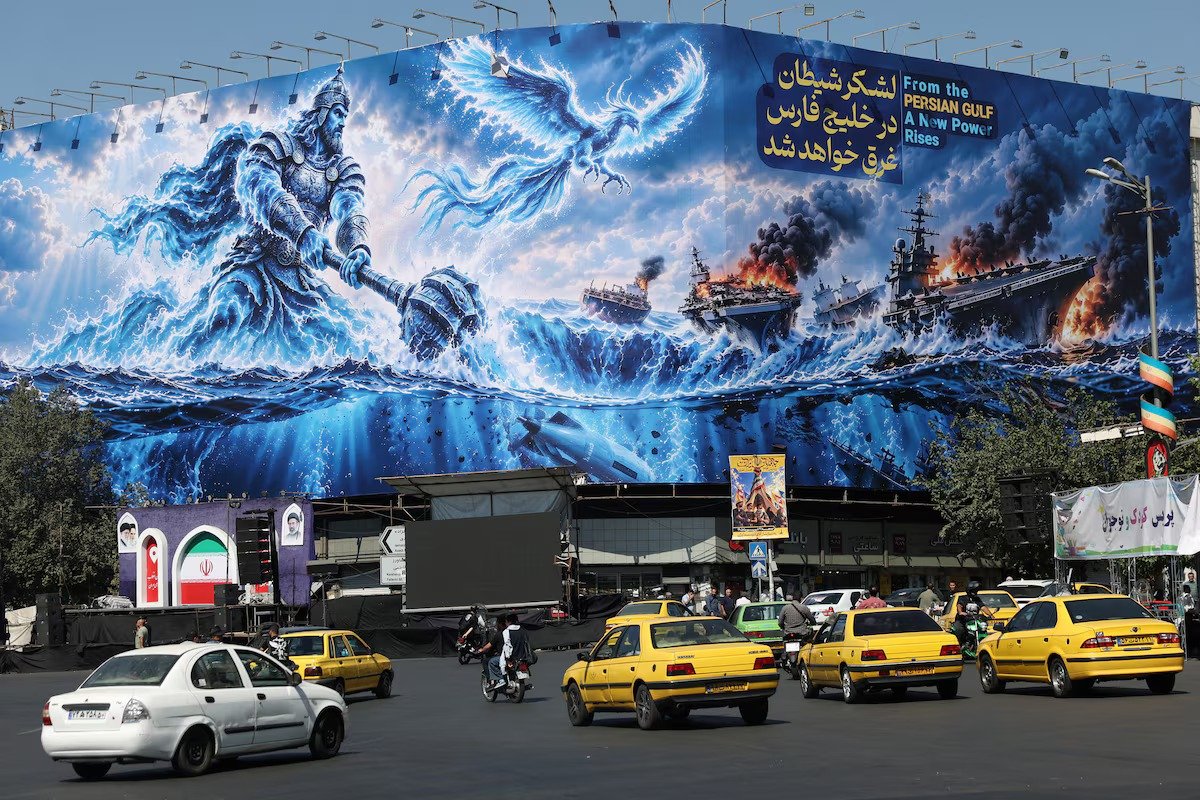
Iran has defended its proposal to end the war with the United States, insisting that a two-day negotiating framework could provide a practical starting point for peace despite Washington’s rejection of Tehran’s conditions. The diplomatic dispute comes as Qatar intensifies mediation efforts and US President Donald Trump prepares to meet Qatari Prime Minister Sheikh Mohammed bin Abdulrahman Al-Thani in Washington.
The proposed arrangement would initially focus on ending military hostilities, lifting the US blockade of Iranian ports and addressing sanctions. In return, Tehran would stop its blockade of the Strait of Hormuz. Discussions on Iran’s nuclear programme and additional sanctions would follow at a later stage.
However, the administration of President Donald Trump has repeatedly dismissed the proposal. US Secretary of State Marco Rubio described Iran’s conditions as unrealistic, while Iranian Foreign Ministry spokesperson Esmaeil Baghaei defended them as the most reasonable offer currently available.
The disagreement highlights the substantial distance between Washington and Tehran, even as both sides face pressure to prevent another escalation. More than eight months after the conflict began on February 28, 2026, attacks continue across the Gulf, commercial shipping remains under threat and a lasting political settlement remains uncertain.
What Is Iran’s Two-Day Peace Proposal?
Iran’s proposal seeks to separate an immediate end to the fighting from the more complicated negotiations surrounding its nuclear programme and wider economic restrictions. Tehran has suggested that the initial framework could be condensed into a two-day timeframe, potentially allowing both sides to establish the basic conditions for ending the conflict without resolving every disagreement at once.
The proposal contains several interconnected measures:
- End to the US blockade: Washington would lift its blockade of Iranian ports, removing a major obstacle to Iran’s maritime trade.
- Sanctions relief: The United States would lift some sanctions as part of the initial arrangement.
- Halt to bombing: Military strikes against Iran would stop under the proposed framework.
- Iranian commitment on shipping: Tehran would end its own blockade of the Strait of Hormuz.
- Further negotiations: Discussions about Iran’s nuclear programme and remaining sanctions would take place after the initial agreement.
The sequencing is central to the Iranian approach. Rather than attempting to settle every contentious issue before stopping the fighting, Tehran wants an initial agreement focused on military de-escalation and maritime access. The remaining political and nuclear questions would then be addressed through subsequent negotiations.
However, this approach leaves important questions unresolved. Washington would need to determine whether Iran’s commitments could be verified, how quickly sanctions relief would take effect and what guarantees would prevent military operations from restarting. Tehran, meanwhile, would need assurances that an end to bombing and the lifting of restrictions would be implemented rather than delayed.
These disagreements help explain why a proposal that Iran presents as a relatively quick route to negotiations has not persuaded the US administration.
US Rejects Tehran’s Conditions as Unrealistic
The Trump administration has shown little willingness to accept Iran’s proposed sequence of concessions. Speaking on Sunday, November 8, Secretary of State Marco Rubio criticised Tehran’s conditions, describing them as “outrageous and ridiculous and really not realistic.”
His remarks indicate that Washington does not consider Iran’s offer an adequate basis for ending the conflict. The US position suggests that a ceasefire arrangement cannot simply postpone difficult questions about Iran’s nuclear activities, regional security and maritime restrictions.
Rubio also cautioned against expectations of an immediate diplomatic breakthrough. Despite renewed mediation efforts and domestic pressure to bring the war to an end, he said he did not believe an agreement was imminent.
The disagreement reflects competing priorities. Iran wants the immediate removal of military and economic pressure, while the United States is seeking an agreement that addresses broader security concerns. Neither side appears ready to accept the other’s preferred negotiating framework.
For Tehran, accepting a halt to bombing without meaningful relief from the blockade and sanctions could weaken its negotiating position. For Washington, providing concessions before reaching an enforceable wider agreement could create concerns about Iran retaining leverage over regional shipping and security.
Trump Signals Reluctance to Resume Major Strikes
Although Trump has rejected Iran’s existing proposal, he has also played down the likelihood of major military operations restarting in the immediate future. In a telephone interview with CNN on Sunday, the president said renewed strikes would be highly unlikely if negotiations continued to make progress and the two sides signed what he described as a strong agreement.
His comments suggest that the White House is keeping diplomatic options open rather than treating another major military campaign as inevitable. However, Trump’s position remains conditional on the outcome of negotiations.
The president also indicated that the US military had identified additional infrastructure targets in Iran should fighting resume. He specifically referred to 38 bridges that could be struck if military action restarted.
The warning demonstrates that Washington continues to maintain military pressure alongside diplomatic engagement. It also underlines the risks facing the negotiations: although Trump has expressed a preference for an agreement, the possibility of renewed attacks remains part of the US strategy.
Infrastructure targeting could also have consequences beyond immediate military operations. Bridges and other transport facilities are important for civilian movement, trade and essential services. Any renewed campaign involving such targets would therefore raise concerns about damage to Iran’s economy and the wider population.
Qatar Intensifies Its Role as a Peace Mediator
Qatar is emerging as a central diplomatic channel as Washington and Tehran struggle to agree on the terms of negotiations. Qatari Prime Minister and Foreign Minister Sheikh Mohammed bin Abdulrahman Al-Thani is scheduled to meet Trump and Vice President JD Vance in Washington on Monday, November 9.
The meeting follows Al-Thani’s visit to Tehran last week, where he engaged with Iranian officials. His diplomatic activity reflects Qatar’s continuing effort to communicate between the opposing sides and identify possible compromises.
Since the beginning of the conflict, Qatar has played an important intermediary role by conveying messages, discussing proposals and attempting to narrow differences between Washington and Tehran. Its diplomatic position gives it access to both sides at a time when direct negotiations remain difficult.
The meeting with Trump and Vance is particularly significant because it brings together senior US decision-makers and a mediator who has recently held discussions in Iran. Qatar could help clarify which parts of Tehran’s proposal are negotiable and what conditions Washington would require before accepting a new framework.
However, mediation does not guarantee an agreement. Qatar can facilitate communication, but the final decisions on military operations, sanctions, maritime restrictions and nuclear negotiations remain with the parties involved.
JD Vance Joins Diplomatic Discussions
US Vice President JD Vance is also expected to participate in discussions with Al-Thani. Vance previously led negotiations surrounding a short-lived truce in June, giving him direct experience with the diplomatic challenges involved in securing an agreement between Washington and Tehran.
His involvement is important because the vice president has been closely connected to the administration’s efforts to manage the conflict. The meeting could provide an opportunity to assess whether the earlier negotiating framework can be revived or whether a different approach is needed.
Vance’s political position has also become more complicated following the Republican Party’s poor performance in the November 2026 midterm elections. Senior Republicans, including Vance, have blamed the Iran War for contributing to the party’s disappointing electoral results.
The election outcome has increased pressure on the administration to demonstrate progress towards ending the conflict. A prolonged war could continue to create political difficulties for Republicans, particularly if military costs, energy disruptions and regional instability remain unresolved.
Nevertheless, domestic political pressure does not automatically translate into an agreement. The administration must still reconcile its demand for a stronger settlement with Iran’s insistence on immediate relief from military and economic restrictions.
UAE Warns of a Long Period of Regional Uncertainty
Concerns about an early agreement are not limited to Washington. Senior United Arab Emirates official Anwar Gargash also expressed doubts about the prospects for a comprehensive political settlement between the United States and Iran.
Speaking on Monday, Gargash warned that the region should prepare for an extended period of uncertainty rather than assume that the conflict would end through a quick diplomatic breakthrough.
He said the region should prepare for a situation in which neither a decisive resolution nor a stable regional order could be taken for granted.
The warning reflects the wider consequences of the conflict for Gulf countries. Iranian attacks on regional states, threats to commercial shipping and the disruption of energy supplies have made the war a security and economic concern far beyond the immediate confrontation between Washington and Tehran.
Gulf governments also face the challenge of protecting critical infrastructure while avoiding further escalation. Even if direct US-Iranian fighting decreases, the region could remain vulnerable to attacks by allied armed groups, maritime incidents and unresolved political disputes.
US Strike Reported on Iran’s Qeshm Island
Diplomatic efforts are continuing alongside military activity. Iranian state media reported that the United States carried out strikes on Qeshm Island overnight on Sunday.
A provincial official told Iran’s semi-official Fars news agency on Monday that the reported strikes did not damage vital infrastructure or disrupt essential services. The United States had not publicly commented on the Iranian media reports at the time of the report.
Qeshm is a strategically important island in the Persian Gulf, close to the Strait of Hormuz. Its location gives it significance in discussions surrounding maritime security and the movement of commercial vessels through one of the world’s most important energy shipping routes.
The reported attack is another indication that diplomatic engagement has not yet produced a complete halt to military operations. Even limited strikes can complicate negotiations by increasing mistrust and creating pressure for retaliation.
For the peace process to advance, both sides would need to establish clearer arrangements for preventing further attacks while negotiations continue.
Attacks on Tankers Keep Strait of Hormuz Under Pressure
Commercial shipping remains one of the most immediate concerns in the conflict. Attacks on tankers in the Gulf and the Strait of Hormuz increased sharply in October and continued at the highest reported rate since the beginning of the war, according to figures from international maritime agencies cited last week.
The Strait of Hormuz is a critical passage connecting the Persian Gulf with the Gulf of Oman and international waters. It is used by major oil and gas exporters to transport energy supplies to customers around the world.
Any prolonged disruption can affect shipping costs, insurance premiums, energy prices and the reliability of global supply chains. The threat is particularly serious because commercial vessels from different countries use the route, making maritime incidents an international concern.
Iran has maintained pressure on shipping through its restrictions around the strait. At the same time, vessels have continued reporting attacks and other security incidents in the surrounding waters.
On Sunday, Iran said a tanker had struck a mine east of the Strait of Hormuz. Tehran does not typically acknowledge responsibility for attacks on vessels that report being hit by projectiles, making it important to distinguish between confirmed incidents and claims about who was responsible.
The maritime situation also illustrates why the Iranian peace proposal places the Strait of Hormuz at the centre of an initial agreement. A mutual commitment to restore shipping access could reduce immediate risks for energy markets and commercial operators.
War’s Consequences Extend Across the Middle East
The conflict has developed into a wider regional crisis since the United States and Israel began military operations against Iran on February 28, 2026. Its consequences have extended beyond the direct confrontation, affecting Gulf Arab countries, Lebanon, Yemen and international energy markets.
Iranian strikes on Gulf Arab states have raised security concerns among neighbouring governments. The war has also coincided with a major Israeli offensive in Lebanon during the spring and summer, adding another layer of instability to an already fragile regional environment.
Yemen has also experienced renewed conflict involving the Iran-allied Houthi movement. The group has continued to play a role in the wider regional confrontation, creating additional risks for neighbouring countries and commercial infrastructure.
These developments make a comprehensive settlement more difficult because the conflict is no longer limited to the relationship between Washington and Tehran. Any durable regional arrangement would need to account for the actions of allied armed groups, the security concerns of Gulf governments and the wider disputes involving Israel and Lebanon.
Houthis Claim Attack on Saudi Aramco Building
Yemen’s Iran-allied Houthi group said on Sunday that it had struck an office building belonging to Saudi state oil company Aramco in Riyadh.
Saudi Arabia’s Energy Ministry confirmed that an attack had blown out windows across several floors of a building in the city’s financial district. However, the ministry did not assign responsibility for the incident.
The difference between the Houthi claim and the Saudi statement is important. While the group publicly claimed the attack, the Saudi authorities confirmed damage without independently attributing it to the Houthis.
The incident highlights the vulnerability of critical energy infrastructure during the conflict. Saudi Arabia is one of the world’s leading oil producers, and attacks on facilities connected to its energy industry can increase concerns about the reliability of regional supplies.
It also demonstrates how the war’s consequences can spread through regional alliances. Even when Washington and Tehran are considering diplomatic options, attacks involving groups aligned with Iran can complicate efforts to establish a wider ceasefire.
Why a Peace Agreement Remains Difficult
Despite renewed diplomatic activity, several major obstacles stand between the United States and Iran.
Disagreement Over the Order of Concessions
Iran wants the initial agreement to deliver an end to bombing, the removal of the US port blockade and some sanctions relief. Washington, however, has rejected the proposal in its current form. The two sides therefore disagree not only about what a final settlement should contain but also about which concessions should come first.
Unresolved Nuclear Questions
Iran’s nuclear programme remains a major issue in the broader dispute. Tehran’s proposal would postpone those discussions until after the initial arrangement, while Washington has broader security concerns that it wants addressed through negotiations. Delaying the issue could make an immediate agreement easier to discuss, but it would not remove the underlying disagreement.
Maritime Security and Energy Supplies
The Strait of Hormuz remains a critical pressure point. A settlement would need credible commitments to restore commercial shipping and prevent further attacks. Without reliable maritime access, energy markets and regional economies could remain exposed even if direct military operations decline.
Regional Armed Groups
Attacks involving the Houthis and other regional actors complicate the possibility of a bilateral agreement. A deal between Washington and Tehran would not automatically guarantee that every allied group would stop military operations or that neighbouring countries would feel secure.
Domestic Political Pressures
Trump faces growing pressure to show that the war can be brought to an end, particularly following the Republican Party’s poor midterm performance. Iran, meanwhile, has its own political and strategic reasons to seek sanctions relief and an end to military pressure without appearing to surrender key negotiating leverage.
What Happens Next in US-Iran Peace Talks?
The meeting between Trump, Vance and Qatar’s prime minister could help determine whether there is room for a revised negotiating framework. Al-Thani’s recent visit to Tehran gives Qatar an opportunity to communicate Iran’s position directly while exploring what Washington might accept.
One possible path would involve an initial agreement to stop attacks and restore maritime access, followed by more detailed negotiations on sanctions and nuclear issues. However, such an arrangement would require both governments to agree on verification, implementation and consequences if either side violates its commitments.
Another challenge will be ensuring that a reduction in direct US-Iranian hostilities also leads to fewer attacks across the wider region. The reported strike on Qeshm Island, tanker incidents and the attack claimed by the Houthis against the Aramco building show how quickly the security situation can undermine diplomatic progress.
For now, Iran is defending its two-day proposal as a reasonable starting point, while Washington continues to reject its conditions and signals that a stronger agreement is necessary. Qatar’s mediation may help narrow the differences, but officials on both sides of the Gulf have warned against expecting an immediate breakthrough.
The central question is whether Washington and Tehran can agree to stop the fighting without first resolving every major dispute. Until they find a mutually acceptable framework, the region is likely to remain exposed to military escalation, maritime disruption and prolonged political uncertainty.
For breaking news and live news updates, like us on Facebook or follow us on Twitter and Instagram. Read more on Latest World on thefoxdaily.com.





COMMENTS 0