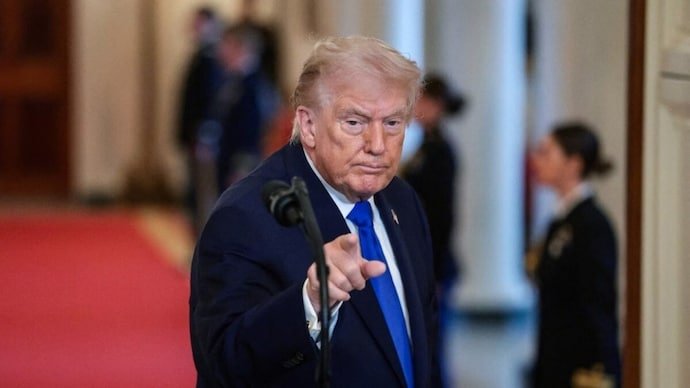
After months of escalating tensions, military threats, and fears of a broader conflict in the Middle East, US President Donald Trump has announced that a major agreement with Iran may be only days away from completion. Speaking at the White House, Trump declared that the United States had achieved what he described as a “great settlement” with Iran and suggested that only final documentation remains before a formal signing ceremony can take place.
The development has immediately attracted global attention because the stakes extend far beyond Washington and Tehran. A successful agreement could influence Oil Prices, regional security, international trade routes, and one of the world’s most sensitive geopolitical issues: Iran’s nuclear program.
However, while Trump has projected confidence, Iranian officials have signaled that negotiations are still ongoing and that key issues remain unresolved. This contrast highlights the complexity of an agreement that could become one of the most consequential diplomatic breakthroughs of the decade.
What Trump Announced About the Proposed Iran Deal
According to Trump, negotiators have largely completed discussions and are now finalizing the documents necessary for a formal agreement. He suggested that a signing ceremony could be held in Europe within days and confirmed that Vice President JD Vance would represent the United States.
The president also claimed that discussions had progressed significantly enough to avoid planned military action and that approval had been secured at the highest levels of Iran’s leadership.
Trump’s remarks indicate that negotiators have moved beyond broad concepts and into the final stage of implementation planning, although the exact text of the agreement has not been publicly released.
Why the Iran Nuclear Issue Remains the Centerpiece
The most significant element of the proposed agreement appears to be Iran’s commitment not to pursue nuclear weapons. Trump repeatedly emphasized that preventing Iran from becoming a nuclear-armed state was the primary objective of the negotiations.
For decades, concerns surrounding Iran’s nuclear activities have been a major source of tension between Tehran and Western governments. While Iran has consistently maintained that its nuclear program is intended for peaceful purposes such as energy production and scientific research, critics have argued that the technology could potentially be used for military purposes.
If the reported agreement includes robust verification mechanisms and monitoring systems, it could address one of the most persistent security concerns in international Diplomacy.
The Long History Behind US-Iran Tensions
To understand why this potential agreement matters, it is important to examine the broader relationship between the United States and Iran.
Relations have remained strained since the Iranian Revolution of 1979. Over the decades, disputes have centered on sanctions, regional influence, military confrontations, and Iran’s nuclear ambitions. Multiple diplomatic initiatives have attempted to reduce tensions, but progress has often been interrupted by political changes, regional conflicts, and mutual distrust.
The latest negotiations come after a period of heightened instability in the Middle East, making the potential agreement particularly significant.
Could the Strait of Hormuz Reopen Without Restrictions?
One of the most noteworthy aspects of Trump’s announcement was his claim that the Strait of Hormuz would fully reopen following the signing of the agreement.
The Strait of Hormuz is one of the world’s most strategically important waterways. It serves as a critical route for global energy shipments, connecting oil-producing Gulf nations to international markets.
Any disruption in this narrow passage can have immediate consequences for global energy prices, transportation costs, and economic stability.
| Strategic Area | Importance to Global Economy |
|---|---|
| Oil Exports | Major route for international crude oil shipments |
| Natural Gas Trade | Critical pathway for LNG exports |
| Global Shipping | Supports international trade routes |
| Energy Prices | Direct influence on fuel costs worldwide |
| Inflation | Affects transportation and production expenses |
A reduction in tensions around the Strait of Hormuz could ease concerns in global Energy Markets and provide greater stability for businesses and consumers worldwide.
Iran’s Response Suggests Caution
Despite Trump’s optimism, Iran has publicly stated that a final agreement has not yet been reached.
Iranian officials have indicated that while significant progress has been made, negotiations continue and some disagreements remain unresolved. Tehran has also emphasized that it will not compromise on what it considers its national interests.
This difference in public messaging is not unusual during sensitive diplomatic negotiations. Governments often avoid declaring victory until every provision has been reviewed and approved by relevant institutions.
Iran’s cautious approach may also reflect domestic political considerations, as leaders must balance international diplomacy with internal expectations.
Why Regional Powers Are Watching Closely
The proposed agreement has implications far beyond the United States and Iran. Middle Eastern governments have a strong interest in reducing regional tensions because prolonged instability creates security risks and economic uncertainty.
Countries across the Gulf region have invested heavily in economic diversification strategies, infrastructure projects, tourism initiatives, and technology development. These ambitions depend on a stable security environment.
As a result, many regional actors have supported efforts aimed at preventing further escalation and encouraging diplomatic solutions.
The agreement could potentially strengthen regional cooperation and create opportunities for broader dialogue on economic and security issues.
How This Deal Differs From Previous Negotiations
One reason the current negotiations are receiving so much attention is that they are taking place under very different circumstances than earlier diplomatic efforts.
Previous talks focused primarily on nuclear restrictions and sanctions relief. Today’s discussions are occurring amid changing geopolitical realities, shifting regional alliances, and growing concerns about energy security.
Several factors make the current environment unique:
- Increased demand for regional stability.
- Growing importance of energy security.
- Economic pressures affecting multiple countries.
- Greater involvement from regional stakeholders.
- Strong incentives to avoid a broader conflict.
These factors create conditions that may be more favorable for a lasting agreement than in previous negotiation cycles.
Potential Impact on Global Energy Markets
Financial markets often react quickly to developments involving Iran because of the country’s strategic role in global energy supplies.
If the agreement succeeds, several economic effects could follow.
More Stable Oil Prices
Reduced geopolitical uncertainty generally helps stabilize energy markets. Greater predictability in supply routes can ease pressure on oil prices.
Lower Inflation Risks
Energy costs influence transportation, manufacturing, agriculture, and consumer goods. Greater stability in energy markets could help limit inflationary pressures.
Improved Investor Confidence
Businesses and investors typically favor predictable geopolitical conditions. A successful agreement could improve confidence in regional economic prospects.
Stronger Global Trade Flows
Safer shipping routes and reduced security concerns can lower transportation costs and improve supply chain efficiency.
The Verification Challenge
One of the most important questions surrounding any nuclear agreement is how compliance will be monitored.
History has shown that successful nuclear agreements depend not only on political commitments but also on transparent verification mechanisms. Inspection systems, monitoring procedures, and international oversight are often critical components.
Without strong enforcement provisions, even the most ambitious diplomatic agreements can struggle to achieve their objectives.
Once the full details become public, analysts will closely examine how the agreement addresses verification and accountability.
What Happens If Negotiations Collapse?
Although optimism has increased, diplomatic negotiations remain unpredictable until a final agreement is signed.
If talks break down, several risks could quickly re-emerge:
- Renewed military tensions.
- Higher oil price volatility.
- Increased pressure on global supply chains.
- Expanded sanctions and economic restrictions.
- Greater uncertainty across international markets.
This possibility explains why governments, investors, and energy markets are closely monitoring every development.
The Bigger Story: A Changing Middle East
One overlooked aspect of the current negotiations is how dramatically the Middle East’s priorities are evolving. Across the region, governments are increasingly focused on economic growth, technology investment, infrastructure development, renewable energy projects, and attracting international capital.
These goals require stability. Consequently, many countries are placing greater emphasis on diplomacy and economic cooperation than in previous decades.
If the US-Iran agreement succeeds, it may represent more than a Nuclear Deal. It could signal a broader transformation in regional politics, where economic development increasingly outweighs geopolitical confrontation.
Future Outlook: Could This Become a Historic Diplomatic Breakthrough?
Trump’s announcement has raised expectations that a significant diplomatic achievement may be within reach. His administration believes that major issues have been resolved and that only final procedural steps remain before an agreement can be signed.
Yet Iran’s more cautious position suggests that important details still need to be finalized. Diplomatic history shows that the final stages of negotiations are often the most challenging, as governments work through legal language, implementation mechanisms, and political sensitivities.
If a deal is ultimately signed, it could reduce regional tensions, strengthen energy security, improve global economic stability, and reshape Middle Eastern diplomacy for years to come. It may also become one of the defining foreign policy developments of Donald Trump’s presidency.
For now, the world is watching closely. The coming days could determine whether years of confrontation give way to a new phase of diplomacy or whether one of the most complex geopolitical disputes of the modern era remains unresolved.
For breaking news and live news updates, like us on Facebook or follow us on Twitter and Instagram. Read more on Latest World on thefoxdaily.com.





COMMENTS 0