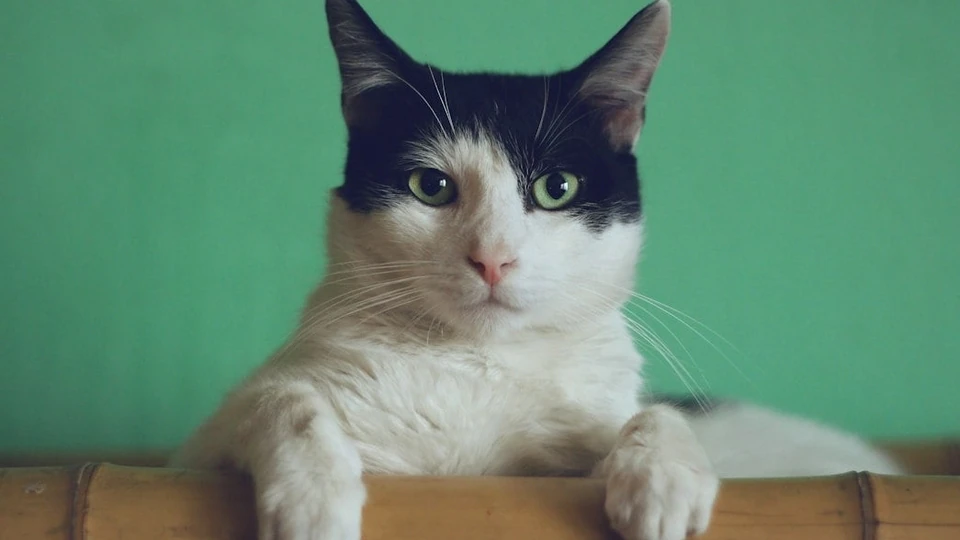
Imagine a cat sitting quietly near a park bench while two people discuss sensitive information. Neither person suspects that the animal is part of an intelligence operation. But hidden beneath its fur is a miniature transmitter, an antenna and a microphone designed to capture their conversation.
This was the unusual idea behind one of the Central Intelligence Agency’s most unconventional Cold War experiments. Known as Operation Acoustic Kitty, the project attempted to transform an ordinary cat into a mobile surveillance device capable of approaching people without attracting attention.
The CIA wanted to use the animal to listen to conversations between suspected foreign agents and their Soviet contacts in public places. The project involved specialised equipment and reportedly cost around $20 million, according to National Geographic.
However, the experiment encountered a problem that even advanced intelligence technology could not solve: the cat had a mind of its own. Despite the equipment being developed for the mission, the animal could not reliably follow instructions or travel to the locations selected by intelligence officers.
Operation Acoustic Kitty eventually became a famous example of how an ambitious technological idea can fail when practical limitations are overlooked.
What Was Operation Acoustic Kitty?
Operation Acoustic Kitty was a CIA research project developed during the Cold War. Its objective was to explore whether a living animal could be used to collect intelligence by secretly recording conversations in places where conventional surveillance equipment might be difficult to install.
During the 1960s, intelligence agencies were looking for increasingly sophisticated ways to monitor rival governments and suspected intelligence networks. Listening devices, concealed microphones and other surveillance technologies were important parts of espionage operations.
However, placing recording equipment close enough to a conversation was not always easy. People could notice unfamiliar objects, suspicious equipment or individuals behaving unusually. The CIA therefore explored whether an animal could serve as a less conspicuous surveillance platform.
Cats appeared suitable for the concept because they could move around buildings, gardens and public spaces without attracting the same attention as a human operative. A cat sitting near a group of people might seem completely ordinary, even when those people were discussing sensitive matters.
The agency’s plan was to combine this natural mobility with miniature electronic equipment. If successful, the animal could approach a conversation, capture audio and transmit it to an intelligence officer positioned nearby.
The project began in 1964 and continued through several years of research and testing. Its central challenge was not simply developing a small listening device but making an animal behave like a controllable intelligence asset.
How the CIA Planned to Turn a Cat Into a Spy
The surveillance system involved placing several components inside or around the animal’s body. According to the CIA’s historical account, the equipment included a microphone implanted in one of the cat’s ears, a miniature radio transmitter beneath its skin and an antenna incorporated into its fur.
Each component had a specific purpose. The microphone was intended to capture nearby conversations, while the transmitter would send the recorded audio to CIA personnel monitoring the operation from a distance. The antenna helped the system communicate with the receiving equipment.
The design aimed to make the technology difficult for anyone observing the cat to detect. Unlike a conventional recording device, the equipment would not need to be placed inside a bag, hidden beneath a bench or carried by an undercover operative.
The concept was particularly ambitious for the 1960s, when electronic surveillance equipment was considerably larger and more difficult to conceal than many modern devices.
Miniaturising the components was only one part of the challenge. The CIA also needed the animal to approach the intended targets, remain close enough to capture their conversations and avoid behaving in ways that would reveal the operation.
That requirement proved much more difficult than developing the listening equipment itself.
Why Did the CIA Choose a Cat for Espionage?
The choice of a cat was based on its ability to move through everyday environments without immediately attracting suspicion. Cats regularly appear in parks, residential areas and public spaces, where people generally do not consider their presence unusual.
For intelligence officers, this offered a potential advantage. A human operative might attract attention by standing close to a conversation for an extended period. A cat could theoretically occupy the same space without raising similar concerns.
The CIA’s concept relied on the assumption that the animal would naturally approach people and remain nearby long enough to record useful information.
However, this reasoning overlooked an important difference between an animal and a conventional surveillance device. A microphone can be positioned exactly where an operator wants it, but a cat cannot be expected to remain in a particular location simply because intelligence officers need it there.
Even if an animal is trained to respond to certain instructions, its behaviour can change depending on its surroundings, distractions and instincts. These limitations became the defining weakness of Acoustic Kitty.
The $20 Million Experiment Faced an Unexpected Problem
Operation Acoustic Kitty reportedly cost approximately $20 million, according to National Geographic. The expense reflected the specialised research, surgical procedures, electronic equipment and training required to develop the experimental surveillance system.
Despite the investment, the project struggled with a fundamental problem: the cat could not be reliably controlled in the field.
The CIA needed an animal that would move towards selected individuals and remain within recording range. Instead, the cat behaved unpredictably and did not consistently follow the intended surveillance route.
The problem was particularly serious because intelligence operations depend on timing and precision. A listening device that works perfectly but cannot be positioned where it is needed has little practical value.
The experiment demonstrated that technological sophistication alone could not overcome the limitations of using a living animal for a highly controlled mission.
Was the CIA Spy Cat Really Hit by a Taxi?
One of the most widely circulated stories about Operation Acoustic Kitty involves an alleged accident during a field test. According to a 2018 report by History.com, CIA personnel took the specially equipped cat to a park to record a conversation between two men sitting on a bench.
Instead of approaching the intended targets, the animal reportedly wandered into the road and was struck by a taxi.
The story became one of the most memorable details associated with the project, reinforcing the idea that the CIA’s unusual experiment had ended in disaster.
However, the agency has challenged this version of events. In its historical account, the CIA explained that the taxi story originated from a former official who made a joke about the cat being killed by a taxi or bus during a 1979 discussion.
The former official later acknowledged that the remark was not intended to be taken literally. As a result, the widely repeated claim that the spy cat died during its first field mission should not be treated as an established fact.
The distinction is important because the project’s failure is documented separately from the story about the animal’s alleged death. The CIA abandoned the experiment because it was not operationally practical, but that does not establish that the cat was killed by a vehicle.
Was the Spy Cat Mistreated During the Experiment?
Another controversial aspect of Operation Acoustic Kitty concerns the treatment of the animal. Because the surveillance equipment required surgical implantation, questions have been raised about whether the cat suffered during the procedures.
Some accounts have used the nickname “Frankenkitty” to describe the animal, comparing the experimental modifications to the fictional creation of Frankenstein.
The CIA rejected claims that the animal was subjected to deliberately harmful treatment. Its account said the equipment was implanted and later removed through microsurgical procedures described as low-risk and comparable to techniques used in veterinary clinics.
The agency maintained that the cat was not harmed by the procedures. However, the unusual nature of the experiment continues to attract attention because it involved using an animal as a platform for intelligence collection.
Operation Acoustic Kitty also raises broader ethical questions about the use of animals in scientific and military research. Modern discussions of animal experimentation generally focus on issues such as welfare, pain management, scientific necessity and whether alternative methods are available.
Although the CIA presented its experiment as a technical intelligence project, its unusual approach illustrates how Cold War competition encouraged agencies to explore unconventional methods of surveillance.
Why Operation Acoustic Kitty Was Abandoned in 1967
After several years of development and testing, the CIA discontinued Operation Acoustic Kitty in 1967. The main reason was the difficulty of directing the animal towards specific surveillance targets.
The listening equipment had reportedly demonstrated technical potential, but the complete system failed to meet the requirements of an operational intelligence mission.
The CIA needed predictable behaviour, reliable positioning and consistent audio collection. The cat could not provide those capabilities with sufficient reliability.
The agency later acknowledged that the experiment was not practical for its specialised requirements. The project therefore never became an operational surveillance programme in which the animal was routinely deployed to gather intelligence.
The decision illustrates an important principle in intelligence technology: a device must work not only under controlled testing conditions but also in unpredictable real-world environments.
Acoustic Kitty was an unusual attempt to combine biological behaviour with electronic surveillance. Its failure showed that a technically functioning device could still be unsuitable for the mission it was designed to perform.
From Spy Cats to Cyborg Insects: How Research Continued
The idea of using living creatures in technology did not disappear with Operation Acoustic Kitty. Decades later, researchers explored whether electronic implants could influence the movement of insects for scientific and potential surveillance applications.
One notable example involved research supported by the Pentagon’s Defense Advanced Research Projects Agency, commonly known as DARPA. The agency has funded a range of experimental technologies involving robotics, biological systems and advanced sensors.
In research conducted during the 2000s, scientists at the University of California, Berkeley, developed a cyborg beetle whose flight movements could be influenced using electronic stimulation.
The findings were published in October 2009 in the journal Frontiers in Integrative Neuroscience. Researchers demonstrated that electrical stimulation could help initiate, stop and influence the beetle’s flight movements.
The work involved electronic interfaces connected to the insect’s nervous system. Unlike the CIA’s cat experiment, which focused on capturing conversations, the beetle research investigated how biological movement could be controlled through electronic signals.
It represented a different scientific approach to combining living organisms with technology. The research also demonstrated how advances in electronics and neuroscience could make experiments involving biological systems more sophisticated.
What Operation Acoustic Kitty Reveals About Cold War Espionage
Operation Acoustic Kitty remains memorable because it shows how far intelligence agencies were willing to go in their search for surveillance advantages during the Cold War.
The CIA was not simply trying to build a smaller microphone. It was attempting to turn an ordinary animal into an intelligence platform that could move through public spaces without attracting attention.
The experiment also highlights the difference between an imaginative concept and a workable technology. The listening equipment was only one part of the system. The agency also needed reliable movement, positioning and behaviour, requirements that proved impossible to guarantee.
Today, surveillance technology relies on increasingly compact microphones, cameras, wireless networks, drones and other specialised equipment. These technologies offer capabilities that were difficult to imagine during the 1960s, although they also raise questions about privacy, security and the limits of monitoring.
More than half a century after its development, Acoustic Kitty continues to stand out as one of the CIA’s strangest Cold War experiments. Its story is not simply about an unsuccessful attempt to create a spy cat. It is a reminder that even a multimillion-dollar intelligence project can fail when the technology cannot overcome the unpredictability of the real world.
For breaking news and live news updates, like us on Facebook or follow us on Twitter and Instagram. Read more on Latest World on thefoxdaily.com.




COMMENTS 0