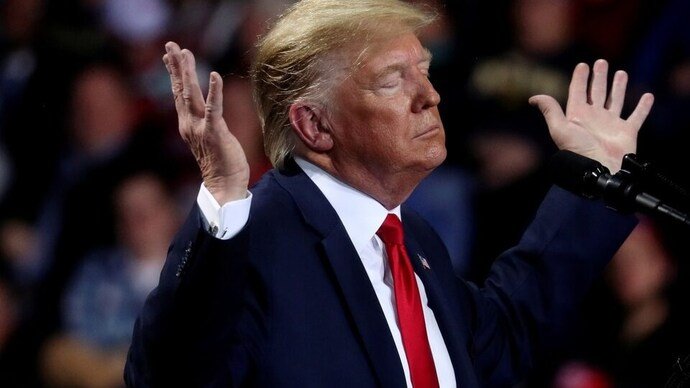
President Donald Trump has responded to the Republican Party’s sweeping defeat in the November 3, 2026, US Midterm Elections by defending his economic record, criticising the outcome and promising a political comeback. In a post on his Truth Social platform on Sunday, November 8, Trump called the result a major setback for the country and linked it to a sharp fall in stock-market value.
“America took a giant step back in History with the results of the last Election,” Trump wrote, adding that the stock market, which he described as a “ROCKETSHIP” under his leadership, had suffered a one-day loss of $3 trillion. He ended the message by telling supporters not to fear, promising that the country would return “BIGGER AND STRONGER THAN EVER BEFORE”.
The message came as Democrats secured control of both the House of Representatives and the Senate, ending Republican control of Congress. The result represents a major setback for Trump because the opposition will gain greater influence over legislation, federal spending, congressional investigations and the confirmation of presidential nominees.
Trump links Democratic victory to claimed $3 trillion market loss
Trump’s Truth Social message connected the election result with a claimed $3 trillion decline in stock-market value. His statement presented the market movement as evidence of the economic consequences of the Republican defeat, while defending the performance of financial markets during his presidency.
However, the $3 trillion figure should be understood as Trump’s claim rather than proof that the election itself caused the entire decline. A change in the combined market value of listed companies can reflect movements in share prices across multiple sectors, and stock markets respond to several factors, including interest-rate expectations, corporate earnings, economic data and geopolitical developments.
The timing of a market decline does not establish that an election result was its sole cause. Establishing a direct connection would require examining the market’s performance, investor expectations and other developments during the same trading period.
Stock-market capitalisation also differs from the amount of money investors have actually withdrawn. When share prices fall, the estimated total value of companies declines, but that does not mean an equivalent amount of cash has left the financial system.
Trump’s reference to the market therefore served as part of his political response to the election. He sought to contrast the Democratic victory with his own account of economic performance and to reassure supporters that the setback would not prevent a future recovery.
Democrats win control of both chambers of Congress
The November 3 midterm elections produced a decisive change in the balance of power in Washington. Democrats won enough seats to take control of both the House of Representatives and the Senate, giving the party a congressional majority for the next two years.
The Associated Press called Democratic control of the Senate late on election night, followed by the House early on November 4. The results included Democratic gains in states that have traditionally been competitive or Republican-leaning, making the outcome a significant setback for the party that had controlled both chambers before the vote.
In the Senate, Democrats secured several important victories, including in Texas, Ohio, Iowa, North Carolina and South Carolina. The party also made gains in the House, winning districts that had been held by Republicans and strengthening its position in several competitive areas.
The new Congress is scheduled to begin its work on January 3, 2027. Until then, Republicans retain their existing congressional majorities during the remainder of the current legislative session, although the election result has already changed the political calculations surrounding major policy decisions.
The midterms were particularly important for Trump because he had repeatedly encouraged voters to treat the election as a judgment on his presidency. He campaigned for Republican candidates, appeared at rallies and urged supporters to vote as though his own name were on the ballot.
Trump initially said Republicans would have won if he were on the ballot
As Democratic victories began emerging on election night, Trump attempted to distance himself from the Republican losses. In a Truth Social post, he wrote: “I wasn’t on the Ballot and if I was, we would have won IN A LANDSLIDE!”
The statement followed weeks of campaigning in which Trump had asked Republican supporters to behave as though he were personally contesting the election. He argued that the party needed a strong performance to protect his legislative agenda and prevent Democrats from reversing his administration’s policies.
Trump had also described the midterms as among the most important elections in American history and predicted a major Republican victory if his supporters turned out in sufficient numbers.
However, the results did not match those expectations. In an interview with Fox News after the election, Trump acknowledged that he had expected Republicans to perform better. He pointed to the large crowds at his campaign rallies, saying that many people had attended and that some could not get inside.
His remarks highlighted the difference between rally attendance and electoral performance. Large campaign events can demonstrate enthusiasm among supporters, but they do not necessarily represent the views of the wider electorate or indicate how voters will behave in individual congressional districts.
Why the midterm defeat is a major setback for Trump
Midterm elections determine the composition of Congress during the second half of a presidential term. Although voters do not choose a new president in these contests, the results can substantially change the administration’s ability to pass legislation and implement its priorities.
Trump’s Republican Party had controlled both chambers before the November vote. That arrangement gave the administration a more favourable environment for advancing legislation, negotiating federal spending and securing confirmation of presidential nominees.
With Democrats preparing to control both chambers, the administration will face a more difficult legislative environment. The opposition will have the power to block or reshape bills, demand changes to spending proposals and use congressional committees to examine executive-branch decisions.
The shift is particularly consequential because the president’s party generally relies on congressional support to pass major domestic legislation. A divided government can force negotiations, delay policy changes and create disputes over the federal budget.
Trump will nevertheless remain president, and the election does not automatically remove his executive authority. The administration can continue carrying out policies within the powers granted to the presidency and federal agencies.
Democrats gain greater investigative and oversight powers
Control of the House will give Democrats the ability to chair important congressional committees and determine much of the chamber’s legislative and investigative agenda. Committee leaders can organise hearings, request documents, question administration officials and issue subpoenas as part of authorised oversight investigations.
Democratic lawmakers are expected to examine several areas of the administration’s record, including immigration enforcement, federal spending, the handling of the Iran war and allegations of corruption. The scope and direction of those investigations will depend on committee decisions and the evidence available to lawmakers.
Congressional oversight is one of the legislature’s central constitutional responsibilities. Committees can investigate how federal agencies implement laws, how public money is spent and whether executive officials have complied with legal requirements.
However, an investigation does not establish wrongdoing by itself. Allegations raised during hearings or political debates must be assessed against documents, testimony and applicable law.
The change in House leadership could also bring renewed attention to policies that received limited scrutiny when Republicans controlled the chamber. Democrats will have greater influence over which issues receive hearings and how congressional oversight resources are allocated.
Senate control gives Democrats leverage over nominations
The Democratic takeover of the Senate will give the party additional influence over presidential appointments. The chamber has a constitutional role in providing advice and consent on many senior executive and judicial nominations.
That includes appointments to federal departments, agencies and the judiciary. A Democratic majority can delay confirmation proceedings, reject nominees or demand further information before allowing appointments to advance.
The Senate also plays an important role in treaty-related processes and other matters requiring its approval. Its control will therefore affect how quickly Trump can fill senior positions and advance parts of his administration’s agenda.
Democrats will not automatically be able to reverse every Republican policy or prevent all presidential appointments. The outcome of individual votes will depend on the rules governing each process, the level of party unity and whether any members cross party lines.
Nevertheless, control of the chamber will give Democrats a stronger position in negotiations with the White House and greater authority over the Senate’s legislative calendar.
Federal spending and government funding could become major flashpoints
Government funding is likely to become one of the most important areas of disagreement between the White House and the incoming Democratic congressional leadership. Congress must approve appropriations and other legislation required to keep federal agencies operating.
With Democrats controlling both chambers, negotiations over spending priorities could become more complicated for the administration. Lawmakers may seek changes to funding for immigration enforcement, defence, domestic programmes and other federal activities.
Disagreements over appropriations can also create the risk of a government shutdown if Congress and the president fail to agree on funding legislation before existing authority expires.
Trump retains the power to veto legislation passed by Congress. If he rejects a bill, lawmakers would generally need a two-thirds majority in both the House and Senate to override the veto.
That threshold is considerably higher than a simple majority. As a result, Democrats may be able to pass bills through Congress but could still face difficulty turning them into law if the president opposes the measures.
The new political arrangement is therefore likely to produce negotiations, veto threats and disagreements over the administration’s priorities rather than an automatic transfer of executive power to Democrats.
Cost of living and Iran war emerge as political challenges
The election took place amid public concerns about the cost of living, fuel prices and the administration’s handling of the conflict with Iran. These issues became part of the wider debate over Trump’s presidency and the Republican Party’s economic and foreign-policy record.
Household affordability has been a central concern in American politics because it affects voters’ everyday experiences, including housing, food, transport, healthcare and energy costs. Even when economic indicators show growth, voters may remain dissatisfied if essential expenses continue to put pressure on household budgets.
Fuel prices also carry political significance because they affect commuting costs, transport businesses and the price of goods. Changes in energy markets can be influenced by international supply conditions, domestic production, refining capacity and geopolitical tensions.
The Iran war added another dimension to the election debate. Military operations and regional instability can influence energy prices, government spending and relations with international partners. The conflict’s handling is expected to face greater scrutiny from congressional Democrats now that they control both chambers.
These issues do not explain every individual vote, and election results are shaped by local candidates and district-level concerns as well as national politics. However, the Democratic gains have created an opportunity for the party to make affordability and accountability central themes of its congressional agenda.
What the Democratic victory means for the next two years
The new congressional majority will give Democrats a platform to challenge Trump’s legislative programme and present alternatives on major domestic and foreign-policy questions. The party can use committee leadership, floor debates and public hearings to question the administration’s decisions.
Democrats may also seek to introduce legislation on healthcare, consumer costs, immigration, environmental policy and federal oversight. Whether those proposals become law will depend on negotiations with the White House and the president’s willingness to sign them.
For Republicans, the defeat creates pressure to reassess campaign strategies, candidate selection and the party’s relationship with Trump. The results may also intensify internal discussions over how to approach the remainder of his presidency and prepare for the next national election cycle.
Republican leaders will have to decide whether to maintain a unified defence of the administration or seek a more independent position on issues where public dissatisfaction contributed to the party’s losses. The balance between loyalty to Trump and the need to respond to voters will remain an important political question.
Can Trump make a political comeback after the midterms?
Trump’s promise that America will return “bigger and stronger than ever before” signals that he intends to respond to the defeat with a message of resilience rather than retreat. His comments also suggest that he will continue presenting his presidency as an economic success despite the Democratic gains.
However, a political comeback will depend on developments over the next two years. The administration’s handling of economic conditions, international conflicts and domestic policy will shape public debate, while Democrats will have an opportunity to demonstrate how they use their congressional majorities.
The midterm result does not determine the outcome of the next presidential election. It does, however, change the political environment in which both parties will prepare for that contest.
For Trump, the immediate challenge is governing with an opposition-controlled Congress while defending his record and keeping Republican lawmakers united. For Democrats, the responsibility is to use their new majorities to pursue their agenda and conduct oversight without allowing congressional disputes to overwhelm legislative work.
Washington enters a new phase of divided political leadership
The Democratic sweep of the 2026 midterms has ended Republican control of both chambers and created a major obstacle for Trump’s legislative programme. The incoming Congress will have greater authority to investigate the administration, influence federal spending and scrutinise presidential appointments.
Trump has responded by criticising the result, linking it to a claimed $3 trillion market loss and promising a stronger national comeback. His message seeks to reassure supporters, but the new congressional balance means the administration will have to negotiate with Democratic leaders on many of its priorities.
The next two years will test how the White House operates without a Republican majority in Congress. Whether the political setback becomes a temporary interruption or a longer-term challenge for Trump’s party will depend on the administration’s decisions, the performance of the incoming Congress and the issues that dominate American public debate.
For breaking news and live news updates, like us on Facebook or follow us on Twitter and Instagram. Read more on Latest World on thefoxdaily.com.






COMMENTS 0