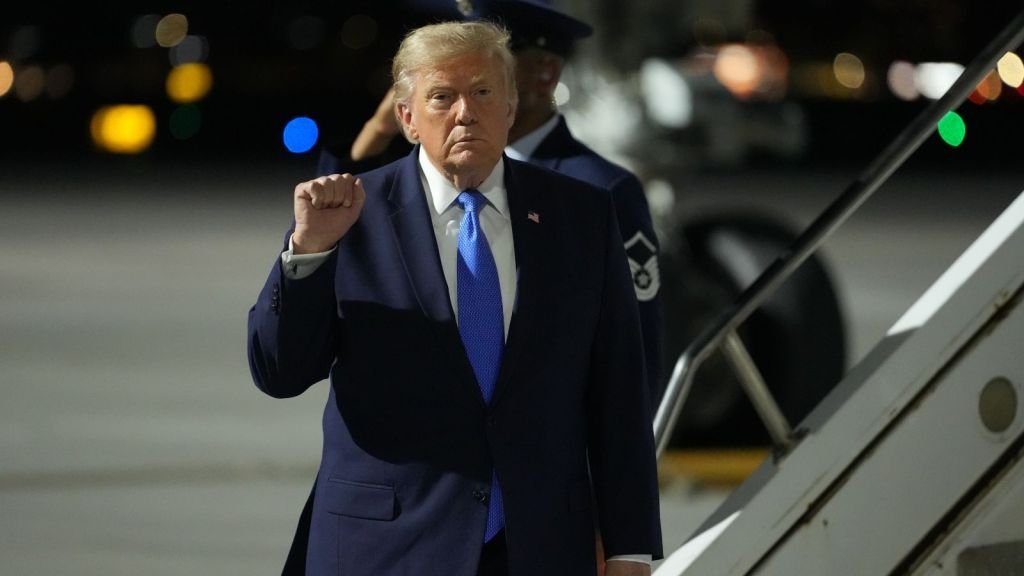
US President Donald Trump said the strategically important Strait of Hormuz could reopen “very soon” as Washington and Tehran continue discussions aimed at reducing tensions. At the same time, Trump issued a warning to Iran, saying the United States would respond forcefully if Tehran withdrew from a possible agreement.
Trump said negotiations with Iran had continued through an “all-day negotiation” on Tuesday, August 4, describing the discussions as “very good” while insisting that his preferred outcome remained a diplomatic solution.
The comments came amid heightened tensions between the United States and Iran, with global attention focused on the possibility of an agreement that could restore stability around one of the world’s most important energy routes.
Trump Says Deal Could Happen ‘Tomorrow or Next Day’
Speaking in an interview with Fox News, Trump said Iran was interested in finding a way to end the conflict and suggested that progress could come quickly.
“The only thing that matters is action. And they want to make a deal. We’ll see what happens,” Trump said, adding that he believed an agreement could happen “tomorrow or the next day.”
He also warned that Iran would face a strong response if it abandoned negotiations.
“If they back out again, they are going to get hit really hard. They know that. They understand that. I have no choice,” Trump said.
Trump also linked the discussions to concerns over Iran’s nuclear programme, saying Tehran could not be allowed to obtain a nuclear weapon.
US-Iran Talks Focus on Strait of Hormuz
The Strait of Hormuz has emerged as one of the key issues in the ongoing diplomatic discussions because of its importance to global energy supplies.
According to reports, the United States and Iran were close to reaching an interim understanding that could allow the strategic waterway to reopen, with Oman playing a role in facilitating discussions.
Axios, citing regional sources and a US official, reported that Washington was aiming for an announcement regarding the agreement. However, Iranian state media later reported that any agreement involving Oman and the Strait of Hormuz could be delayed while the United States continues issuing threats against Iran.
The conflicting statements indicate that while diplomatic channels remain active, significant disagreements between Washington and Tehran continue.
Qatar Says Mediation Efforts Are Continuing
Qatar has also been involved in diplomatic efforts aimed at reducing tensions between the United States and Iran.
The office of Qatar’s Emir Sheikh Tamim bin Hamad Al Thani said that he spoke with Trump regarding ways to reduce tensions and narrow differences between Washington and Tehran.
Qatar said mediators were making progress in efforts to end the conflict, although Tehran denied that formal talks were taking place.
Why the Strait of Hormuz Matters
The Strait of Hormuz is one of the world’s most important maritime energy routes. Located between the Persian Gulf and the Gulf of Oman, the narrow waterway serves as a critical passage for oil, natural gas and commercial shipping.
Approximately 20% of Global Oil and liquefied natural gas (LNG) shipments pass through the strait, making any disruption a major concern for Energy Markets.
The importance of the waterway extends beyond Gulf countries because many nations depend on energy supplies transported through this route.
Impact on Global Energy Markets
Any prolonged disruption in the Strait of Hormuz could affect global crude oil prices by creating uncertainty over supply availability.
Energy markets typically react strongly to geopolitical risks in major oil-producing regions. Concerns about shipping disruptions, supply shortages or military escalation can push prices higher.
Higher crude prices can influence fuel costs, inflation and transportation expenses across multiple economies.
Why India Is Closely Watching Developments
India is among the countries that would closely monitor any developments involving the Strait of Hormuz because of its dependence on energy imports from Gulf producers.
A significant portion of India’s crude oil imports from the Middle East travels through this maritime route. Any disruption could affect shipping schedules, energy costs and broader economic conditions.
Potential impacts include:
- Higher Crude Oil Prices.
- Increased fuel costs for consumers and businesses.
- Higher transportation expenses.
- Greater pressure on energy import bills.
Global Shipping and Trade Risks
The importance of the Strait of Hormuz is not limited to oil and gas. The route is also connected to broader global trade networks.
Rising tensions in the region can increase shipping costs as companies factor in security risks, longer routes or higher insurance expenses.
War-risk insurance premiums can rise during periods of instability, increasing costs for shipping companies and potentially affecting supply chains.
| Area | Possible Impact of Hormuz Disruption |
|---|---|
| Oil markets | Potential rise in crude prices due to supply uncertainty. |
| India’s energy security | Possible pressure on crude imports from Gulf suppliers. |
| Shipping industry | Higher insurance and freight costs. |
| Consumers | Possible increase in fuel and transportation costs. |
| Global trade | Potential supply chain disruptions. |
Diplomacy Versus Military Pressure
Trump’s latest remarks reflect a combination of diplomatic engagement and pressure tactics toward Iran.
While the US president said negotiations were progressing and expressed hope for an agreement, his warnings showed that military options remain part of Washington’s approach if talks fail.
Iran, meanwhile, has continued to push back against threats while maintaining its own position regarding negotiations.
What Could Happen Next?
The immediate focus will be on whether Washington and Tehran can convert ongoing discussions into a formal agreement and whether the Strait of Hormuz can return to normal operations.
The outcome will depend on several factors, including:
- The terms of any possible US-Iran agreement.
- Iran’s response to American demands.
- The role of regional mediators such as Oman and Qatar.
- Security conditions in the Gulf region.
If tensions ease and maritime traffic resumes normally, energy markets could see reduced uncertainty. However, if negotiations collapse, the region could face renewed instability with potential consequences for global oil supplies and trade.
Strait of Hormuz Remains a Global Flashpoint
The latest developments underline the strategic importance of the Strait of Hormuz and its connection to global economic stability.
For now, Trump has indicated that diplomacy remains his preferred option, but his warning to Iran shows that negotiations are taking place against the backdrop of continued pressure and geopolitical risk.
As discussions continue, governments, energy companies and financial markets worldwide will closely monitor whether the promised reopening of the waterway becomes reality or whether tensions return.
For breaking news and live news updates, like us on Facebook or follow us on Twitter and Instagram. Read more on Latest World on thefoxdaily.com.






COMMENTS 0