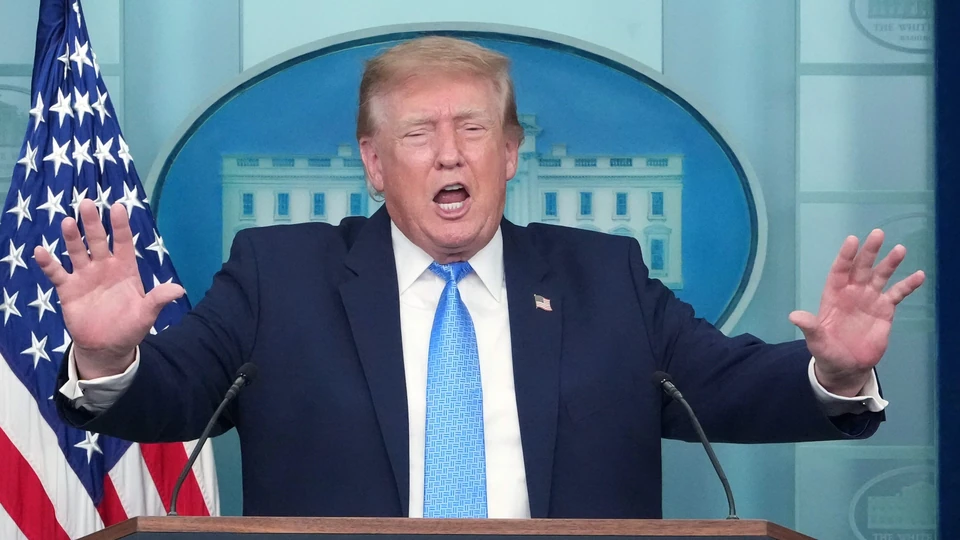
A US federal judge has allowed President Donald Trump‘s $10 billion defamation lawsuit against the BBC to move forward, rejecting the broadcaster’s attempt to have the central claim dismissed over an edited clip of Trump’s January 6, 2021, speech. However, the court dismissed Trump’s separate claim accusing the British broadcaster of unfair trade practices.
The ruling, issued on November 10 by US District Judge Jeffrey Kuntz in Florida, means the defamation dispute can proceed to the next stage of litigation. It does not establish that the BBC defamed Trump or that the president is entitled to damages. Those questions will have to be addressed as the case develops.
Trump described the decision as a “huge victory” in a social media post. The BBC said it was surprised by the ruling but respected the court’s authority and remained confident in its legal position.
The lawsuit centres on a BBC Panorama documentary that combined separate portions of Trump’s speech from January 6, 2021. The edited version made it appear that Trump had directed supporters to storm the US Capitol without including a section in which he called for peaceful protest.
Why the Judge Allowed Trump’s Defamation Claim to Proceed
Judge Jeffrey Kuntz declined to dismiss Trump’s defamation claim, concluding that the president had presented sufficiently plausible allegations for the case to continue.
Trump argued that the BBC’s editing of his speech created a misleading impression of what he had said and damaged his reputation. The judge found that Trump had plausibly alleged that the broadcaster knew, or should have known, that the edited clip was misleading.
At this stage, the court was not deciding whether the BBC had actually committed defamation. Instead, it was considering whether Trump’s allegations were legally sufficient to proceed beyond the initial stage of the case.
This distinction is important because allowing a lawsuit to continue is not the same as finding the defendant liable. Trump will still have to establish the necessary elements of his claim, while the BBC will have the opportunity to challenge his allegations and present its defence.
The decision therefore represents a procedural development rather than a final judgment on the accuracy of the documentary or the broadcaster’s legal responsibility.
BBC Documentary Edited Trump’s January 6 Speech
The dispute focuses on a segment of Trump’s speech delivered on January 6, 2021, before supporters travelled towards the US Capitol. The speech took place on the day Congress was meeting to certify the results of the 2020 presidential election.
Trump’s lawsuit alleges that the BBC combined two separate portions of the speech in a way that substantially changed its meaning. One section included his instruction to supporters to march towards the Capitol, while another contained his use of the phrase “fight like hell”.
According to the lawsuit, the documentary omitted a separate passage in which Trump called for peaceful protest. By joining the selected portions together without the intervening context, the edited version allegedly suggested that he directly urged supporters to use violence or storm the Capitol.
The clip appeared in a BBC Panorama documentary shortly before the 2024 US presidential election, which Trump won. Its broadcast later became the centre of a major controversy over the broadcaster’s editorial judgment and the way political speeches are presented in news programming.
The legal question is not simply whether the documentary shortened Trump’s speech. The central dispute concerns whether the editing created a materially false impression, whether that impression was defamatory and whether the BBC can be held legally responsible.
BBC Previously Apologised but Denied Defamation
The BBC has previously acknowledged that the editing of Trump’s speech was misleading and apologised to him. However, the broadcaster has maintained that an apology does not mean it is legally liable for defamation.
The distinction between an editorial error and a legally actionable defamatory statement is central to the case. A broadcaster may acknowledge that a programme should have provided more context while still disputing whether its actions meet the legal requirements for defamation.
Following the court’s latest decision, a BBC spokesperson said the organisation was surprised by the ruling but respected the court’s authority. The broadcaster also said it remained confident in its position.
The BBC’s response indicates that it intends to continue defending itself as the litigation progresses. The court’s refusal to dismiss the defamation claim means the broadcaster will have to address the allegations through the next stages of the legal process.
Trump’s $10 Billion Lawsuit Against the BBC
Trump filed the lawsuit in a Florida federal court in December, seeking at least $10 billion in damages over the documentary’s treatment of his January 6 speech.
The lawsuit alleges that the BBC’s editing damaged his reputation by presenting a version of his remarks that omitted important context. It argues that viewers could have understood the edited clip as evidence that Trump had directly encouraged the Capitol attack.
The case is among several legal actions Trump has pursued against media organisations over coverage he considers inaccurate or damaging. These lawsuits have become part of a wider confrontation between Trump and news outlets over political reporting, editorial decisions and public accountability.
The amount sought in the lawsuit is substantial, but it is not an amount awarded by the court. Any damages would depend on the outcome of the case and the legal findings made during the proceedings.
Judge Dismisses Trump’s Unfair Trade Practices Claim
Although the judge allowed the defamation case to proceed, he dismissed Trump’s separate claim alleging unfair trade practices by the BBC.
The two claims involve different legal questions. The defamation allegation concerns whether the edited documentary conveyed a false and damaging impression of Trump’s speech. The unfair trade practices claim relied on a separate legal basis and did not survive the court’s review.
The dismissal narrows the scope of the lawsuit, leaving the defamation claim as its central component. It also means Trump cannot proceed with the unfair trade practices allegation in its current form under the ruling.
The decision is therefore a mixed outcome for both sides. Trump secured permission to continue pursuing his main allegation, while the BBC avoided having the unfair trade practices claim proceed alongside it.
Leaked BBC Memo Triggered Editorial Controversy
The controversy surrounding the documentary intensified after a leaked internal BBC memo highlighted concerns about the editing of Trump’s speech. The memo cited the changes as evidence of potential political bias and raised questions about the broadcaster’s editorial standards.
The disclosure triggered a public relations crisis for the BBC and led to high-level resignations. The episode also renewed scrutiny of how public broadcasters handle politically sensitive material, particularly during election periods.
The controversy extended beyond the specific documentary because the BBC is a publicly funded broadcaster with a responsibility to maintain editorial independence and public trust. Questions about political impartiality can have wider consequences for its reputation, especially when its coverage involves major political figures.
The BBC’s admission that the editing was misleading became an important part of the public debate. However, the legal proceedings will need to establish whether the editing crossed the threshold required for defamation liability under the applicable law.
Trump Calls the Ruling a Major Victory
Trump welcomed the decision, describing it as a “huge victory” in a social media post. He said his administration and legal team would continue challenging organisations he believes have misled the American public.
His response focused on the decision to allow the defamation claim to continue. However, the court did not rule that the BBC was guilty of defamation, nor did it award Trump compensation.
The BBC, meanwhile, expressed surprise at the outcome while reiterating its confidence in its legal position. The broadcaster’s earlier apology over the editing remains relevant to the wider dispute, but the court will have to consider the legal arguments and evidence before reaching a final conclusion.
What Happens Next in Trump’s BBC Lawsuit?
With the defamation claim surviving the initial dismissal request, the lawsuit can move forward through the federal court process. The next stages are expected to involve further legal arguments, examination of evidence and consideration of the circumstances surrounding the documentary’s production and broadcast.
Key issues may include how the editing was carried out, what the BBC knew about the omitted portion of the speech, whether the final programme created a false impression and whether Trump can demonstrate legally recognised harm to his reputation.
The BBC will be able to contest Trump’s account and defend its editorial decisions. The broadcaster’s previous apology may feature in the dispute, but it does not automatically determine the outcome of the defamation claim.
For now, the November 10 ruling keeps Trump’s central lawsuit alive while removing the separate unfair trade practices claim. The case remains unresolved, and the court has not yet determined whether the BBC is legally responsible for defaming the US president.
For breaking news and live news updates, like us on Facebook or follow us on Twitter and Instagram. Read more on Latest World on thefoxdaily.com.

COMMENTS 0