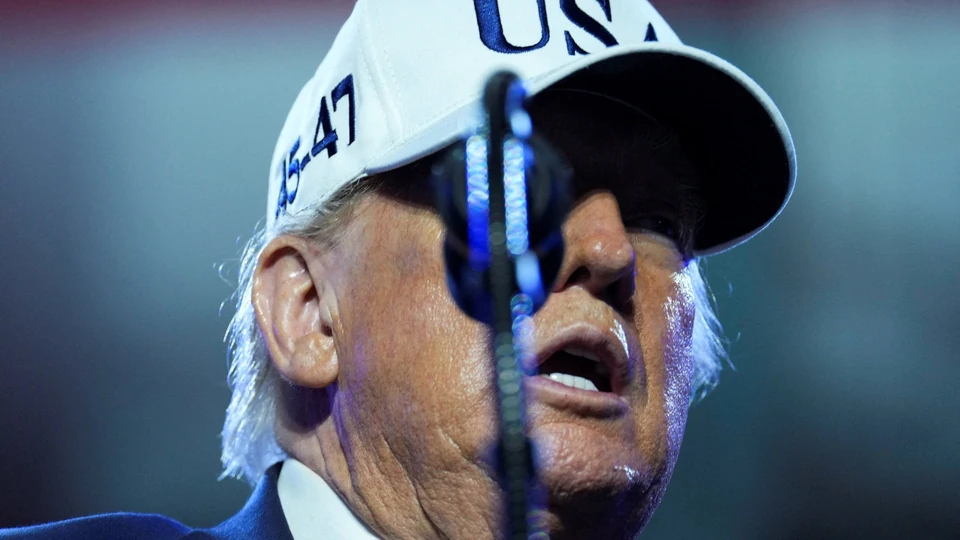
Trump’s comments mark a more conditional public position after he warned earlier in the week that US forces remained “locked and loaded” for further action. He has not ruled out military escalation, but his latest remarks suggest Washington may hold off if negotiations produce an agreement addressing its demands.
Trump’s comments came after several days of uncertainty over whether Washington would resume large-scale military operations. The president had previously warned that American forces were prepared to launch further attacks if negotiations failed. His latest remarks introduce a more diplomatic possibility, although he continues to emphasise that military action remains an option.
Trump says Iran must sign a ‘very strong agreement’
In his interview with CNN, Trump made clear that the possibility of fresh strikes would depend on the outcome of negotiations. He said the United States would not need another major military operation if Iran agreed to what he described as a strong agreement.
“It depends on whether or not they sign a very strong agreement,” Trump told CNN. He repeated that another attack was highly unlikely to be necessary if discussions continued to make progress.
However, the president did not rule out military action completely. He said he would authorise further strikes if he considered them necessary, arguing that previous American attacks had already inflicted substantial damage on Iran’s military capabilities and economy.
Trump described Iran as a “failing nation” and claimed that its financial position was deteriorating. He also said the United States had struck Iran hard enough to leave its military significantly weakened.
His comments were accompanied by a warning that Washington retained the ability to escalate. Trump said the United States could “finish them off” if the situation required further military action.
The combination of diplomatic language and military warnings reflects the uncertainty surrounding the negotiations. Washington is signalling that it may avoid another offensive, but Tehran has yet to accept the conditions necessary for an agreement.
Trump’s 301% inflation claim about Iran
During the CNN interview, Trump claimed that Iran had experienced inflation of 301% this year. He used the figure to support his argument that American military and economic pressure had weakened the country.
The figure was presented as Trump’s assertion during the interview, rather than as an independently established inflation measurement. Inflation statistics depend on the period being measured, the methodology used and whether the figure refers to annual consumer-price inflation, cumulative price increases or another economic indicator.
Iran has faced longstanding economic difficulties, including international sanctions, currency depreciation, restrictions on trade and pressure on government finances. The conflict has added further uncertainty to an economy already affected by years of external restrictions and domestic challenges.
Economic pressure can make it harder for a government to finance imports, maintain industrial production and stabilise prices. However, a country’s financial condition cannot be assessed through one inflation figure alone. Currency movements, employment, public finances, oil exports and access to international markets also matter.
Trump’s comments indicate that his administration views economic pressure as an important part of its strategy towards Tehran. Whether that pressure will persuade Iran to accept Washington’s demands remains uncertain.
Iran sends nuclear proposal to the US through Qatar
The latest diplomatic developments followed Iran’s submission of a nuclear proposal to the United States through Qatar. A senior Iranian official told Reuters that Tehran had sent the proposal on November 5 and that Washington was reviewing it.
Qatar has played an important intermediary role in efforts to reduce tensions between Washington and Tehran. Its diplomatic channels provide a way for the two countries to exchange proposals and messages despite the absence of normal direct relations.
Iran’s proposal is intended to address its nuclear programme as part of wider efforts to end the conflict. However, Tehran has attached conditions to the start of substantive negotiations.
According to the Iranian official, discussions on the proposal would begin only after the United States met seven demands. Iran’s stated conditions include the lifting of American sanctions, the release of frozen Iranian assets and compensation for war damage.
Iran has also linked negotiations to the reopening of the Strait of Hormuz, a strategically important waterway through which a substantial share of global oil and gas shipments passes.
The United States, however, wants nuclear issues to be addressed from the beginning of any negotiations. Washington’s position creates a significant difference between the two sides: Iran wants certain economic and political demands addressed first, while the US wants the nuclear programme to remain central to the initial discussions.
The details of the complete seven-point proposal have not been publicly established. The Iranian official who described the document to Reuters did not disclose its full contents, and the submission should not be interpreted as a completed agreement or a confirmed start to formal negotiations.
Why the Strait of Hormuz is central to the negotiations
The Strait of Hormuz is one of the world’s most important maritime energy routes. It connects the Persian Gulf with the Gulf of Oman and the Arabian Sea, providing a passage for oil and liquefied natural gas shipments from major Gulf producers to international markets.
Any disruption to shipping through the strait can affect energy supplies, insurance costs and global commodity prices. The waterway’s importance gives Iran considerable strategic leverage, while the United States and its partners have strong economic and security interests in keeping it accessible.
The dispute over the strait is therefore closely connected to the wider negotiations. Iran has indicated that reopening the route and beginning talks are linked to Washington meeting its conditions. The United States, meanwhile, has been seeking a settlement that addresses both nuclear concerns and maritime security.
Recent reports of incidents involving commercial vessels in and around the strait have added to concerns about the security of international shipping. Iran has reported that mines damaged or ignited tankers, while the United States has described disabling a commercial vessel attempting to breach its blockade. The accounts have not been independently verified in full.
Continued disruption could affect countries far beyond the Middle East. Higher shipping and energy costs can influence fuel prices, transport expenses and inflation in economies that depend on imported oil and gas.
Trump’s position on Iran changes after Republican midterm defeat
Trump’s latest comments come after Republicans suffered major losses in the November 3 midterm elections, with Democrats winning control of both the House of Representatives and the Senate.
The result has intensified political scrutiny of the administration’s decision to go to war with Iran. The conflict has become a major issue in the debate over the Republican defeat, alongside the cost of living, inflation and public concerns about the direction of American foreign policy.
Vice President JD Vance publicly blamed the Iran war for the party’s poor performance. In a lengthy post on X on November 4, Vance argued that the conflict had alienated voters who had supported Trump and him in the 2024 presidential election but switched to Democrats in the midterms.
Vance identified four issues that he believed had contributed to the losses: ending the war, addressing the cost of living and inflation, prioritising an America First approach and changing the United States’ relationship with Israel.
He also questioned whether the political cost of the conflict had been worth losing control of Congress. His comments represented a notable public departure from Trump’s continued defence of the military campaign.
Trump has acknowledged that the Iran conflict contributed to Republican losses, particularly because of its effect on fuel prices. However, he has maintained that the decision to attack Iran was necessary and said he would make the same decision again if faced with the same circumstances.
The difference in emphasis between Trump and Vance has highlighted divisions within the Republican Party over the war. Some Republicans continue to defend the military campaign as necessary to prevent Iran from developing nuclear weapons, while others have raised questions about its economic and political costs.
Trump had warned that US forces were ‘locked and loaded’
Trump’s latest comments represent a contrast with his warning earlier in the week that American forces remained prepared for further military action.
On Thursday, November 5, the president said the United States was “locked and loaded” for a potential continuation of the Iran operation. He also said the American military was building more weapons than ever before, suggesting that Washington was maintaining its ability to escalate if negotiations failed.
“If we have to do the rest of the Iran thing, we’re very much locked and loaded,” Trump said.
At the time, he did not provide a definitive answer about whether another large-scale military operation would take place. Instead, he told reporters that the administration would make a decision based on developments.
The warning followed earlier suggestions that Washington might resume combat operations after the midterm elections. The possibility of renewed strikes had raised concerns that the conflict could enter another phase, potentially prompting retaliation from Iran against American or Israeli targets.
Trump’s Sunday interview offers a more conditional assessment. He now says another attack is highly unlikely if the negotiations advance, but his earlier warnings show that the military option remains part of the administration’s strategy.
US identifies potential targets if the conflict resumes
Even as Trump expressed a preference for avoiding another offensive, he indicated that the United States had identified infrastructure targets inside Iran that could be attacked if military operations resumed.
In the CNN interview, he referred to 38 bridges that he claimed American forces could destroy within a short period. He also expressed reluctance about carrying out attacks that would cause extensive damage to infrastructure needed by civilians.
Trump said rebuilding such facilities could take years, highlighting the potential long-term consequences of strikes against transport networks and other essential infrastructure.
Infrastructure attacks raise significant legal and humanitarian questions. Under international humanitarian law, military operations must distinguish between civilian objects and legitimate military objectives. Attacks must also comply with the principles of proportionality and precautions to protect civilians.
Bridges and transport facilities can have both civilian and military uses. Their legal status in an armed conflict depends on factors such as their contribution to military operations and the expected consequences of an attack on civilians.
Any renewed campaign targeting infrastructure would therefore carry risks beyond immediate military damage. It could disrupt transport, supply chains, access to essential services and economic activity, while potentially increasing pressure on neighbouring countries and international mediators.
Iran could retaliate if the United States launches fresh strikes
Iran has warned that it would respond to renewed American and Israeli military attacks. Tehran has threatened to target US and Israeli interests, raising the possibility that another round of strikes could widen the conflict across the region.
The earlier conflict has already involved attacks beyond the immediate US-Iran confrontation. Iran has launched strikes against Israel and Gulf states hosting American military bases, while regional armed groups have also become involved in the wider crisis.
Any renewed escalation could place military installations, commercial shipping and energy infrastructure at risk. Countries in the Gulf would face particular concerns because of their proximity to Iran and their role in regional energy exports.
The presence of American military forces in the region also creates the possibility of a wider confrontation if US personnel or facilities are targeted. Washington would then face pressure to respond, potentially making it harder to contain the conflict through diplomacy.
For these reasons, regional governments have continued diplomatic efforts to prevent a return to large-scale fighting. Qatar’s mediation role and contacts among Gulf states reflect the wider concern that another escalation could have serious consequences for regional security and international trade.
What could prevent a US-Iran peace agreement?
Despite the diplomatic activity, several major disagreements remain between Washington and Tehran. The nuclear programme is the central issue for the United States, which wants guarantees that Iran will not develop a nuclear weapon.
Iran has consistently defended its right to pursue a civilian nuclear programme while rejecting demands that it considers an infringement on its sovereignty. The two sides would need to agree on limits, verification arrangements and the role of international monitoring before a durable nuclear settlement could be reached.
Sanctions relief is another major obstacle. Iran wants restrictions on its economy lifted and access to frozen assets restored. Washington would have to decide what concessions it is prepared to make and what commitments it would require in return.
The question of compensation for war damage could prove even more difficult. Iran has included reparations among its demands, but the United States has not indicated that it is prepared to accept such a condition.
Maritime security also needs to be addressed. A lasting agreement would have to establish arrangements for safe passage through the Strait of Hormuz and reduce the risk of attacks on commercial vessels.
These issues demonstrate why the exchange of proposals does not necessarily mean that a peace agreement is close. Both sides may be willing to explore diplomacy while maintaining demands that the other considers unacceptable.
Will Trump order another attack on Iran?
For now, Trump has said that fresh strikes are highly unlikely if Iran agrees to a strong agreement and negotiations continue to progress. His statement suggests that the White House is prepared to consider a diplomatic outcome rather than automatically returning to military action.
However, the president has not withdrawn his warnings or ruled out further attacks. The United States continues to maintain military options, while Iran has threatened retaliation if Washington resumes its offensive.
The next steps will depend on whether the two governments can narrow their differences over nuclear restrictions, sanctions, frozen assets and the Strait of Hormuz. Qatar and other regional countries are likely to remain important channels for communication.
The political consequences of the war may also influence the administration’s calculations. The Republican midterm defeat has increased pressure on Trump to address voters’ concerns about the conflict and its economic impact, although he continues to defend the original decision to use military force.
Diplomacy offers an opening, but tensions remain
Trump’s latest remarks have created an opening for diplomacy by suggesting that another round of American strikes can be avoided if Iran accepts a strong agreement. The Iranian proposal delivered through Qatar provides a channel for negotiations, but the conditions attached to it reveal how far apart the two sides remain.
Washington wants nuclear commitments and greater security guarantees, while Tehran is seeking sanctions relief, access to frozen assets, compensation and changes to the arrangements surrounding the Strait of Hormuz.
The president’s description of Iran as a “failing nation” and his warnings that the United States could “finish them off” show that the diplomatic message is still accompanied by military pressure. Whether that approach produces an agreement or another escalation will depend on the decisions made by both governments in the coming days.
For breaking news and live news updates, like us on Facebook or follow us on Twitter and Instagram. Read more on Latest World on thefoxdaily.com.





COMMENTS 0