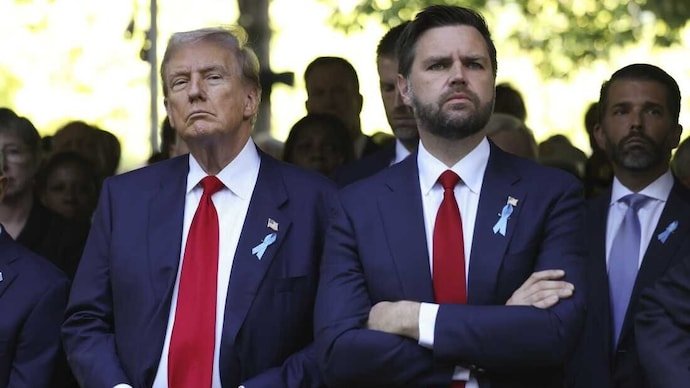
The ongoing Russia-Ukraine conflict continues to influence global geopolitics, military alliances, and diplomatic strategies. A newly released political book has now added another intriguing chapter to the debate by revealing an alleged conversation inside Donald Trump’s second administration regarding potential peacekeeping arrangements in Ukraine.
According to the book Regime Change, authored by veteran journalists Maggie Haberman and Jonathan Swan, US Vice President JD Vance proposed exploring a peacekeeping mission involving countries outside Europe, including India and Saudi Arabia. The proposal emerged during discussions about a potential ceasefire agreement between Russia and Ukraine.
What has attracted worldwide attention is Trump’s reported reaction. The book claims that Trump immediately dismissed the possibility of India contributing troops, laughing off the idea and remarking that “the Indians won’t do that” and “they won’t pay for something like that.”
Whether viewed as a reflection of Trump’s negotiating style, his perception of international burden-sharing, or broader strategic calculations, the episode offers important insights into how the United States may approach future conflicts, alliances, and peacekeeping operations.
Understanding the Context Behind the Ukraine Peacekeeping Debate
The discussion reportedly took place on January 30, 2025, shortly after Trump began his second term as President of the United States. The meeting was organized by retired Lieutenant General Keith Kellogg, who had been appointed as Trump’s special envoy for Ukraine and Russia.
The objective was to establish a broad framework for ending the Russia-Ukraine War, which remains one of the most significant geopolitical crises of the twenty-first century.
According to the book, Kellogg presented a document titled “An America First Plan: Trump’s Historic Peace Deal for Russia-Ukraine War.” The proposal aimed to create conditions for a ceasefire while avoiding deeper American military involvement.
The plan reportedly included several key elements:
- A negotiated ceasefire between Russia and Ukraine.
- No formal US recognition of Russian territorial claims.
- A commitment from Ukraine not to retake occupied territories through force.
- An international monitoring mechanism to oversee ceasefire implementation.
- The deployment of foreign peacekeeping forces.
It was this final component that sparked debate among senior administration officials.
Why JD Vance Opposed a European Peacekeeping Force
Vice President JD Vance reportedly raised concerns about using troops from European NATO members such as France, Britain, or the Netherlands to monitor a ceasefire in Ukraine.
His objections were rooted in the delicate security dynamics surrounding Russia.
From Moscow’s perspective, NATO expansion has long been viewed as a strategic threat. The presence of NATO troops inside Ukraine, even under a peacekeeping mandate, could potentially be interpreted as a provocation rather than a neutral stabilizing force.
Vance reportedly warned that such an arrangement might increase tensions, complicate peace negotiations, and potentially draw the United States into a broader conflict.
This concern aligns with a growing faction within American Politics that favors reducing direct US involvement in overseas conflicts while encouraging regional powers to shoulder greater responsibility.
Seeking alternatives, Vance reportedly explored whether non-European countries could play a role in any future ceasefire mission.
Why India Was Mentioned as a Potential Peacekeeper
India’s inclusion in the discussion was not accidental. Over the past two decades, India has emerged as one of the world’s most influential geopolitical actors.
India possesses one of the largest armed forces globally and has extensive experience participating in international peacekeeping missions under the United Nations framework.
Indian troops have served in conflict zones across Africa, Asia, and the Middle East, earning a reputation for professionalism and operational effectiveness.
Additionally, India maintains working relationships with both Russia and Western nations. Unlike many NATO countries, New Delhi has carefully balanced its diplomatic engagement with Moscow while simultaneously strengthening strategic ties with the United States, Europe, Japan, and Australia.
This unique position could theoretically make India a more acceptable peacekeeping partner for multiple sides involved in the Ukraine conflict.
Saudi Arabia was reportedly suggested for similar reasons, given its growing diplomatic influence and efforts to mediate international disputes.
Trump’s Reported Response and What It Reveals
The most widely discussed aspect of the book is Trump’s alleged rejection of the India proposal.
According to the authors, Trump laughed at the suggestion and argued that India would not be willing to bear the financial burden associated with such a mission.
He reportedly stated that India generally avoids paying for international security operations and therefore would be unlikely to participate.
The remarks are notable because Trump has frequently praised his relationship with Indian Prime Minister Narendra Modi.
Throughout both of his presidential terms, Trump has highlighted the importance of US-India relations. He has attended major events alongside Modi, emphasized economic cooperation, and often described India as a key strategic partner.
Yet the reported comments suggest that Trump may distinguish between diplomatic partnerships and military burden-sharing arrangements.
His position appears consistent with a broader philosophy that has defined much of his foreign policy thinking: allies and partners should contribute more resources to international security efforts rather than relying heavily on American support.
The “America First” Foreign Policy Framework
The alleged exchange reflects the central principles of Trump’s America First doctrine.
Under this approach, international commitments are evaluated primarily through the lens of American national interests, financial costs, and strategic benefits.
Trump has repeatedly argued that the United States has carried a disproportionate share of global security responsibilities for decades.
This perspective has influenced his positions on:
- NATO defense spending.
- Military aid to Ukraine.
- Foreign assistance programs.
- Trade agreements.
- Peacekeeping operations.
In the context of Ukraine, Trump has consistently expressed skepticism toward open-ended military commitments. He has argued that European countries should assume greater responsibility for security challenges occurring on their own continent.
The reported dismissal of both European and Indian peacekeeping scenarios may therefore reflect a broader desire to minimize long-term American entanglement while seeking alternative diplomatic solutions.
How India Views International Peacekeeping Missions
India has historically been one of the largest contributors to UN peacekeeping operations.
Thousands of Indian military personnel have participated in missions across multiple continents since the 1950s. Indian peacekeepers have served in countries affected by civil wars, insurgencies, and humanitarian crises.
However, India traditionally evaluates such deployments carefully.
Several factors influence New Delhi’s decisions:
- The legal framework of the mission.
- International legitimacy through the United Nations.
- National Security considerations.
- Regional strategic implications.
- Potential risks to Indian personnel.
Any proposal involving Ukraine would likely face intense scrutiny because of the conflict’s complexity and the involvement of major global powers.
Unlike many traditional peacekeeping environments, Ukraine remains deeply connected to broader strategic competition between Russia and the West.
Could India Actually Participate in a Ukraine Mission?
While the discussion described in the book remains hypothetical, it raises an important question: would India ever consider participating in a Ukraine peacekeeping operation?
The answer depends largely on the structure of the mission.
If a ceasefire were achieved through broad international consensus and backed by a credible multilateral framework, India might at least evaluate the possibility.
However, New Delhi has generally avoided becoming directly involved in conflicts where major powers remain active participants.
India’s diplomatic approach toward the Russia-Ukraine war has emphasized dialogue, Diplomacy, humanitarian assistance, and respect for international law rather than direct military engagement.
This balanced position has allowed India to maintain communication channels with all major stakeholders while preserving its strategic autonomy.
The Administration’s Broader View of Ukraine
The book also portrays significant skepticism within Trump’s circle regarding Ukraine’s leadership.
According to the authors, Trump repeatedly criticized Ukrainian President Volodymyr Zelenskyy during the meeting.
These criticisms reportedly included claims that Ukraine had been poorly managed and that Zelenskyy had become highly effective at securing support from previous American administrations.
Such views are important because they help explain why the administration has focused heavily on negotiated settlements rather than expanded military support.
Critics argue that this approach could reward Russian aggression. Supporters counter that it reflects geopolitical realities and prioritizes ending a costly conflict.
The debate remains one of the most contentious issues in international affairs.
Global Reactions and Strategic Implications
The revelations have generated considerable discussion among foreign policy experts.
For India, the episode underscores the growing perception of the country as a major global stakeholder whose participation is increasingly considered in discussions involving international security.
For Europe, the account highlights continuing uncertainty regarding future American commitments to transatlantic defense arrangements.
For Ukraine, it illustrates the difficult diplomatic balancing act required to secure international support while pursuing a sustainable peace agreement.
For Russia, the idea of non-European peacekeepers may be viewed more favorably than deployments involving NATO countries, although significant challenges would still remain.
Ultimately, the discussion reveals how difficult it would be to design a ceasefire mechanism acceptable to all parties.
The Future of Ukraine Peace Negotiations
As the war continues, questions surrounding post-conflict security arrangements will become increasingly important.
Any durable settlement would likely require monitoring mechanisms, confidence-building measures, and international guarantees designed to prevent renewed hostilities.
Whether those responsibilities fall to European nations, non-aligned countries, international organizations, or a combination of actors remains uncertain.
The debate described in Regime Change demonstrates that policymakers are already considering multiple scenarios, even if consensus remains elusive.
What is clear is that the conflict’s resolution will require careful diplomacy involving not only Ukraine and Russia but also major powers across Europe, Asia, and the broader international community.
Conclusion
The reported exchange between Donald Trump and JD Vance offers a fascinating glimpse into the strategic calculations shaping future discussions about Ukraine. While Vance explored the possibility of involving India and Saudi Arabia in a potential peacekeeping mission, Trump allegedly dismissed the idea, arguing that India would be unlikely to participate or bear the associated costs.
Beyond the headline-grabbing comments, the episode highlights deeper questions about burden-sharing, global security responsibilities, and the evolving role of emerging powers in international conflict resolution.
India’s mention in such high-level discussions reflects its growing geopolitical importance, even if participation in a Ukraine peacekeeping force remains highly speculative. As diplomatic efforts continue and the search for a lasting settlement intensifies, the debate over who should enforce peace may become almost as important as the negotiations aimed at achieving it.
For breaking news and live news updates, like us on Facebook or follow us on Twitter and Instagram. Read more on Latest World on thefoxdaily.com.



COMMENTS 0