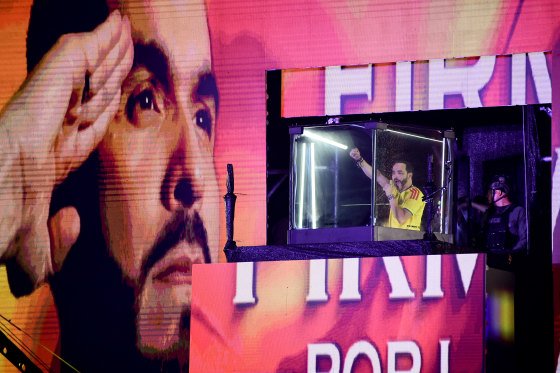
Colombia is witnessing one of the closest presidential elections in its modern History as political outsider Abelardo de la Espriella emerged with a razor-thin lead over progressive rival Iván Cepeda in a fiercely contested runoff vote. While electoral authorities continued final verification of results, the narrow margin immediately sparked legal and political challenges, turning the election into a broader debate about the future of Latin America’s third-largest economy.
The significance of the election extends far beyond a simple change of leadership. For millions of Colombians, the vote became a referendum on public safety, economic management, institutional trust, and the effectiveness of President Gustavo Petro’s ambitious reform agenda. The outcome also carries implications for regional Politics, Colombia’s relationship with the United States, and efforts to address one of the world’s longest-running internal conflicts.
Why Colombia’s Presidential Election Is Drawing Global Attention
Colombia occupies a strategically important position in Latin America. It is one of the region’s largest economies, a major US ally, and a key player in international efforts to combat drug trafficking and organized crime. Any major political shift in Bogotá inevitably attracts international attention.
The 2026 presidential runoff gained additional visibility because of the contrasting visions presented by the candidates. On one side stood Abelardo de la Espriella, a businessman, lawyer, and political newcomer who campaigned on restoring order through tougher crime policies and stronger state authority. On the other side was Iván Cepeda, a veteran progressive lawmaker who promised to continue many of the social and political reforms introduced under Petro.
The result has exposed deep divisions within Colombian society, highlighting disagreements over security, economic priorities, and the role of government in addressing inequality.
The Election Results at a Glance
With nearly all votes counted, de la Espriella maintained a narrow advantage over Cepeda.
| Candidate | Political Alignment | Approximate Vote Share |
|---|---|---|
| Abelardo de la Espriella | Conservative outsider | 49.7% |
| Iván Cepeda | Progressive coalition | 48.7% |
The tiny gap between the candidates prompted Cepeda’s campaign to challenge results from thousands of voting stations. While election disputes are not unusual in tightly contested races, Colombian presidential elections have historically produced clear outcomes once final certification is completed.
The challenge now is not only determining the official winner but also maintaining public confidence in democratic institutions during a highly polarized political moment.
A Referendum on Gustavo Petro’s Legacy
Although President Gustavo Petro was not a candidate, the election became a direct test of his administration’s record.
When Petro took office, he promised sweeping reforms aimed at reducing inequality, expanding social protections, reforming Healthcare, and advancing environmental policies. He also introduced an ambitious strategy known as “Total Peace,” which sought simultaneous negotiations with multiple armed groups operating across Colombia.
Supporters argue that many of Petro’s initiatives faced resistance from political opponents and institutional barriers. They believe his government laid the groundwork for long-term reforms that require more time to produce visible results.
Critics, however, point to persistent security concerns, economic uncertainty, and rising public frustration. For many voters, the election became an opportunity to express dissatisfaction with the pace and effectiveness of change.
The narrow result suggests that Colombia remains deeply divided over Petro’s legacy rather than united in either approval or rejection.
Security Dominated the Election Campaign
If one issue defined the 2026 election, it was public security.
Colombia has spent decades dealing with insurgencies, criminal organizations, drug cartels, and armed groups that have shaped the country’s political and social landscape. Despite important peace agreements and security improvements in previous years, violence remains a major concern in many regions.
Recent years have seen renewed clashes among armed groups competing for control of drug trafficking routes, illegal mining operations, and extortion networks. Rural communities in particular continue to face challenges related to displacement, violence, and weak state presence.
De la Espriella built his campaign around these concerns, promising a stronger response to organized crime and a more aggressive security strategy.
His message resonated with voters who believe the government must prioritize restoring law and order before pursuing broader reforms.
The Influence of the Bukele Model
One of the most discussed elements of de la Espriella’s campaign was his admiration for the security strategy employed by El Salvador’s President Nayib Bukele.
Bukele’s administration dramatically reduced crime rates through mass arrests, expanded prison capacity, and aggressive action against gangs. While supporters praise the results, human rights organizations have expressed concerns about due process and civil liberties.
De la Espriella proposed building multiple large-scale prisons and expanding the state’s ability to combat criminal organizations. His supporters argue that extraordinary security challenges require bold solutions.
Opponents warn that Colombia’s conflict is far more complex than El Salvador’s gang problem and that imported solutions may not address the country’s unique challenges.
The debate reflects a broader global question: how can democracies improve security without compromising fundamental rights?
Drug Trafficking Remains Colombia’s Biggest Challenge
Despite years of international cooperation and billions of dollars spent on anti-narcotics programs, drug trafficking continues to fuel violence across Colombia.
Illegal armed groups increasingly depend on cocaine production and trafficking for revenue. These criminal economies often undermine state authority, create corruption risks, and contribute to local instability.
Analysts note that security policies alone are unlikely to solve the problem. Sustainable progress may require combining Law Enforcement with economic development, Infrastructure investment, education, and alternative livelihood opportunities for vulnerable communities.
The next administration will therefore face the difficult task of balancing immediate security demands with long-term structural reforms.
The Trump Connection and International Implications
De la Espriella’s campaign received significant international attention because of his close alignment with conservative political movements and public support from US President Donald Trump.
The endorsement elevated his profile internationally and drew comparisons to political trends seen in other democracies where outsider candidates have successfully challenged established political systems.
A de la Espriella presidency could lead to closer cooperation with conservative governments across the Americas on issues such as border security, migration, counter-narcotics operations, and trade.
It could also reshape Colombia’s diplomatic priorities at a time when geopolitical competition and regional instability are becoming increasingly important factors in International Relations.
Economic Pressures Influenced Voter Sentiment
While security dominated headlines, economic concerns also played a major role in shaping voter behavior.
Many Colombians continue to face challenges related to inflation, employment opportunities, and rising living costs. Households across the country have felt pressure from global economic disruptions, supply-chain challenges, and domestic fiscal constraints.
Voters often judge governments based on everyday economic realities rather than long-term policy goals. As a result, concerns about affordability and economic stability became closely linked to broader evaluations of the Petro administration.
The next president will inherit several key economic priorities:
- Strengthening investor confidence
- Reducing unemployment
- Managing fiscal deficits
- Improving infrastructure investment
- Supporting regional development
- Balancing social spending with economic growth
The Hidden Story: Regional Polarization
One of the most important but underreported aspects of the election is Colombia’s growing regional divide.
Voting patterns revealed stark differences between various parts of the country. Regions experiencing different levels of violence, economic development, and government investment often supported different candidates.
This highlights a fundamental challenge facing Colombian democracy: many citizens live in dramatically different realities depending on where they reside.
Urban voters may prioritize economic reforms and social policies, while rural communities often place greater emphasis on security and state presence. Bridging these competing priorities will be essential for whoever assumes the presidency.
What Happens If the Vote Challenge Continues?
Cepeda’s campaign has vowed to challenge results from more than 30,000 voting stations, arguing that every vote must be carefully reviewed.
While large-scale election reversals are extremely rare, prolonged disputes can affect public confidence and delay political transition planning.
The handling of these challenges will be closely watched by domestic observers, international organizations, and financial markets.
Political stability during this period is particularly important because investors and businesses often seek certainty before making major decisions.
A Global Trend Reflected in Colombia’s Vote
The Colombian election mirrors political developments occurring across many democracies worldwide.
Voters increasingly prioritize practical concerns such as security, affordability, public services, and government effectiveness over traditional ideological debates. Candidates who position themselves as outsiders often benefit when public trust in established political institutions declines.
At the same time, progressive movements continue to maintain substantial support, particularly among younger voters and urban populations.
The result is not a simple shift to the left or right. Instead, it reflects a broader demand for results-oriented leadership capable of addressing everyday challenges.
What the Next Four Years Could Look Like
If de la Espriella’s lead is confirmed, Colombia could enter a period marked by stronger emphasis on security policies, institutional reform, and closer alignment with conservative governments in the region.
However, the narrow margin means any future administration will govern a deeply divided electorate. Success will likely depend on building broad coalitions rather than relying solely on ideological support.
Meanwhile, if opposition challenges continue, political tensions could remain elevated for weeks, placing additional pressure on Colombia’s democratic institutions.
Conclusion: Colombia Faces a Defining Political Crossroads
The 2026 presidential election has revealed a nation at a crossroads. Abelardo de la Espriella’s razor-thin lead represents more than a potential change in leadership it reflects growing concerns about security, economic stability, and the effectiveness of existing political approaches.
At the same time, the strong performance of Iván Cepeda demonstrates that progressive reforms continue to command significant support among millions of Colombians.
Whether the final result is confirmed quickly or challenged through legal channels, the election has already delivered a clear message: Colombians want solutions to persistent problems, and they expect their leaders to deliver tangible results. The next president’s ability to balance security, economic growth, democratic Governance, and national unity will determine not only the success of the next administration but also the direction of Colombia for years to come.
For breaking news and live news updates, like us on Facebook or follow us on Twitter and Instagram. Read more on Latest World on thefoxdaily.com.






COMMENTS 0