- Rhetoric or Real Capability?
- The Strategic Context: Why Now?
- The Ongoing Conflict: More Than Just Words
- What Could This “New Weapon” Be?
- Comparison: Military Signaling vs Actual Deployment
- The Negotiation Deadlock: Why Talks Are Stuck
- Why This Matters Globally
- Prediction: What Happens Next?
- Reading Between the Lines
- Conclusion: A High-Stakes Game of Pressure and Perception
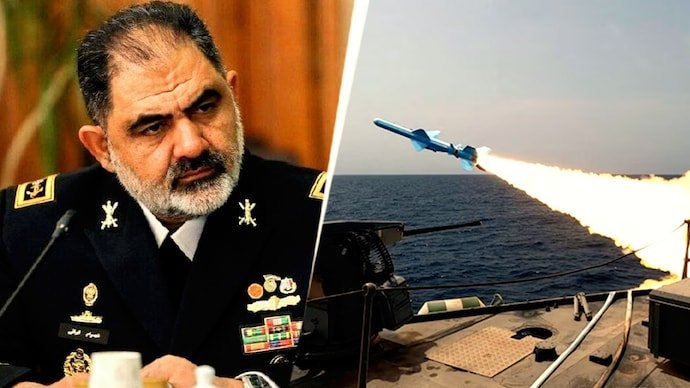
As negotiations between the United States and Iran remain stuck, the tone from Tehran has taken a sharper turn. In a striking statement, Iran’s Navy commander warned that the country would soon unveil a new weapon one that could leave its adversaries shocked. The comment, laced with both bravado and strategic messaging, comes at a moment when Diplomacy appears to be losing ground to deterrence.
But beyond the headline-grabbing phrase, the real question is: what does this warning actually mean and how seriously should it be taken?
Rhetoric or Real Capability?
Iran’s statement about a weapon that could cause a “heart attack” is clearly designed to provoke attention. Military language like this often serves multiple purposes it signals strength to domestic audiences, sends a warning to adversaries, and attempts to shift leverage in negotiations.
However, such claims are rarely made in a vacuum. Iran has a History of gradually revealing new military technologies, particularly in areas like missile systems, Naval Warfare, and asymmetric capabilities.
The phrase “right next to them” is especially telling. It suggests that the capability being referenced may not be a distant or theoretical system, but something deployed in proximity to U.S. or allied assets possibly in contested maritime zones.
The Strategic Context: Why Now?
The timing of this warning is critical.
Negotiations between Washington and Tehran have hit a wall. A key sticking point is sequencing whether nuclear issues should be addressed immediately or postponed until broader conflicts are resolved.
The United States insists on tackling nuclear concerns upfront. Iran, on the other hand, has proposed delaying those discussions.
This deadlock has created a vacuum where military signaling is filling the gap.
When diplomacy stalls, messaging often shifts from negotiation tables to public statements and sometimes, to demonstrations of force.
The Ongoing Conflict: More Than Just Words
The current standoff is not just rhetorical. It is unfolding against the backdrop of active hostilities across the region.
Iran claims it has conducted multiple waves of retaliatory operations targeting U.S. and allied positions. While details remain contested, the scale of such claims indicates a prolonged and geographically dispersed confrontation.
At the same time, the United States has reportedly increased its military presence, deploying additional naval assets and missile systems.
This creates a classic escalation dynamic:
- One side increases pressure
- The other responds with countermeasures
- Both sides attempt to avoid full-scale war while maintaining leverage
It’s a delicate balance and one that can shift quickly.
What Could This “New Weapon” Be?
While no official details have been released, analysts typically look at patterns in Iran’s military development to make educated assessments.
Possible categories include:
- Advanced naval systems: Designed for operations in confined waterways like the Strait of Hormuz
- Missile technology: Enhancements in range, accuracy, or evasion capabilities
- Electronic warfare tools: Systems that disrupt enemy communications or navigation
- Unmanned systems: Drones or autonomous platforms capable of coordinated attacks
The emphasis on proximity (“right next to them”) may point toward naval or drone-based systems rather than long-range weapons.
Still, until an official unveiling occurs, much of this remains speculative.
Comparison: Military Signaling vs Actual Deployment
| Aspect | Military Signaling | Actual Deployment |
|---|---|---|
| Purpose | Influence perception | Achieve tactical advantage |
| Visibility | Public statements | Operational secrecy |
| Risk Level | Lower immediate risk | Higher escalation potential |
| Timing | Often during negotiations | During active conflict phases |
Iran’s latest statement fits squarely in the signaling category for now.
The Negotiation Deadlock: Why Talks Are Stuck
The core disagreement between the U.S. and Iran is not new, but it has intensified under current conditions.
Key issues include:
- The scope and timing of nuclear restrictions
- Regional military activity and influence
- Sanctions and economic relief
Iran’s proposal to delay nuclear discussions reflects a strategic calculation it wants to address immediate Conflict pressures first. The U.S., however, views the nuclear issue as too critical to postpone.
This mismatch has effectively frozen progress.
Why This Matters Globally
This situation extends far beyond bilateral tensions.
Its impact can be felt across multiple areas:
Energy Markets
Any escalation in the region can disrupt Oil Supply routes, particularly through key maritime corridors.
Regional Stability
Neighbouring countries remain vulnerable to spillover effects from prolonged conflict.
Global Security
Increased military activity raises the risk of miscalculation, especially in crowded operational zones.
In short, what happens here doesn’t stay here.
Prediction: What Happens Next?
Several scenarios could unfold in the coming weeks:
- Symbolic Unveiling: Iran reveals a new system as a show of strength without immediate use
- Renewed Talks: Pressure from both sides leads to a return to negotiations
- Limited Escalation: Tactical actions increase without triggering full-scale conflict
Each path carries its own risks and opportunities.
Reading Between the Lines
Statements like “hope they don’t have a heart attack” may sound dramatic, even theatrical. But in geopolitical terms, they are rarely accidental.
They serve as signals carefully crafted messages aimed at shaping perception, influencing decisions, and shifting leverage.
Whether this particular warning reflects a genuine breakthrough or simply strategic messaging remains to be seen.
Conclusion: A High-Stakes Game of Pressure and Perception
Iran’s warning about a new weapon comes at a moment when diplomacy is faltering and tensions are rising. It highlights a broader reality: when talks stall, countries often turn to signaling strength to regain leverage.
The challenge is ensuring that such signals don’t spiral into unintended escalation.
For now, the world is left waiting watching to see whether the next move comes in the form of negotiation, demonstration, or confrontation.
Because in situations like this, even words can carry the weight of action.
For breaking news and live news updates, like us on Facebook or follow us on Twitter and Instagram. Read more on Latest World on thefoxdaily.com.





COMMENTS 0