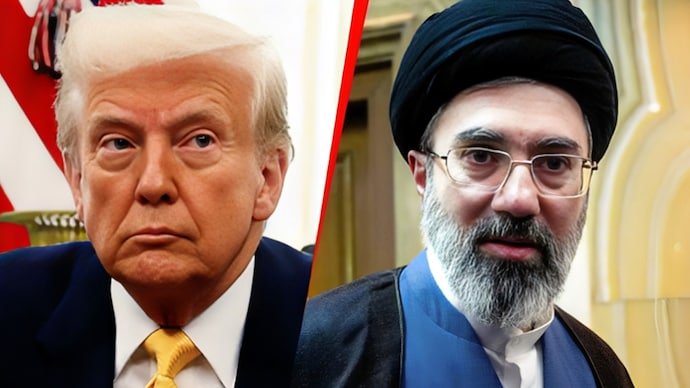
The United States and Iran appear closer to a major diplomatic breakthrough after reports emerged that both sides have agreed to a draft framework designed to halt hostilities, stabilize regional security, restore global energy flows, and restart negotiations over Tehran’s nuclear programme.
The reported agreement, often referred to as a 14-point framework, is not a final peace treaty. Instead, it represents an interim roadmap intended to reduce tensions immediately while creating a structured path toward a comprehensive settlement.
The significance of the framework extends far beyond Washington and Tehran. It has the potential to influence global oil prices, international trade routes, regional security arrangements, financial markets, and diplomatic relationships across the Middle East.
At a time when geopolitical tensions have repeatedly disrupted energy markets and raised fears of broader military escalation, the proposed framework offers a rare opportunity to replace confrontation with negotiation.
What Is the US-Iran 14-Point Framework?
The reported framework is essentially a temporary agreement aimed at creating breathing room for both sides.
Rather than attempting to solve every dispute immediately, the framework focuses on reducing tensions through a series of confidence-building measures while providing negotiators with a 60-day window to work toward a final agreement.
The proposal revolves around three major pillars:
- Restoring maritime security and reopening the Strait of Hormuz
- Providing economic relief and sanctions easing
- Restarting negotiations on Iran’s nuclear programme
This phased approach reflects a common diplomatic strategy used in complex international disputes where deep mistrust exists between negotiating parties.
Why the Strait of Hormuz Is the Most Important Element
One of the most significant components of the framework concerns the reopening of the Strait of Hormuz.
The narrow waterway serves as one of the world’s most critical energy corridors, connecting the Persian Gulf to global markets.
Roughly one-fifth of global oil trade passes through this strategic chokepoint, making it essential for international Energy Security.
Any disruption in Hormuz can trigger immediate consequences for:
- Global oil prices
- Shipping costs
- Inflation rates
- Energy-importing economies
- Financial market stability
The framework reportedly requires Iran to reopen the waterway for commercial traffic while the United States eases restrictions affecting Iranian maritime operations.
Why the Strait of Hormuz Matters to the World Economy
| Sector | Potential Impact of Reopening Hormuz |
|---|---|
| Oil Markets | Improved supply stability |
| Shipping Industry | Reduced operational risk |
| Global Inflation | Lower energy-driven price pressure |
| Asian Economies | More predictable energy imports |
| Financial Markets | Reduced geopolitical uncertainty |
For major importers such as India, China, Japan, and South Korea, uninterrupted access through Hormuz remains vital for economic stability.
The Economic Incentives Driving the Negotiations
Economic relief appears to be one of the strongest incentives encouraging Iran to remain engaged in negotiations.
Years of sanctions have restricted Iran’s access to international financial systems, foreign investment, and energy export revenues.
The proposed framework reportedly includes several measures aimed at providing immediate economic benefits.
- No new US sanctions during negotiations
- Temporary sanctions waivers
- Partial restoration of oil exports
- Access to frozen financial assets
- Future economic cooperation discussions
These measures could provide Tehran with short-term economic breathing room while broader negotiations continue.
The Importance of the $25 Billion Frozen Assets Proposal
One of the most widely discussed provisions involves the release of approximately $25 billion in frozen Iranian assets.
These funds have remained inaccessible due to sanctions and financial restrictions imposed over several years.
If released, the assets could be used for:
- Economic stabilization
- Infrastructure projects
- Industrial development
- Public services
- Financial sector support
For Iran, access to these resources would represent one of the most tangible benefits of the agreement.
For negotiators, the asset release serves as a confidence-building measure intended to encourage continued diplomatic engagement.
The Reported $300 Billion Economic Vision
Some reports originating from Iranian media suggest that discussions could eventually involve a broader reconstruction and economic development initiative worth as much as $300 billion.
Although these reports remain unconfirmed by independent international sources, they highlight a potentially ambitious long-term vision.
Such a framework could include:
- Infrastructure modernization
- Foreign investment projects
- Industrial cooperation
- Technology partnerships
- Regional economic integration
If realized, this would extend the agreement far beyond a traditional ceasefire arrangement.
The Nuclear Issue Remains the Biggest Challenge
Despite discussions about sanctions and economic relief, Iran’s nuclear programme remains the core issue that has shaped US-Iran relations for decades.
The reported framework seeks to stabilize the situation while negotiators work toward a more comprehensive solution.
According to available information, Iran would:
- Commit not to pursue nuclear weapons
- Pause further uranium enrichment
- Stop expanding nuclear facilities
- Maintain current nuclear activity levels during negotiations
These commitments would be temporary measures pending a broader agreement.
Why Uranium Enrichment Is So Controversial
Uranium enrichment has long been the most sensitive aspect of the nuclear dispute.
Iran argues that enrichment activities support peaceful civilian nuclear programs, including energy production and scientific research.
Western governments, however, have expressed concerns that highly enriched uranium could potentially shorten the timeline required for weapon development.
Future negotiations are expected to address:
- Acceptable enrichment levels
- Monitoring mechanisms
- International inspections
- Stockpile management
- Long-term nuclear restrictions
These discussions are likely to be among the most difficult during the proposed 60-day negotiation period.
Breaking Down the Reported 14-Point Framework
While the complete text remains unpublished, reports suggest the framework includes the following key elements:
| Reported Provision | Purpose |
|---|---|
| Immediate halt to hostilities | Reduce military escalation |
| Reopen Strait of Hormuz | Restore maritime trade |
| Ease restrictions on Iranian ports | Support shipping activity |
| No new sanctions during talks | Encourage negotiations |
| Oil export waivers | Boost Iranian revenues |
| Release frozen assets | Provide economic relief |
| 60-day negotiation window | Create diplomatic roadmap |
| No nuclear weapons commitment | Address security concerns |
| Pause uranium enrichment expansion | Prevent escalation |
| Freeze new nuclear facilities | Maintain status quo |
| Talks on uranium stockpiles | Resolve technical disputes |
| Regional de-escalation efforts | Improve stability |
| Economic cooperation discussions | Promote integration |
| Negotiation of final agreement | Create lasting settlement |
Why This Framework Matters More Than Previous Efforts
Unlike agreements focused solely on nuclear restrictions, the reported framework attempts to address multiple dimensions of the US-Iran relationship simultaneously.
It combines:
- Security measures
- Economic incentives
- Energy market stabilization
- Regional Diplomacy
- Nuclear negotiations
This broader approach reflects lessons learned from previous diplomatic efforts, where progress in one area often failed because other disputes remained unresolved.
The Impact on Global Oil Markets
Energy markets are closely monitoring developments because Iran remains one of the world’s most significant energy producers.
If sanctions ease and exports increase, markets could experience:
- Greater supply availability
- Reduced price volatility
- Lower shipping risk premiums
- Improved energy security
Even the perception of reduced geopolitical risk can influence commodity prices and investor sentiment.
For countries heavily dependent on imported energy, the benefits could extend well beyond the Middle East.
What the Agreement Could Mean for India
India has a strong interest in any development that stabilizes the Strait of Hormuz and Middle Eastern energy supplies.
As one of the world’s largest crude oil importers, India is particularly sensitive to disruptions in Gulf shipping routes.
Potential benefits for India include:
- More stable oil prices
- Reduced shipping costs
- Improved energy security
- Lower inflationary pressure
- Greater regional stability
Indian businesses, consumers, and policymakers would all closely monitor implementation of the framework.
The Biggest Risks Facing the Agreement
Despite the optimism surrounding the framework, numerous obstacles remain.
Potential risks include:
- Breakdown of negotiations
- Military incidents in the region
- Political opposition within either country
- Disagreements over inspections
- Disputes regarding sanctions timelines
- Regional security complications
History shows that US-Iran diplomacy is often vulnerable to sudden setbacks.
The success of the framework will depend heavily on both sides maintaining momentum throughout the negotiation process.
Future Outlook: Can This Become a Historic Breakthrough?
The proposed framework represents one of the most ambitious attempts in years to address the underlying causes of US-Iran tensions.
While the agreement does not solve every dispute immediately, it creates a structured mechanism for addressing them through diplomacy rather than confrontation.
The next 60 days will likely determine whether the framework evolves into a lasting settlement or becomes another missed opportunity in the long and complicated history of US-Iran relations.
If negotiators successfully resolve issues surrounding sanctions, nuclear restrictions, inspections, and regional security, the framework could lay the foundation for a more stable Middle East and a more predictable global energy market.
Conclusion
The reported US-Iran 14-point framework represents far more than a temporary ceasefire arrangement. By addressing maritime security, economic relief, sanctions, frozen assets, and nuclear concerns within a single negotiating structure, it attempts to tackle the most difficult issues dividing Washington and Tehran.
The reopening of the Strait of Hormuz, access to billions in frozen assets, Sanctions Relief, and renewed nuclear talks could significantly reduce tensions that have shaped Middle Eastern Geopolitics for decades.
Although many details remain unresolved and the final outcome is far from guaranteed, the framework offers a credible pathway toward stability, economic recovery, and diplomatic engagement. If successfully implemented, it could become one of the most important geopolitical agreements of the decade and reshape the strategic landscape of the Middle East for years to come.
For breaking news and live news updates, like us on Facebook or follow us on Twitter and Instagram. Read more on Latest World on thefoxdaily.com.






COMMENTS 0