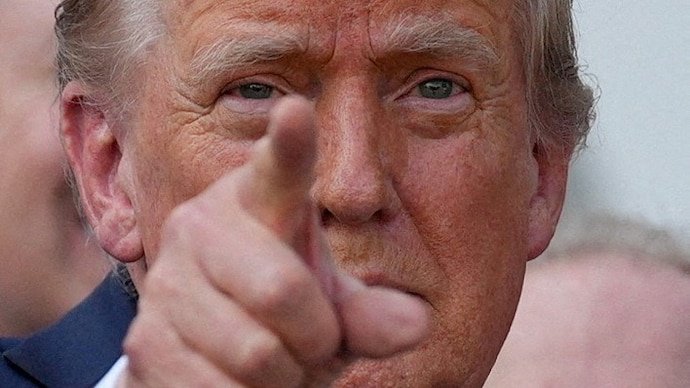
- Trump’s Claim: “Nuclear Dust” Deal Could End Standoff
- What the Potential Deal Includes
- Talks Expected Soon: Islamabad Emerges as Key Venue
- Ceasefire in Question: Peace or Pause?
- Why Iran May Be Shifting Its Position
- Global Stakes: Why This Deal Matters
- Ongoing Disagreement With Pope Leo
- Challenges Ahead: Key Issues Still Unresolved
- Conclusion: A Deal Within Reach, But Not Guaranteed
US President Donald Trump announced on Thursday that Iran has agreed in principle to hand over its stockpile of enriched uranium, signaling that a potential nuclear deal between the two countries could be close. Speaking at the White House, Trump described the development as a major breakthrough following six weeks of intense conflict and negotiations. Talks are expected to resume as early as this weekend, possibly in Islamabad, with mediation support from Pakistan. While optimism is growing, uncertainty remains over the Ceasefire, which could collapse if negotiations fail. The proposed deal centers on limiting Iran’s nuclear capabilities in exchange for potential Sanctions relief, making it a critical moment in global Diplomacy.
Trump’s Claim: “Nuclear Dust” Deal Could End Standoff
President Trump framed the latest development as a turning point in US-Iran Relations, stating that Tehran has agreed to hand over enriched uranium referred to by him as “nuclear dust.”
“They’ve agreed to give us back the nuclear dust… There’s a very good chance we’re going to make a deal,” Trump said.
Enriched uranium is a key component in nuclear technology and, at higher levels, can be used to develop nuclear weapons. For years, it has been the central point of contention between Washington and Tehran.
If confirmed, Iran’s willingness to transfer or reduce its stockpile would mark a significant shift in negotiations and could address one of the United States’ primary security concerns.
What the Potential Deal Includes
While details remain under negotiation, key elements of the proposed agreement have begun to emerge:
- Reduction or transfer of enriched uranium: Iran may ship part of its stockpile خارج the country
- Limits on nuclear activity: US proposed a 20-year suspension, while Iran suggested 3–5 years
- Sanctions relief: Tehran seeks easing of international economic restrictions
Sources indicate that a compromise may be forming, particularly around uranium stockpiles, with Iran potentially agreeing to partial transfer something it had previously resisted.
This suggests both sides are moving toward middle ground, a key requirement for any successful agreement.
Talks Expected Soon: Islamabad Emerges as Key Venue
Trump confirmed that the next round of negotiations could take place as early as this weekend, with Islamabad likely to host the discussions.
The choice of location highlights Pakistan’s growing role as a mediator in the conflict. Trump praised both Prime Minister Shehbaz Sharif and Military leadership for facilitating dialogue.
“If the deal is signed in Islamabad, I might go… They’ve been great,” Trump said.
A potential visit by the US President would underscore the diplomatic importance of the agreement and signal strong international backing.
Ceasefire in Question: Peace or Pause?
Despite the progress in negotiations, the ceasefire between the US and Iran remains uncertain. Trump cast doubt on whether it needs to be extended, suggesting confidence in ongoing talks but also signaling readiness for escalation if necessary.
“If there’s no deal, fighting resumes,” he warned.
This dual messaging reflects the fragile nature of the situation:
- Optimism about a deal is rising
- But military tensions remain just below the surface
The ceasefire, set to expire soon, will be a critical test of both sides’ commitment to diplomacy.
Why Iran May Be Shifting Its Position
Officials suggest that Iran’s apparent flexibility is not accidental. Several factors may be influencing Tehran’s approach:
- Military pressure: Weeks of sustained strikes have weakened infrastructure
- Economic strain: Sanctions and conflict have intensified financial challenges
- Diplomatic isolation: Limited global support increases pressure to negotiate
Trump himself linked Iran’s shift to recent military and strategic actions:
“It’s a combination of about four weeks of bombing and a very powerful blockade,” he said.
While such statements are politically charged, they reflect the broader reality that negotiations often follow periods of heightened pressure.
Global Stakes: Why This Deal Matters
The potential agreement carries significant implications beyond the US and Iran. At its core, the deal aims to prevent nuclear proliferation a key concern for Global Security.
Key global impacts include:
- Reduced nuclear risk: Limits on Iran’s program could ease international fears
- Stability in the Middle East: A deal may lower regional tensions
- Economic ripple effects: Sanctions relief could influence global oil markets
However, failure to reach an agreement could have the opposite effect, potentially escalating conflict and destabilizing the region further.
Ongoing Disagreement With Pope Leo
Trump also reiterated his disagreement with Pope Leo regarding the Iran conflict. While the Pope has called for peace and restraint, Trump emphasized the importance of addressing what he sees as a critical security threat.
“The Pope can say what he wants… but Iran cannot have a nuclear weapon,” Trump stated.
This exchange highlights the broader divide between political and moral perspectives on the conflict, with each side emphasizing different priorities.
Challenges Ahead: Key Issues Still Unresolved
Despite signs of progress, several challenges remain before a deal can be finalized:
- Scope of uranium transfer: Full vs partial removal
- Duration of nuclear limits: 3–5 years vs 20 years
- Sanctions relief timeline: Immediate vs phased approach
- Verification mechanisms: Ensuring compliance over time
These issues are complex and politically sensitive, meaning negotiations could still face setbacks.
Conclusion: A Deal Within Reach, But Not Guaranteed
President Trump’s claim that Iran is ready to hand over enriched uranium signals a potentially historic shift in one of the world’s most contentious geopolitical standoffs. After six weeks of conflict, both sides appear closer than ever to a negotiated settlement.
However, the path forward remains uncertain. While talks are gaining momentum and compromises are emerging, key differences still need to be resolved.
The coming days particularly the expected negotiations this weekend will be crucial in determining whether this moment leads to a lasting agreement or a return to conflict.
For now, the world watches closely as diplomacy and tension move side by side, with the outcome likely to shape global security for years to come.
For breaking news and live news updates, like us on Facebook or follow us on Twitter and Instagram. Read more on Latest World on thefoxdaily.com.




COMMENTS 0