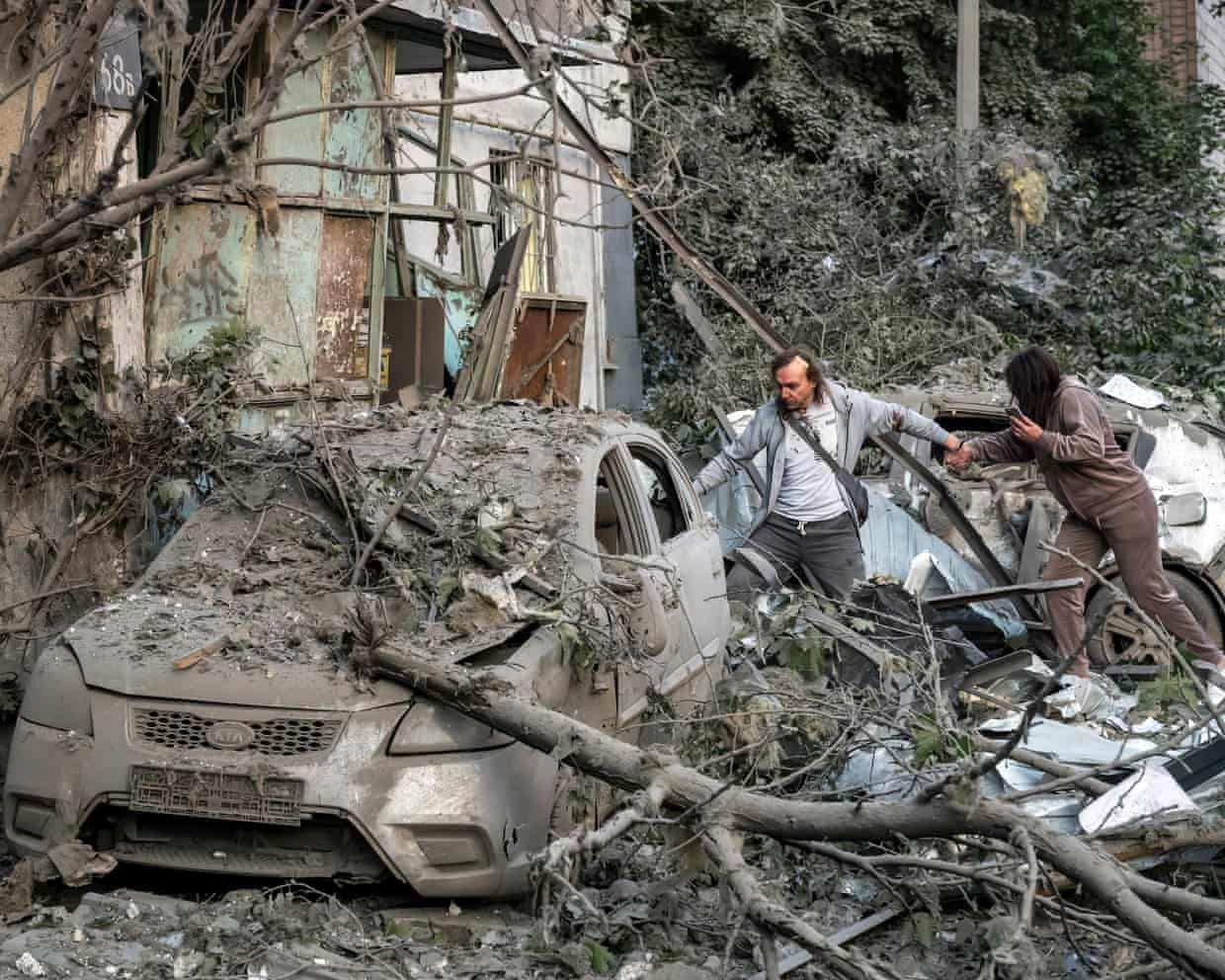
More than four years after Russia’s full-scale invasion transformed European Geopolitics, Ukraine‘s path toward European Union membership has evolved from a diplomatic aspiration into a central strategic question. While many European leaders publicly support Ukraine’s eventual accession, significant divisions remain over how quickly it should happen and what risks such a move would create.
Traditionally, EU enlargement has been a slow and highly technical process that often takes more than a decade. Candidate countries must align thousands of laws and regulations with EU standards, implement reforms, strengthen democratic institutions, and meet strict economic criteria.
However, Ukraine’s situation is unlike any previous enlargement case. The country is simultaneously fighting Europe‘s largest war since World War II, defending the continent’s eastern frontier, and seeking integration into Western institutions. This has led some policymakers and analysts to argue that conventional timelines may no longer be sufficient.
The debate is no longer simply about whether Ukraine should join the European Union. Instead, it has become a question of whether Europe can afford to keep Ukraine waiting.
Why Ukraine’s EU Membership Has Become a Strategic Issue
For much of the past two decades, EU enlargement was viewed primarily as an economic and political project. Candidate countries sought access to the single market, investment opportunities, and the stability associated with membership.
Ukraine’s case is fundamentally different.
The country’s accession is increasingly viewed through the lens of Security, geopolitics, and Europe’s future role in a rapidly changing international order.
Russia’s invasion demonstrated that Europe’s security architecture remains vulnerable. It also exposed the continent’s continued dependence on external security guarantees, particularly from the United States.
As European governments confront this reality, Ukraine is increasingly being seen not merely as a country seeking membership but as a potential contributor to Europe’s strategic strength.
The Role of EU Membership in a Future Peace Agreement
Whenever negotiations eventually bring an end to the war, political leaders will face a difficult challenge: ensuring that any settlement remains sustainable.
Military guarantees alone may not be enough.
Ukraine’s political leadership will likely need to demonstrate that the country has secured a meaningful future within European institutions. A credible EU membership pathway could become one of the most important incentives supporting long-term stability.
Such a commitment would provide:
- Political certainty.
- Economic integration.
- Investment confidence.
- Institutional reform incentives.
- Long-term strategic alignment with Europe.
Without these elements, any postwar settlement could face significant domestic resistance and remain vulnerable to future instability.
How EU Membership Could Accelerate Reform in Ukraine
One of the strongest arguments supporting accession is the transformative effect that EU membership requirements have historically had on candidate countries.
The accession process requires governments to implement reforms across a wide range of sectors, including:
- Judicial independence.
- Anti-corruption measures.
- Public administration.
- Competition policy.
- Financial transparency.
- Regulatory oversight.
For Ukraine, these reforms could help address longstanding Governance challenges while creating a more attractive environment for domestic and foreign investment.
Successful reform would also reduce long-term reconstruction costs by encouraging private-sector participation and improving institutional efficiency.
Europe’s Overlooked Advantage: Security
Much of the discussion focuses on what Ukraine gains from joining the EU. Less attention is paid to what Europe gains.
One of the most significant benefits would be security.
Ukraine possesses one of the largest and most battle-tested military forces in Europe. Years of high-intensity warfare have produced extensive operational experience, technological innovation, and military adaptation.
European governments are increasingly seeking greater strategic autonomy as uncertainty grows regarding future American commitments to European defense.
In that context, Ukraine’s military capabilities could become a valuable strategic asset.
| Strategic Area | Potential Benefit for the EU |
|---|---|
| Military Capability | Access to one of Europe’s largest armed forces |
| Defense Innovation | Advanced battlefield and drone technology experience |
| Security Deterrence | Stronger eastern defense posture |
| Agriculture | Expanded food production capacity |
| Economic Growth | Large reconstruction and investment opportunities |
Ukraine Could Transform Europe’s Defense Industry
The war has accelerated Ukraine’s defense innovation at an extraordinary pace.
Faced with battlefield challenges, Ukrainian companies and military planners have rapidly developed expertise in areas such as:
- Drone warfare.
- Electronic warfare.
- Battlefield intelligence.
- Rapid manufacturing adaptation.
- Defense technology integration.
These capabilities align closely with Europe’s growing efforts to strengthen its own defense industrial base.
Rather than being merely a recipient of security assistance, Ukraine could become an important contributor to Europe’s future defense ecosystem.
The Agricultural Superpower Argument
Ukraine is often referred to as one of the world’s agricultural powerhouses.
The country possesses some of the most fertile farmland on the planet and plays a critical role in global food markets.
Its integration into the European Union would significantly expand the bloc’s agricultural capacity.
This could strengthen Europe’s food security, enhance export competitiveness, and increase the EU’s influence in global agricultural trade.
However, it is also one of the most controversial aspects of accession.
Farmers in several EU member states worry that Ukrainian agricultural products could increase competition and place downward pressure on prices.
Why Many EU Governments Remain Hesitant
Despite strong public support for Ukraine, many European governments remain cautious about rapid accession.
The concerns are substantial and cannot be dismissed easily.
Economic Costs
Ukraine’s Economy remains significantly smaller and less developed than the EU average.
Membership would likely require major financial transfers through cohesion funds, agricultural support programs, and reconstruction assistance.
Current beneficiaries of EU funding may see resources redirected toward Ukraine, creating political resistance.
Agricultural Competition
Several member states are concerned about the impact of Ukrainian agricultural exports on domestic producers.
This issue has already generated political tensions during discussions about trade liberalization.
Governance and Corruption Concerns
Although Ukraine has implemented reforms, questions remain regarding governance standards, judicial independence, and corruption prevention.
Some governments worry about admitting a country before reforms are fully entrenched.
Territorial Disputes
Perhaps the most complex challenge involves territories affected by the war.
The European Union would need to determine how membership applies to regions where sovereignty remains contested.
Previous examples exist within Europe, but the scale and geopolitical complexity of the Ukraine Conflict create unique complications.
The Problem with Traditional Enlargement
The traditional EU enlargement model was designed for a different era.
Candidate countries typically progressed through lengthy negotiations, often waiting many years before membership became reality.
Applying the same approach to Ukraine could mean delaying accession until the late 2030s or even beyond.
Many analysts argue that such delays would undermine both Ukraine’s stability and Europe’s strategic interests.
In a rapidly evolving geopolitical environment, timelines that once appeared reasonable may no longer be practical.
New Models for Membership Are Emerging
To address these challenges, policymakers have proposed alternative approaches that balance speed with safeguards.
Among the ideas being discussed:
- Phased integration into the single market.
- Gradual access to EU funding programs.
- Conditional participation based on reform benchmarks.
- Associate membership frameworks.
- Temporary safeguard mechanisms.
These approaches aim to provide Ukraine with meaningful integration while allowing the EU to manage economic and political concerns.
Such flexibility could help bridge the gap between immediate accession and traditional enlargement timelines.
The Geopolitical Stakes Are Higher Than They Appear
The debate over Ukraine’s membership is ultimately about more than Ukraine.
It is about defining what kind of European Union emerges from the continent’s most significant security crisis in generations.
A faster accession process would signal that the EU is capable of adapting to geopolitical realities and responding strategically to external threats.
A slower process could preserve existing procedures but risk creating uncertainty at a moment when clarity may be essential.
The decision will influence not only Ukraine’s future but also perceptions of European credibility, unity, and strategic ambition.
Future Outlook
Ukraine’s path toward EU membership remains uncertain, but the direction of travel appears increasingly clear. European leaders broadly recognize that Ukraine belongs within the European political and economic framework. The remaining debate centers on timing, conditions, and implementation.
As security concerns continue reshaping European policy, pressure is likely to grow for more innovative approaches to enlargement. Rather than choosing between immediate membership and decades-long negotiations, policymakers may pursue hybrid models that accelerate integration while preserving reform incentives.
The coming years could therefore redefine not only Ukraine’s future but also the future of EU enlargement itself.
Conclusion
Ukraine’s potential accession to the European Union is no longer merely an enlargement question. It has become a strategic test of Europe’s ability to respond to a changing geopolitical environment.
While concerns regarding economics, governance, agriculture, and security are genuine, the potential benefits are equally significant. Ukraine offers military capability, agricultural strength, economic opportunities, and a powerful demonstration of European resilience.
The greatest insight often missed in this debate is that Ukraine may not be the only country seeking protection and opportunity through EU membership. Europe itself stands to gain enormously from bringing Ukraine into its political, economic, and strategic framework. In that sense, accelerating Ukraine’s accession may ultimately be less about helping Kyiv and more about strengthening Europe’s own future.
For breaking news and live news updates, like us on Facebook or follow us on Twitter and Instagram. Read more on Latest World on thefoxdaily.com.






COMMENTS 0