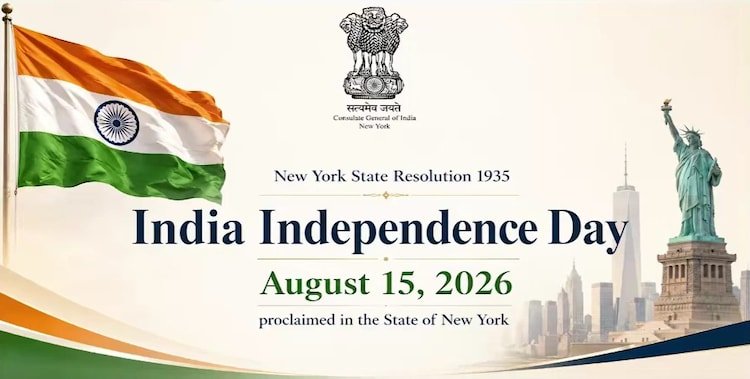
The relationship between India and the United States continues to reach new milestones, and a recent resolution passed by the New York State Senate may become one of the most symbolic examples yet. Lawmakers have urged Governor Kathy Hochul to proclaim August 15, 2026, as India Independence Day in New York State, a move that goes far beyond ceremonial recognition.
The proposal acknowledges India’s independence, democratic legacy, cultural heritage, and the growing role of Indian-Americans in shaping New York’s Economy, Education system, business environment, and civic institutions. At a time when India-US ties are expanding across trade, technology, defense, education, and people-to-people exchanges, the resolution sends a powerful message about the importance of one of America’s fastest-growing and most influential communities.
Who is involved? New York State senators, Indian-American community leaders, and representatives of the Indian Consulate. What happened? A resolution urging formal recognition of India Independence Day in New York. When? Ahead of the 79th anniversary of India’s independence in 2026. Where? In Albany, New York. Why? To recognize India’s democratic journey and the contributions of Indian-Americans. How? Through bipartisan legislative support and growing public acknowledgment of the community’s impact.
Why This Resolution Matters Beyond Symbolism
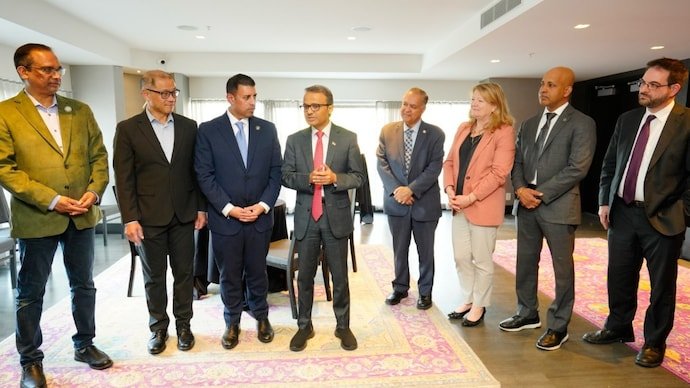
Political resolutions often carry significance far beyond ceremonial recognition. The New York State Senate’s action reflects a broader transformation in how India is perceived globally and how Indian-Americans are shaping the social and economic fabric of the United States.
New York is home to one of America’s largest and most influential Indian-origin populations. Over the past several decades, Indian-Americans have emerged as leaders in technology, Healthcare, finance, education, entrepreneurship, public service, and scientific research. Their achievements have strengthened local communities while creating deeper economic and cultural links between India and the United States.
Recognition of India Independence Day by one of America’s most influential states demonstrates that the Indian-American community is no longer viewed solely through the lens of immigration. It is increasingly recognized as a driving force in innovation, business growth, civic engagement, and public leadership.
The resolution also reflects the growing importance of cultural Diplomacy. While governments negotiate trade agreements and strategic partnerships, communities build enduring Relationships through education, business, cultural exchange, and shared democratic values.
The Historical Significance of August 15
August 15, 1947, marks one of the most consequential moments in modern world history. After nearly two centuries of British colonial rule, India achieved independence and began one of the most ambitious democratic experiments ever undertaken.
At independence, India faced immense challenges including poverty, low literacy rates, political fragmentation, and economic underdevelopment. Yet over the decades, the nation transformed itself into the world’s largest democracy and one of the fastest-growing major economies.
Today, India is home to more than 1.4 billion people and plays a critical role in global technology, manufacturing, pharmaceuticals, space exploration, and international diplomacy. The recognition of India’s Independence Day by New York therefore celebrates not only a historical event but also India’s remarkable national journey.
The Growing Influence of Indian-Americans in New York
The Senate debate highlighted a reality that has become increasingly visible across the United States: Indian-Americans have become one of the country’s most successful and influential communities.
Across New York, Indian-Americans have established businesses, led universities, advanced medical research, and contributed significantly to local economies. Their presence can be seen from Wall Street and Silicon Alley to hospitals, research institutions, and public offices.
Key areas where Indian-Americans have made a significant impact include:
- Technology and software innovation
- Healthcare and medical sciences
- Financial services and investment management
- Higher education and academic leadership
- Entrepreneurship and small business development
- Public service and government
- Community philanthropy and civic engagement
The community’s contributions extend beyond economics. Indian festivals, cuisine, arts, traditions, and cultural events have become an important part of New York’s multicultural identity, enriching neighborhoods across the state.
India-US Relations: From Strategic Partners to Global Collaborators
The Senate resolution comes at a time when India-US relations are stronger than at any point in history.
Over the past two decades, the two democracies have expanded cooperation in trade, defense, technology, education, energy, healthcare, and supply chain resilience. What was once a cautious diplomatic relationship has evolved into a multifaceted strategic partnership.
| Area | Past Relationship | Current Status |
|---|---|---|
| Trade | Limited engagement | Major economic partnership |
| Technology | Restricted cooperation | Collaboration in AI, semiconductors and innovation |
| Education | Moderate student exchanges | Large-scale academic cooperation |
| Defense | Minimal interaction | Strategic defense collaboration |
| People-to-People Ties | Growing immigrant community | Deep societal and economic integration |
Indian-Americans have played a central role in this transformation by serving as cultural ambassadors, entrepreneurs, researchers, investors, and public leaders who bridge the interests of both nations.
The Democratic Connection Between India and the United States
Several senators referenced India’s democratic traditions during the debate, highlighting a shared value system that forms the foundation of bilateral relations.
Despite differences in geography, history, and political structures, India and the United States are united by a commitment to representative government, constitutional institutions, individual freedoms, and democratic participation.
The recognition of India Independence Day reinforces the idea that democratic values can create powerful international partnerships. In an era when democratic systems face challenges worldwide, symbolic gestures like this carry greater significance than ever before.
The references to Mahatma Gandhi during Senate discussions further underscored the enduring influence of non-violence, civic responsibility, and democratic engagement in contemporary public life.
The Economic Impact of the Indian-American Community
One dimension often overlooked in discussions about cultural recognition is the economic contribution of Indian-Americans.
Indian-origin entrepreneurs have launched thousands of businesses across the United States, generating employment opportunities and contributing billions of dollars to economic activity. From technology startups to hospitality businesses and healthcare enterprises, their impact is visible across multiple sectors.
New York in particular benefits from Indian-American participation in finance, technology, medicine, education, and real estate. Many community members are also actively involved in philanthropy, supporting educational institutions, healthcare initiatives, and community development projects.
The Senate resolution therefore acknowledges a community that has become deeply integrated into New York’s economic success story.
A Recognition of Cultural Diversity and Inclusion
The resolution also reflects a broader trend across the United States toward recognizing the contributions of diverse communities.
As New York continues to evolve as one of the world’s most multicultural regions, celebrations of cultural heritage have become important tools for promoting inclusion, understanding, and social cohesion.
Official recognition of India Independence Day creates opportunities for educational programs, cultural events, and community celebrations that help residents better understand India’s history, traditions, and global influence.
Such initiatives contribute to stronger community relationships and encourage intercultural dialogue in an increasingly interconnected society.
What This Means for Future India-US Relations
Although the resolution itself is symbolic, its long-term implications may be more significant than they initially appear.
People-to-people connections have become one of the strongest pillars of India-US relations. As Indian-Americans continue to gain influence in Politics, business, academia, and public life, they are likely to play an even greater role in shaping future cooperation between the two nations.
The recognition of India Independence Day by state legislatures could encourage similar initiatives elsewhere in the United States, further strengthening awareness of India’s growing global importance.
It also reflects a broader shift in international relations where diaspora communities increasingly influence diplomacy, economic partnerships, and cultural exchange.
A Comparison With Previous Milestones in India-US Engagement
The Senate resolution joins a series of important milestones that have strengthened India-US ties over recent decades. These include expanding trade relationships, defense agreements, technology partnerships, educational collaborations, and growing cultural exchanges.
What makes this development unique is that it originates at the state level rather than through federal diplomacy. It demonstrates how support for stronger India-US relations now extends beyond Washington and into local communities and state institutions.
This grassroots recognition may ultimately prove just as important as formal diplomatic agreements because it reflects public appreciation and societal integration.
The Missing Story: The Rise of Diaspora Diplomacy
One angle often overlooked in coverage of such developments is the growing importance of diaspora diplomacy.
Indian-Americans have become a powerful bridge connecting two nations that are increasingly aligned economically, strategically, and culturally. Through business investments, educational exchanges, technology partnerships, and civic engagement, the community helps translate diplomatic goodwill into tangible outcomes.
The New York Senate resolution is not merely about commemorating history. It is also about recognizing the role that diaspora communities play in shaping the future of international relations.
As global migration continues to reshape societies, diaspora diplomacy may become one of the defining forces of twenty-first-century Geopolitics.
Future Outlook
The momentum behind India-US relations shows little sign of slowing. Growing economic cooperation, expanding technology partnerships, increasing educational exchanges, and stronger people-to-people connections are likely to deepen bilateral ties in the years ahead.
The Indian-American community will remain central to this evolution, serving as a bridge between two democracies that increasingly view each other as indispensable partners.
If Governor Kathy Hochul adopts the Senate’s recommendation, August 15 could become an annual reminder of not only India’s independence but also the enduring friendship between India and the United States.
Conclusion
The New York State Senate’s resolution urging recognition of August 15 as India Independence Day represents far more than a ceremonial gesture. It acknowledges India’s democratic legacy, celebrates the extraordinary contributions of Indian-Americans, and reflects the deepening relationship between two of the world’s most important democracies.
At a time when global partnerships are increasingly shaped by people-to-people connections, the resolution highlights the power of cultural understanding, civic engagement, and shared values. Whether viewed through the lens of diplomacy, economics, history, or community development, this development stands as another milestone in the continuing story of India-US cooperation.
More importantly, it signals that the influence of the Indian-American community and the strategic importance of India itself will continue to grow in the decades ahead.
For breaking news and live news updates, like us on Facebook or follow us on Twitter and Instagram. Read more on Latest World on thefoxdaily.com.




COMMENTS 0