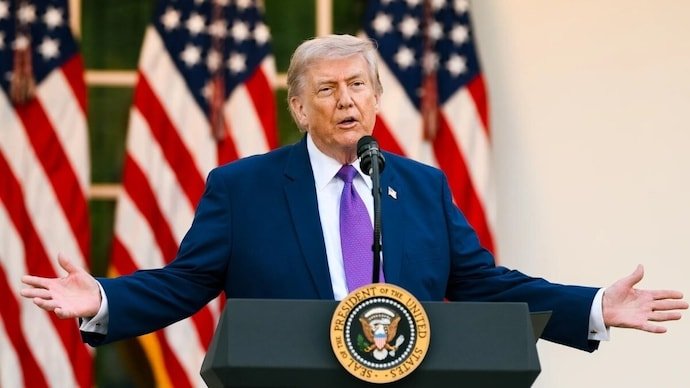
In a dramatic political reversal, the Trump administration has abandoned plans for a proposed $1.8 billion “weaponisation fund” after facing significant resistance from Republican senators. The decision marks a rare instance in which members of President Donald Trump’s own party publicly challenged a major administration initiative and successfully forced a retreat.
The fund emerged from a legal settlement linked to Trump’s lawsuit against the Internal Revenue Service (IRS), which alleged improper handling of his confidential tax records. While supporters argued the fund would compensate individuals who suffered from government abuse, critics warned that it could become a politically explosive mechanism for rewarding controversial claimants, including individuals connected to the January 6 Capitol riot.
The episode highlights a broader struggle over how governments should address alleged abuses of power, how compensation mechanisms should operate, and how political loyalty is increasingly colliding with fiscal and legal concerns in Washington.
What Was the $1.8 Billion Weaponisation Fund?
The proposed fund was designed to compensate individuals who claimed they had been harmed by government actions that they believed were politically motivated, improperly conducted, or abusive.
The initiative originated from a settlement connected to Trump’s legal challenge regarding the handling of his tax records. Administration officials described the concept as part of a broader effort to address alleged government misconduct and restore public trust in federal institutions.
Supporters viewed the proposal as a corrective measure intended to compensate victims of perceived bureaucratic overreach. Critics, however, questioned the scale of the fund, the criteria for eligibility, and the lack of clarity surrounding potential beneficiaries.
The controversy intensified when lawmakers sought assurances that participants involved in the January 6, 2021, Capitol events would not be eligible for compensation. The administration’s reluctance to provide definitive exclusions became a turning point in the Political Debate.
Why Republicans Opposed the Fund
Perhaps the most surprising aspect of the controversy was not Democratic opposition but resistance from Republicans themselves.
Trump has traditionally maintained strong influence within the Republican Party. Yet the weaponisation fund triggered concerns among lawmakers who feared the proposal could become politically damaging ahead of critical legislative battles.
Several concerns drove Republican opposition:
- Uncertainty regarding who would qualify for compensation.
- Concerns about potential payouts to controversial claimants.
- Questions regarding taxpayer accountability.
- Potential political fallout during election cycles.
- Fear that the controversy could derail other administration priorities.
One major concern was the potential impact on a broader $72 billion legislative package aimed at funding immigration enforcement initiatives. Republican lawmakers reportedly worried that public backlash surrounding the fund could jeopardize support for the larger bill.
In practical political terms, many lawmakers concluded that defending the compensation fund carried greater risks than abandoning it.
The Political Significance of a Rare Republican Rebellion
The withdrawal of the fund is noteworthy because it demonstrates that even a highly influential president can face resistance from within his own party when political risks become too great.
Modern American Politics has increasingly been characterized by party discipline and ideological polarization. High-profile disagreements between party leaders and rank-and-file lawmakers have become less common.
This episode therefore serves as an important reminder that congressional lawmakers retain significant leverage, particularly when legislation depends on narrow margins of support.
The fund’s collapse illustrates a broader reality of Governance: political power ultimately depends not only on leadership but also on maintaining coalitions capable of supporting policy initiatives.
The IRS Lawsuit That Started the Controversy
At the center of the dispute lies Trump’s lawsuit involving the handling of his tax records.
The case emerged from long-running controversies surrounding the release and examination of Trump’s financial information. Throughout his political career, tax transparency became one of the most debated issues associated with his presidency.
The settlement eventually led to provisions that sparked intense scrutiny, including agreements concerning future audits and broader discussions regarding compensation for individuals alleging government misconduct.
While the legal dispute focused on specific allegations involving tax records, the political consequences expanded far beyond the original case, ultimately influencing congressional debates and federal funding discussions.
The Debate Over Government Weaponisation
The term “weaponisation of government” has become one of the most influential phrases in contemporary American politics.
Supporters of the concept argue that Federal Agencies can sometimes be used unfairly against political opponents, businesses, activists, or ordinary citizens. Critics counter that such claims are often exaggerated and risk undermining confidence in public institutions.
The abandoned fund became a focal point in this broader debate.
Those who supported the initiative argued that compensation mechanisms already exist in various forms throughout government systems. They claimed that individuals harmed by improper government actions deserve meaningful remedies.
Opponents questioned whether a large-scale compensation program could be administered fairly and warned that political considerations might influence payout decisions.
The controversy ultimately revealed how difficult it is to balance accountability, justice, and public trust when government institutions themselves become subjects of political dispute.
The January 6 Factor That Changed Everything
A major turning point came when lawmakers focused on whether individuals connected to the January 6 Capitol riot could potentially receive compensation.
Although administration officials did not explicitly state that such individuals would qualify, concerns grew after officials declined to provide categorical assurances excluding them.
For many lawmakers, the issue became politically unsustainable.
The possibility real or perceived that individuals involved in one of the most controversial events in recent American history could receive government compensation transformed the debate from a technical legal matter into a national Political Controversy.
Once that perception took hold, opposition expanded rapidly.
What the Decision Means for Taxpayers
From a fiscal perspective, the abandonment of the fund removes a potentially significant financial obligation.
Large compensation programs often face intense scrutiny because they involve difficult questions regarding eligibility, oversight, administration, and long-term costs.
| Key Issue | Supporters’ View | Critics’ View |
|---|---|---|
| Compensation | Justice for victims of abuse | Potential misuse of public funds |
| Government Accountability | Creates remedies for misconduct | May politicize compensation decisions |
| Public Trust | Shows willingness to address grievances | Could reduce confidence in institutions |
| Cost | Necessary investment in justice | Large burden on taxpayers |
The debate illustrates a recurring challenge in Public Policy: ensuring accountability without creating mechanisms vulnerable to political controversy or abuse.
The Conflict-of-Interest Questions Facing the Justice Department
Another major aspect of the controversy involves Acting Attorney General Todd Blanche’s role in approving elements of the settlement.
Because Blanche previously served as Trump’s personal attorney, critics questioned whether his involvement created perceptions of a Conflict of interest.
Supporters argue that prior professional Relationships do not automatically create ethical violations and that government officials frequently transition from private legal practice to public service.
Critics maintain that decisions involving former clients require heightened scrutiny to protect public confidence in impartial decision-making.
Regardless of legal conclusions, the controversy highlights the importance of transparency in maintaining trust in public institutions.
Why This Story Matters Beyond Washington
Although the dispute centers on federal politics, its implications extend far beyond Capitol Hill.
The controversy touches on several issues that affect democracies worldwide:
- How governments address allegations of institutional abuse.
- How compensation systems should be structured.
- How political influence affects public administration.
- How public trust can be maintained during periods of polarization.
- How accountability mechanisms can function without becoming political tools themselves.
Many democracies face similar debates regarding transparency, oversight, and institutional independence. The outcome of such discussions often shapes public confidence in government for years to come.
The Bigger Story: A Shift in Republican Governance
One insight often overlooked in coverage of this controversy is what it reveals about the Republican Party itself.
For years, political observers have focused on Trump’s influence over the party. However, the collapse of the weaponisation fund suggests that practical governance concerns can still override partisan loyalty when lawmakers perceive significant political risks.
This does not necessarily signal a broader political break. Instead, it demonstrates that congressional Republicans are increasingly willing to challenge specific initiatives when electoral, fiscal, or policy considerations demand it.
That development could become increasingly important as future legislative battles emerge over spending, immigration, taxation, and executive authority.
Future Outlook
Although the $1.8 billion weaponisation fund has been abandoned, the underlying issues are unlikely to disappear.
Questions about government accountability, political bias within institutions, tax enforcement, and compensation for alleged misconduct will remain central topics in American politics.
The administration may pursue alternative mechanisms to address concerns regarding government abuse, while lawmakers will likely continue debating the proper balance between accountability and fiscal responsibility.
Meanwhile, the controversy serves as a reminder that even seemingly symbolic legal settlements can evolve into major political battles with national consequences.
Conclusion
The Trump administration’s decision to abandon the proposed $1.8 billion weaponisation fund represents more than a policy reversal. It reflects the complex intersection of law, politics, accountability, and public perception in modern governance.
What began as a settlement-related initiative ultimately became a test of political support, Institutional Trust, and fiscal responsibility. Republican resistance, concerns over potential beneficiaries, and broader questions about government accountability combined to force a significant retreat.
As debates over political weaponisation and institutional fairness continue, the controversy will likely be remembered as an important example of how public scrutiny and legislative pressure can reshape even the most ambitious policy proposals. More importantly, it underscores a fundamental reality of democracy: accountability applies not only to government agencies but also to the leaders seeking to reform them.
For breaking news and live news updates, like us on Facebook or follow us on Twitter and Instagram. Read more on Latest World on thefoxdaily.com.






COMMENTS 0