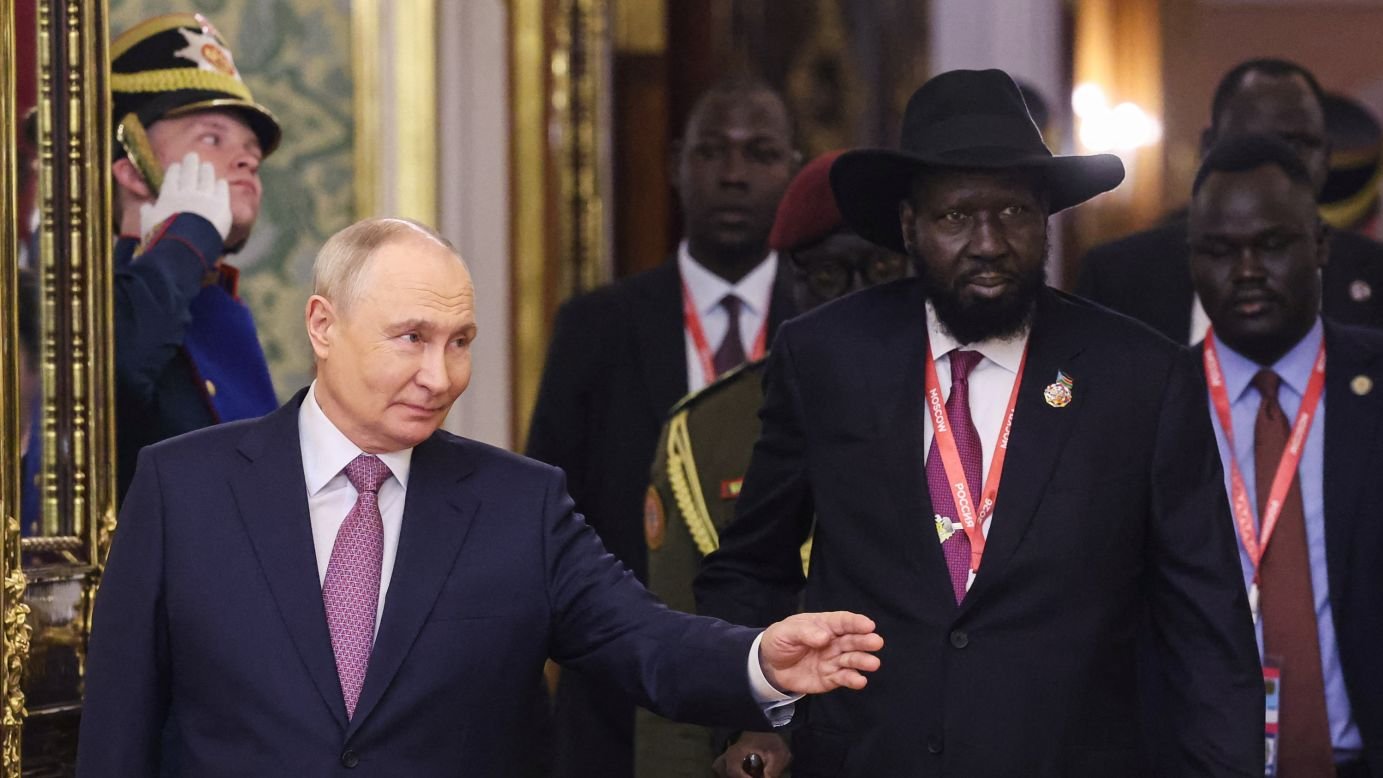
Russia is working to strengthen its international partnerships as its war in Ukraine continues and Western sanctions constrain its economy. Africa has become an important part of that diplomatic effort, with Moscow seeking closer political, military and economic ties across the continent.
But African governments are not necessarily joining Russia’s side in a wider contest between Moscow and Western powers. Many are pursuing a more flexible approach, maintaining relationships with several international partners while seeking security assistance, investment, trade opportunities and diplomatic support.
That distinction was visible at the third Russia-Africa Summit in Moscow, where delegations from 48 of Africa’s 54 countries attended the two-day gathering. Twenty-two countries were represented by their heads of state, according to Kremlin aide Yury Ushakov. The figure was higher than the 17 heads of state who attended the 2023 summit, although it remained below the 43 who took part in the first meeting in 2019.
For Russian President Vladimir Putin, the gathering offered an opportunity to present Moscow as a reliable alternative to Western partners. He accused Western countries of exploiting Africa’s resources, maintaining colonial-era attitudes and using debt to restrict the continent’s development. Russia, he argued, was offering cooperation based on trade, technology and mutual economic benefits.
“Our business does not engage in the predatory, neo-colonial exploitation of natural and human resources,” Putin said, arguing that Russian companies contributed to local employment and government tax revenues.
The summit also served a diplomatic purpose. At a time when Russia faces extensive sanctions and strained relations with many Western governments, photographs and public appearances alongside African leaders help Moscow demonstrate that it retains international partners.
However, the presence of African leaders in Moscow does not necessarily indicate that their governments have committed themselves to Russia’s geopolitical objectives. Their participation reflects a range of national interests, and many are attempting to preserve room for manoeuvre in an increasingly competitive international environment.
Why Russia Wants Stronger Relations With Africa
Russia’s interest in Africa combines diplomatic, economic and security considerations. The continent offers opportunities to develop new markets, secure access to strategic resources, expand military cooperation and build support among countries whose positions can matter in international institutions.
The war in Ukraine has made these relationships more significant for Moscow. Western sanctions have restricted parts of Russia’s access to international markets, finance and technology. Strengthening ties with governments outside the Western alliance system can help Russia maintain commercial links and reduce its diplomatic isolation.
Africa is particularly important because its governments have different foreign-policy priorities and do not all follow the same approach to international conflicts. Some countries have maintained relations with Moscow, while others have continued to work closely with European and American partners. Several seek cooperation with both sides.
Will Brown, an Africa policy specialist at the European Council on Foreign Relations, has argued that the political imagery surrounding the summit may be as important to Moscow as the agreements reached there. Photographs of Putin meeting African leaders can be circulated through Russian diplomatic and media networks to reinforce the message that the country remains internationally engaged.
For African governments, however, the summit is also an opportunity to communicate their willingness to work with multiple powers. Tighisti Amare, director of the Africa Programme at Chatham House, describes this approach as “diversified non-alignment”: maintaining relationships with different partners instead of committing exclusively to one geopolitical camp.
The reasons vary from country to country. Governments facing security challenges may seek military equipment or training. Others are interested in agricultural supplies, energy infrastructure, technology, education or diplomatic backing. Some also use competition between international partners to negotiate better terms for cooperation.
This approach means that Russia’s expanding diplomatic presence should not automatically be interpreted as a corresponding decline in Western influence. African governments can engage with Moscow while continuing to receive investment, development assistance and security cooperation from other countries.
Russia’s Expanding Security Role in the Sahel
Security cooperation has become one of the most visible parts of Russia’s engagement with Africa. Moscow has strengthened its presence in parts of the Sahel, particularly Mali, Burkina Faso and Niger, where military-led governments have moved away from traditional Western security partnerships.
These governments have sought Russian assistance as they confront armed groups, political instability and continuing security challenges. Their decisions have created opportunities for Moscow to expand its military relationships in a region where France and other Western partners previously held significant influence.
Russia’s involvement has developed through the Africa Corps, a paramilitary force that took over much of the work previously associated with the Wagner Group following Wagner’s 2023 mutiny against the Kremlin.
The change involved more than a new name. Africa Corps operates openly under Russia’s Defence Ministry and military intelligence structures. Its personnel include former Wagner fighters, while its activities have placed greater emphasis on military training, advising and protecting strategic locations.
Wagner has nevertheless remained active in some countries, including the Central African Republic, where the government has resisted a complete transition to the new structure.
The Sahel remains a major focus because governments in the region face persistent threats from armed organisations and have sought alternatives to Western military assistance. Researcher Anna Ida Rock of the Swedish Defence Research Agency has reported an Africa Corps presence in Burkina Faso, the Central African Republic, Equatorial Guinea, Libya, Mali and Niger.
Russian military instructors have also been reported in the Republic of Congo, Madagascar and Togo, although claims about a Russian presence in Togo have been disputed.
Moscow is also pursuing strategic access beyond the Sahel. A proposed naval facility in Sudan would give Russia a potential foothold near the Red Sea, an important maritime corridor connecting the Mediterranean with the Indian Ocean. The proposal has been discussed for several years, but its implementation has faced uncertainty linked to Sudan’s political and security situation.
Military Cooperation Has Produced Uneven Results
Russia’s security partnerships have delivered different outcomes across the countries where its personnel operate. In some cases, Russian forces have helped governments strengthen their military positions. In others, the presence of Russian personnel has not brought a lasting improvement in civilian security.
In Mali, Russian support helped government forces retake the north-eastern city of Kidal, an important development in the country’s struggle to reassert control over territory. However, insecurity has continued, and Africa Corps personnel have suffered significant losses.
In Burkina Faso, Russian personnel have focused partly on protecting the authorities during a period of political instability. The country’s wider security crisis remains difficult, with armed groups continuing to pose a threat in several areas.
Russia’s role in Niger has been more limited than in some neighbouring countries. The country’s military authorities have nevertheless sought to diversify their security relationships following the breakdown of earlier partnerships with Western governments.
The Central African Republic provides another example of the complicated results of Russian involvement. Russian forces have helped the government maintain its position, but armed violence and insecurity have persisted. The authorities may have gained an important security partner, yet the arrangement has not resolved the problems affecting many civilians.
These differences highlight the limits of measuring Russia’s influence only through the number of countries where its military personnel are present. The longer-term significance of these partnerships depends on whether they improve security, strengthen state institutions and produce benefits that extend beyond the governments receiving assistance.
Trade Remains Smaller Than Russia’s Diplomatic Ambitions
Although Russia has expanded its political and security presence in Africa, its commercial relationship with the continent remains considerably smaller than those maintained by major trading partners such as China and the European Union.
Russia-Africa trade was estimated at $27 billion in 2025, below the $40 billion target Moscow announced in 2019. Putin has now set a new objective of increasing trade to more than $50 billion.
The comparison with other major economic partners illustrates the scale of the challenge. China-Africa trade reached approximately $348 billion in 2025, while trade between the European Union and Africa stood at around $395 billion.
These differences show that diplomatic visibility and commercial influence are not the same. Russia may be able to build relationships through military cooperation and high-level political meetings, but expanding trade requires a much larger network of businesses, investment, transport links and financial arrangements.
Agriculture is one area where Moscow has established stronger commercial links. Putin said Russia exported 13 million metric tons of agricultural products to Africa during the first nine months of 2026. He also highlighted fertilizer supplies, which are important for countries seeking to improve agricultural productivity and reduce exposure to disruptions in international supply chains.
For African importers, access to grain and fertilizer can be a practical consideration rather than a political endorsement. Governments facing food-security pressures may seek supplies from whichever partners can provide suitable products, prices and delivery arrangements.
Energy Projects Offer Another Route for Cooperation
Energy is another sector in which Russia is seeking a larger role. Its state-owned nuclear company, Rosatom, is building Egypt’s El Dabaa nuclear power plant, one of the most prominent examples of Russian involvement in African energy infrastructure.
The project reflects the long-term nature of nuclear cooperation. Such facilities require substantial financing, specialised technology, trained personnel and decades of planning, operation and maintenance. Their importance therefore extends beyond the initial construction contract.
Russia has also discussed floating nuclear power plants and other energy-related proposals with countries interested in expanding electricity generation. However, discussions and announcements should be distinguished from projects that have reached the construction stage.
For African governments, energy partnerships can support wider development objectives, including industrial growth, urbanisation and improved access to electricity. At the same time, large infrastructure projects require careful consideration of financing, long-term costs, technical capacity and the ability to maintain facilities.
Putin also promoted digital cooperation and the local production of medicines and vaccines at the summit. These proposals could address areas where African countries are seeking stronger domestic capabilities, but turning them into practical outcomes will require sustained investment.
Amare has pointed to the importance of funding, production facilities and skills in determining whether such proposals can move beyond political commitments. Technology partnerships are unlikely to deliver substantial results without institutions capable of supporting research, manufacturing, regulation and workforce development.
Ethiopia’s Military Deal Highlights Russia’s Arms Role
Ethiopia illustrates the continuing importance of military equipment in Russia’s relationship with African governments. Prime Minister Abiy Ahmed said at the summit that Ethiopia had received Russian Su-35 fighter jets and planned to acquire four S-400 long-range air-defence systems.
The reported agreement covers 12 Su-35 aircraft. Russia’s state arms exporter told Reuters that two had been delivered. The overall value of the deal and the delivery schedule for the S-400 systems have not been disclosed.
The reported acquisition is significant because it demonstrates that Russia continues to supply advanced military equipment to foreign customers despite restrictions imposed by Western sanctions. Anna Ida Rock told CNN that the deal showed Moscow retained the ability to provide sophisticated weapons systems.
However, the arrangement could also attract attention from neighbouring countries. Ethiopia and Egypt have experienced tensions over the Grand Ethiopian Renaissance Dam on the Nile, which has raised concerns in Cairo about the potential effects on water security.
Any major expansion of Ethiopia’s military capabilities may therefore be viewed through the wider regional security environment. The consequences will depend on how the equipment is integrated into Ethiopia’s armed forces and how neighbouring governments respond.
Russia’s position in the global arms market has also faced pressure. The Stockholm International Peace Research Institute reported that Russian arms exports fell by 64% between the 2016–2020 and 2021–2025 periods. The decline reflects the challenges facing a major arms supplier that is also conducting a prolonged war and operating under extensive international sanctions.
For African buyers, the availability of Russian weapons remains one consideration, but procurement decisions also involve cost, maintenance, spare parts, training and the long-term reliability of supply. Sanctions can complicate some of these arrangements even when a deal is politically supported.
Recruitment Allegations Raise Human Rights Concerns
Russia’s military engagement with Africa has also drawn scrutiny over the recruitment of African nationals into its armed forces. Amnesty International has documented cases involving African men who were allegedly recruited through deception, coercion or exploitation of economic hardship.
The organisation said that the circumstances described in many cases amounted to trafficking. CNN has also interviewed African men who said they were misled or forced into Russian military service before being sent to fight in Ukraine.
These allegations raise questions about the risks faced by people seeking employment abroad, particularly when recruitment arrangements involve military service in an active war zone. Economic pressure, limited employment opportunities and misleading promises can leave potential recruits vulnerable to exploitation.
Russia has denied involvement in unlawful recruitment. In February, the Russian embassy in Kenya said Russian authorities had never engaged in the illegal recruitment of Kenyan citizens, while maintaining that foreign nationals could voluntarily enlist in the country’s armed forces.
The distinction between voluntary enlistment and recruitment involving deception or coercion is central to the issue. Allegations of trafficking require scrutiny of how individuals were approached, what they were promised, whether they understood the nature of the work and whether they were able to withdraw from the arrangements.
For African governments, the issue adds a sensitive dimension to military cooperation with Moscow. Partnerships that provide equipment or training can also create responsibilities to protect citizens from exploitation and ensure that recruitment practices comply with national and international law.
What the Russia-Africa Summit Produced
The Moscow summit concluded with several documents intended to provide a framework for future cooperation. These included a joint declaration, an agreement on civilian artificial intelligence and a Russia-Africa action plan covering the 2027–2029 period.
The African Union Commission and Russia also signed a cooperation plan addressing areas such as security, trade, energy, agriculture, health, education and technology.
The Commission has described the plan as a framework for cooperation rather than a legally binding agreement. This distinction matters because a declaration of shared priorities does not automatically create funded projects or enforceable obligations.
The practical value of the commitments will depend on what happens after the summit. Governments and institutions will need to identify which agencies are responsible, allocate resources, establish implementation schedules and assess progress.
Artificial intelligence cooperation, for example, could involve research, skills development, digital infrastructure and public-sector applications. But meaningful progress would require access to computing resources, technical expertise, reliable electricity and suitable regulatory frameworks.
Similarly, cooperation in health and medicine would need investment in manufacturing facilities, trained workers, regulatory systems and distribution networks. Without these elements, promises of local production may remain limited to announcements rather than lead to sustained industrial capacity.
African Governments Are Seeking Options, Not Choosing One Camp
The summit’s broader significance lies in the way African governments are managing their relationships with major international powers. Russia wants to demonstrate that it remains an influential global partner, but African countries have their own priorities and are not necessarily adopting Moscow’s wider geopolitical position.
For governments facing security threats, Russian military assistance may offer an alternative to partnerships that have become politically difficult or have failed to meet expectations. For countries focused on development, agricultural supplies, energy projects, technology and investment may be more important than strategic alignment.
Maintaining relations with several partners also gives governments more negotiating options. A country can pursue military cooperation with Russia while seeking infrastructure finance from China, maintaining trade ties with Europe and working with the United States on other priorities.
This diversified approach does not eliminate the risks of dependence. Relying heavily on one supplier for military equipment, energy technology or essential commodities can create vulnerabilities, particularly when political relations deteriorate or supply chains are disrupted.
It also means that African governments must assess whether international agreements deliver measurable benefits. The value of a partnership cannot be judged only by the number of official visits, summit declarations or high-profile announcements. Implementation, financing, local employment, technology transfer and long-term economic outcomes are equally important.
Will Brown has argued that African governments are navigating a more competitive international environment and using the available choices to their advantage. In his assessment, they understand the leverage that comes from having several potential partners.
Putin’s effort to strengthen Russia’s position in Africa is therefore only one part of a wider diplomatic contest. Moscow is seeking allies, markets and strategic access, but African governments are also using the competition to pursue their own security and development goals.
The central question is not simply whether Russia can increase its influence across the continent. It is whether the partnerships announced in Moscow translate into tangible outcomes for African countries, and whether those governments can preserve the freedom to work with multiple international partners while protecting their own national interests.
The summit’s attendance figures and announced agreements were reported ahead of and after the October 28–29 gathering. Ethiopia’s military announcement also requires a distinction: Prime Minister Abiy Ahmed described the acquisition as 12 Su-35 fighters, while Russia’s arms exporter told Reuters that the first delivery consisted of two aircraft. The remaining delivery schedule and the timing of the S-400 systems were not disclosed. :chatgpt-content-reference{index=”0″}
Trade figures underline the gap between Russia’s diplomatic ambitions and its commercial position in Africa. Available 2025 estimates put Russia-Africa trade at about $27 billion, compared with more than $348 billion in China-Africa trade. :chatgpt-content-reference{index=”1″}
For breaking news and live news updates, like us on Facebook or follow us on Twitter and Instagram. Read more on Latest World on thefoxdaily.com.



COMMENTS 0