- A Remarkable Shift From Tariff Wars to Public Warmth
- Why Beijing Carefully Designed the Summit Optics
- The Personal Chemistry Between Trump and Xi Became the Story
- Trade Remains the Biggest Economic Question
- Taiwan Still Represents the Most Dangerous Flashpoint
- The Iran War and Energy Security Added New Urgency
- Domestic Politics Are Driving Both Leaders
- The Summit Revealed a New Phase in US-China Relations
- Why Global Markets Are Watching Closely
- Diplomacy Wrapped in Spectacle But Reality Remains Complicated
- Conclusion: The Smiles Matter But the Structural Rivalry Is Far From Over
When US President Donald Trump stepped onto the red carpet in Beijing, the moment felt almost surreal considering how hostile US-China relations had become only a few years earlier. Military bands played, schoolchildren waved flags, and Chinese President Xi Jinping greeted Trump with a warmth rarely displayed in public Diplomacy.
But the biggest takeaway from the summit was not the grandeur of the ceremony. It was the visible personal rapport between two leaders who once presided over one of the sharpest geopolitical confrontations of the modern era.
The Beijing summit marked more than a diplomatic event. It represented an attempt by both Washington and Beijing to stabilise a relationship that increasingly shapes global economics, military balance, supply chains, energy markets and even the future of technology.
Yet despite the smiling photographs and carefully crafted optics, the deeper rivalry between the United States and China has not disappeared. In many ways, the summit exposed a growing reality of modern Geopolitics: competition and cooperation now exist side by side.
A Remarkable Shift From Tariff Wars to Public Warmth
The contrast between this meeting and Trump’s earlier rhetoric toward China could hardly be sharper.
During his previous political campaigns and throughout much of his first presidency, Trump built enormous political support around confronting Beijing. He accused China of unfair trade practices, intellectual property theft and economic manipulation. The trade war that followed triggered tariffs exceeding 100 percent on many goods, disrupted global supply chains and pushed relations between the two countries to historic lows.
The Covid-19 pandemic deepened the hostility further. American political discourse increasingly portrayed China as both an economic and strategic threat. Beijing, meanwhile, accused Washington of attempting to contain China’s rise.
That History made the atmosphere in Beijing especially striking.
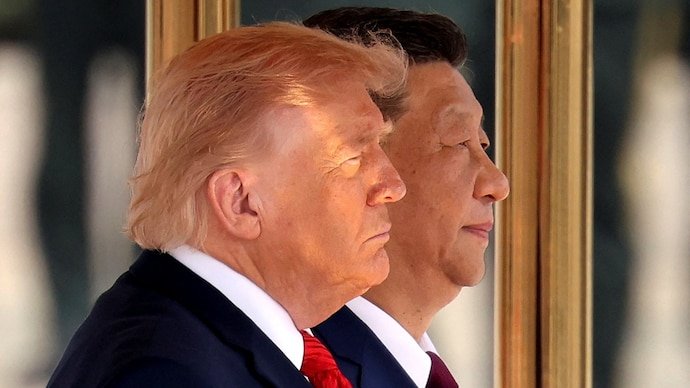
Trump praised China publicly during the visit, complimented Xi personally and repeatedly highlighted what he described as a “cherished” opportunity for dialogue. Xi, known for maintaining a highly disciplined and reserved public image, appeared unusually relaxed during several interactions.
Body language experts and diplomatic analysts quickly focused on these gestures because symbolism matters enormously in high-level diplomacy, particularly in China where ceremonial messaging is carefully managed.
Why Beijing Carefully Designed the Summit Optics
China’s leadership understands the value of political theatre better than almost any government in the world.
The welcome ceremony outside the Great Hall of the People was not simply hospitality. It was strategic communication aimed at multiple audiences:
- The Chinese public
- American political elites
- Global investors
- US allies in Asia
- Developing nations watching the balance of power shift
Every detail appeared calculated to project stability, confidence and equality between the two superpowers.
For years, Chinese officials have argued that Beijing deserves recognition not as a junior partner to Washington, but as an equal Global Power. The summit imagery strongly reinforced that message.
Trump’s references to a possible “G2” relationship the idea that the US and China together dominate global affairs further strengthened Beijing’s preferred narrative.
That concept has long worried smaller countries because it implies that major global decisions could increasingly revolve around negotiations between Washington and Beijing alone.
The Personal Chemistry Between Trump and Xi Became the Story
Political summits often produce carefully scripted statements, but this meeting generated unusual attention because of the apparent ease between the two leaders.
Trump’s off-script compliments toward Xi stood out immediately.
“You’re a great leader,” Trump remarked publicly a statement that would have been almost unimaginable during the peak of the trade war years.
Observers also noted repeated physical gestures, including shoulder pats, close walking formations and sustained eye contact. While such details may appear minor, they carry significant diplomatic meaning, especially in meetings involving China’s highly choreographed political culture.
Xi rarely displays overt warmth in public settings. That made his reciprocal gestures particularly noteworthy.
Several analysts described the interaction as more conversational and personal than previous US-China meetings. The summit suggested that both leaders now see value in building direct rapport despite ongoing disagreements.
This matters because modern geopolitics increasingly depends not only on institutions but also on leader-to-leader relationships.
Personal diplomacy cannot erase structural tensions, but it can reduce escalation risks during crises.
Trade Remains the Biggest Economic Question
Despite the positive atmosphere, one major reality remains unchanged: the US-China economic relationship is still deeply unstable.
Although tariff escalation has slowed compared to previous years, there is still no clear long-term framework governing trade between the world’s two largest economies.
American companies continue pushing for greater access to Chinese markets, while Washington remains concerned about technology transfers, industrial subsidies and Supply Chain dependence.
China, meanwhile, wants relief from restrictions targeting its semiconductor and advanced technology sectors.
The summit highlighted a growing paradox in the relationship.
The two countries increasingly compete strategically, yet their economies remain deeply interconnected.
| Major Area | US Position | China’s Position |
|---|---|---|
| Trade tariffs | Wants fairer trade balance | Wants reduced restrictions |
| Technology exports | Limits advanced chip access | Seeks tech self-reliance |
| Taiwan | Supports island’s defense | Claims Taiwan as territory |
| Military influence | Expand Indo-Pacific alliances | Reduce US regional presence |
| Global leadership | Maintain strategic dominance | Increase international influence |
Neither side can easily disengage economically without damaging global markets.
That reality partly explains the softer tone emerging from both capitals.
Taiwan Still Represents the Most Dangerous Flashpoint
Even as Trump and Xi exchanged smiles in Beijing, Taiwan remained the issue hanging silently over the summit.
Chinese officials reportedly warned that Taiwan continues to represent the single greatest risk for military confrontation between the two countries.
For Beijing, Taiwan is not merely a diplomatic dispute. Chinese leadership frames reunification as a core national objective tied directly to national identity and political legitimacy.
The United States, meanwhile, remains legally obligated under the Taiwan Relations Act to support Taiwan’s defensive capabilities.
That creates a dangerous strategic balancing act.
Washington officially recognises the “One China” policy while simultaneously providing military support to Taiwan. Beijing views those arms sales as interference in internal affairs.
One particularly telling moment during the summit was the deliberate avoidance of Taiwan questions during public appearances.
That silence itself was revealing.
Both governments appeared determined not to allow the issue to overshadow the carefully constructed atmosphere of stability.
But avoiding public confrontation does not eliminate the underlying tension.
The Iran War and Energy Security Added New Urgency
Another major issue shaping the summit was the growing instability in the Middle East.
The Iran conflict and concerns surrounding the Strait of Hormuz have heightened global fears about energy supply disruptions. Since both China and the United States rely heavily on stable global energy markets, cooperation on this issue serves mutual interests.
The White House statement emphasizing that “Iran can never have a nuclear weapon” and that the Strait of Hormuz must remain open highlighted one area where Washington and Beijing still find common ground.
This is an important shift because US-China relations are no longer driven solely by bilateral disputes.
Global crises including wars, inflation, energy markets and climate risks increasingly force both countries to maintain at least minimal cooperation.
Domestic Politics Are Driving Both Leaders
The summit also reflected internal political pressures facing both presidents.
Trump is navigating inflation concerns, legal controversies linked to previous trade policies and political criticism over broader foreign policy challenges. Stabilising relations with China could help calm financial markets and ease business uncertainty.
Xi faces a different challenge.
China’s economy continues struggling with weak consumer confidence, rising youth unemployment and a prolonged property-sector slowdown. Foreign investment has also shown signs of caution amid geopolitical tensions.
For Beijing, projecting stable ties with Washington helps reassure investors and global markets.
Unlike Trump, however, Xi does not face immediate electoral pressure. That difference gives Beijing greater long-term strategic flexibility.
It also explains why Chinese diplomacy often appears more patient and methodical compared to Washington’s faster political cycles.
The Summit Revealed a New Phase in US-China Relations
Perhaps the biggest insight from the meeting is that US-China relations are entering a more complicated phase.
The earlier period of open hostility and escalating rhetoric created enormous economic uncertainty globally. Both sides now appear to recognise that completely uncontrolled confrontation carries massive risks.
However, this does not mean rivalry is ending.
Instead, the relationship is evolving into what many analysts describe as “managed competition.”
In this framework:
- The US and China compete economically
- They rival each other militarily
- They battle for technological leadership
- They still cooperate selectively where necessary
This hybrid relationship may define Global Politics for decades.
That is why the Trump-Xi chemistry matters beyond symbolism. Personal trust even limited trust can become valuable during moments of geopolitical crisis.
Why Global Markets Are Watching Closely
Financial markets and multinational corporations are paying close attention to every signal coming from Washington and Beijing.
US-China tensions affect:
- Global manufacturing
- Technology supply chains
- Semiconductor production
- Oil prices
- Shipping routes
- Currency markets
- Consumer inflation worldwide
A calmer tone between the two countries may temporarily reduce fears of immediate escalation, particularly regarding trade restrictions.
But investors also understand that structural disagreements remain unresolved.
The real test will come when the two governments face another major dispute involving Taiwan, technology sanctions or military activity in the Indo-Pacific.
Diplomacy Wrapped in Spectacle But Reality Remains Complicated
The Beijing summit succeeded in achieving one immediate objective: it changed the tone of the conversation.
The images of Trump and Xi smiling together, exchanging compliments and presenting an image of stability sent a powerful global message after years of confrontation.
Yet diplomatic warmth should not be mistaken for strategic alignment.
The disagreements between the United States and China involve far more than temporary policy disputes. They reflect a deeper contest over global influence, economic leadership and the future international order.
Even Xi’s closing remark suggesting that “Make America Great Again” and “the rejuvenation of the Chinese nation” can coexist carried layered strategic messaging.
It implied coexistence without surrender.
That may ultimately define the next chapter of US-China relations.
Conclusion: The Smiles Matter But the Structural Rivalry Is Far From Over
The Trump-Xi summit in Beijing delivered striking visuals that would have seemed impossible during the darkest moments of the trade war era.
The chemistry between the two leaders became the defining image of the visit because it symbolised something larger: both countries now appear eager to prevent rivalry from spiraling into outright instability.
But beneath the warmth lies a harder reality.
The disputes over Taiwan, technology, military influence, trade and global leadership remain unresolved. Those issues are too deeply embedded in the strategic interests of both nations to disappear through personal diplomacy alone.
Still, the summit demonstrated an important truth about modern geopolitics: sometimes optics are policy.
For now, both Washington and Beijing appear to believe that projecting stability serves their interests. Whether that atmosphere survives the next major crisis will determine whether this summit becomes a genuine turning point or merely a temporary diplomatic performance wrapped in grandeur.
For breaking news and live news updates, like us on Facebook or follow us on Twitter and Instagram. Read more on Latest World on thefoxdaily.com.




COMMENTS 0