- Ceasefire Announcement: A Rare Diplomatic Breakthrough
- Historic Talks After 34 Years
- Key Players in the Negotiation
- Invitation for Direct Talks at the White House
- Hezbollah’s Position and Conditional Response
- Background: What Triggered the Recent Conflict?
- Why a 10-Day Ceasefire Matters
- Challenges Ahead: Why Peace Is Not Guaranteed
- Global and Regional Implications
- Conclusion: A Fragile but Important Step Toward Peace
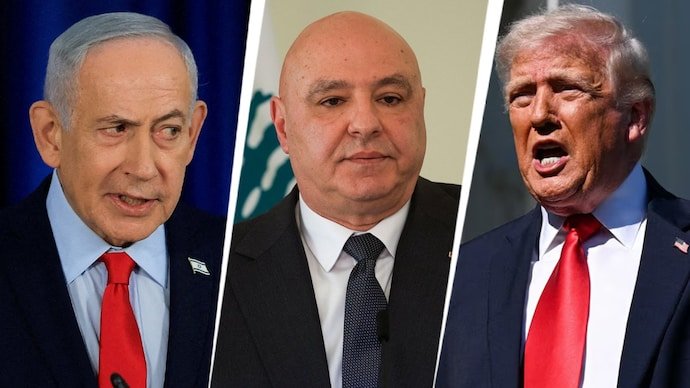
The United States President Donald Trump announced that Israel and Lebanon have agreed to a 10-day Ceasefire, marking a significant diplomatic development after weeks of escalating tensions. The agreement, set to begin at 5 PM EST (3:30 AM IST), follows high-level discussions involving Lebanese President Joseph Aoun and Israeli Prime Minister Benjamin Netanyahu. The breakthrough comes after the first formal meeting between representatives of both nations in 34 years, held in Washington alongside US Secretary of State Marco Rubio. The ceasefire aims to pause ongoing hostilities, create space for further negotiations, and potentially lay the groundwork for a longer-term peace process. This development arrives amid heightened conflict in the region, making the timing critical for both stability and Diplomacy.
Ceasefire Announcement: A Rare Diplomatic Breakthrough
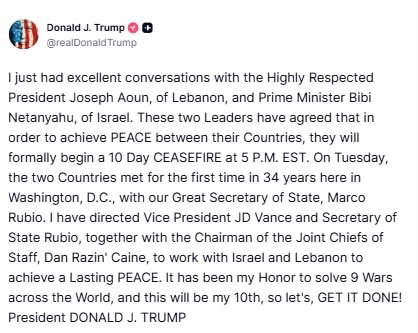
The announcement of a ceasefire between Israel and Lebanon is being viewed as a rare moment of progress in a region often defined by prolonged conflict. According to Trump, the agreement was the result of “excellent conversations” with leaders from both sides, signaling a renewed willingness to engage diplomatically.
The 10-day ceasefire is designed as an initial step rather than a final solution. While temporary, such pauses often play a crucial role in conflict resolution by reducing immediate violence and opening channels for dialogue. Trump emphasized that this truce could evolve into a broader peace initiative if both sides demonstrate commitment.
“It has been my honor to solve wars across the world, and this will be my 10th,” Trump stated, framing the ceasefire as part of a broader diplomatic mission.
While the tone may reflect political confidence, the underlying reality is more complex. Achieving even a short-term ceasefire between Israel and Lebanon requires coordination, trust-building, and mutual restraint—factors that have historically been difficult to maintain.
Historic Talks After 34 Years
One of the most notable aspects of this development is the resumption of direct engagement between Israel and Lebanon after more than three decades. Representatives from both countries met earlier this week in Washington, marking the first such interaction since 1983.
This meeting, facilitated by US officials, represents a significant shift. Historically, relations between Israel and Lebanon have been marked by hostility, limited communication, and indirect negotiations. The fact that both parties agreed to sit at the same table suggests a shared recognition of the need to de-escalate.
Diplomatic observers note that such meetings are often more important than they appear. Even if no immediate long-term agreement is reached, establishing communication channels can prevent misunderstandings and reduce the risk of unintended escalation.
Key Players in the Negotiation
The ceasefire effort involves several high-profile figures, each playing a distinct role in shaping the outcome:
| Leader | Role | Contribution |
|---|---|---|
| Donald Trump | US President | Facilitated negotiations and announced ceasefire |
| Joseph Aoun | Lebanese President | Engaged in discussions and supported truce efforts |
| Benjamin Netanyahu | Israeli Prime Minister | Participated in negotiations and agreed to ceasefire terms |
| Marco Rubio | US Secretary of State | Oversaw diplomatic talks in Washington |
| JD Vance | US Vice President | Assigned to support ongoing negotiations |
| Dan Caine | Military Leadership | Ensuring coordination on security aspects |
This multi-level involvement highlights the complexity of the situation. Diplomatic agreements of this nature require not only political will but also logistical coordination and security assurances.
Invitation for Direct Talks at the White House
In a further sign of diplomatic momentum, Trump announced plans to invite both Netanyahu and Aoun to the White House. This meeting would mark the first meaningful high-level talks between Israel and Lebanon since 1983.
Such an invitation serves multiple purposes. It reinforces the United States’ role as a mediator, provides a neutral ground for discussion, and signals international support for peace efforts. More importantly, it elevates the ceasefire from a temporary arrangement to a potential stepping stone toward structured negotiations.
Trump expressed optimism about the outcome, stating that both sides “want to see peace.” While optimism is valuable, History suggests that sustained progress will depend on consistent follow-through rather than initial enthusiasm.
Hezbollah’s Position and Conditional Response
A critical factor in the success of the ceasefire is the response of Hezbollah, the Iran-backed group operating in Lebanon. According to reports, Hezbollah was briefed on the proposed truce by Iran’s ambassador shortly before the public announcement.
Senior Hezbollah lawmaker Hassan Fadlallah indicated that the group’s commitment to the ceasefire depends entirely on Israel’s actions.
“Everything is tied to Israel’s commitment to halt all forms of hostilities,” Fadlallah said.
This conditional stance underscores the fragile nature of the agreement. While the Lebanese government may support the ceasefire, Hezbollah’s independent military capabilities mean that its cooperation is essential for maintaining calm on the ground.
In simple terms: a ceasefire on paper is one thing, but enforcement in reality depends on multiple actors behaving as expected.
Background: What Triggered the Recent Conflict?
The current escalation began on March 2, when Hezbollah launched rockets, missiles, and drones toward a missile defense site near Haifa in northern Israel. This attack followed joint US-Israeli operations targeting Tehran, which heightened regional tensions.
Israel responded swiftly with Airstrikes targeting Beirut suburbs and other locations, along with evacuation orders for several villages in southern Lebanon and the Beqaa Valley. The situation rapidly intensified, raising concerns about a broader regional conflict.
To better understand the sequence:
- Hezbollah initiated attacks following geopolitical tensions involving Iran
- Israel launched retaliatory strikes targeting strategic locations
- Civilian areas faced evacuation orders, increasing humanitarian concerns
- International pressure mounted to de-escalate the situation
This chain of events illustrates how quickly regional tensions can escalate into active conflict, making timely diplomatic intervention crucial.
Why a 10-Day Ceasefire Matters
At first glance, a 10-day ceasefire may seem short. However, in conflict zones, even a brief pause can have significant impact.
Here’s why this truce matters:
- De-escalation: Immediate reduction in violence protects civilians
- Testing Intentions: Both sides can demonstrate willingness to maintain peace
- Diplomatic Window: Creates space for further negotiations
- Humanitarian Relief: Allows aid and recovery efforts to begin
Think of it less as a final solution and more as a “trial period” for peace. If successful, it could lead to extended agreements. If not, it may simply delay further conflict.
Challenges Ahead: Why Peace Is Not Guaranteed
Despite the positive developments, several challenges could undermine the ceasefire:
Lack of Trust
Decades of hostility mean that both sides remain deeply skeptical of each other’s intentions.
Multiple Stakeholders
Groups like Hezbollah operate independently, complicating enforcement of any agreement.
Regional Tensions
The broader geopolitical landscape, including Iran’s involvement, adds layers of complexity.
Risk of Violations
Even minor incidents could derail the ceasefire and trigger renewed escalation.
In short, maintaining peace requires more than signing an agreement—it requires consistent discipline and coordination.
Global and Regional Implications
The ceasefire has implications beyond Israel and Lebanon. It reflects ongoing efforts by the United States to stabilize a volatile region and prevent wider conflict.
For neighboring countries, the truce reduces immediate security concerns. For global markets, it may ease uncertainty related to geopolitical instability. And for international diplomacy, it reinforces the importance of dialogue—even between long-standing adversaries.
However, the broader impact will depend on whether this ceasefire evolves into sustained peace efforts or remains a temporary pause.
Conclusion: A Fragile but Important Step Toward Peace
The 10-day ceasefire between Israel and Lebanon represents a meaningful, though fragile, step toward reducing tensions in a historically volatile region. It brings together key leaders, reopens diplomatic channels after decades, and offers a short window for building trust.
While challenges remain—particularly regarding enforcement and regional dynamics—the agreement provides a rare opportunity to shift from conflict to conversation.
Looking ahead, the success of this ceasefire will depend on actions rather than announcements. If both sides honor their commitments and continue engaging diplomatically, this temporary truce could evolve into a more lasting peace process.
If not, it risks becoming just another brief pause in a long history of conflict. For now, however, it stands as a reminder that even in the most entrenched disputes, dialogue is still possible—and sometimes, that’s where real change begins.
For breaking news and live news updates, like us on Facebook or follow us on Twitter and Instagram. Read more on Latest World on thefoxdaily.com.





COMMENTS 0