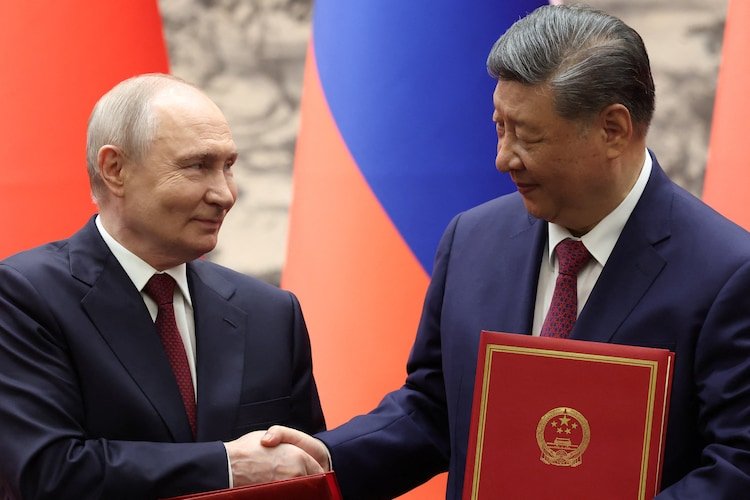
- Why the Xi-Putin Meeting Matters More Than It First Appears
- China’s Core Message: Beijing Cannot Be Isolated
- The Real Driver Behind the Xi-Putin Summit: Energy Security
- The Pipeline That Could Redraw Eurasian Energy Politics
- Xi’s Diplomatic Theatre Was Carefully Designed
- China and Russia Are Partners But Not Allies
- The Trump Factor Still Looms Over Everything
- Why the Timing Matters in the Middle East Crisis
- What the Xi-Putin Meeting Means for the Future World Order
- Conclusion: Xi’s Real Goal Was Bigger Than Either Meeting
When Chinese President Xi Jinping welcomed Donald Trump in Beijing, the symbolism was obvious. China wanted to show that despite trade wars, tariff disputes, Taiwan tensions, and strategic rivalry, Washington still had to engage with Beijing.
But just four days later, Xi rolled out another red carpet this time for Russian President Vladimir Putin.
The timing was no accident.
In modern geopolitics, leaders rarely schedule major summits this close together unless they want the world to notice the sequence itself. By hosting the presidents of the United States and Russia within a single week, Xi Jinping transformed Beijing into the diplomatic center of gravity at a moment when the international order is becoming increasingly fragmented.
The meetings were about far more than trade deals, pipeline talks, or ceremonial handshakes. They reflected China’s broader strategy in a rapidly changing world: maintain economic engagement with the United States while deepening strategic coordination with Russia.
That balancing act has become one of the defining geopolitical stories of the decade.
Why the Xi-Putin Meeting Matters More Than It First Appears
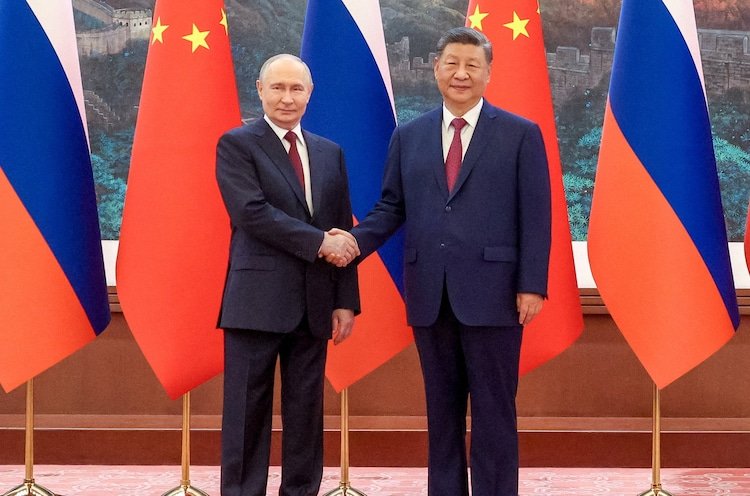
At first glance, the Putin visit looked routine. The Chinese and Russian leaders meet frequently, and both governments describe their relationship as entering a “new era.” Putin’s latest trip to Beijing was his 25th visit to China, coinciding with the 25th anniversary of the China-Russia Treaty of Good-Neighbourliness and Friendly Cooperation.
But the timing changed everything.
Trump’s Beijing visit had already captured global headlines. Discussions focused heavily on tariffs, technology restrictions, Taiwan, semiconductor supply chains, and the Middle East crisis triggered by instability around Iran and the Strait of Hormuz.
Then came Putin.
Suddenly, Beijing appeared to be doing something few capitals can currently achieve: engaging both Washington and Moscow at the highest level while neither side could afford to ignore China.
That image matters enormously for Xi Jinping.
China increasingly wants to position itself not simply as another major power, but as the indispensable global power a country capable of speaking to every side while advancing its own interests quietly in the background.
China’s Core Message: Beijing Cannot Be Isolated
For years, American strategic planners have debated whether Washington could weaken the China-Russia partnership by pulling Moscow away from Beijing or by economically pressuring China into isolation.
Xi’s back-to-back meetings with Trump and Putin were effectively a public response to that idea.
The message was subtle but unmistakable:
- China can negotiate with the United States.
- China can deepen ties with Russia.
- China does not intend to choose between confrontation and cooperation.
- And most importantly, China believes the global system is shifting toward multipolarity.
This explains why Chinese and Russian officials repeatedly used phrases like “multipolar world order” and “opposing unilateralism” during the summit.
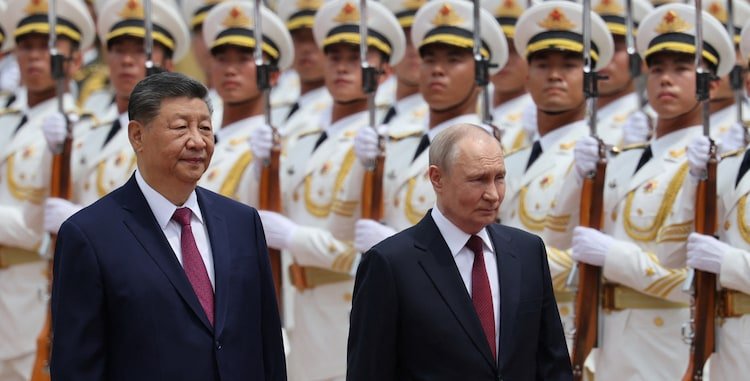
Those terms are diplomatic shorthand.
In plain English, they reflect frustration with a US-led global order where Washington still dominates financial systems, military alliances, and international institutions.
China and Russia may not agree on everything, but both share a common interest in weakening Western strategic dominance.
The Real Driver Behind the Xi-Putin Summit: Energy Security
Publicly, both sides emphasized friendship, strategic trust, and economic cooperation.
Privately, energy security was likely the most urgent issue on the table.
The Middle East crisis has become a major source of anxiety for Beijing. China imports massive volumes of oil, and disruptions around the Strait of Hormuz threaten both industrial production and long-term economic stability.
That is where Russia becomes critically important.
Since the Ukraine war began in 2022, China has emerged as one of Russia’s largest economic lifelines. Moscow redirected huge portions of its oil and gas exports toward Asian markets after Western sanctions cut access to Europe.
China benefited from discounted Russian energy. Russia gained a stable buyer.
The relationship became increasingly strategic rather than merely commercial.
| Key Strategic Interest | China’s Objective | Russia’s Objective |
|---|---|---|
| Energy Security | Stable oil and gas supply | Long-term export market |
| Trade Expansion | Reduce dependence on Western markets | Offset sanctions pressure |
| Geopolitical Influence | Promote multipolar order | Counter Western isolation |
| Technology Cooperation | Access strategic resources and research | Maintain industrial partnerships |
| Global Diplomacy | Project China as global mediator | Strengthen international legitimacy |
With oil shipping lanes increasingly vulnerable, Russia’s overland pipeline infrastructure suddenly looks even more attractive to Beijing.
That is why the long-discussed Power of Siberia 2 gas pipeline has regained urgency.
The Pipeline That Could Redraw Eurasian Energy Politics
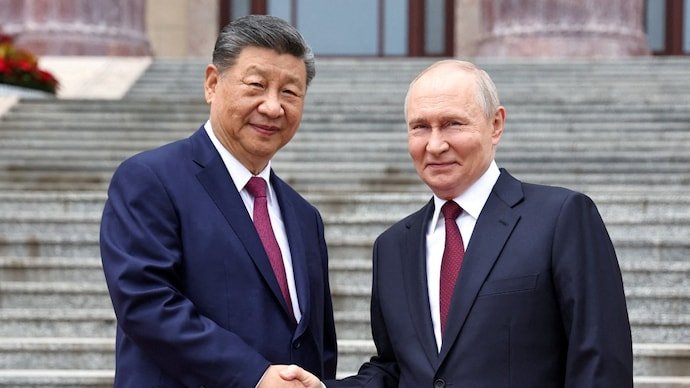
The Power of Siberia 2 project has been under discussion for years, but negotiations repeatedly slowed because China refused to become too dependent on Russian energy.
Beijing has traditionally diversified suppliers carefully, importing oil and gas from the Middle East, Central Asia, Africa, and Russia simultaneously.
But geopolitics changes calculations.
The Iran conflict, rising shipping risks, and uncertainty around maritime trade routes have made land-based energy corridors far more valuable.
If completed, the Power of Siberia 2 pipeline would transport enormous quantities of Russian gas into China through Mongolia.
For Moscow, the project would compensate for lost European markets.
For Beijing, it would reduce exposure to naval chokepoints controlled or influenced by Western powers.
That strategic logic matters enormously in any future Taiwan crisis scenario.
Chinese planners understand that a conflict over Taiwan could trigger severe maritime disruptions or sanctions. Reliable overland energy supply routes from Russia therefore become a form of geopolitical insurance.
This is one of the most important long-term developments often missing from headline coverage.
Xi’s Diplomatic Theatre Was Carefully Designed
Diplomacy is never only about policy. It is also about optics.
Trump’s visit featured elaborate state banquets, grand ceremonial visuals, and carefully choreographed symbolism. China wanted to present itself as an equal superpower capable of hosting the American president on its own terms.
Putin’s visit carried a different tone.
Less spectacle. More strategic seriousness.
That contrast itself was revealing.
Trump represented competition mixed with necessity.
Putin represented continuity and strategic alignment.
China was effectively signaling that relations with Russia are institutional and durable, while relations with the United States remain transactional and unstable.
That distinction reflects Beijing’s worldview.
Chinese policymakers increasingly believe America’s political cycles create unpredictability, while Russia despite economic weakness and sanctions offers strategic consistency.
China and Russia Are Partners But Not Allies
One of the biggest misconceptions in global politics is the idea that China and Russia form a formal alliance similar to NATO.
They do not.
The relationship is better understood as a pragmatic strategic partnership.
Both countries cooperate heavily because their interests currently overlap:
- Both oppose Western sanctions regimes.
- Both want reduced US global dominance.
- Both benefit from alternative financial systems.
- Both support a more fragmented global order.
But there are also underlying tensions.
China’s economy massively outweighs Russia’s.
Beijing is cautious about becoming too closely tied to Moscow’s military confrontations.
Russia, meanwhile, worries privately about becoming economically dependent on China over the long term.
This makes the partnership flexible rather than ideological.
That flexibility is actually one reason the relationship has survived so long.
The Trump Factor Still Looms Over Everything
Ironically, Trump’s visit may have made the Putin summit even more important.
Beijing likely wanted to reassure Moscow that improved US-China communication would not come at Russia’s expense.
That concern matters because major powers constantly fear diplomatic isolation.
Russia understands that if Washington and Beijing ever significantly stabilize relations, Moscow’s leverage could weaken dramatically.
China understands the opposite risk: if Russia becomes too unstable or weakened, Beijing loses a critical geopolitical partner.
So Xi’s rapid engagement with Putin served another purpose maintaining strategic trust.
In essence, China was telling Russia:
“We can talk to Washington without abandoning Moscow.”
Why the Timing Matters in the Middle East Crisis
The Iran conflict has added another layer of urgency.
China depends heavily on Middle Eastern energy imports. Any prolonged instability threatens manufacturing, exports, shipping costs, and domestic growth targets.
Russia, meanwhile, benefits financially from higher energy prices but also wants geopolitical stability that weakens Western unity.
That overlap creates incentives for closer coordination.
China’s biggest fear is not necessarily war itself.
It is economic disruption.
Beijing’s entire political model depends on long-term stability, industrial output, and predictable trade flows. Sudden global shocks create risks not just internationally, but domestically.
This explains why Xi has increasingly emphasized phrases like “global stability,” “shared development,” and “opposing unilateral intervention.”
Those slogans are not random diplomatic clichés. They reflect China’s core strategic anxiety: instability threatens growth.
What the Xi-Putin Meeting Means for the Future World Order
The most important takeaway from the summit may not be any individual agreement or joint statement.
It is the broader image China is trying to build.
Beijing wants to be seen as:
- A rival to Washington
- A partner to Moscow
- A stabilizer during global crises
- A central player in trade and energy networks
- A power capable of shaping the next world order
Whether that vision succeeds remains uncertain.
China still faces slowing economic growth, demographic pressure, technology restrictions, and growing suspicion from neighboring countries.
But the symbolism of hosting Trump and Putin within days of each other was undeniably powerful.
Very few countries could attempt such diplomatic balancing.
Even fewer could make both leaders show up.
Conclusion: Xi’s Real Goal Was Bigger Than Either Meeting
Xi Jinping’s decision to meet Vladimir Putin just days after hosting Donald Trump was not simply about diplomacy. It was about narrative.
China wanted the world to see Beijing as the one capital where both Washington and Moscow still need to engage.
That image matters in a century increasingly defined by fractured alliances, economic weaponization, and geopolitical competition.
The Xi-Trump talks focused on managing rivalry.
The Xi-Putin summit focused on deepening strategic resilience.
Together, the meetings revealed something larger: China is positioning itself not merely as a participant in the global order, but as a country trying to redesign parts of it.
And as tensions rise from Taiwan to Ukraine to the Middle East, Beijing clearly believes the coming decade will belong not to rigid alliances, but to powers capable of balancing multiple worlds at once.
For breaking news and live news updates, like us on Facebook or follow us on Twitter and Instagram. Read more on Latest World on thefoxdaily.com.





COMMENTS 0