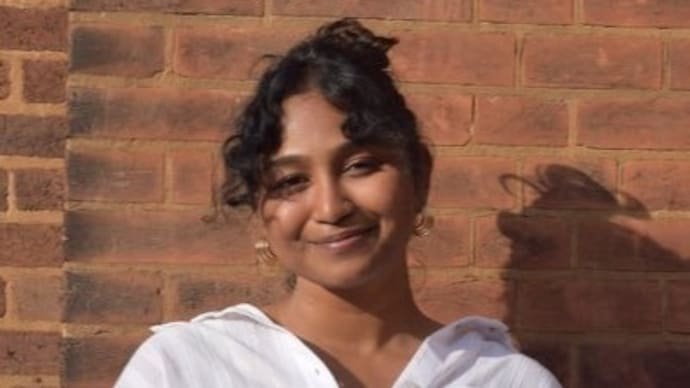
- Who Is Sai Shraddha Suresh Viswanathan?
- What Exactly Happened?
- The Q Manivannan Factor Changed the Entire Debate
- What the Scottish Green Party Said
- Why This Story Matters Beyond Scotland
- The 2024 Scottish Law Change Explained
- Why Student Visa Politics Is Becoming Increasingly Sensitive
- The Human Side Often Gets Ignored
- The Bigger Question: Who Gets to Represent Modern Democracies?
- Political Optics Matter Especially for Progressive Parties
- Could This Trigger Wider Policy Clarification?
- Conclusion
A political controversy inside Scotland’s Green Party has sparked intense debate after Indian-origin student leader Sai Shraddha Suresh Viswanathan alleged that she was pressured to withdraw from the Scottish Parliament election race because of her visa status.
The issue has gone far beyond an internal party disagreement. It now raises larger questions about immigrant participation in Politics, inconsistencies in candidate eligibility, and how democracies adapt to increasingly global societies.
The controversy became especially sensitive because another Indian-origin candidate from the same party, reportedly on a similar student visa, was allowed to contest the election and eventually won a seat in the Scottish Parliament.
At the centre of the storm is a simple but politically explosive question:
If one international student could contest and win, why was another allegedly encouraged to step aside?
Who Is Sai Shraddha Suresh Viswanathan?
Sai Shraddha Suresh Viswanathan is not an unknown political activist suddenly stepping into public life.
She currently serves as the president of the National Union of Students (NUS) Scotland, becoming the first international student to hold the position. Her election was widely viewed as a significant moment for representation within Scotland’s student movement.
Originally from Kerala, India, Viswanathan built her reputation through student advocacy, campaigning on issues such as:
- International student rights
- Affordable education
- Mental health support
- Housing challenges
- Immigration concerns affecting students
Her political profile made her one of the more visible young figures within progressive Scottish politics.
That is why the latest allegations have attracted attention far beyond party circles.
What Exactly Happened?
According to Viswanathan, she had secured third place on the Scottish Green Party’s regional candidate list for North East Scotland during internal party selections in 2025.
Under Scotland’s electoral system, placement on regional party lists is significant because it determines the likelihood of candidates entering Parliament depending on overall party performance.
However, Viswanathan claimed that during a phone conversation with a party official in July 2025, concerns were raised about whether her student visa status could affect her ability to remain legally in Scotland for the full term as a Member of the Scottish Parliament (MSP).
She alleges she was subsequently advised to withdraw from the race.
The emotional impact, she later said, was severe.
“It took a significant toll on my health and well-being,” Viswanathan reportedly said while reflecting on the episode.
The issue may have remained internal if not for what happened next.
The Q Manivannan Factor Changed the Entire Debate
The controversy escalated dramatically after another Indian-origin Scottish Green candidate, Q Manivannan, successfully contested the election while also reportedly being on a student visa.
Not only was Manivannan allowed to remain in the race, but he also went on to win a seat representing Edinburgh and Lothians East.
This comparison fundamentally changed public perception of the controversy.
Critics immediately began questioning whether the rules were being applied inconsistently.
Supporters of Viswanathan argued that the situation exposed potential confusion, unequal treatment, or poor internal communication within the party.
The Scottish Greens, however, strongly denied blocking anyone because of visa status.
What the Scottish Green Party Said
The Scottish Green Party rejected allegations that Viswanathan had been prevented from contesting because of immigration concerns.
In its response, the party maintained that candidates themselves are responsible for ensuring they satisfy all legal eligibility requirements.
The party stated that:
- Candidates must independently verify visa compliance
- The party only provides guidance where necessary
- No candidate was officially blocked due to visa status
The statement attempted to frame the issue as an administrative and legal matter rather than a political decision.
But politically, the optics remain difficult.
Especially because the comparison with another successful candidate continues to dominate discussions online.
Why This Story Matters Beyond Scotland
At first glance, this may appear like a niche political dispute involving internal party procedures.
In reality, it reflects a much bigger global conversation.
Modern democracies increasingly rely on immigrants, international students, and foreign professionals who contribute economically, socially, and academically.
But political systems often struggle to decide how much participation these individuals should have in formal democratic institutions.
The debate becomes even more complicated in countries like the United Kingdom, where immigration remains politically sensitive.
Viswanathan’s case highlights a growing contradiction:
| Issue | Current Reality |
|---|---|
| International students contribute economically | Yes |
| Students can hold leadership roles | Yes |
| Students can influence public policy debates | Yes |
| Students can contest elections in Scotland | Legally allowed under new rules |
| Long-term immigration certainty guaranteed | No |
That contradiction lies at the heart of the controversy.
The 2024 Scottish Law Change Explained
One of the most misunderstood parts of the debate involves changes to Scottish election law introduced in 2024.
Under the revised rules, individuals without permanent residency rights became eligible to stand for election to the Scottish Parliament.
This was considered a major democratic expansion designed to make representation more inclusive.
However, there was an important caveat.
If an elected representative later loses the legal right to remain in the UK, they could potentially be disqualified from office.
That legal uncertainty appears to be central to the concerns raised in Viswanathan’s case.
Critics argue the law created a democratic opening without fully resolving the immigration complications that could emerge afterward.
Why Student Visa Politics Is Becoming Increasingly Sensitive
The timing of this controversy is also politically important.
Immigration policy in the UK has become significantly more restrictive in recent years, particularly concerning international students.
Successive governments have tightened:
- Post-study work rules
- Dependent visa regulations
- Graduate visa pathways
- Immigration income thresholds
At the same time, universities continue heavily recruiting international students because of the enormous economic value they bring.
This creates a paradox:
International students are welcomed as economic contributors but often face uncertainty regarding long-term belonging and political inclusion.
That broader tension gives the Viswanathan controversy deeper significance.
The Human Side Often Gets Ignored
One aspect missing from many political debates is the personal cost involved.
For international students, immigration status is rarely just paperwork.
It affects:
- Mental health
- Career planning
- Financial security
- Public visibility
- Sense of identity
Viswanathan openly acknowledged the emotional impact the controversy had on her well-being.
And that matters.
Political participation already demands enormous resilience. Adding immigration uncertainty to that equation can make public life even more stressful.
Ironically, the controversy may now make her a far more recognizable political figure than if she had quietly contested the election.
The Bigger Question: Who Gets to Represent Modern Democracies?
This controversy ultimately raises one of the defining political questions of the modern era:
Should long-term residents who contribute to society be allowed to fully participate in democratic institutions, even without permanent citizenship?
Different countries answer that question differently.
Some nations strictly reserve political participation for citizens alone.
Others increasingly allow non-citizens to vote or contest local Elections.
Scotland’s reforms signaled movement toward broader inclusion.
But the Viswanathan episode suggests that legal reforms alone may not automatically resolve institutional hesitation or uncertainty.
Political Optics Matter Especially for Progressive Parties
The controversy is particularly awkward for the Scottish Greens because progressive parties often position themselves as champions of migrant inclusion and diversity.
That means expectations are naturally higher.
Even the perception of unequal treatment can create reputational damage.
Critics of the party have already pointed out the irony of a progressive political movement facing accusations involving barriers for immigrant participation.
Whether fair or not, perception often shapes political narratives faster than official explanations.
Could This Trigger Wider Policy Clarification?
The controversy may ultimately force broader legal and political clarification in Scotland.
Experts may now push for:
- Clearer candidate eligibility guidance
- Specific protections for visa-holding candidates
- Transparent party-level advisory procedures
- More detailed election law interpretations
Political parties themselves may also become more cautious when advising candidates whose immigration status could later become controversial.
No party wants future accusations of inconsistency or discrimination.
Conclusion
The Sai Shraddha Suresh Viswanathan controversy is about far more than one election campaign.
It exposes the complicated intersection of immigration law, democratic participation, political optics, and modern identity.
At a time when countries increasingly depend on global talent, questions about who gets to participate in political life are becoming impossible to ignore.
Scotland attempted to create a more inclusive democratic framework through its 2024 election reforms.
But this episode shows that legal inclusion and practical acceptance are not always the same thing.
Whether the Scottish Green Party acted appropriately or not will continue to be debated.
But one thing is certain:
The controversy has sparked an important conversation about representation, fairness, and what democracy should look like in an increasingly international world.
And for many international students watching closely, the outcome of that conversation could matter far beyond Scotland.
For breaking news and live news updates, like us on Facebook or follow us on Twitter and Instagram. Read more on Latest World on thefoxdaily.com.



COMMENTS 0