- Why Mahmoud Ahmadinejad Was an Unexpected Choice
- The Bigger Goal: Regime Change, Not Just Military Strikes
- The Killing of Ali Khamenei Changed Everything
- The Alleged “Jailbreak Operation”
- Why the Ahmadinejad Strategy Failed
- Why Regime Change in Iran Has Always Been Difficult
- The Historical Shadow of Foreign Intervention
- Why Ahmadinejad Was Politically Complicated
- The Conflict Revealed the Limits of Military Power
- The Global Implications Are Enormous
- Conclusion: Why the Ahmadinejad Plot Failed
For decades, discussions about Iran have largely revolved around nuclear negotiations, sanctions, proxy wars, and regional influence. But the latest revelations surrounding the US-Israel Conflict with Iran suggest something far more ambitious may have been unfolding behind the scenes.
According to reports citing American officials, the original strategic objective of the joint US-Israeli campaign against Iran extended beyond Military targets and missile facilities. The broader vision allegedly included destabilising the Iranian political system, triggering internal fragmentation, and eventually facilitating a post-war leadership transition in Tehran.
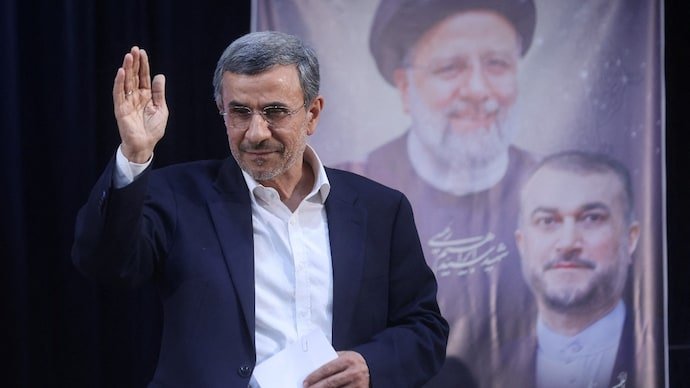
At the centre of this extraordinary alleged plan stood an unexpected figure: former Iranian president Mahmoud Ahmadinejad.
The idea sounds almost paradoxical.
Ahmadinejad was once one of Israel’s fiercest critics and among the most internationally controversial leaders Iran has ever produced. During his presidency from 2005 to 2013, he became globally known for inflammatory rhetoric, Holocaust denial, aggressive nuclear positioning, and confrontational anti-Western speeches.
Yet according to the emerging claims, US and Israeli planners believed Ahmadinejad’s later political estrangement from Iran’s ruling establishment may have made him useful during a potential succession crisis following the death of Supreme Leader Ali Khamenei.
But the alleged regime-change strategy collapsed almost immediately.
And its failure reveals why foreign-engineered political transitions inside Iran remain extraordinarily difficult even during moments of severe national crisis.
Why Mahmoud Ahmadinejad Was an Unexpected Choice
To outside observers, Ahmadinejad may appear like the last person Western governments would ever support.
His presidency was marked by:
- Escalating tensions with Israel and the West
- Expansion of Iran’s uranium enrichment programme
- Severe crackdowns on domestic protests
- Populist nationalist rhetoric
- International isolation and sanctions
However, Iranian Politics is far more complex than a simple division between “hardliners” and “moderates.”
In later years, Ahmadinejad increasingly clashed with the Iranian establishment itself, particularly factions close to Supreme Leader Ali Khamenei.
Over time:
- He criticised senior officials publicly
- He accused powerful institutions of corruption
- He challenged parts of the clerical establishment
- He was blocked from future presidential runs
- His political influence became increasingly restricted
That estrangement reportedly made some Western and Israeli strategists believe he could serve as a transitional nationalist figure capable of attracting sections of Iran’s political base while simultaneously weakening the existing power structure.
It was a risky calculation.
And ultimately, it failed.
The Bigger Goal: Regime Change, Not Just Military Strikes
One of the most important insights emerging from the reports is that the alleged strategy appears to have involved far more than conventional military objectives.
Publicly, Washington consistently framed the operation around:
- Destroying Iran’s missile infrastructure
- Disabling nuclear facilities
- Weakening Iranian naval capabilities
- Reducing regional proxy threats
But according to officials cited in reports, Israel’s broader strategic blueprint allegedly aimed at creating conditions for political collapse inside Iran.
This reportedly included:
- Targeting leadership structures
- Disrupting command systems
- Damaging state infrastructure
- Encouraging internal unrest
- Supporting alternative political networks
- Coordinating influence operations
The expectation appears to have been that a rapid decapitation of Iran’s leadership would create confusion severe enough to fracture the Islamic Republic from within.
Instead, the opposite happened.
The Killing of Ali Khamenei Changed Everything
The reported death of Supreme Leader Ali Khamenei during coordinated strikes marked one of the most dramatic moments in modern Middle Eastern Geopolitics.
Khamenei had ruled Iran for nearly four decades and represented the central pillar of the Islamic Republic’s political and religious system.
Israeli planners reportedly believed that eliminating him would:
- Collapse Iran’s command structure
- Create succession chaos
- Trigger elite infighting
- Accelerate internal unrest
- Open pathways for political transition
But political systems especially authoritarian or semi-authoritarian systems often behave differently under external attack.
Instead of immediate collapse, national institutions frequently consolidate around survival.
Iran’s political establishment, though heavily shaken, reportedly maintained enough cohesion to prevent the complete fragmentation foreign planners may have expected.
The Alleged “Jailbreak Operation”
Perhaps the most extraordinary part of the reports involves the alleged operation targeting Ahmadinejad’s house arrest conditions in Tehran’s Narmak district.
According to claims cited by American officials:
- An Israeli strike targeted an IRGC security checkpoint near Ahmadinejad’s residence
- The checkpoint was reportedly destroyed
- Ahmadinejad survived the attack with injuries
- His residence itself remained standing
The implication was explosive:
The operation may have been designed not to eliminate Ahmadinejad, but to free him.
Reports described the mission as effectively functioning as a “jailbreak operation.”
If accurate, this would represent one of the most unusual covert political manoeuvres in recent Middle Eastern history.
Why the Ahmadinejad Strategy Failed
Even if the broader plan existed, several major factors appear to have caused its collapse.
1. Ahmadinejad Reportedly Lost Confidence
After surviving the strike, Ahmadinejad reportedly withdrew from public view entirely.
Instead of emerging as a political alternative, he disappeared from the national scene.
That alone severely weakened any succession strategy built around him.
2. Iran’s Institutions Survived
One major miscalculation appears to have been underestimating the resilience of Iran’s state institutions.
Despite leadership losses, several core structures reportedly remained functional:
- The IRGC
- Security networks
- Religious institutions
- Provincial governance systems
- Military command frameworks
Regime-change operations often depend on rapid institutional collapse. Iran’s system bent under pressure but did not fully break.
3. Public Uprising Never Fully Materialised
Another key assumption reportedly involved expectations of widespread internal unrest.
But history repeatedly shows that foreign military intervention can sometimes strengthen nationalist sentiment even among populations dissatisfied with their own governments.
Instead of triggering mass coordinated revolt, the conflict may have reinforced fears of foreign interference among parts of Iranian society.
4. Ethnic and Regional Dynamics Were Overestimated
Reports also mentioned expectations involving Kurdish mobilisation.
However, regional ethnic dynamics inside Iran are extremely complicated and historically resistant to outside manipulation.
Building a nationwide political transition through fragmented regional pressures is far more difficult than many external planners often anticipate.
Why Regime Change in Iran Has Always Been Difficult
Iran’s political system was specifically designed after the 1979 Islamic Revolution to survive external pressure.
Over decades, the state developed overlapping power centres capable of maintaining continuity during crises.
| Institution | Role in Political Stability |
|---|---|
| Supreme Leader’s Office | Religious and political authority |
| IRGC | Military and internal security power |
| Clerical Networks | Ideological legitimacy |
| Parliament and Bureaucracy | Administrative continuity |
| Provincial Structures | Local governance and stability |
This layered system makes rapid external regime-change efforts extremely difficult.
Unlike smaller states with highly centralised leadership structures, Iran possesses multiple overlapping centres of authority capable of adapting during crises.
The Historical Shadow of Foreign Intervention
Another major reason regime-change efforts face resistance in Iran is historical memory.
Many Iranians remain deeply conscious of the 1953 coup, when Prime Minister Mohammad Mossadegh was overthrown in a Western-backed operation.
That event continues to shape Iranian political psychology across ideological lines.
Even Iranians critical of their government often remain suspicious of foreign-engineered political intervention.
This historical factor creates a major obstacle for any external power attempting to shape Iran’s internal political future.
Why Ahmadinejad Was Politically Complicated
Ahmadinejad also presented serious strategic contradictions.
While estranged from sections of the Iranian establishment, he remained deeply controversial internationally.
His presidency left behind a highly polarising legacy involving:
- Economic instability
- International sanctions
- Human rights criticism
- Nuclear escalation
- Confrontational diplomacy
That made him an unusual candidate for any transition plan seeking broad legitimacy.
He may have possessed nationalist appeal among some factions, but his global reputation created enormous diplomatic complications.
The Conflict Revealed the Limits of Military Power
One of the clearest lessons from the reported failure is that military superiority does not automatically produce political transformation.
Modern conflicts increasingly demonstrate that:
- Destroying infrastructure is easier than rebuilding governance
- Leadership decapitation rarely guarantees systemic collapse
- Political legitimacy cannot easily be imposed externally
- National identity often hardens during foreign attack
This pattern has appeared repeatedly across modern conflicts in:
- Iraq
- Afghanistan
- Libya
- Syria
Iran’s institutional resilience appears to have reinforced that lesson once again.
The Global Implications Are Enormous
If accurate, the reports surrounding Ahmadinejad and the alleged succession strategy could have major geopolitical consequences.
They may:
- Deepen Iranian distrust toward the West
- Strengthen hardline factions internally
- Complicate future diplomatic negotiations
- Increase regional instability
- Intensify anti-Western political narratives
At the same time, the episode highlights how modern warfare increasingly combines:
- Military operations
- Political engineering
- Psychological warfare
- Information campaigns
- Covert succession planning
The boundaries between war, intelligence operations, and political manipulation are becoming increasingly blurred.
Conclusion: Why the Ahmadinejad Plot Failed
The reported US-Israel plan involving Mahmoud Ahmadinejad ultimately appears to have collapsed because it underestimated the complexity of Iranian politics, overestimated the effects of military shock, and misjudged how societies react during existential crises.
Instead of rapidly fracturing, Iran’s political system adapted under pressure.
Instead of emerging as a transitional figure, Ahmadinejad reportedly vanished from public life after surviving the strike intended to free him.
And instead of triggering swift regime change, the conflict exposed the enduring resilience of one of the Middle East’s most deeply entrenched political systems.
The episode also offers a broader geopolitical lesson:
In modern conflicts, removing leaders is often far easier than reshaping nations.
As the Middle East War continues to reshape regional power dynamics, the failed Ahmadinejad scenario may ultimately be remembered less as a successful covert strategy and more as a warning about the limits of externally engineered political change.
For breaking news and live news updates, like us on Facebook or follow us on Twitter and Instagram. Read more on Latest World on thefoxdaily.com.





COMMENTS 0