- What the Pakistani Officer Claimed
- Why the Claim Quickly Fell Apart
- Understanding Operation Bunyan Ul Marsoos
- What Is the Fatah-1 Missile System?
- Why Information Warfare Matters in Modern Conflicts
- Social Media Turns the Incident Into a Viral Story
- The Geography Behind the Confusion
- Debris Recoveries Added to Tensions
- The Bigger Military Lesson: Precision Claims Need Precision Facts
- India-Pakistan Conflict Narratives Are Increasingly Digital
- Why the Story Resonated So Widely
- Conclusion: A Viral Reminder That Modern Warfare Is Also a Credibility Battle
Military conflicts are often fought not only with missiles and drones, but also with narratives. In the age of social media, satellite imagery, open-source intelligence, and real-time digital verification, even the smallest factual inconsistency can rapidly become an international embarrassment.
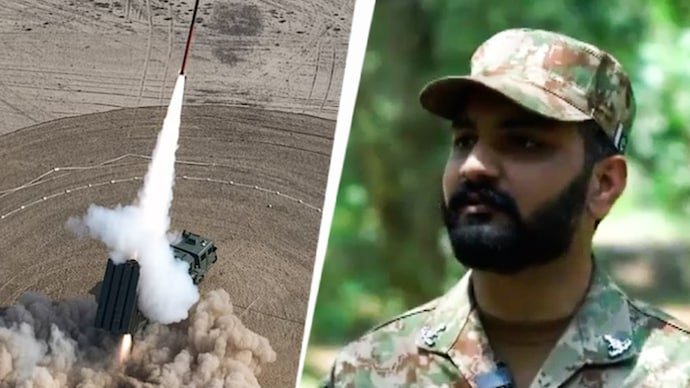
That is exactly what unfolded after a Pakistani officer associated with the Fatah-1 missile operations claimed in an interview that Pakistan had successfully targeted two Indian military installations “Rajouri Airbase” and “Mamun Airbase” during Operation Bunyan Ul Marsoos.
The problem, however, is significant: neither of these locations exists as an operational Indian Air Force airbase.
The remarks, made during a televised interview with a local Pakistani channel, have since gone viral online, with analysts, defence observers, and social media users questioning the credibility of the claims and mocking the apparent confusion over military geography.
Beyond the humour and memes, the Controversy also highlights a deeper issue surrounding information warfare, military communication, and the growing role of open-source verification in modern conflicts between India and Pakistan.
What the Pakistani Officer Claimed
During the interview, Captain Muneeb Zamal, reportedly associated with Pakistan’s Fatah-1 missile operations, stated that two Indian targets had been successfully engaged.
According to his comments, the assigned targets were:
- “Rajouri Airbase”
- “Mamun Airbase”
He further claimed that the missile missions were executed successfully during the hostilities that followed India’s Operation Sindoor and Pakistan’s retaliatory Operation Bunyan Ul Marsoos.
However, scrutiny quickly emerged because:
- Rajouri is a district in Jammu and Kashmir and does not host an Indian Air Force airbase.
- Mamun is a military cantonment area near Pathankot in Punjab, not an operational IAF airbase.
The comments immediately triggered reactions online, with users sarcastically suggesting that the missiles struck the targets so effectively that the airbases vanished from existence altogether.
Why the Claim Quickly Fell Apart
Unlike past decades, military claims today are rapidly examined through publicly accessible tools including:
- Satellite imagery
- Google Maps
- Open-source intelligence platforms
- Aviation databases
- Military tracking communities
As a result, inaccurate claims can be challenged within minutes.
In this case, defence observers quickly pointed out that there is no known operational Indian Air Force installation officially named “Rajouri Airbase” or “Mamun Airbase.”
India does maintain military Infrastructure and cantonments in several northern regions, but that is very different from functioning IAF airbases equipped for combat aviation operations.
The distinction matters because military targeting claims are generally expected to reference identifiable strategic facilities.
Understanding Operation Bunyan Ul Marsoos
The controversy emerged in the context of heightened India-Pakistan tensions following the Pahalgam terror attack and India’s subsequent Operation Sindoor.
Pakistan’s retaliatory military response, referred to as Operation Bunyan Ul Marsoos, reportedly involved:
- Drone incursions
- Cross-border missile launches
- Attempts to target Indian military infrastructure
- Operations across Jammu and Kashmir, Punjab, Rajasthan, and Gujarat sectors
Among the systems reportedly used was the Fatah-1 guided artillery rocket.
Pakistan had publicly claimed that strikes targeted installations such as:
- Udhampur Air Base
- Pathankot Air Base
- Adampur Air Base
These are real and strategically important Indian military facilities.
The confusion surrounding “Rajouri Airbase” and “Mamun Airbase” therefore stood out sharply because the names did not align with publicly known Indian Air Force infrastructure.
What Is the Fatah-1 Missile System?
The Fatah-1 is a guided artillery rocket system developed by Pakistan for precision strikes against medium-range targets.
It is part of Pakistan’s broader effort to modernise battlefield strike capabilities through guided rocket artillery and tactical missile systems.
The weapon is designed for:
- Precision targeting
- Rapid deployment
- Surface-to-surface strike operations
- Battlefield support missions
Pakistan has promoted the Fatah-series as an advanced indigenous capability intended to improve operational flexibility and strike accuracy.
However, military systems are judged not only by technical specifications, but also by the credibility of operational claims surrounding their use.
Why Information Warfare Matters in Modern Conflicts
The incident also reveals how modern warfare increasingly extends into the information domain.
Today, every military statement faces immediate scrutiny from:
- Journalists
- Satellite analysts
- Defence researchers
- Social media investigators
- Independent OSINT communities
This creates a major shift compared to earlier eras when governments had greater control over battlefield narratives.
In contemporary conflicts, credibility itself becomes a strategic asset.
If military claims are proven inaccurate, it can:
- Damage institutional credibility
- Undermine psychological operations
- Reduce public trust
- Provide propaganda opportunities to rivals
The “non-existent airbase” controversy became a textbook example of how quickly digital audiences can challenge official narratives.
Social Media Turns the Incident Into a Viral Story
Within hours of the interview circulating online, users across social media platforms began posting jokes and memes about the supposed airbases.
Some users sarcastically compared the missing bases to fictional locations, while others joked that the missiles were so powerful they erased the targets from maps entirely.
One widely shared comment humorously suggested:
“Archaeologists, cartographers, Google Maps, and the Indian Air Force are searching for Rajouri Airbase and Mamun Airbase.”
Another joked:
“Next target: Atlantis.”
While humorous on the surface, the viral reaction reflects how modern military messaging can instantly become part of internet culture.
The Geography Behind the Confusion
The controversy may also stem from confusion between military regions, cantonments, and airbases.
| Location | What It Actually Is | Status |
|---|---|---|
| Rajouri | District in Jammu and Kashmir | No operational IAF airbase |
| Mamun | Military cantonment near Pathankot | Not an IAF airbase |
| Pathankot Air Base | Major Indian Air Force station | Operational military airbase |
| Udhampur | Military headquarters region | Strategic defence area |
Such distinctions are important because modern military targeting requires precise geographic intelligence.
Errors in terminology can quickly create doubts about operational accuracy.
Debris Recoveries Added to Tensions
Following the cross-border escalation, missile debris was reportedly recovered from multiple Indian states including:
- Haryana
- Punjab
- Rajasthan
Later reports also mentioned suspected missile debris recovered from Srinagar’s Dal Lake.
These incidents demonstrated how missile exchanges and Drone Warfare increasingly affect civilian and rural areas far from active frontlines.
Even when strategic targets are not successfully hit, debris from interceptions or failed strikes can create panic, property damage, and public anxiety.
The Bigger Military Lesson: Precision Claims Need Precision Facts
One of the biggest takeaways from the controversy is that modern precision warfare also demands precision communication.
military operations today unfold under unprecedented public visibility.
Every claimed strike can potentially be verified through:
- Commercial satellite imagery
- Geolocation analysis
- Flight tracking systems
- Publicly available maps
- Independent intelligence communities
That means factual inconsistencies are no longer minor public-relations issues. They can rapidly escalate into credibility crises.
This is especially important in South Asia, where India and Pakistan remain nuclear-armed neighbours with highly sensitive security dynamics.
India-Pakistan Conflict Narratives Are Increasingly Digital
The episode also demonstrates how future India-Pakistan confrontations may involve parallel battles:
- Physical military operations
- Cyber activity
- Drone warfare
- Psychological operations
- Online narrative control
- Digital misinformation campaigns
Military messaging is now consumed not only by domestic audiences but also by global online communities capable of instant fact-checking.
That fundamentally changes how governments and militaries communicate during crises.
Why the Story Resonated So Widely
The reason this story gained such traction is simple: it combined serious geopolitical tension with an unusually obvious factual inconsistency.
Stories involving military errors, especially during periods of heightened National Security tensions, naturally attract enormous public attention.
But in this case, the gap between the claim and publicly verifiable geography made the controversy particularly difficult to ignore.
In an era where even casual internet users can verify locations using digital maps, claims involving non-existent targets are almost guaranteed to go viral.
Conclusion: A Viral Reminder That Modern Warfare Is Also a Credibility Battle
The controversy surrounding Pakistan’s claimed strikes on “Rajouri Airbase” and “Mamun Airbase” highlights more than just an embarrassing geographic error.
It underscores how warfare in the digital age is increasingly shaped by transparency, open-source intelligence, and public scrutiny.
Military narratives can no longer rely solely on official statements. They are now tested instantly against satellite imagery, online databases, digital maps, and collective internet analysis.
For both India and Pakistan, this represents a new strategic reality where credibility itself becomes part of national security.
And in this particular case, the internet reached its verdict quickly: it is difficult to celebrate hitting targets that apparently never existed.
For breaking news and live news updates, like us on Facebook or follow us on Twitter and Instagram. Read more on Latest World on thefoxdaily.com.






COMMENTS 0