
A powerful 7.8-magnitude earthquake off the southern Philippines has triggered widespread tsunami warnings, emergency evacuations, and fears of significant damage across parts of Southeast Asia. The quake, which struck near Mindanao at a shallow depth, sent strong tremors across the region and immediately raised concerns among Disaster Management agencies due to its potential to generate dangerous tsunami waves.
Residents in coastal communities rushed to higher ground as authorities in the Philippines, Indonesia, and neighboring countries issued urgent warnings. While initial reports indicated limited structural damage and no immediate large-scale casualties, emergency officials cautioned that the full impact may take hours or even days to assess as aftershocks continue to shake the region.
The earthquake serves as a reminder of the immense geological forces that shape the Pacific Ring of Fire, one of the world’s most active earthquake zones and home to hundreds of millions of people living under constant seismic risk.
What Happened? Understanding the Philippines Earthquake
The earthquake struck off the coast of Mindanao, the second-largest island in the Philippines, at a shallow depth of approximately 10 kilometers. Shallow earthquakes are particularly dangerous because their energy reaches the surface with greater intensity, often causing stronger ground shaking and increasing the risk of damage.
Seismologists initially issued varying magnitude estimates before settling on a powerful 7.8 reading. Earthquakes of this strength are classified as major events and have the potential to cause widespread destruction, especially if they occur near populated areas.
The tremors were felt across large portions of southern Philippines, with residents reporting violent shaking, falling objects, cracked buildings, and temporary disruptions to electricity and communication networks.
| Earthquake Details | Information |
|---|---|
| Magnitude | 7.8 |
| Location | Off Mindanao, Southern Philippines |
| Depth | Approximately 10 km |
| Risk Level | Major Earthquake |
| Tsunami Warning | Issued Across Multiple Regions |
| Aftershocks | Expected for Days or Weeks |
Why Tsunami Warnings Were Issued So Quickly
One of the most dangerous aspects of undersea earthquakes is their ability to displace massive amounts of water, generating tsunami waves that can travel across entire ocean basins.
Because the earthquake occurred beneath the sea and registered a magnitude well above 7.5, tsunami monitoring centers immediately began evaluating the risk of coastal flooding.
Authorities warned that tsunami waves could exceed one meter above normal tide levels in some areas, while certain coastlines could potentially experience even larger surges depending on local geography and seabed conditions.
Unlike normal ocean waves, tsunamis carry enormous energy and can travel at jet-aircraft speeds across deep water before slowing and rising dramatically near coastlines.
This is why disaster agencies often order evacuations even before waves are confirmed.
Mass Evacuations Across Coastal Communities
Emergency officials moved quickly to evacuate vulnerable coastal areas throughout southern Philippines.
Residents were instructed to leave beaches, ports, fishing villages, and low-lying coastal settlements immediately.
Many communities activated emergency response plans that included:
- Evacuation to higher ground
- Temporary shelter operations
- Emergency communication systems
- Search and rescue preparations
- Medical response coordination
- Coastal monitoring activities
Authorities emphasized that tsunami dangers can continue for several hours after the initial earthquake, with multiple waves often arriving over an extended period.
Early Damage Reports Begin to Emerge
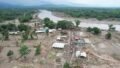
Although catastrophic destruction was not immediately reported, local officials confirmed damage to infrastructure and public facilities.
Reports from affected areas included:
- Cracked bridges
- Damaged government buildings
- Collapsed structures and monuments
- Power outages
- Communication disruptions
- Damage to homes and businesses
Residents described scenes of panic as people rushed outdoors during the shaking. In several communities, furniture, appliances, and household items were thrown from their positions by the force of the tremors.
Officials cautioned that damage assessments remain ongoing and that additional impacts may be discovered as inspection teams reach remote locations.
Why Aftershocks Could Be a Major Concern
Large earthquakes rarely occur in isolation.
Aftershocks are expected to continue for days, weeks, or even months following a major seismic event.
Some aftershocks can be powerful enough to cause additional damage, especially to buildings and infrastructure already weakened by the initial quake.
In this case, seismologists reported aftershocks exceeding magnitude 6.0, which by themselves are capable of causing significant shaking.
Emergency authorities have urged residents to remain vigilant and avoid entering damaged structures until safety inspections are completed.
The Pacific Ring of Fire: Why the Philippines Faces Frequent Earthquakes
The Philippines sits along the Pacific Ring of Fire, a horseshoe-shaped zone surrounding much of the Pacific Ocean where tectonic plates collide, slide past each other, and dive beneath one another.
This region accounts for approximately 90 percent of the world’s earthquakes and hosts most of the planet’s active volcanoes.
The geological forces responsible for these events operate continuously beneath the Earth’s surface.
As tectonic plates move, stress accumulates over years or decades until it is suddenly released as an earthquake.
| Ring of Fire Facts | Significance |
|---|---|
| Global Earthquakes | About 90% occur here |
| Active Volcanoes | More than 75% worldwide |
| Countries Affected | Philippines, Japan, Indonesia, Chile, USA and others |
| Main Cause | Tectonic plate interactions |
Lessons From Past Tsunami Disasters
The rapid response to this earthquake reflects lessons learned from previous tsunami catastrophes.
One of the most devastating examples was the 2004 Indian Ocean tsunami, which killed more than 230,000 people across multiple countries after a massive undersea earthquake.
That disaster transformed global tsunami monitoring systems and led governments to invest heavily in early-warning networks, evacuation planning, and public awareness campaigns.
Today, sophisticated monitoring systems can detect major earthquakes within minutes and rapidly issue alerts that save lives.
The swift evacuation orders following the Mindanao earthquake demonstrate how those investments continue to play a critical role in disaster preparedness.
The Economic Impact Could Extend Beyond the Philippines
Major earthquakes often create economic consequences that reach far beyond the immediate disaster zone.
Potential impacts include:
- Infrastructure repair costs
- Business disruptions
- Supply chain interruptions
- Agricultural losses
- Tourism impacts
- Insurance claims
Mindanao is an important economic region for the Philippines, contributing significantly to agriculture, fisheries, mining, and trade.
If infrastructure damage proves extensive, recovery efforts could require substantial government resources and international assistance.
How Modern Disaster Response Has Improved
Compared to previous decades, emergency response capabilities have improved dramatically.
Governments now benefit from:
- Satellite monitoring systems
- Real-time seismic sensors
- Mobile emergency alerts
- Advanced weather and ocean monitoring
- Improved evacuation planning
- International disaster cooperation
These tools help authorities respond faster and reduce casualties even during extremely powerful natural disasters.
However, experts note that preparedness remains the most effective Defense against earthquakes because accurate long-term earthquake prediction is still impossible.
What Happens Next?
The next 48 to 72 hours will be critical.
Authorities will continue monitoring sea levels, assessing structural damage, restoring utilities, and tracking aftershocks.
Engineers are expected to inspect roads, bridges, schools, hospitals, and government facilities to determine whether they remain safe for public use.
Emergency shelters may remain operational until officials are confident that tsunami risks have passed and damaged areas have been secured.
The Bigger Picture: A Reminder of Nature’s Power
The 7.8-magnitude Philippines earthquake highlights the immense power of Earth’s geological systems and the ongoing vulnerability of communities located in seismically active regions.
Despite advances in Technology, disaster management, and early-warning systems, earthquakes remain among the most unpredictable natural hazards.
What makes events like this particularly significant is not only their immediate impact but also their ability to test infrastructure, emergency preparedness, and community resilience.
Conclusion
The powerful earthquake off Mindanao has triggered tsunami warnings, forced evacuations, disrupted essential services, and placed emergency agencies across the region on high alert. While initial reports suggest that widespread catastrophe may have been avoided, the situation remains fluid as authorities continue assessing damage and monitoring aftershocks.
The coming days will reveal the full extent of the earthquake’s impact. For now, the event stands as a stark reminder that countries along the Pacific Ring of Fire must remain prepared for sudden and powerful natural disasters. As rescue teams, engineers, and emergency responders continue their work, millions across the region will be watching closely for updates and hoping that the worst has already passed.
For breaking news and live news updates, like us on Facebook or follow us on Twitter and Instagram. Read more on Latest World on thefoxdaily.com.




COMMENTS 0