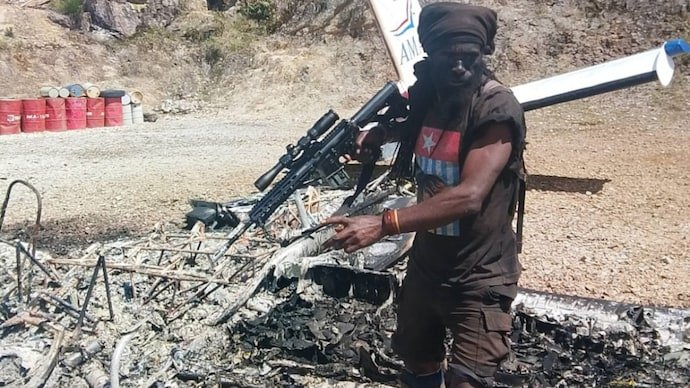
The decades-old conflict in Indonesia‘s Papua region has drawn renewed international attention after separatist fighters claimed responsibility for killing an American pilot and setting his aircraft on fire in Yahukimo, a remote district in Highland Papua. The armed group described the attack as a political message directed at both the Indonesian and United States governments, accusing authorities of ignoring the root causes of the long-running conflict.
While Indonesia has confirmed that the aircraft was discovered burned at a local airport, officials have not yet officially confirmed the pilot’s death or identified those responsible, stating that investigations remain ongoing. The incident nevertheless marks one of the most serious attacks involving a foreign national in Papua in recent years and raises fresh concerns about aviation safety, humanitarian access, and the future of peace efforts in the region.
Beyond the immediate tragedy, the attack illustrates how the conflict has evolved into a complex mix of political grievances, security operations, resource disputes, and international attention, making Papua one of the most sensitive flashpoints in Southeast Asia.
What Happened in Yahukimo?
According to statements released by the West Papua National Liberation Army (TPNPB), its fighters attacked a small aircraft shortly after it landed in Yahukimo. The group claimed American pilot Nicholas F. Gosselin was killed during the assault before the aircraft was set on fire.
Indonesian authorities have confirmed finding the destroyed aircraft but have been more cautious regarding the circumstances surrounding the incident. Officials say they are still verifying exactly what happened, including the fate of those on board and whether separatist rebels carried out the attack.
The aircraft reportedly belonged to PT AMA, an Indonesian aviation company that operates flights delivering food, fuel, medicine, mail, and other essential supplies to isolated communities across Papua, where road infrastructure remains extremely limited.
Who Are the West Papua National Liberation Army (TPNPB)?
The West Papua National Liberation Army, commonly known as TPNPB, is an armed separatist organization seeking independence for Papua from Indonesia. The group operates in several mountainous and forested regions where government access is often limited.
It is widely regarded as the military wing of the broader West Papuan independence movement, which argues that Papua’s incorporation into Indonesia was neither free nor representative of the wishes of the indigenous population.
Over the years, the group has carried out attacks against Indonesian security forces, infrastructure, and occasionally civilians or foreign nationals, particularly when it believes they are supporting military operations.
Why Papua Remains a Conflict Zone
The roots of today’s violence stretch back more than half a century.
After the Netherlands prepared its former colony for self-government, Indonesia assumed administrative control of Papua during the 1960s. In 1969, the territory formally became part of Indonesia following the “Act of Free Choice.”
Indonesia considers the process legally valid and internationally recognized. However, many Papuan independence supporters argue that the vote was conducted under significant political pressure and did not represent genuine self-determination.
This disagreement has fueled an armed insurgency that has continued for decades.
Today, Papua remains one of Indonesia’s most resource-rich regions, containing valuable deposits of gold, copper, timber, and natural gas. At the same time, many indigenous communities continue to raise concerns about economic inequality, infrastructure development, land rights, and political representation.
Timeline of Major Events in the Papua Conflict
| Year | Key Development |
|---|---|
| 1963 | Indonesia assumes administrative control of Papua. |
| 1969 | Act of Free Choice leads to Papua’s incorporation into Indonesia. |
| 1970s–2000s | Separatist insurgency continues with periodic armed clashes. |
| 2019 | Large-scale protests erupt following racial discrimination incidents. |
| 2023 | New Zealand pilot Phillip Mehrtens kidnapped by separatist fighters. |
| 2024 | Mehrtens released after prolonged negotiations. |
| 2026 | Separatists claim responsibility for attack on American pilot in Yahukimo. |
Why Civil Aviation Has Become Increasingly Vulnerable
Papua’s geography makes aviation essential rather than optional. Dense rainforests, rugged mountains, and limited road networks mean that many communities rely almost entirely on aircraft for everyday necessities.
Small planes regularly transport:
- Medical supplies.
- Food and drinking water.
- Fuel.
- Teachers and healthcare workers.
- Postal deliveries.
- Emergency evacuation services.
When aviation becomes a target during armed conflict, its effects extend far beyond transportation. Entire communities can lose access to medicine, food supplies, and emergency healthcare within days.
This explains why attacks on civilian aircraft generate significant international concern even when they occur in remote regions.
The Rebels’ Justification and Their Political Message
According to TPNPB spokesperson Sebby Sambom, the aircraft allegedly entered territory that the group considers a restricted operational zone despite previous warnings.
The separatists claim that some civilian aircraft have been used to transport Indonesian military personnel and logistical supplies into contested areas. On that basis, they argue such flights are no longer purely civilian operations.
The Indonesian government has not supported these allegations, and civil aviation authorities stated that no security concerns had been reported before the aircraft landed.
The differing narratives illustrate one of the central challenges of the Papua conflict: both sides fundamentally disagree over how military operations, civilian infrastructure, and security responsibilities should be interpreted.
Indonesia’s Response
Following discovery of the burned aircraft, Indonesian police, military personnel, and civil aviation officials launched an investigation.
Authorities have confirmed:
- The aircraft departed from Wamena.
- Communication was lost after landing in Yahukimo.
- The aircraft was later discovered destroyed.
- The exact sequence of events remains under investigation.
Officials have avoided prematurely assigning responsibility while forensic and security assessments continue.
This cautious approach reflects the complexity of investigating incidents in remote mountain regions where access is difficult and independent verification often takes considerable time.
The Broader Humanitarian Impact
While security incidents dominate international headlines, the humanitarian consequences are often even more significant.
Years of armed conflict have periodically displaced civilians, interrupted education, disrupted healthcare delivery, and complicated development efforts across parts of Papua.
Communities living near conflict areas frequently face:
- Restricted movement.
- Interrupted schooling.
- Healthcare shortages.
- Economic uncertainty.
- Transportation disruptions.
- Higher costs for essential goods.
Humanitarian organizations have repeatedly emphasized the importance of protecting civilians and ensuring safe access for humanitarian assistance regardless of political disagreements.
Foreign Pilots Have Been Targeted Before
The latest incident recalls another high-profile aviation crisis that attracted global attention.
In February 2023, New Zealand pilot Phillip Mehrtens was taken hostage after landing a commercial aircraft in Papua’s mountainous Nduga region.
He remained in captivity for approximately nineteen months before being released through negotiations involving Indonesian authorities, local intermediaries, and the New Zealand government.
That case demonstrated both the security risks faced by civilian aviation crews and the willingness of separatist groups to use foreign nationals as leverage in their political campaign.
The reported killing of an American pilot represents an even more serious escalation if officially confirmed.
Why Papua Matters Beyond Indonesia
Papua’s importance extends beyond domestic Indonesian politics.
The island occupies a strategically significant position in the Indo-Pacific region and possesses substantial natural resources that contribute to Indonesia’s economy.
The region is known for:
- Major copper reserves.
- Large gold deposits.
- Extensive forests.
- Natural gas resources.
- Rich biodiversity.
Because of these strategic and economic factors, developments in Papua are closely monitored by regional governments, international observers, investors, and Human Rights organizations.
Comparison: Papua’s Conflict Compared with Other Long-Running Insurgencies
| Factor | Papua Conflict | Common Pattern in Long Insurgencies |
|---|---|---|
| Primary Issue | Self-determination and governance | Political autonomy or independence |
| Geography | Mountainous rainforest | Difficult terrain limiting state access |
| Economic Dimension | Resource-rich territory | Competition over valuable resources |
| Humanitarian Impact | Displacement and service disruption | Long-term civilian hardship |
| International Interest | Moderate but increasing | Often grows after attacks on foreigners |
Expert Insight: Why Attacks on Civil Aviation Are Especially Significant
Armed conflicts frequently target military installations, but attacks involving civilian aviation carry broader consequences because they directly affect humanitarian logistics, emergency medical services, and isolated populations.
Even when the intended objective is political messaging, aviation-related violence can discourage airlines from operating in remote regions, reducing access to healthcare, education, and essential supplies for thousands of civilians.
This makes aviation security a critical component of broader conflict management strategies in geographically isolated areas such as Papua.
Future Outlook
The coming weeks will likely focus on confirming the circumstances surrounding the incident and determining responsibility through official investigations.
If separatist involvement is formally established, Indonesia may strengthen security measures around regional airports and aviation routes serving remote communities. Airlines operating in Papua could also review flight procedures, risk assessments, and operational protocols.
At the political level, the attack may intensify calls for renewed dialogue between Jakarta and Papuan representatives while simultaneously prompting stronger security responses. Whether these developments lead to negotiations or further confrontation will depend on decisions taken by both the Indonesian government and separatist groups.
Conclusion
The reported killing of American pilot Nicholas F. Gosselin and the destruction of his aircraft represent one of the most serious security incidents in Papua in recent years. Although Indonesian authorities continue investigating the circumstances, the separatists’ claim of responsibility has once again placed the decades-old conflict in the international spotlight.
Beyond the immediate tragedy, the incident highlights the enduring complexity of the Papua conflict, where historical grievances, political aspirations, security concerns, and humanitarian challenges remain deeply intertwined. It also underscores the growing risks faced by civilian aviation operating in conflict-affected regions and the urgent need for solutions that protect both local communities and those providing essential services.
As investigations continue and international attention grows, the events in Yahukimo may become another defining moment in the evolving story of Papua a conflict whose resolution will require not only enhanced security but also sustained political engagement, dialogue, and efforts to address the underlying issues that have fueled unrest for decades.
For breaking news and live news updates, like us on Facebook or follow us on Twitter and Instagram. Read more on Latest World on thefoxdaily.com.


COMMENTS 0