- What Is Happening in al-Bustan?
- Why Jerusalem Is So Politically Explosive
- The King’s Garden Project and the Battle Over Historical Narrative
- Why Palestinians Say Building Permits Are Nearly Impossible
- Why Residents Are Demolishing Their Own Homes
- How October 7 and the Gaza War Changed the Situation
- The International Dimension of the Controversy
- The Larger Battle Over Identity in Jerusalem
- Why Archaeology in Jerusalem Is Uniquely Sensitive
- What Happens Next?
- Conclusion
In the crowded Palestinian neighbourhood of al-Bustan in East Jerusalem, families are making an agonizing choice: destroy their own homes or face even heavier financial penalties from Israeli authorities.
The demolitions are tied to Israel’s long-running plan to develop a Biblical-themed archaeological park known as the “King’s Garden,” a project connected to the broader City of David tourism and heritage initiative near Jerusalem’s Old City.
For Israeli authorities and nationalist groups, the project represents an effort to highlight Jerusalem’s ancient Jewish History and reinforce the city’s Biblical significance. For many Palestinians, however, it represents something entirely different displacement, unequal urban policy, and the gradual reshaping of East Jerusalem’s demographic and political reality.
The Controversy has once again placed global attention on one of the most explosive issues in the Israeli-Palestinian Conflict: who controls Jerusalem, whose history is prioritized, and who gets to remain in the city’s most symbolically charged areas.
What Is Happening in al-Bustan?
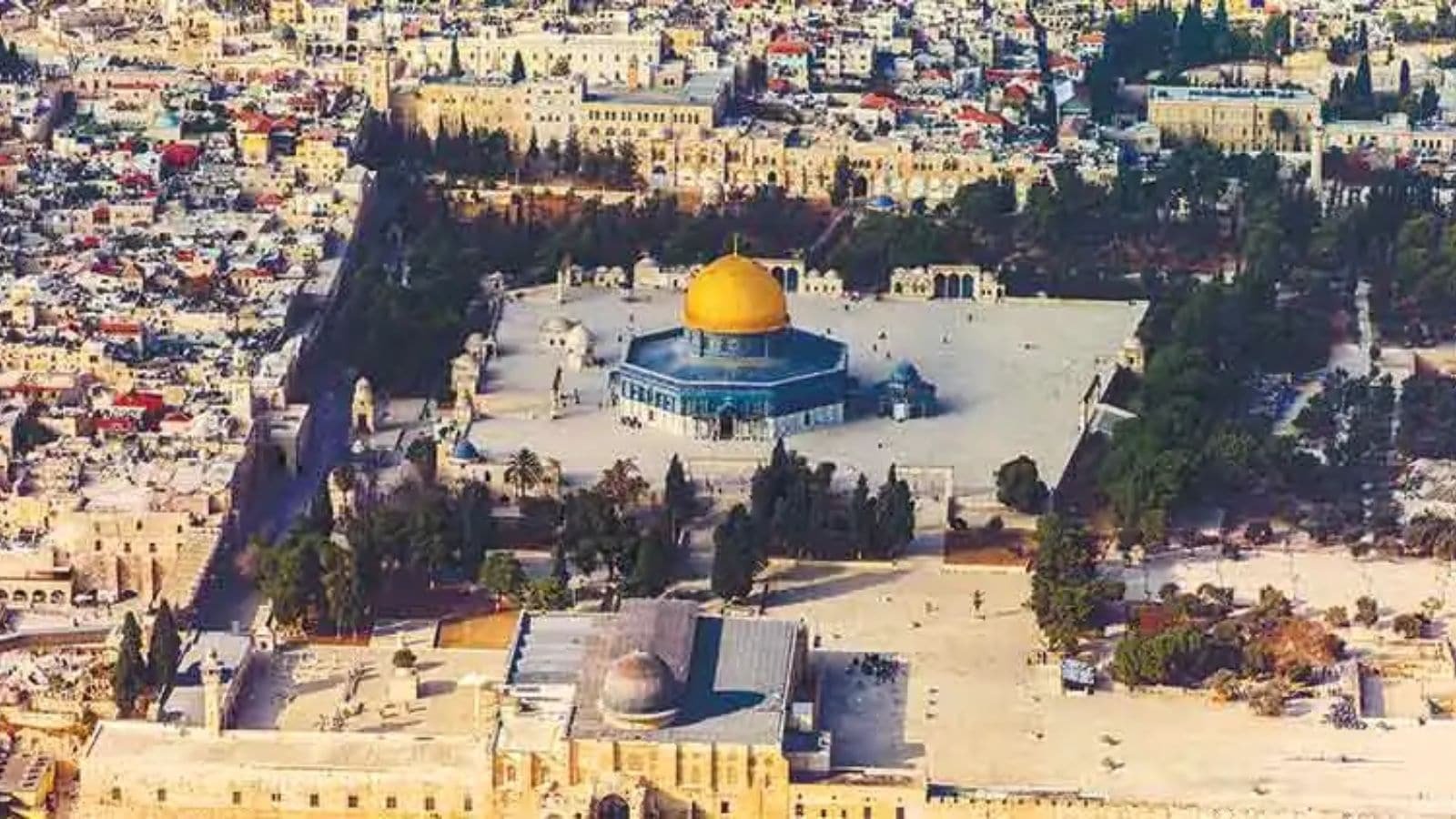
Al-Bustan is part of Silwan, a densely populated Palestinian neighbourhood located just outside the walls of Jerusalem’s Old City. The area sits near some of the most archaeologically and politically sensitive land in the region.
Israeli authorities have for years argued that many homes in al-Bustan were built without permits and stand in the way of a planned park project called the King’s Garden.
The proposed park is designed around Biblical narratives associated with King David and King Solomon and forms part of a wider tourism and archaeological network promoted as the “City of David.”
According to reports, dozens of Palestinian homes have already been demolished in recent years, while additional structures remain under demolition orders.
What has drawn particular attention internationally is the growing number of residents choosing to demolish their homes themselves.
The reason is largely financial.
Municipal authorities can reportedly charge homeowners massive fees if government crews carry out the demolitions. Facing crushing costs, some families rent bulldozers and construction equipment to dismantle homes they may have spent decades building.
The emotional and psychological toll of such scenes has become one of the defining images of the controversy.
Why Jerusalem Is So Politically Explosive
To understand why the al-Bustan demolitions matter globally, it is necessary to understand Jerusalem itself.
Few cities in the world carry as much religious, historical, and political significance.
Jerusalem is sacred to:
- Jews
- Muslims
- Christians
It contains sites central to all three Abrahamic faiths, including:
- The Western Wall
- Al-Aqsa Mosque
- The Dome of the Rock
- The Church of the Holy Sepulchre
Because of this, disputes over land, housing, archaeology, and sovereignty in Jerusalem rarely remain local municipal issues. They quickly become international political flashpoints.
East Jerusalem, where al-Bustan is located, was captured by Israel during the 1967 Arab-Israeli war and later annexed a move not recognized by much of the international community.
Palestinians view East Jerusalem as the capital of a future Palestinian state, while Israel considers the entire city its indivisible capital.
That unresolved conflict sits beneath nearly every dispute involving housing, planning, demolitions, or archaeology in the city.
The King’s Garden Project and the Battle Over Historical Narrative
The King’s Garden project is not simply an urban redevelopment plan. It is deeply tied to competing historical narratives.
Israeli authorities and nationalist organizations connected to the City of David project argue that the area contains archaeological remains linked to ancient Jewish kingdoms described in Biblical texts.
The goal, supporters say, is to preserve and showcase Jerusalem’s ancient heritage for visitors and future generations.
However, critics including many Palestinians, Human Rights groups, and even some archaeologists argue that archaeology in Jerusalem is increasingly being used as a political tool.
Some scholars have questioned whether all discoveries in the area directly support the specific Biblical narratives promoted through tourism projects.
Critics also argue that archaeological development often overlaps with efforts to strengthen Israeli control over strategically important Palestinian neighbourhoods around the Old City.
In Jerusalem, archaeology is rarely just about history.
It is often intertwined with modern sovereignty, identity, and territorial claims.
| Israeli Government Position | Palestinian and Critic Concerns |
|---|---|
| Preserve Biblical heritage | Displacement of Palestinian residents |
| Expand archaeological tourism | Political use of archaeology |
| Protect historical sites | Unequal planning and permit policies |
| Develop public park space | Loss of homes and community networks |
| Strengthen Jerusalem tourism economy | Demographic reshaping of East Jerusalem |
Why Palestinians Say Building Permits Are Nearly Impossible
One of the central arguments raised by Palestinian residents involves Jerusalem’s building permit system.
Many Palestinians say obtaining legal construction permits in East Jerusalem is extraordinarily difficult, expensive, and slow.
As a result, families facing population growth and housing shortages often build without permits, knowing they risk future demolition orders.
Human rights organizations have repeatedly argued that restrictive planning policies create a structural imbalance between Jewish and Palestinian neighbourhoods in Jerusalem.
Israeli authorities reject accusations of discrimination and maintain that construction regulations apply according to municipal law.
Still, the permit issue remains one of the most contentious aspects of Jerusalem’s urban Politics.
For many Palestinians, the demolitions are viewed not merely as legal enforcement actions, but as part of a broader pressure campaign that gradually reduces Palestinian presence in strategically important areas.
Why Residents Are Demolishing Their Own Homes
Perhaps the most disturbing aspect of the situation is the rise in self-demolitions.
Under Israeli municipal policy, homeowners may face enormous charges if authorities carry out the demolition themselves.
To avoid these fees, some residents choose to dismantle their own homes.
This creates devastating scenes where families destroy kitchens, bedrooms, and walls built over generations.
Beyond financial pressure, self-demolition also allows families to salvage belongings and building materials before structures are completely destroyed.
But the emotional cost is immense.
For many Palestinians, the experience represents a form of forced participation in their own displacement.
The images emerging from al-Bustan have become especially powerful internationally because they transform an abstract political conflict into something intensely personal and human.
How October 7 and the Gaza War Changed the Situation
Several reports suggest momentum behind the project accelerated significantly after the October 7 Hamas attacks and the subsequent Gaza war.
The attacks reshaped Israeli politics and intensified nationalist sentiment across parts of the country.
Security concerns, public anger, and political polarization increased dramatically following the violence.
In this Environment, projects connected to Israeli sovereignty, heritage, and territorial control gained renewed political backing.
At the same time, international diplomatic pressure on Israeli domestic policies became more complicated as global attention focused heavily on Gaza, hostage negotiations, and regional security risks.
The broader political climate therefore created conditions in which long-delayed projects in Jerusalem moved forward more aggressively.
The International Dimension of the Controversy
Jerusalem’s status has long been one of the most sensitive issues in international diplomacy.
Most countries do not formally recognize Israeli sovereignty over East Jerusalem, and many international organizations consider Israeli settlements and certain municipal policies there controversial under international law.
The al-Bustan demolitions are therefore attracting global attention not only because of humanitarian concerns, but also because they touch directly on unresolved questions surrounding:
- Sovereignty
- Occupation
- Urban planning rights
- Cultural heritage
- Demographic change
- International law
International criticism has intensified further following reports of inflammatory nationalist slogans during marches in Jerusalem, adding to fears about rising ethnic tensions inside the city.
For many observers, the demolitions symbolize the broader erosion of coexistence and trust between communities in Jerusalem.
The Larger Battle Over Identity in Jerusalem
At its core, the al-Bustan dispute is not just about buildings or archaeology.
It is about competing visions of Jerusalem itself.
For Israeli nationalist groups, emphasizing ancient Jewish ties to the city strengthens claims to historical legitimacy and national identity.
For Palestinians, protecting neighbourhoods like Silwan represents a struggle to preserve their presence, culture, and future political claims in East Jerusalem.
Both sides view Jerusalem as central to their national story.
That is why even relatively small urban projects can trigger enormous international controversy.
In many cities, a park development would be a local planning matter. In Jerusalem, it becomes a geopolitical event.
Why Archaeology in Jerusalem Is Uniquely Sensitive
Archaeology usually aims to uncover the past. In Jerusalem, however, it often shapes the present.
Excavations, heritage projects, and tourism initiatives can influence:
- Land ownership debates
- Political narratives
- Religious claims
- International diplomacy
- Tourism economies
- Settlement expansion
This makes archaeological work in Jerusalem unusually politicized compared to most parts of the world.
Even among Israeli scholars, debates continue over how archaeological findings should be interpreted and presented publicly.
Some experts warn against oversimplifying complex historical layers into single national narratives.
Jerusalem’s history spans Jewish, Christian, Muslim, Roman, Byzantine, Ottoman, and Arab periods all of which remain deeply important to different communities today.
What Happens Next?
The future of al-Bustan remains uncertain.
More demolitions are expected, while legal challenges and international criticism are likely to continue.
The controversy could also increase diplomatic pressure on Israel at a time when global scrutiny over the broader Israeli-Palestinian conflict is already extremely high.
At the same time, the political climate inside Israel currently appears more supportive of projects emphasizing sovereignty and historical claims in Jerusalem.
That means disputes over neighbourhoods like Silwan are unlikely to disappear anytime soon.
In fact, they may become even more central to future confrontations over Jerusalem’s identity and future status.
Conclusion
The demolitions in al-Bustan reveal far more than a local housing dispute.
They expose the deep intersection of archaeology, politics, nationalism, religion, and urban planning in one of the world’s most contested cities.
For Israeli authorities and nationalist groups, the King’s Garden project represents historical preservation and Cultural Identity. For many Palestinians, it represents displacement, unequal treatment, and the shrinking space available for Palestinian life in East Jerusalem.
The painful reality of families tearing down their own homes has transformed the issue into a powerful symbol of the broader Israeli-Palestinian conflict.
And in Jerusalem a city where every stone carries history and every neighbourhood carries political meaning even a park project can become part of a much larger struggle over memory, identity, and belonging.
For breaking news and live news updates, like us on Facebook or follow us on Twitter and Instagram. Read more on Latest World on thefoxdaily.com.






COMMENTS 0