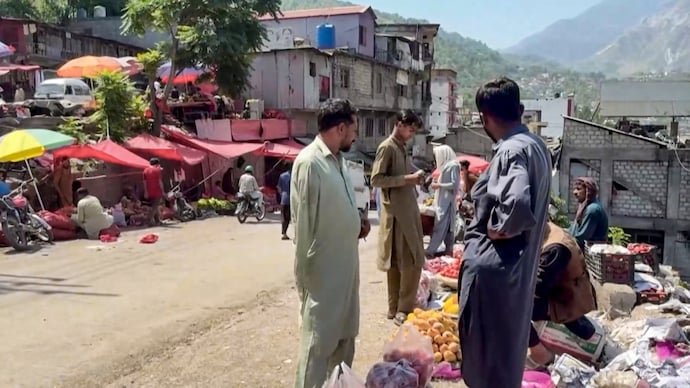
The United Nations has called for accountability over any harm caused to people taking part in peaceful Protests in Pakistan-administered Kashmir, while urging authorities to restore full internet access, investigate deaths impartially and pursue meaningful political dialogue. The intervention comes after weeks of unrest involving the Joint Awami Action Committee (JAAC), clashes with Security Forces and restrictions on communications and public assembly.
Why the UN is raising alarm over Pakistan-occupied Kashmir protests
The latest UN comments put the conduct of authorities in Pakistan-administered Kashmir under renewed international scrutiny. Farhan Haq, deputy spokesman for UN Secretary-General Antonio Guterres, said the Secretary-General supported the concerns previously raised by UN High Commissioner for Human Rights Volker Türk.
The central message from the UN is straightforward: peaceful protest is protected, and if people were harmed because they participated in such protests, there must be accountability.
That position is significant because the unrest has involved both protesters and members of the security forces, making an independent account of what happened especially important. The UN has therefore called not simply for an end to violence, but for prompt, thorough and impartial investigations into deaths connected to the unrest.
The UN’s concerns also extend beyond the immediate violence. Restrictions on internet access and public gatherings have become part of the dispute, with the human rights office arguing that such measures can affect freedom of expression and peaceful assembly.
What happened during the protests in Pakistan-administered Kashmir?
The unrest developed ahead of elections to the regional Legislative Assembly and involved the Joint Awami Action Committee, an umbrella movement bringing together sections of civil society including traders, transport workers, students, lawyers and activists.
The movement’s protests have been linked to wider political and economic grievances in the region. Over time, the confrontation with authorities became more serious, with reports of deaths among protesters as well as law enforcement personnel.
In July, the UN human rights office said dozens of people had reportedly been killed since June, with most of the victims being protesters but with members of security forces also among those killed. The UN consequently urged authorities to establish the facts surrounding every death rather than allowing competing versions of events to harden into accepted narratives.
That distinction matters. When protests turn violent, accountability cannot depend solely on whether a person was a demonstrator or a member of the security forces. An impartial Investigation is intended to establish who used force, under what circumstances and whether the response complied with applicable legal standards.
UN calls for independent investigations into deaths
Volker Türk’s earlier intervention called for investigations that are prompt, thorough and impartial. The UN has repeated that position rather than assigning responsibility for individual deaths without an established investigation.
This approach is particularly important in a region where access to information has been constrained. When internet services are restricted during unrest, residents can have difficulty communicating with one another, journalists can face obstacles in verifying reports and families may struggle to obtain timely information about events.
An investigation that is credible to the public therefore has to do more than announce a conclusion. It needs to establish the circumstances surrounding deaths and injuries and examine the actions of all sides involved in the clashes.
The UN’s demand for accountability should consequently be understood as part of a broader call for transparency. It is not simply a request to punish individuals. It is a call for authorities to demonstrate that allegations of unlawful harm will be examined through a credible process.
Why internet access has become a major part of the dispute
One of the clearest elements of the UN’s position concerns internet access. The UN human rights office has urged authorities to ensure full internet access throughout the territory.
internet restrictions can have consequences that go well beyond Social Media. During a period of unrest, residents rely on communications networks to receive information, contact relatives, seek medical assistance, coordinate transportation and document developments.
For journalists and human rights observers, communications access is also important for independently checking claims. Without reliable connectivity, information can become fragmented, while rumours can spread without the normal ability to verify them.
That makes an Internet Shutdown or prolonged restriction particularly sensitive when allegations of excessive force are already being investigated. The less information available from independent sources, the harder it becomes for the public to distinguish confirmed events from competing claims.
The UN’s position therefore connects internet access with broader civil liberties rather than treating it simply as a telecommunications issue.
What is the Joint Awami Action Committee?
The Joint Awami Action Committee has emerged as a central organisation in the unrest. It is not a conventional political party. Its support base includes different sections of civil society, including traders, transporters, students, lawyers and activists.
That broad composition helps explain why the protests have developed into a wider political confrontation rather than remaining limited to a single professional or economic group.
Authorities have taken a much harder position toward the movement. The group was banned under anti-terrorism provisions, with officials citing threats to public order and security. Human rights organisations and UN officials, however, have expressed concern about the use of anti-terrorism mechanisms in response to a protest movement.
The issue is not merely whether authorities have the legal power to impose restrictions. The more difficult question is whether such powers are being used proportionately and whether peaceful political activity is being treated as a security threat without sufficient justification.
Why the UN is calling for political dialogue
The UN has paired its demands for accountability with a call for meaningful and inclusive political dialogue. That is an important part of its response because the protests are rooted in grievances that cannot necessarily be resolved through policing alone.
Even if authorities succeed in dispersing demonstrations, underlying grievances can remain. If residents believe that their concerns are not being heard, a temporary reduction in street protests does not necessarily mean that the political problem has disappeared.
Dialogue offers a different route. It allows authorities, community representatives and other stakeholders to discuss disputed issues without relying exclusively on confrontation.
The word “inclusive” is particularly important. A dialogue that excludes the groups at the centre of the grievances may have limited credibility. The UN’s position suggests that lasting stability requires the authorities to engage with the concerns of the population rather than addressing the unrest only as a law-and-order problem.
The election backdrop makes the situation more sensitive
The protests occurred against the backdrop of regional elections, adding another layer to the crisis. Elections are supposed to provide an institutional mechanism through which political grievances can be expressed, debated and resolved.
When significant unrest occurs around an election, questions about representation, public confidence and political participation naturally become more important.
The UN’s call for dialogue therefore has significance beyond the immediate protests. The credibility of political institutions depends partly on whether people believe they have peaceful ways to influence decisions affecting their lives.
If protests are met primarily with restrictions, arrests or force, the political system can face a deeper trust problem. Conversely, credible investigations and engagement with grievances can help reduce tensions and create space for political participation.
What the UN statement does and does not say
The UN has been careful in its language. It has expressed concern, called for investigations and demanded accountability where people were harmed for peaceful protest. It has not, however, issued a blanket finding assigning responsibility for every death or every incident during the unrest.
That distinction is important when assessing reports from a conflict-affected environment. Allegations from protesters, authorities and other actors can differ sharply. An international organisation calling for an impartial investigation is effectively acknowledging that the facts need to be established through a credible process.
The UN’s position also applies to deaths among security personnel. Türk’s earlier statement called for investigations into deaths on both sides. That approach avoids treating accountability as something that applies only to one category of victim.
Why accountability matters beyond the immediate crisis
Accountability can serve several purposes after a period of political violence. It can establish a factual record, identify unlawful conduct, provide families with answers and reduce the possibility that unresolved grievances fuel another confrontation.
There is also a broader institutional issue. If citizens believe that security forces can use excessive force without meaningful scrutiny, trust in public institutions can deteriorate. If security personnel believe that they are being blamed regardless of circumstances, that can create a different form of instability.
A credible investigation is therefore not necessarily an attack on the state or its security institutions. Properly conducted, it can strengthen confidence in those institutions by demonstrating that their powers are subject to rules and oversight.
The same principle applies to protest movements. The right to peaceful assembly does not remove legal responsibilities from demonstrators when violence occurs. But allegations of violence also do not automatically eliminate the rights of everyone participating in a broader protest.
What could happen next in Pakistan-administered Kashmir?
The immediate challenge is to prevent another cycle in which political grievances produce demonstrations, demonstrations produce restrictions, restrictions deepen anger and confrontations lead to further casualties.
The UN’s proposed route is built around four linked steps: accountability for harm, impartial investigations into deaths, restoration of internet access and meaningful political dialogue.
Whether that approach succeeds will depend heavily on how authorities respond and whether local political actors are willing to use dialogue rather than confrontation. It will also depend on whether investigations are viewed as genuinely independent and whether their findings are made credible to affected communities.
The election environment adds urgency. Political disputes are harder to contain when public trust is already under pressure and when competing sides believe that institutions are not responding to their concerns.
For residents, the most consequential issue is likely to be whether the crisis produces concrete changes rather than another temporary political settlement. A return to normal daily life without addressing the grievances behind the protests could leave the underlying tensions unresolved.
The bigger issue behind the UN’s intervention
The UN’s intervention is ultimately about more than one protest movement or one period of unrest. It highlights the difficult balance governments face when demonstrations become disruptive or violent while fundamental rights remain at stake.
Authorities have a responsibility to maintain public order and protect people from violence. At the same time, peaceful protest, expression and access to information are important parts of a functioning political system. The challenge is to enforce security without treating legitimate dissent itself as a security threat.
In Pakistan-administered Kashmir, that balance is now being tested under unusually difficult circumstances. The deaths reported during the unrest, restrictions on communications and the banning of the JAAC have turned a regional political dispute into an issue attracting international human rights scrutiny.
The UN’s message is therefore clear even where it stops short of assigning blame: allegations of harm cannot simply be ignored, deaths require credible investigation, peaceful protest must be protected, internet access should be restored and political grievances need to be addressed through inclusive dialogue.
The next test will be whether those principles translate into action on the ground. If authorities can establish accountability while reopening political space, the immediate crisis may become an opportunity to rebuild trust. If restrictions and unresolved grievances continue without credible investigations, the pressure that produced the protests may remain even after the streets become quieter.
For breaking news and live news updates, like us on Facebook or follow us on Twitter and Instagram. Read more on Latest World on thefoxdaily.com.






COMMENTS 0